A discreet buyer’s guide to evaluating luxury condominium pet policies, building culture, access routes, outdoor routines, and service expectations before touring with a dog.
In South Florida luxury real estate, the first question is rarely whether a building is beautiful. It is whether the building’s daily life will suit the way you actually live. For buyers arriving with a dog, that question becomes more exacting. A residence can offer the right view, the right finishes, and the right address, yet still feel wrong if the pet policy, elevator etiquette, and walking routine create daily friction.
The most discerning buyers treat the pet conversation as part of their opening diligence. Before scheduling a private tour, ask for the current pet rules in writing. Do not rely on a casual assurance that the building is “pet friendly.” That phrase can mean many things: one dog, two dogs, size limits, breed review, registration requirements, pet deposits, restricted lobby routes, or specific service elevator protocols. The goal is not to challenge the building’s culture. It is to understand it before emotion enters the purchase.
This is especially important in high-service environments such as Brickell, Miami Beach, Sunny Isles, Coconut Grove, and the quieter bayfront enclaves. A buyer considering 2200 Brickell may be weighing an urban routine, while a buyer drawn to The Well Coconut Grove may be prioritizing a softer residential rhythm. In both cases, the dog’s experience deserves the same scrutiny as the floor plan.
The written rule is only the first layer. The second is enforcement. Ask who reviews pet applications, whether the association or management office requires vaccination records, whether pets must be registered before move-in, and whether fees are one-time or recurring. If your dog is large, aging, anxious, unusually vocal, or still in training, ask direct questions before the tour.
A polished building may have a formal policy that reads simply, but a more detailed operating culture in practice. Ask whether dogs may pass through the main lobby, whether they are expected to use a designated elevator, and whether there are time restrictions for moving through shared amenity areas. Ask what happens if a guest arrives with a dog, or if a dog walker will be entering regularly. If you employ staff, confirm how the building handles recurring access for pet care providers.
Luxury is not only about permission. It is about ease. A rule that appears manageable on paper can become tedious if it adds unnecessary steps to every walk.
When touring with a dog in mind, walk the route your dog will actually use. Start at the residence entry, continue to the elevator, pass through the lobby or service corridor, exit to the street, and identify the nearest appropriate relief area. Notice floor surfaces, doors, waiting areas, and noise. A nervous dog may react differently to stone lobbies, mirrored elevators, valet activity, or echoing corridors.
If the residence has a terrace, ask what is permitted there. A terrace can be a pleasure for a pet owner, but it is not a substitute for outdoor walking. Ask about balcony safety, screening, drainage expectations, and whether any pet-related items are restricted from exterior view. The most successful condominium pet routines are quiet, hygienic, and invisible to neighbors.
Buyers drawn to oceanfront living at The Perigon Miami Beach, for instance, may imagine long walks and a slower morning cadence. A buyer evaluating Bentley Residences Sunny Isles may be focused on privacy, arrival sequence, and vertical living. In each case, the question is the same: can the building’s circulation support your dog’s daily rhythm without turning a simple walk into a production?
The best pet questions are calm and specific. Ask whether the building has a pet incident policy, how complaints are handled, and whether there is a record of recurring issues buyers should understand before purchase. You are not looking for gossip. You are looking for operational clarity.
Ask about grooming deliveries, pet food deliveries, walkers, trainers, and veterinary access. If you travel often, ask whether pet sitters can be approved in advance. If your dog is elderly, ask about elevator redundancy and backup procedures during maintenance periods. If your dog is young, ask where training accidents are most problematic from a building perspective and how management expects owners to respond.
This is where a buyer’s tone matters. A sophisticated inquiry signals respect for the building. It also gives management an opportunity to describe expectations plainly. In an ultra-premium condominium, discretion is a shared amenity.
Pet compatibility is cultural. Some buildings feel relaxed around dogs. Others permit pets but are clearly designed for owners who prefer a quieter, more controlled environment. Neither is inherently better. The issue is fit.
During a tour, observe how staff respond to dogs entering and exiting. Are they warm, neutral, or visibly cautious? Do residents appear comfortable sharing elevators with pets? Are there clear places for dogs to wait without blocking arrival areas? Does the building feel busy at the hours you will be walking?
Do not assume a smaller building is easier or a larger building is more tolerant. Boutique properties can feel intimate and gracious, but they may also heighten neighbor awareness. Larger towers may have more infrastructure, but more residents and more dogs can mean more rules. The right answer is the one that matches your routine.
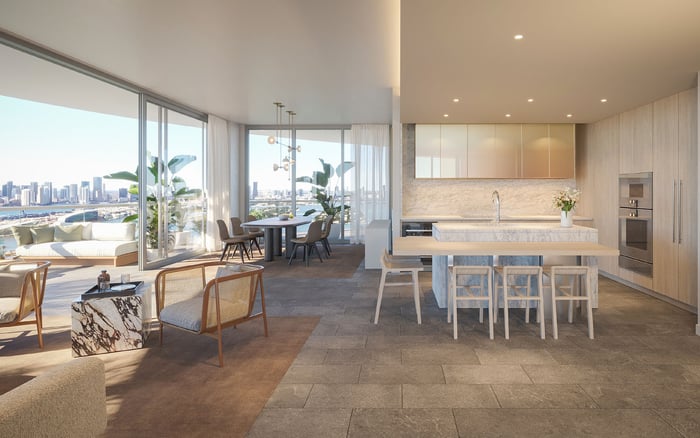
Inside the home, look at durability and separation. Smooth stone may be beautiful but slippery for some dogs. Wood, rugs, and upholstery require a realistic maintenance plan. Ask how easily the dog can move from the entry to the living areas and whether there is a natural place for leashes, towels, food storage, and a discreet bed.
Consider sound. A residence near elevators, trash rooms, mechanical areas, or amenity floors may create triggers for sensitive dogs. Conversely, a quiet exposure may be ideal for an older pet. If your dog barks at corridor noise, ask whether you can spend a few minutes in silence during the showing. The most revealing part of a tour may be the pause.
For pets, the finest residence is not always the largest one. It is the one where daily care feels composed. In a luxury condominium, that may mean a secondary entry, an easy-to-clean foyer, a private elevator landing, or simply a layout that keeps the dog calm when guests arrive.
Do not bring a dog to the first tour unless the building and listing team have approved it in advance. The more elegant approach is to complete the initial review, narrow the choices, then schedule a pet-aware second visit if appropriate. That visit should be purposeful: test the arrival, elevator, corridor, and outdoor route.
Bring the dog only if it will produce useful information. A highly social dog may charm everyone while revealing little. A nervous dog may tell you immediately whether the environment is too stimulating. Either way, keep the visit controlled, brief, and respectful. Luxury buildings remember behavior.
Should I ask for pet rules before scheduling a tour? Yes. Written rules help you avoid falling in love with a residence that does not fit your dog’s size, routine, or building-access needs.
Is “pet friendly” enough information for a luxury condo buyer? No. Ask about number of pets, size limits, review procedures, fees, elevator use, guest pets, and dog-walker access.
Can pet rules differ from one condominium to another? Yes. Each building can have its own documents, management practices, and culture, so confirm the current policy directly.
Should I bring my dog to the first showing? Usually not. A better approach is to preview the residence first, then request a controlled pet-aware visit for finalists.
What should I observe during a pet-aware tour? Watch the elevator route, lobby path, outdoor access, flooring, corridor noise, staff response, and your dog’s comfort level.
Are terraces important for dog owners? They can be helpful, but they do not replace proper walks. Ask what is permitted on terraces and how exterior appearance is managed.
What if my dog uses a walker or sitter? Ask how recurring access is approved, whether credentials are needed, and how the building handles frequent service-provider entries.
How should I evaluate a building’s pet culture? Observe resident behavior, staff tone, elevator etiquette, and whether pet movement feels natural or heavily constrained.
Does a larger condo tower automatically work better for dogs? Not necessarily. Larger buildings may offer more infrastructure, while smaller buildings may offer quieter routines and fewer encounters.
What is the most important pet question to ask before buying? Ask whether your dog’s daily routine can happen gracefully, repeatedly, and without creating tension with management or neighbors.
For a discreet conversation and a curated building-by-building shortlist, connect with MILLION.
If branded residences are on your mind — as a home or as an allocation — we would be glad to share what we are seeing, privately.
Begin a quiet conversation