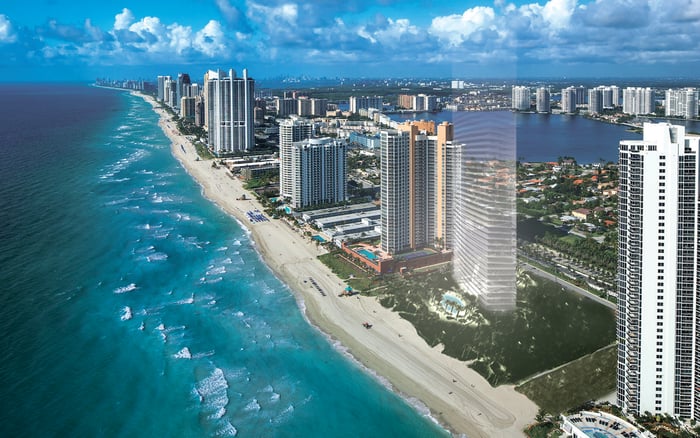
A discreet buyer’s guide to why cash purchasers in South Florida should review condominium, HOA and club onboarding before signing, with attention to approvals, move-in logistics and lifestyle access.

In South Florida luxury real estate, cash carries distinct power. It can simplify financing contingencies, sharpen a negotiation and give a seller confidence that closing will not be delayed by underwriting. Yet cash does not automatically deliver immediate, frictionless occupancy. For a buyer entering a condominium, private community, branded residence or club-oriented address, the experience after signing may be shaped by a separate layer of governance: new-resident onboarding.
That onboarding may include an association application, background review, financial disclosure, orientation, interview, move-in scheduling, staff registration, elevator reservation, amenity access setup and, in certain communities, club or membership procedures. None of these steps diminishes the value of a cash offer. They define how quickly, and how gracefully, ownership becomes daily life.
For buyers comparing Brickell, Miami Beach, Sunny Isles Beach, Boca Raton, Fort Lauderdale and Palm Beach, the question is not simply, “Can I close?” It is, “What must happen before I can live, host, park, receive deliveries, access amenities and bring in household staff without interruption?” That is why this topic belongs squarely in Buyer's Guides for ultra-premium purchases.
A luxury contract can feel decisive, especially when backed by cash. But in association-governed properties, signing is not always the end of review. A building or community may request formal ownership documents, identification, background information, references, financial details or interview participation before move-in credentials are issued.
The practical issue is timing. If an application package is incomplete, an interview window is missed or a move-in request is submitted too late, a buyer can own the residence yet still be waiting for full operational access. This matters for second-home purchasers, families arriving for the season and relocating executives coordinating aircraft, schools, vehicles, household goods and private staff.
In a high-service tower such as The Residences at 1428 Brickell, the ownership experience is inseparable from building systems, staff protocols and amenity registration. The same principle applies across waterfront and urban luxury: a residence is not only a deeded asset, but a managed environment.
Financed buyers often expect paperwork. Cash buyers, by contrast, may reasonably believe liquidity removes most administrative obstacles. That assumption can create avoidable friction. The purchase may be clean, but the community still needs to know who is entering its ecosystem, how the residence will be used and how the arrival will be managed.
This is especially important when a buyer plans to close through an entity, designate family users, register assistants, accommodate frequent guests or coordinate renovations immediately after closing. The onboarding process may treat each of those details differently. A cash buyer who reviews those requirements before signing can structure the contract calendar, closing date and post-closing schedule with greater precision.
For new-construction buyers, there is another layer: the transition from contract to delivery may involve owner orientations, warranty contacts, building systems, parking assignments, storage, access devices and amenity enrollment. In established resale towers, the process may focus more on association approval, move-in logistics and transfer of building privileges. Neither should be treated as an afterthought.
South Florida’s finest buildings are valuable not only for views, architecture and finishes, but for the order they preserve. Governance protects quiet enjoyment, security, service standards and the daily rhythm of a community. For the right buyer, that structure is a feature.
In Miami Beach, where privacy, beach access and design pedigree often define the purchase decision, onboarding can be as relevant as floor plan. A buyer considering a refined coastal address such as The Perigon Miami Beach should ask early how resident registration, guest protocols, service access and move-in procedures are handled. The goal is not to challenge the rules, but to understand them before they affect the calendar.
The same is true in branded and hospitality-influenced residences. A high-touch property may feel effortless once everything is activated, but effortless service usually rests on precise information. Names, vehicles, pets, staff, deliveries, vendors and amenity preferences may all need to be organized in advance.
Before going under contract, cash buyers should request the full onboarding path in plain language. What application is required? Who must be listed? Is an interview part of the process? What disclosures are requested? How long is review expected to take? When can move-in be scheduled? Are there blackout dates, elevator rules or insurance requirements for movers?
Buyers should also ask how amenities are activated. Pool, spa, fitness, beach, dining, marina, club, valet, package room and private event access can each have its own procedure. In Sunny Isles Beach, where vertical waterfront living is often paired with extensive service, a residence such as St. Regis® Residences Sunny Isles illustrates why the administrative layer should be mapped before arrival. The more comprehensive the lifestyle, the more important the onboarding choreography.
Pet policies, guest policies and leasing rules also deserve early attention. Even when a buyer has no immediate plan to lease, host extensively or bring multiple pets, future flexibility is part of the asset. Understanding the rules before signing is more elegant than negotiating with them afterward.
In some South Florida environments, ownership is tied to a broader club or community framework. That may involve a separate membership process, orientation, sponsorship culture, use privileges, charges or house rules. A cash buyer should distinguish between buying the real estate and becoming fully integrated into the lifestyle platform surrounding it.
This can be particularly relevant in golf, marina and wellness-oriented settings, as well as boutique enclaves where culture matters. In Bay Harbor Islands, for example, the appeal may lie in a quieter residential cadence, proximity to the water and a more intimate scale. A buyer looking at The Well Bay Harbor Islands should consider not only the residence, but how wellness amenities, resident access and day-to-day protocols are introduced.
Lifestyle is not generic. Some buyers prize anonymity. Others want immediate social access, concierge recognition or seamless family use. Onboarding is where those preferences meet the building’s operating reality.
A disciplined buyer’s team should surface onboarding before the contract is final. The objective is to align deposits, closing, possession, furniture delivery, seasonal arrival and any planned improvements with the association or community timeline. When that sequence is understood, cash retains its advantage without creating a false sense of instant access.
This is also where local counsel, a sophisticated agent and property management dialogue can add value. They can identify missing forms, clarify whether entities or trusts require additional documentation, confirm who may attend an interview and determine whether move-in reservations can be tentatively planned around closing.
The most successful cash buyers treat onboarding as a form of due diligence. It is not merely administrative. It is a preview of how the building communicates, enforces standards and serves residents. In that sense, it can reveal as much about quality of life as a private tour.
Does a cash purchase eliminate association approval? Not necessarily. Cash may simplify the transaction, but an association or community may still require its own onboarding steps.
Should I review onboarding before making an offer? Yes. Early review helps align closing, possession, movers, staff and travel plans with building requirements.
Can I own the residence before I can move in? In some cases, ownership and practical access may not occur at the same pace if onboarding or move-in scheduling remains incomplete.
What documents might be requested? Buyers may be asked for applications, identification, background information, financial details, references or entity documents.
Are interviews common in luxury buildings? Some associations or communities may include interviews or orientations as part of their resident approval or welcome process.
Why do amenity registrations matter? They determine how residents, family members, guests and sometimes staff access the services that define the lifestyle.
Should second-home buyers pay special attention? Yes. Seasonal arrivals often involve tight schedules, deliveries, vehicles and household setup, making advance planning essential.
Do club communities have separate onboarding? They may. Real estate ownership and club or membership participation can involve different processes and timelines.
Can onboarding affect renovation plans? Yes. Vendor access, insurance, work hours, elevator use and approvals can influence how quickly improvements begin.
What is the main takeaway for cash buyers? Liquidity is powerful, but the best arrivals are planned through both the contract and the community’s operating rules.
For a discreet conversation and a curated building-by-building shortlist, connect with MILLION.
If branded residences are on your mind — as a home or as an allocation — we would be glad to share what we are seeing, privately.
Begin a quiet conversation