A buyer-focused guide to choosing a South Florida residence where privacy, arrival sequence, vertical access, staffing, and neighborhood context make security feel refined rather than performative.

For buyers moving between Singapore and South Florida, the security conversation is rarely about spectacle. It is about choreography. The most compelling residence does not announce protection with a fortress posture. It steadies the vulnerable moments of daily life: the arrival from the airport, the elevator ride after dinner, the guest passing through the lobby, the driver waiting below, the staff member who needs access without disturbing the household.
That is why Brickell has become such a revealing test case. It is vertical, international, social, and walkable, yet it can still feel intimate when a building is planned with care. A residence such as St. Regis® Residences Brickell belongs in a buyer conversation not because one should assume any specific security feature, but because the right questions around arrival, service, privacy, and residential separation are especially important in a branded, hospitality-minded environment.
The goal is not to buy the most guarded address. The goal is to buy a home where protection is absorbed into design, staffing, circulation, and etiquette.
Security that feels discreet begins before the front door. A serious buyer should walk the arrival sequence in real time. Where does the car stop? Can a driver pause without creating a scene? Is there a clear separation between residents, guests, vendors, and service providers? Does the porte cochere feel calm, or does it funnel everyone into one highly visible moment?
In Brickell, where energy is part of the appeal, this becomes a question of elegance. A tower can offer skyline views and a sophisticated social life, but the daily arrival still needs to feel private. When evaluating Una Residences Brickell or another waterfront Brickell address, a buyer should think less about drama and more about whether movement through the property feels intuitive, protected, and unforced.
A useful rule: if a visitor can understand the whole building in thirty seconds, it may not be private enough. The best residences reveal themselves slowly.
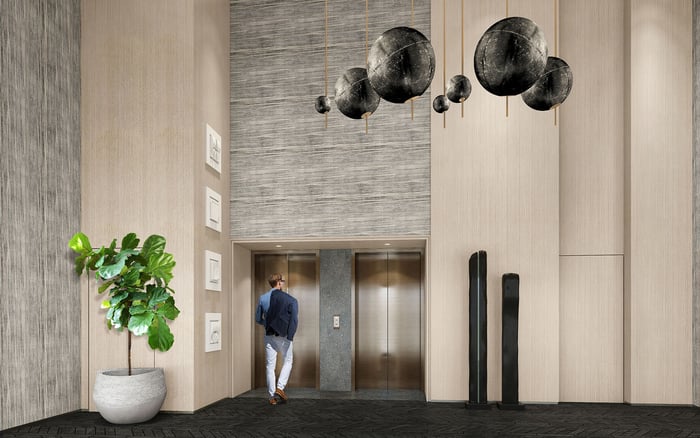
In a condominium, privacy is not only a matter of walls. It is a matter of vertical circulation. Buyers should ask how residents move from arrival to elevator, from elevator to residence, and from residence to amenities. The fewer awkward overlaps, the more refined the experience.
This is where theatrical security often fails. A conspicuous guard desk can look reassuring, but it does not solve elevator congestion, visible waiting areas, or service traffic crossing the same path as residents. Discreet security feels more like a well-run club: everyone knows where to go, staff recognizes patterns, and the building does not need to over-explain itself.
The due diligence is simple but revealing. Visit at different times of day. Observe whether the lobby is serene or performative. Study whether staff are attentive without hovering. Ask how guests are announced, how deliveries are handled, and how access is coordinated when the owner is traveling.
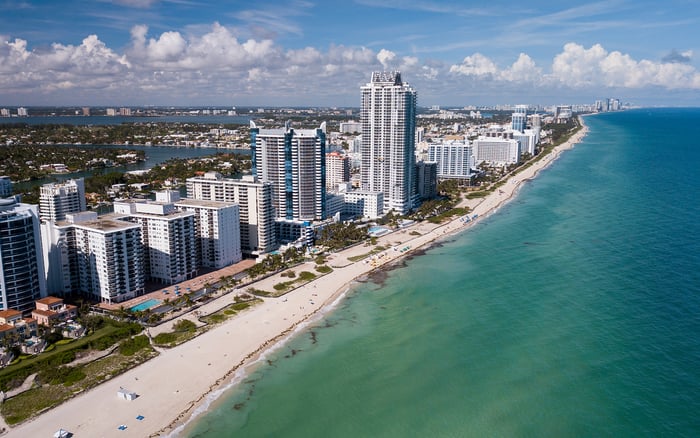
South Florida is not one privacy market. Brickell, Miami Beach, Fisher Island, Sunny Isles Beach, Coral Gables, Coconut Grove, Fort Lauderdale, and Palm Beach each answer the question differently.
Brickell suits the buyer who wants urban convenience with a controlled residential rhythm. Miami Beach offers a more resort-like equation, where privacy often depends on how well the building separates residents from the energy of the surrounding destination. At The Perigon Miami Beach, the buyer conversation should include beach access, guest flow, service routes, and how residential calm is preserved in a coveted coastal setting.
Fisher Island is different again. It appeals to buyers who want geography itself to participate in the privacy strategy. When considering The Residences at Six Fisher Island, the central question is not whether the address feels exclusive in the abstract. It is whether the daily life pattern, arrivals, family logistics, staff coordination, and guest expectations align with the buyer's temperament.
Sunny Isles Beach adds another lens. Its skyline lifestyle places privacy in conversation with height, views, beach access, and valet culture. At Bentley Residences Sunny Isles, buyers should focus their questions on how the building experience supports discretion without interrupting the ease of a beachfront routine.
A house can feel private and still be operationally exposed. A condominium can feel social and still be intelligently protected. The choice between tower and estate should be based on lifestyle, not assumption.
In single-family settings, the term gated community can sound definitive, but it is only the beginning. A buyer should consider street pattern, visitor management, landscaping, lighting, sight lines, staff entry, service parking, and the way a home presents itself from the street or water. An estate that reveals too much from the curb may feel less private than a well-designed apartment in a building with calm circulation.
For families, the issue becomes consistency. School runs, household staff, wellness appointments, drivers, friends, and visiting relatives all create patterns. The best property is not the one that makes every movement difficult. It is the one that makes ordinary movement feel protected without making the household feel watched.
Views sell quickly. Privacy should be studied slowly. Before committing, buyers should ask for a practical walkthrough of the building experience rather than a purely aesthetic tour.
How are guests cleared? How are vendors scheduled? Where do packages go? Can staff access the residence without crossing the primary social spaces? How does the building handle late-night arrivals? Are amenity spaces positioned for relaxation, or do they create unnecessary exposure? Does the residence have a graceful threshold between public and private zones?
The best answers will sound operational, not theatrical. A refined building does not need to promise invincibility. It should demonstrate competence.
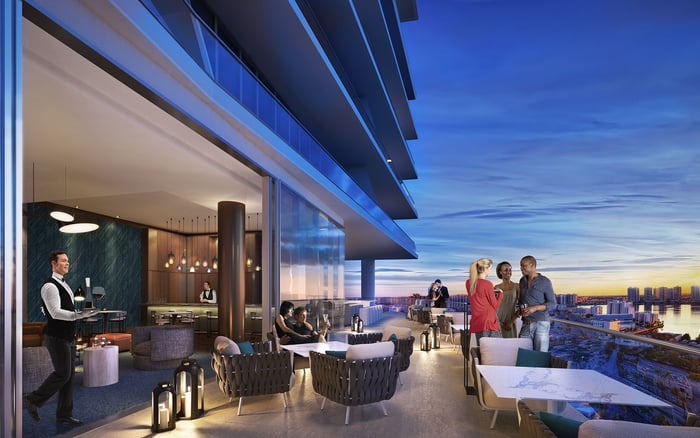
Discreet security is also aesthetic. Heavy visual cues can undermine the ease that luxury buyers want from South Florida. The most persuasive residences use proportion, lighting, landscaping, lobby scale, and staff presence to create reassurance without tension.
Inside the residence, the same principle applies. A thoughtful floor plan creates layers: entry, gallery, entertaining area, family area, private bedroom wing, service zone. These layers allow the household to host, receive staff, and live comfortably without turning every room into a public-facing space.
For the Singapore-to-Brickell buyer, the most successful purchase is not necessarily the most famous address. It is the home where privacy feels cultural, architectural, and operational at once.
What does discreet residential security mean in South Florida? It means privacy is built into arrival, staffing, circulation, and design rather than expressed through obvious visual barriers.
Is Brickell too public for privacy-minded buyers? Not necessarily. The right Brickell building can offer urban access while preserving a calm residential sequence.
Should I choose a condo or a single-family home for better security? Neither is automatically better. The stronger choice depends on daily routines, staffing needs, guest patterns, and tolerance for visibility.
Why is elevator access so important? Elevator planning shapes how residents, guests, staff, and service providers move through a building, which directly affects privacy.
Does waterfront living create extra privacy concerns? It can. Buyers should consider exposure from both land and water, along with lighting, landscaping, and arrival routes.
Are branded residences a good fit for discreet buyers? They can be, especially when service culture supports privacy without making the experience feel formal or overmanaged.
What should I observe during a property tour? Watch the lobby rhythm, valet flow, guest handling, staff demeanor, elevator wait, and how visible residents are during arrival.
Is a gated community always the most secure option? No. Gates help define access, but layout, sight lines, staffing, and household routines matter just as much.
How should international buyers compare neighborhoods? Compare how each area supports your preferred level of visibility, convenience, service, and separation from public energy.
What is the biggest mistake privacy-focused buyers make? They fall in love with a view before studying the operational details that will shape daily comfort.
For a tailored shortlist and next-step guidance, connect with MILLION.
If branded residences are on your mind — as a home or as an allocation — we would be glad to share what we are seeing, privately.
Begin a quiet conversation