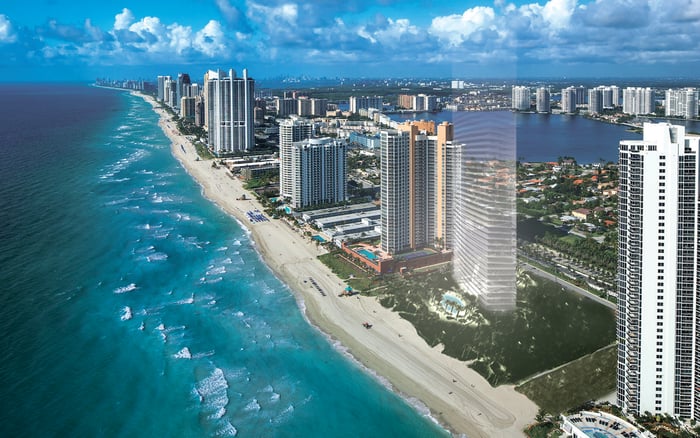
For estate owners moving into South Florida condominiums, staff parking is not a minor operational detail. It can shape daily privacy, household continuity, security procedures, and the true ease of condo living.

For estate owners moving from a gated single-family property into a South Florida condominium, the most meaningful adjustment is often not square footage. It is control. On an estate, household staff can arrive through a private gate, park discreetly, and follow a service rhythm refined over years. In a condominium, that rhythm is shared with a building, a front desk, a valet team, a garage plan, and rules designed for many owners at once.
That is why staff parking protocols deserve attention before a contract is signed. A driver waiting downstairs, a caregiver arriving before sunrise, a chef unloading provisions, a house manager coordinating deliveries, or a personal assistant moving between errands can all depend on access rules that seem invisible during a sales tour. Once daily life begins, those details become highly visible.
In Brickell, the equation can be especially nuanced because urban towers often place a premium on arrival choreography. A buyer considering The Residences at 1428 Brickell should think not only about views, finishes, and amenities, but also about how the building’s access culture will support the household’s actual service patterns.
Estate living usually allows for informal flexibility. A long-serving employee may have a clicker, a known parking area, or a dedicated spot near a service entrance. Guests, vendors, and household staff may never interact with anyone beyond the owner’s own team. Condominium living changes that privacy model. Staff members may need to be registered, announced, valet-parked, escorted, credentialed, or limited to certain entrances and hours.
None of that is inherently negative. A disciplined building can create an elegant, secure experience. The issue is fit. A household accustomed to multiple staff arrivals throughout the day should understand whether the building treats recurring staff as invited guests, outside vendors, or an approved access category. Each interpretation can affect cost, timing, discretion, and convenience.
For South Florida buyers, this conversation belongs beside floor plans and assessments. It determines whether the residence supports the way an owner lives, not simply the way a unit photographs.
The first question is simple: where does staff park? The answer should be specific enough to cover recurring employees, occasional workers, and those who may wait for extended periods. If a driver is expected to remain close to the building, is that permitted? If a caregiver comes daily, is a standing authorization possible? If a chef arrives with groceries, is there a loading protocol that preserves both efficiency and discretion?
The second question concerns timing. Some households operate on early mornings, late evenings, or split shifts. A building may welcome staff access yet still have procedures that make certain hours more complicated. Owners should understand whether overnight parking, repeated daily entries, and long-duration waiting are permitted or discouraged.
The third question is cost. Valet, guest parking, replacement credentials, transponders, and building registration can carry fees or administrative requirements. Even when those costs are modest relative to the purchase, the process matters. A luxury residence should not create daily friction for a household that values seamless service.
In Miami Beach, where many owners divide time between residences, yachts, private clubs, and travel, building teams often become part of the owner’s privacy architecture. At a property such as The Perigon Miami Beach, a buyer should consider how staff access intersects with discretion: who sees arrivals, how names are logged, whether vehicles are staged publicly, and how recurring staff are recognized without constant explanation.
Security procedures can feel formal to someone leaving an estate, but they are central to condominium life. A well-run building protects all residents, and that requires structure. The goal is not to avoid structure. The goal is to know whether that structure supports the owner’s household without unnecessary exposure or delay.
For families with elder care, childcare, medical support, or traveling principals, staff protocols can become more sensitive. A caregiver delayed at the garage, a driver unable to wait nearby, or an assistant uncertain about package and loading procedures can disrupt the quiet efficiency that high-net-worth households expect.
The most revealing example is the private driver. Estate owners may assume a driver can wait, circulate, or park nearby as needed. In a condominium setting, that assumption should be verified. A driver may need a guest parking authorization, a valet arrangement, a nearby off-site plan, or a timed arrival protocol. The best solution depends on the building, the neighborhood, and the owner’s daily cadence.
In Sunny Isles Beach, where vertical oceanfront living often attracts owners with established household teams, the question is not whether the residence feels grand. It is whether the arrival sequence functions grandly. Buyers looking at St. Regis® Residences Sunny Isles should ask how the building anticipates chauffeurs, service providers, and recurring household staff without compromising the serenity of the porte cochère.
A driver protocol should address waiting, communication, vehicle retrieval, guest pickups, luggage handling, and rainy-day arrival. If the building’s answer is vague, the owner should keep asking until the daily routine is clear.
For a certain buyer, staff access is not a preference. It is infrastructure. A residence that accommodates a house manager, caregiver, driver, chef, trainer, and household vendors can feel effortless. A residence that does not can feel restrictive, even if the architecture is exceptional.
This matters for resale because the next buyer in the ultra-premium tier may have similar expectations. Buildings that make daily service easy can appeal to owners relocating from estates, Palm Beach houses, waterfront compounds, or large family residences. Buildings with unclear or inconvenient protocols may narrow their audience, particularly among buyers who travel frequently or rely on year-round household support.
In Fort Lauderdale, where waterfront condominium living often competes with single-family estates, projects such as Four Seasons Hotel & Private Residences Fort Lauderdale invite buyers to compare not only amenities, but also the quality of everyday service logistics.
A sophisticated buyer should review governing documents, parking policies, house rules, valet procedures, guest access forms, and any written guidance for vendors or recurring staff. The review should not be treated only as a legal formality. It should be translated into a day-in-the-life exercise.
Imagine Monday morning. The principal has an early appointment. A driver is downstairs. A housekeeper is arriving. A chef needs access to the service area. A trainer is coming later. A family member has a visiting nurse in the afternoon. If the building can explain how each person enters, parks, waits, and departs, the buyer gains confidence. If the answers depend on exceptions, favors, or informal understandings, the buyer should proceed carefully.
In Boca Raton, where many downsizers come from substantial private homes, the transition can be elegant when the building supports both privacy and routine. A residence such as Alina Residences Boca Raton should be evaluated through that lens: not merely what the owner enjoys, but how the owner’s household operates.
The ideal outcome is not a relaxed rulebook. It is a disciplined building where protocol becomes invisible because it is clear, repeatable, and well communicated. Staff know where to go. Valet knows what to expect. Security recognizes approved access. The owner does not need to intervene every time the household functions.
That is the distinction estate owners should seek in South Florida condominium living. The finest buildings do not just provide amenities. They absorb complexity. They understand that luxury is not only a spa, a pool, or a view. It is the absence of avoidable friction.
Before signing, buyers should ask one final question: will this building make my household easier to run, or will it require me to redesign my life around its limitations? The answer can be as important as the residence itself.
Why should staff parking matter when downsizing from an estate to a condo? Because staff access shapes daily convenience, privacy, and continuity. A beautiful residence can feel inconvenient if household operations are difficult.
Should I ask about staff parking before making an offer? Yes. The earlier the question is raised, the easier it is to evaluate whether the building fits your lifestyle.
What staff roles should be considered? Drivers, caregivers, chefs, housekeepers, trainers, assistants, and house managers should all be included in the access discussion.
Is valet parking always sufficient for staff? Not necessarily. Some staff may need to wait, return repeatedly, unload items, or enter at specific hours.
Can recurring staff be pre-approved by a condominium building? Some buildings may allow standing authorization or registration. Buyers should confirm the procedure in writing before closing.
What documents should be reviewed? Review parking policies, house rules, valet procedures, guest access rules, and any vendor or service-provider guidelines.
Does staff parking affect privacy? Yes. Arrival logs, waiting areas, public staging, and repeated front-desk interactions can all affect discretion.
Is this issue different in Brickell, Miami Beach, and waterfront markets? Each area has a different arrival rhythm, garage context, and service culture. The building’s specific protocol matters more than the neighborhood label.
Should my attorney review parking and access rules? Legal review can be useful, especially when daily staff access is essential to the household. Lifestyle review is equally important.
What is the simplest test before signing? Walk through a real day in your household and ask the building how each staff member would arrive, park, wait, and leave.
For a discreet conversation and a curated building-by-building shortlist, connect with MILLION.
If branded residences are on your mind — as a home or as an allocation — we would be glad to share what we are seeing, privately.
Begin a quiet conversation