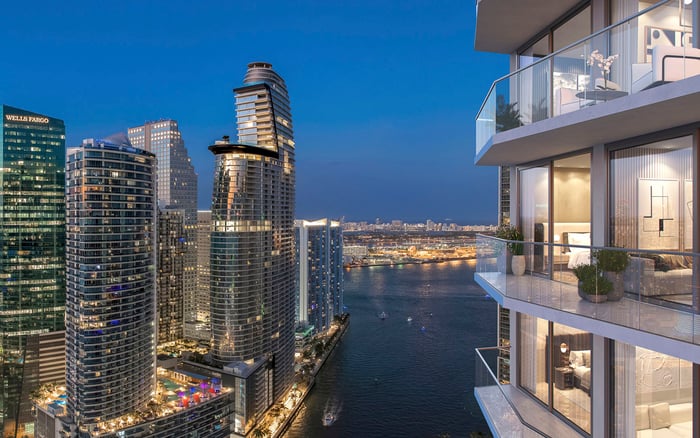
Cash buyers often move quickly in South Florida’s branded residence market, but brand licensing terms can shape services, costs, identity, and future resale positioning. A disciplined review before signing helps protect both lifestyle expectations and investment flexibility.

In South Florida luxury real estate, cash carries a particular elegance. It can simplify negotiations, reduce financing contingencies, and signal certainty to a seller or developer. Yet in the world of branded residences, speed should never be confused with simplicity. The most polished sales gallery, the most recognizable hospitality name, and the most seductive amenity narrative all rest on legal architecture that deserves careful reading.
Brand licensing terms matter because the brand is rarely decorative. It can influence a building’s identity, operating culture, service standards, marketing language, amenity programming, and the emotional premium a buyer is willing to pay. A cash buyer considering a residence in Brickell, Miami Beach, Sunny Isles Beach, or along the broader South Florida coastline should understand whether the brand commitment is durable, conditional, transferable, or subject to change.
The question is not whether a branded address is desirable. Many buyers specifically seek the confidence and lifestyle shorthand that come with a name they already know. The better question is whether the private contract behind that name supports the expectations being sold.
A branded residential building typically involves a relationship between the real estate developer and the owner or operator of a brand. That relationship may cover name usage, design input, service concepts, hospitality programming, marketing approvals, or operational standards. The exact scope is found in the documents, not the brochure.
For buyers, the essential distinction is straightforward. Owning a residence in a branded building does not necessarily mean owning a direct relationship with the brand itself. The brand may license its name to the project under an agreement with the developer or an affiliated entity. The condominium association, unit owners, hotel operator, management company, or future board may have different rights and obligations than a buyer assumes.
This is especially relevant when evaluating addresses associated with global lifestyle and hospitality language, from 888 Brickell by Dolce & Gabbana to Baccarat Residences Brickell. The brand can help define the fantasy, but the governing documents define the reality.
The first clause to understand is duration. A brand license may run for a fixed term, renew automatically, renew only by agreement, or end under certain conditions. A buyer should ask what happens if the license expires, is terminated, or is not renewed. If the building’s name changes, the impact can extend beyond signage. It may affect marketing, services, staff uniforms, digital presence, and resale perception.
The second clause is control. Who decides whether brand standards are met? Who pays for compliance? If a branded lobby, restaurant concept, spa protocol, scent program, or concierge approach requires updates over time, the cost may ultimately reach owners through association budgets or related charges. Cash buyers are often comfortable with premium costs, but they should still understand who has the right to impose them.
The third clause is exclusivity. A brand may have restrictions on nearby competing uses, or it may retain the freedom to appear in other residential, hospitality, or commercial settings. Exclusivity can matter to buyers who are paying for scarcity. It is not enough to assume rarity because a brand feels rare.
The fourth clause is assignment. If the developer sells its interest, if management changes, or if the project structure evolves, the brand relationship may shift. A luxury building’s first impression is usually curated by the developer. Its long-term identity is preserved, or diluted, by governance.
Financed buyers often encounter additional layers of review because lenders scrutinize condominium documents, budgets, insurance, and project structure. Cash buyers may bypass that friction. That can be powerful, but it also removes a form of institutional hesitation that sometimes brings more questions into view.
A cash contract can move quickly from reservation to deposit to binding commitment. In pre-construction settings, buyers may feel pressure to secure a preferred line, exposure, terrace depth, or high-floor residence before availability changes. That urgency is understandable. It is also precisely when a buyer should slow down around brand terms.
In a market where new-construction offerings can carry highly curated lifestyle identities, the review should not stop at floor plans and finishes. Ask for the documents that explain the relationship between the brand, developer, association, and management structure. Then have counsel read them with the same seriousness reserved for title, closing costs, and transfer restrictions.
For many buyers, the purchase is both a lifestyle decision and an investment. Even if the residence is intended as a primary home or second home, future liquidity matters. Resale buyers may evaluate not only the view, plan, and condition, but also whether the building still delivers the branded experience originally associated with it.
If the brand remains visible, respected, and operationally coherent, it may support confidence. If the brand relationship becomes unclear, contested, or diminished, the market may reprice expectations. This does not mean every branded building carries the same risk. It means the buyer should know what supports the brand’s presence beyond opening day.
Consider the difference between buying into a beachfront lifestyle expression in Miami Beach, such as The Ritz-Carlton Residences® Miami Beach, and a vertical automotive-inspired statement in Sunny Isles Beach, such as Bentley Residences Sunny Isles. Each may appeal to a distinct buyer psychology. In both cases, the buyer should understand which elements are contractual, which are aspirational, and which are subject to association or operator decisions over time.
A sophisticated buyer does not need to become a licensing attorney. The goal is to identify where the promise of the brand meets the obligations of ownership. Before signing, ask whether the brand agreement is available for review, even if portions are summarized rather than fully disclosed. Ask who holds the license, who can terminate it, and what owner approvals, if any, are required for major changes.
Ask whether the brand controls service standards after turnover to the association. Ask whether future boards can reduce, modify, or replace branded services. Ask whether branded amenities require mandatory fees, minimum staffing, approved vendors, or capital expenditures. Ask whether marketing restrictions apply when owners resell or lease their residences.
Buyers should also ask how disputes are handled. If the brand and developer disagree, does the owner have any practical voice? If the association inherits obligations, are those obligations clear in the budget and governing documents? The answers may not deter the purchase, but they should inform the offer, timing, and appetite for risk.
South Florida is not one uniform market. Brickell buyers may prioritize skyline identity, walkability, and a polished urban lifestyle. Miami Beach buyers may be more sensitive to privacy, design lineage, and resort-like ease. Sunny Isles Beach buyers often compare waterfront height, views, and international recognition. Broward and Palm Beach County buyers may focus on space, discretion, club culture, or quieter coastal rhythms.
Those local preferences shape how a brand is received. A hospitality name may carry one kind of value in a beach setting and another in a downtown tower. A fashion or design house may resonate strongly with buyers who see the residence as a personal aesthetic statement. A wellness or club-oriented concept may appeal to owners seeking daily ritual rather than occasional spectacle.
That is why the legal review should be paired with a market review. A buyer looking at Rosewood Residences Hillsboro Beach may have different expectations than a buyer choosing a Brickell branded tower. The documents and the location should tell the same story.
Before funds become difficult to recover, create a concise diligence sequence. First, identify the brand’s role in the project. Is it naming, design, management, hospitality programming, or a combination? Second, identify the term of that role. Third, identify the costs associated with maintaining it. Fourth, identify what happens if the relationship ends.
Then move from legal language to lived experience. Which services are mandatory? Which are optional? Which are merely anticipated? What is controlled by the association, and what sits outside it? How will a future buyer understand the same promise when you eventually resell?
For a cash buyer, the goal is not to negotiate every clause in a large-scale condominium program. The goal is to avoid buying a brand assumption that the documents do not support. In the upper tier of South Florida real estate, the name on the porte cochere should enhance the residence, not obscure the diligence.
Why should cash buyers care about brand licensing terms? Cash buyers may move faster than financed buyers, so they need to review brand rights before deposits or contract deadlines reduce flexibility.
Does a branded residence mean the brand manages the building? Not always. Depending on the governing documents, the brand may provide naming, design, service standards, management, or only selected rights.
Can a branded building lose its brand name? It can be possible if the license expires, is terminated, or is not renewed. Buyers should review the consequences before signing.
Are brand-related costs usually part of ownership? They may be reflected in association budgets, service fees, staffing, vendor requirements, or amenity operations. The documents should clarify this.
What should I ask about the brand license term? Ask how long it lasts, whether it renews, who controls renewal, and what happens to the building if the license ends.
Can a future condo board change branded services? It depends on the project documents and contracts. Buyers should understand which services are protected, optional, or board-controlled.
Do licensing terms affect resale? They can. Future buyers may value the residence differently if the brand promise is strong, unclear, reduced, or no longer present.
Should my attorney review the brand documents? Yes. Counsel should review the purchase agreement, condominium documents, budgets, and any available brand-related disclosures.
Is this only important for pre-construction purchases? No. Resale buyers should also understand whether the brand relationship remains active and how it affects ongoing ownership.
What is the safest mindset before signing? Treat the brand as a contract-backed feature, not just a lifestyle signal. Confirm what is promised, who controls it, and who pays for it.
If you'd like a private walkthrough and a curated shortlist, connect with MILLION.
If branded residences are on your mind — as a home or as an allocation — we would be glad to share what we are seeing, privately.
Begin a quiet conversation