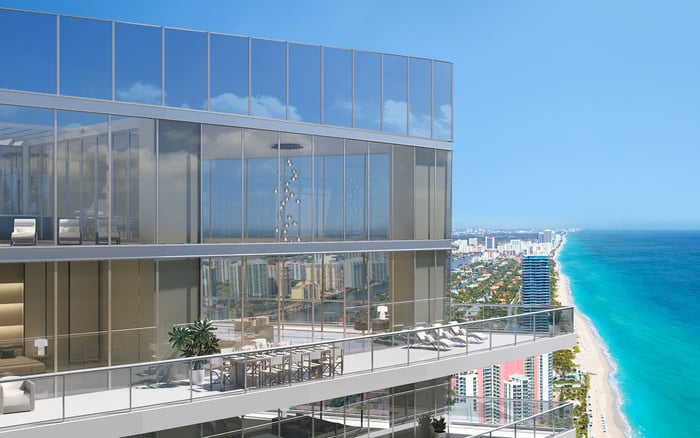
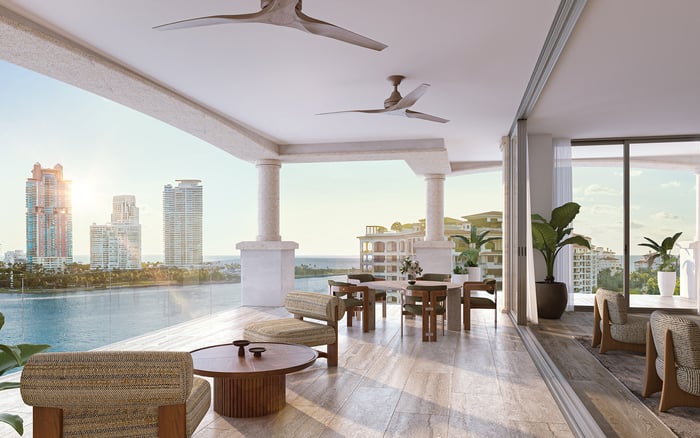
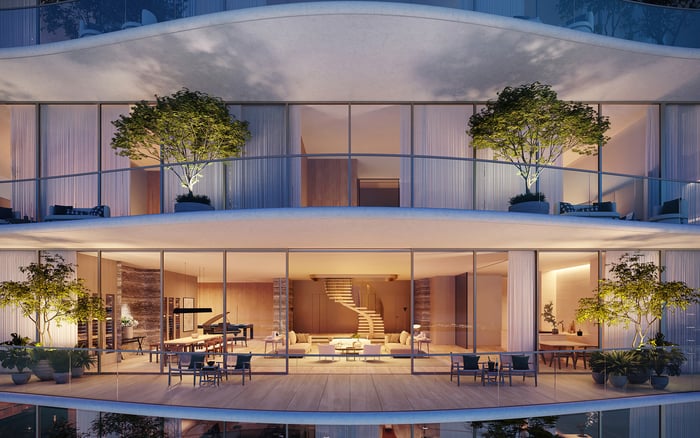
Balcony safety is reshaping how affluent buyers evaluate Miami high-rise residences, turning terraces into measures of engineering discipline, maintenance quality, and long-term livability.
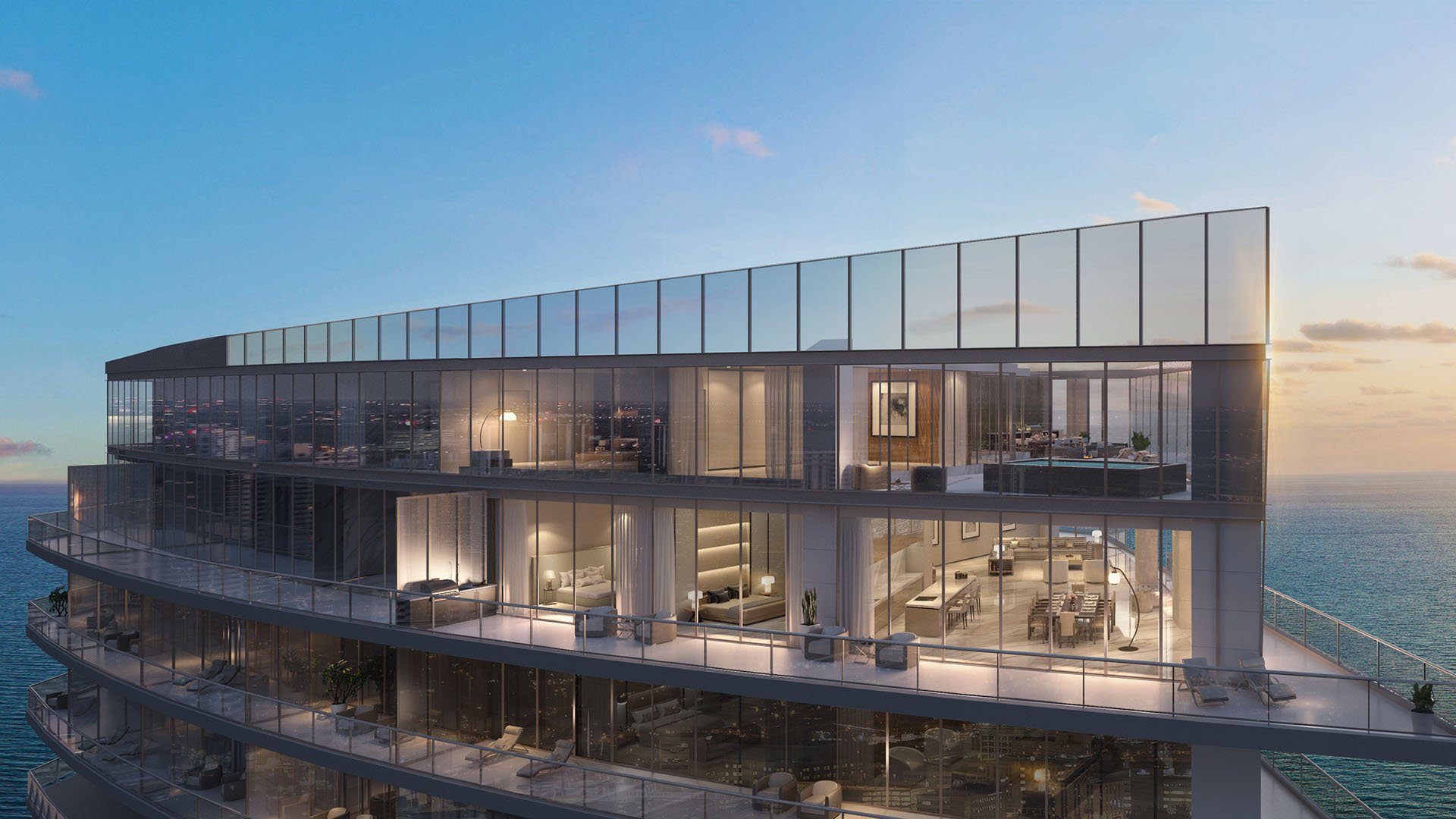
In Miami, the balcony has always been part of the dream: a private threshold between interior calm and the kinetic beauty of water, skyline, and tropical light. Yet in today’s high-rise market, that outdoor room is being evaluated with a more exacting eye. Buyers still want the view, the breeze, and the cinematic arrival of morning over Biscayne Bay. They also want assurance that the space has been designed with discipline.
Balcony safety standards are influencing luxury condo design not as an afterthought, but as a central constraint. The most compelling residences treat the terrace as architecture, structure, weather envelope, and lifestyle amenity at once. That shift is especially visible in Miami, where height, coastal exposure, wind, salt air, and year-round outdoor use converge.
For buyers comparing elite Brickell addresses such as The Residences at 1428 Brickell, the balcony is no longer merely a line item on a floor plan. It is a measure of how thoughtfully a building mediates privacy, exposure, maintenance, and daily life above the city.
A decade ago, luxury balcony discussions often centered on depth, glass railings, and the width of the view corridor. Those qualities still matter, but the sharper question is how the outdoor space performs. Guardrail systems, waterproofing, drainage, transitions at sliding doors, and corrosion resistance are now part of the modern buyer’s vocabulary, even when expressed in lifestyle terms.
The best design response is not to make the balcony feel defensive. It is to make safety invisible, elegant, and fully integrated. A refined terrace should feel effortless underfoot, visually light at the railing, and calm in high-wind conditions. It should invite use without calling attention to the layers of detailing beneath that comfort.
In luxury settings, this often shifts the balance between drama and restraint. Oversized outdoor spaces may be desirable, but their proportions, edge conditions, furnishings, and exposure must work with the building’s structural and maintenance logic. The most successful terraces feel generous without feeling precarious.
The first detail is the edge. Railings, balustrades, and parapet conditions define both the visual experience and the sense of security. In glass-forward design, transparency must be matched by confidence. Buyers should ask how the railing system is maintained, how water is managed at the edge, and how the assembly is expected to perform in a coastal environment.
The second detail is the floor. Terrace surfaces need to be beautiful, but they also need to manage water, heat, cleaning, and long-term wear. Slight slopes, drains, transitions, and thresholds are not glamorous topics, yet they are often where comfort is won or lost.
The third detail is access. A balcony that cannot be easily inspected or maintained may become a future liability. High-end design increasingly considers how exterior components can be reached, cleaned, repaired, and monitored without compromising the privacy or finish level residents expect.
New-construction buyers should be especially attentive to the relationship between marketing imagery and real-world use. Furniture layouts, planting, outdoor kitchens, and artful staging can make a terrace look serene, but the underlying question is whether the space supports daily life in Miami’s climate.
Not all Miami balconies solve the same problem. In Brickell, the terrace is often a private observatory above a dense urban setting. It must balance skyline drama with privacy, sound, and the vertical rhythm of neighboring towers. At St. Regis® Residences Brickell, buyers studying the neighborhood will naturally consider how outdoor space supports a polished city lifestyle rather than only a postcard view.
At branded and design-led addresses such as 888 Brickell by Dolce & Gabbana, the balcony conversation also touches on image. The exterior room has to align with the interior design language, but it cannot be reduced to styling. The most discerning owners will look for terraces that feel cinematic, private, and technically resolved.
Along the oceanfront and in Sunny Isles, exposure becomes more visceral. Salt air, wind, sun, and sea views are part of the allure, but they also make material choices and maintenance culture more important. Buyers considering Bentley Residences Sunny Isles are not simply purchasing height or horizon. They are evaluating how a vertical residence can make outdoor living feel secure, polished, and usable.
Miami Beach introduces another layer: the tension between resort atmosphere and architectural durability. At The Perigon Miami Beach, the broader buyer expectation is that open-air living should feel rarefied, not improvised. The balcony must disappear into the experience while quietly carrying considerable responsibility.
The Surfside tragedy changed how many buyers talk about building safety. In the luxury market, that does not mean every conversation becomes technical, but it does mean the most sophisticated purchasers are less willing to separate beauty from stewardship. They want to understand how a building will be cared for, how exterior elements are monitored, and whether design choices support a long ownership horizon.
This is where balcony standards intersect with value. A terrace may help sell the emotional promise of a residence, but its detailing can influence confidence. In a market where buyers compare towers across lifestyle, service, architecture, and location, exterior-space quality becomes a subtle but powerful differentiator.
The strongest luxury developments do not treat compliance as the finish line. They use safety expectations as a design framework, then layer proportion, materials, privacy, and view choreography on top. That is why the most elegant balconies often feel quiet. Their sophistication is not in spectacle, but in resolution.
Before committing to a high-rise residence, buyers should study the balcony as carefully as the kitchen or primary suite. Ask what materials are used in exposed areas, how water leaves the terrace, how railings are maintained, and whether the association or ownership documents clarify responsibilities for exterior elements.
It is also wise to look beyond the first impression. Visit at different times of day when possible. Notice wind, sound, glare, and privacy. Consider whether furniture placement feels natural or forced. A beautiful balcony should not require constant compromise to be enjoyed.
For investors and second-home owners, maintenance clarity is especially important. A terrace that sits unused for long periods still lives in the weather every day. The best ownership experience comes from buildings that make care predictable, and from buyers who understand that outdoor space is a living component of the residence.
Why are balcony safety standards important in Miami luxury condos? They shape how exterior spaces manage height, weather, water, materials, and long-term care. For buyers, they connect lifestyle appeal with confidence.
Does a larger terrace always mean a better residence? Not necessarily. Proportion, privacy, drainage, exposure, and usability can matter as much as raw outdoor square footage.
What should buyers look for at the balcony edge? Study the railing or parapet condition, visibility, perceived sturdiness, and how water is handled near the perimeter.
Why does salt air matter for high-rise balconies? Coastal exposure can affect exterior materials over time. Buyers should ask how exposed components are selected and maintained.
Are glass railings purely an aesthetic choice? No. They influence views and architectural lightness, but they also require careful detailing, cleaning, and maintenance planning.
How does wind affect balcony design? Wind can influence comfort, furniture choices, planting, and the perceived calm of a terrace. High-floor buyers should pay close attention.
Should balcony maintenance be part of buyer due diligence? Yes. Understanding inspection access, cleaning protocols, and responsibility for exterior elements helps avoid surprises.
Do Brickell balconies differ from beachfront balconies? Often, yes. Brickell emphasizes urban privacy and skyline living, while beachfront terraces must respond more directly to coastal exposure.
Can safety-focused design still feel luxurious? Absolutely. In the best residences, technical rigor is absorbed into proportion, material quality, and a seamless indoor-outdoor experience.
What is the best way to compare balcony quality between projects? Look past staging and compare edge details, drainage, privacy, comfort, and the building’s approach to long-term exterior care.
For a discreet conversation and a curated building-by-building shortlist, connect with MILLION.
If branded residences are on your mind — as a home or as an allocation — we would be glad to share what we are seeing, privately.
Begin a quiet conversation