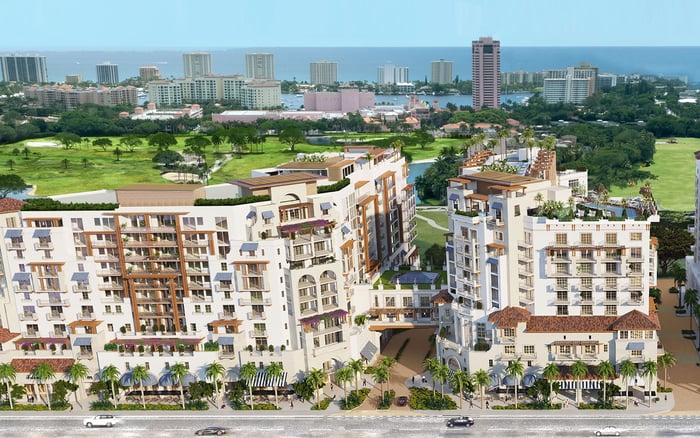
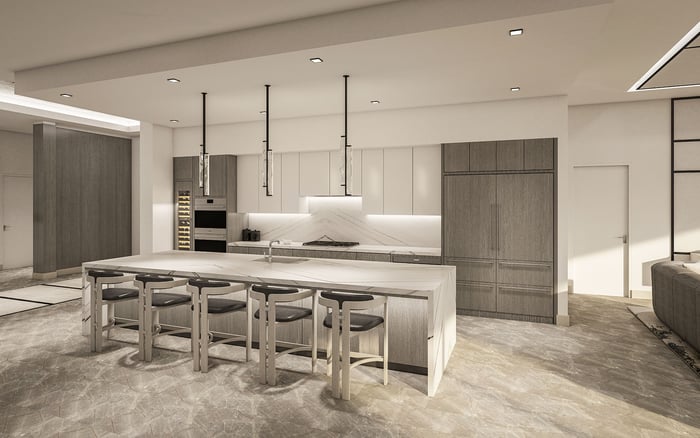
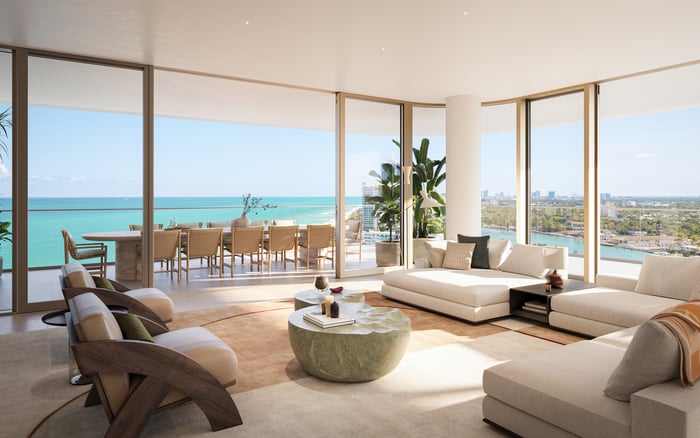
A discreet buyer guide to the tradeoff between private-club convenience and residential seclusion for young families evaluating South Florida luxury homes.
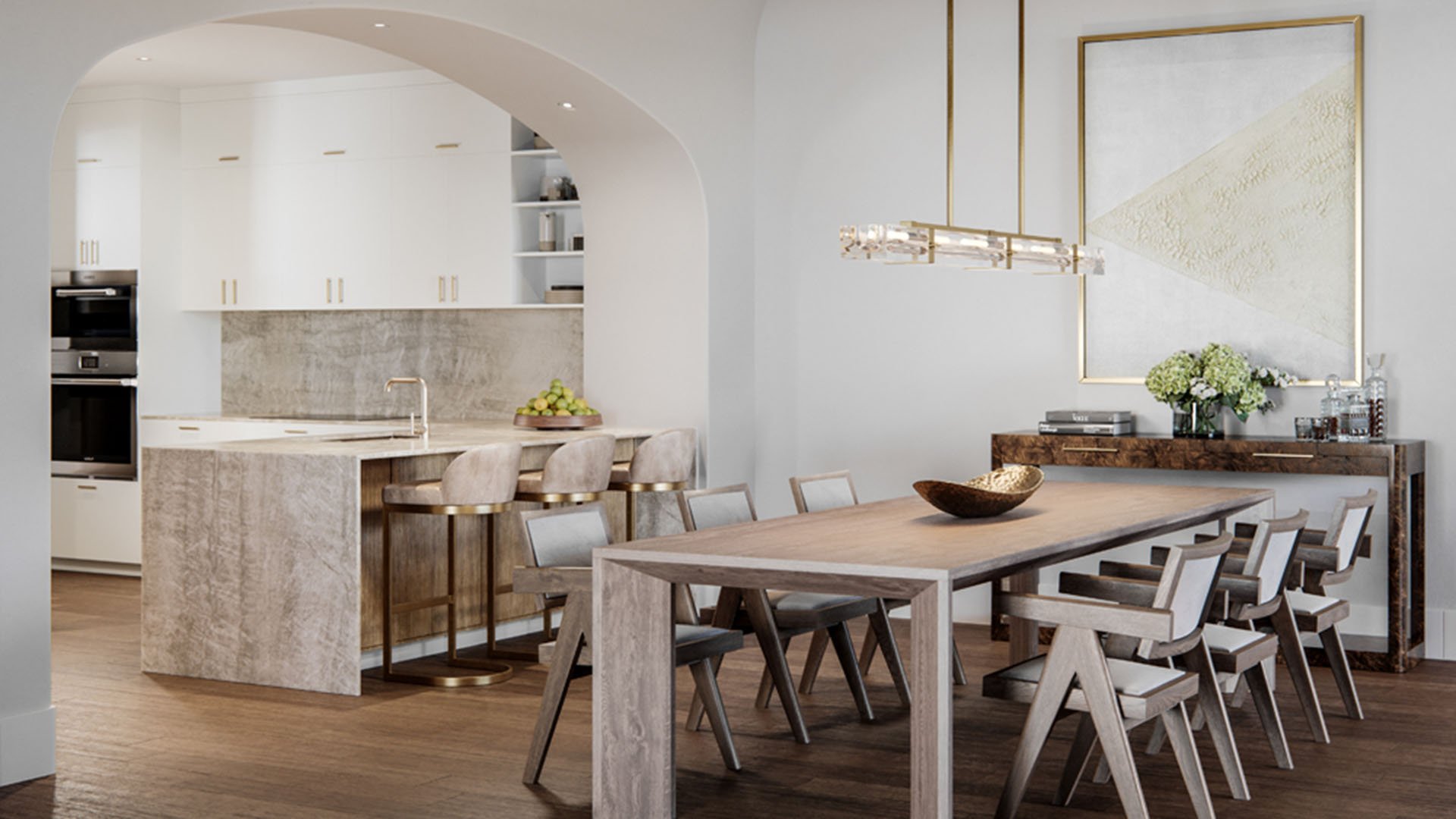
For young families entering South Florida’s luxury market, the question is rarely limited to square footage, views, or finish level. The more consequential decision is whether daily life should orbit a club ecosystem or withdraw into a more private residential setting. Both can be elegant. Both can be expensive. The difference is how the home functions after the novelty fades.
Club adjacency offers proximity to social life, dining, sport, wellness, and a familiar cadence of families moving through similar routines. Privacy offers something less visible but often more valuable: control. It gives parents quieter arrivals, fewer incidental encounters, and a sharper boundary between public life and family life.
The best answer is not ideological. It depends on how a household actually moves through mornings, afternoons, weekends, guests, staff, tutors, grandparents, and travel. In South Florida, where the luxury map includes club-oriented enclaves, waterfront towers, island residences, and garden neighborhoods, the winning address is the one that makes family life feel composed.
Club adjacency can be especially persuasive for families who want structure already built into the week. Young children thrive on repeatable routines, and parents often value places where lunch, lessons, fitness, and casual social contact are close at hand. When the club is part of the family’s real rhythm, proximity reduces friction.
It also creates a form of soft community. The value is not only access, but recognition. Children see familiar faces. Parents can host without staging every detail at home. Weekends become easier to plan because the surrounding environment already contains natural destinations.
This is why buyers considering a club-centered lifestyle may look at addresses such as Shell Bay by Auberge Hallandale as part of a broader conversation about convenience, membership culture, and how close the family wants to be to its recreational center of gravity. The appeal is practical as much as social: less time in transit, fewer fragmented plans, and a lifestyle that can be shared across generations.
Still, adjacency should not be confused with automatic ease. A family should ask whether the energy around the club will feel enriching or exposed. If every arrival is visible, if every weekend requires social stamina, or if parents prefer to choose when they engage, convenience can begin to feel like performance.
Privacy matters most when a family’s daily life is layered. Households with young children often manage school drop-offs, caregivers, deliveries, visiting relatives, physicians, coaches, and friends. A private setting absorbs that activity without making it feel public.
For some buyers, privacy is not isolation. It is the ability to decide when the home opens and when it closes. That can mean a more discreet entry sequence, a quieter residential context, or simply enough separation that family routines are not constantly observed.
Island and estate-oriented settings often sharpen this preference. A family studying The Links Estates at Fisher Island is likely weighing more than prestige. It is considering how a highly private residential environment changes the psychology of arrival, hosting, and childhood. The home becomes less of a social platform and more of a protected base.
This can be especially important for families who are public-facing in business or philanthropy. The more visible the parents are outside the home, the more valuable it can be for the residence to offer stillness. Privacy becomes a form of wellness, not a retreat from community.
The clearest way to evaluate the tradeoff is to ignore the brochure image and model a Tuesday. Where does the car queue begin? How many transitions occur before breakfast? Can a caregiver move efficiently? Is there a place for a child to decompress after school without the home feeling like a lobby?
Families focused on established neighborhood life often compare residential privacy against access to schools, parks, dining, and family services. In this frame, Four Seasons Residences Coconut Grove may enter the conversation not merely as a branded residence, but as an example of how buyers think about Coconut Grove living: shaded, residential, and close to the rhythms many families prize.
Coral Gables presents a different but equally relevant lens. A residence such as The Village at Coral Gables can appeal to buyers who want a more neighborhood-forward interpretation of luxury, where daily life feels grounded rather than resort-driven.
The right question is not whether the address is impressive. It is whether the address lowers the family’s daily temperature.
South Florida’s family luxury market is not a single market. A household comparing Boca Raton with Brickell is often comparing two very different versions of convenience. Boca can signal a preference for residential order and family infrastructure, while Brickell may appeal to parents who want vertical luxury close to professional and urban routines.
A family considering Alina Residences Boca Raton may be drawn to the idea of a polished residential base within Boca Raton’s family-oriented orbit. By contrast, Brickell buyers may accept more urban energy in exchange for proximity to offices, restaurants, and a cosmopolitan daily pattern.
Neither choice is inherently more sophisticated. The distinction is temperament. Some families want weekends to unfold near sport, clubs, and schools. Others want the city close, with privacy delivered through building design, service, and the residence itself. The correct answer is the one that supports the parents’ work life without overexposing the children’s home life.
First, define the household’s privacy threshold. Some families enjoy casual social overlap. Others find it draining. The difference should be acknowledged early, because it shapes everything from amenity usage to elevator comfort.
Second, evaluate the home as a logistics instrument. Luxury is not only marble, water, and ceiling height. It is the ability to move children, luggage, groceries, strollers, sports equipment, and guests without drama.
Third, consider the family’s five-year arc. Toddlers become school-age children. School-age children develop sports, friendships, and independence. The address that feels ideal for a couple may not be the address that works once the children’s schedules become the center of the week.
Finally, separate prestige from peace. Club adjacency can be magnificent when the club is truly used and loved. True privacy can be invaluable when the home must be a sanctuary. The mistake is buying the signal rather than the rhythm.
For young families, true residential privacy often has broader long-term utility, but club adjacency can win decisively when the club is central to daily life. The most refined buyers do not choose one because it sounds more exclusive. They choose after studying the family’s actual pattern.
If the household is socially fluid, sport-driven, and multigenerational, adjacency may create ease that privacy alone cannot match. If the household values quiet, controlled access, and a protected home atmosphere, privacy will usually age better.
The South Florida luxury buyer should therefore ask one final question: does this address make family life simpler, calmer, and more graceful? If the answer is yes, the category matters less than the lived result.
Is club adjacency better for young families? It can be better when the family regularly uses the club for dining, sport, wellness, and social life.
Is privacy more valuable than amenities? Privacy may be more valuable when the household needs quiet, controlled access, and separation from public routines.
Should families prioritize schools before clubs? Families should understand the school-week rhythm first, then decide whether club adjacency improves or complicates that routine.
Does a private setting mean less community? Not necessarily. Privacy controls exposure, while community can still be built through schools, clubs, neighbors, and friends.
Can a condo offer true family privacy? Yes, if the building design, arrival experience, service model, and residence layout support discretion and calm circulation.
What is the biggest mistake buyers make? The common mistake is buying a prestige signal without testing how the address performs during an ordinary weekday.
Is Brickell practical for young families? Brickell can be practical for families that value urban access and accept a more energetic daily environment.
Why do some families prefer island settings? Island settings can appeal to buyers who want a stronger sense of separation, quieter arrival, and residential control.
How should parents compare two very different addresses? They should map school runs, staff flow, guest patterns, weekend habits, and the children’s likely needs over five years.
What matters most in the final decision? The best choice is the address that makes daily family life feel calmer, more efficient, and more private when needed.
When you're ready to tour or underwrite the options, connect with MILLION.
If branded residences are on your mind — as a home or as an allocation — we would be glad to share what we are seeing, privately.
Begin a quiet conversation