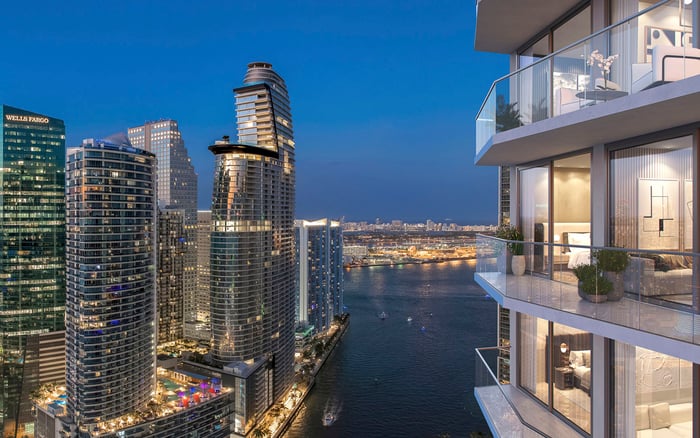
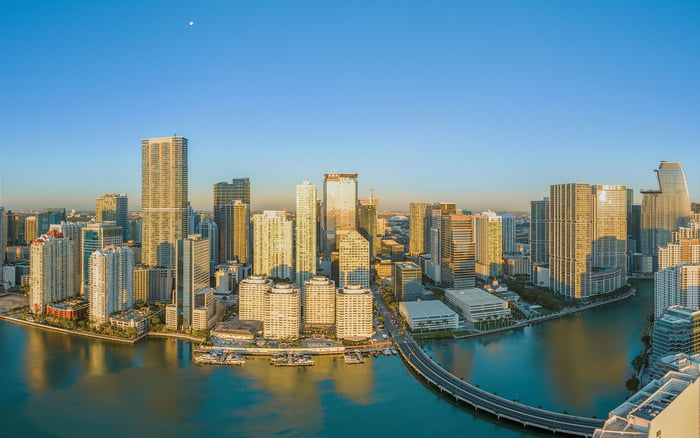
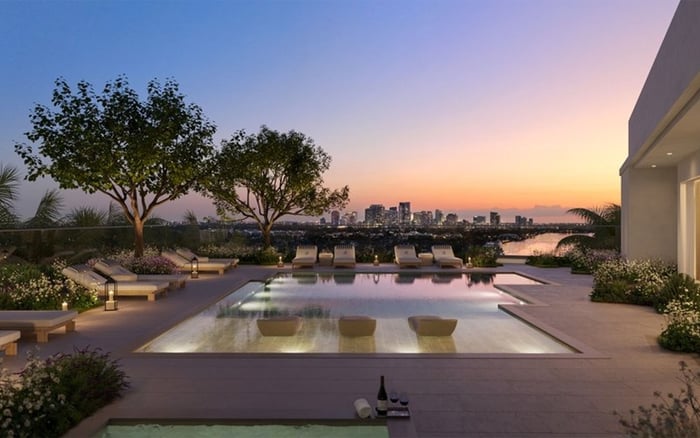
A buyer-focused comparison of Fort Lauderdale beachfront branded living and Mandarin Oriental’s new-generation Miami residence through the lens of technology, privacy, wellness, and service responsiveness.
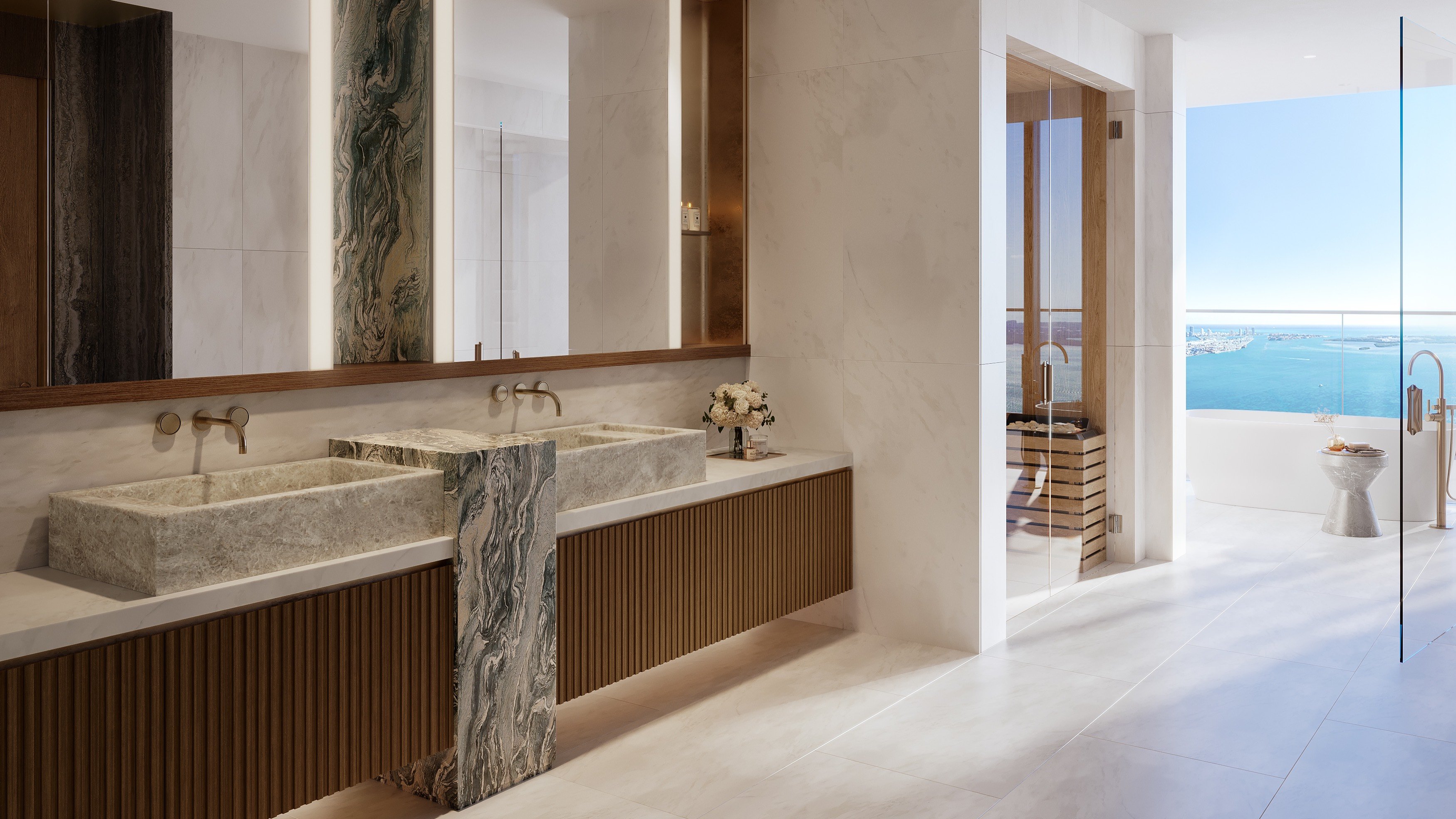
For South Florida’s ultra-prime buyer, the distinction between The Ritz-Carlton Residences® Fort Lauderdale and The Residences at Mandarin Oriental, Miami is not simply a matter of brand preference. It is a question of how daily life is organized, protected, and served.
The Fort Lauderdale side of the comparison speaks to a beachfront hospitality rhythm: arrival, retreat, water, resort culture, and the familiarity of an established luxury-service vocabulary. Mandarin Oriental, Miami, by contrast, is framed as a new-generation, ultra-prime branded residence conceived as an urban island development. The lifestyle is therefore less about stepping into an existing coastal cadence and more about entering a purpose-built residential environment where technology, wellness, and privacy expectations can be considered from the outset.
That is why the conversation has moved beyond marble, ceiling heights, and valet protocol. The sophisticated buyer now asks whether a residence is smart-home ready in a meaningful way, how personal data is handled within branded living, and how quickly service responds when the answer matters.
The most important distinction is that smart-home readiness is not the same as having smart devices. A home can offer automated shades, lighting scenes, climate control, and entry features, yet still feel pieced together if the infrastructure was not contemplated as part of the original residential experience.
Mandarin Oriental, Miami has the advantage of being positioned as a new-build luxury residence and as technology-forward from day one. That matters because integrated automation can be embedded more naturally when the building, residences, and service expectations are conceived together. In a new-generation branded residence, the promise is not merely convenience. It is coherence.
For an established beachfront residence, buyer diligence should focus on compatibility, upgrade paths, service response, and how technology interacts with the physical lifestyle. Does the home support current owner preferences without compromising privacy or simplicity? Can systems evolve without disruptive retrofitting? Can owners preserve a discreet residential experience rather than living inside a constantly shifting technology stack?
This is where buyers also benchmark other South Florida projects. A Fort Lauderdale purchaser may compare the service feel of Four Seasons Hotel & Private Residences Fort Lauderdale, while a Miami buyer may consider the digital expectations surrounding newer urban towers such as The Residences at 1428 Brickell. The point is not to declare one format superior. It is to understand whether technology is foundational or supplementary.
The next frontier in branded residences is not only what the home can do, but what it knows. Access control, guest preferences, service requests, wellness programming, package handling, and smart-home behavior all create information trails. In a private residence, especially at the ultra-prime level, data stewardship becomes part of the value proposition.
Mandarin Oriental, Miami is framed as privacy-aware, which aligns naturally with its wellness-aware and technology-forward positioning. For buyers, that language should prompt sharper questions. What data is collected by building systems? Who can access it? How are service preferences stored? Can a household separate convenience from exposure?
At The Ritz-Carlton Residences® Fort Lauderdale Fort Lauderdale, the privacy conversation should be approached with the same rigor but through a different lens. A beachfront service environment may involve more visible daily touchpoints: arrivals, guests, deliveries, beach routines, car service, and hospitality-style coordination. The buyer’s concern is not only digital privacy. It is behavioral privacy: how effortlessly the residence protects the owner’s patterns, movements, and preferences.
For many South Florida buyers, the search vocabulary is familiar: Fort Lauderdale for a Broward waterfront base, Brickell for a Miami business rhythm, new construction for future-ready design, oceanfront for daily horizon value, and investment for long-term optionality. Privacy now sits across all of those categories.
Service responsiveness is often discussed in vague terms, but it is one of the sharpest differentiators in branded residential living. The question is not whether service exists. It is whether the service model matches the way the owner lives.
A beachfront Fort Lauderdale owner may prioritize immediacy around arrivals, outdoor living, guests, and seasonal use. Responsiveness may mean seamless transitions between residence, water, dining, wellness, and private time. In that world, service is strongest when it is intuitive and nearly invisible.
A Mandarin Oriental, Miami owner may expect a more urban, wellness-aware, privacy-conscious residential rhythm. The urban island profile suggests a different set of priorities: controlled access, curated calm, integrated technology, and a residence that feels insulated from the intensity of Miami while remaining connected to it.
This is also why branded comparisons in Fort Lauderdale are nuanced. St. Regis® Residences Bahia Mar Fort Lauderdale may appeal to buyers studying the next chapter of branded living in the city, while The Ritz-Carlton name carries its own established hospitality associations. The practical question is how each daily service layer responds when the owner’s time, privacy, and comfort are on the line.
The Ritz-Carlton Residences® Fort Lauderdale is best read as a choice for the buyer who wants the emotional clarity of a beachfront lifestyle and the reassurance of a recognized luxury-service environment. The appeal is tactile: water, resort rhythm, coastal ease, and a service culture that should be evaluated through lived experience.
The Residences at Mandarin Oriental, Miami is best read as a choice for the buyer who wants a new-build, ultra-prime, technology-forward residence with a more urban island identity. Its strongest comparison points are integrated planning, wellness alignment, privacy awareness, and the opportunity to treat smart-home readiness as part of the original concept rather than a later enhancement.
For the most discerning buyers, the correct answer may depend less on brand loyalty than on the desired level of friction. Do you want the soft ritual of a beachfront resort address, or the precision of a future-facing Miami residence planned around technology and discretion? Both can be compelling. They simply organize luxury in different ways.
Before choosing between these two lifestyles, buyers should walk through the residence as if they already live there. Test the arrival sequence, elevator privacy, guest handling, service request pathways, package flow, connectivity, lighting control, climate response, and the ease of stepping away from technology when desired.
Ask what is built in, what is optional, what is controlled by the owner, and what is mediated by building staff or third-party systems. In 2026, a luxury residence should feel effortless, but not opaque. The best experience is one where convenience, privacy, wellness, and service reinforce one another by design.
Is this comparison mainly about brand prestige? No. The sharper comparison is between a beachfront Fort Lauderdale service lifestyle and a new-generation urban island Miami residence.
Why does new-build status matter for smart-home readiness? New-build planning can allow automation, infrastructure, and service expectations to be considered from the outset.
Is The Residences at Mandarin Oriental, Miami technology-forward? Yes. It is framed as being conceived from day one with a technology-forward residential outlook.
Does smart-home readiness automatically mean better privacy? Not necessarily. Buyers should ask how systems collect, store, access, and protect personal information.
What privacy questions should buyers ask? Ask who can view service preferences, access logs, guest data, and smart-home settings, and how those permissions are controlled.
How should service responsiveness be evaluated? Focus on real daily scenarios: arrival, guests, deliveries, maintenance, wellness appointments, and urgent in-residence requests.
Which residence is more urban in lifestyle? The Residences at Mandarin Oriental, Miami is positioned as an urban island development with an ultra-prime Miami profile.
Which buyer may prefer Fort Lauderdale? A buyer seeking beachfront rhythm, coastal ease, and an established hospitality atmosphere may lean toward Fort Lauderdale.
Are wellness and privacy connected in this comparison? Yes. A residence that supports wellness should also reduce friction, exposure, and unnecessary digital or physical intrusion.
What is the simplest way to choose between them? Decide whether daily life should feel like a beachfront resort ritual or a technology-forward urban sanctuary.
For a confidential assessment and a building-by-building shortlist, connect with MILLION.
If branded residences are on your mind — as a home or as an allocation — we would be glad to share what we are seeing, privately.
Begin a quiet conversation