In Miami’s luxury condo market, the most practical amenity may be the one guests rarely notice: a service elevator that protects privacy, timing, and daily ease.

In a Miami condo search, the view usually seduces first. Water, skyline, sunset, and height can dominate the early conversation because they are immediate, cinematic, and easy to compare. Yet for a certain buyer, especially one purchasing a primary residence, pied-à-terre, or staff-supported home, the more consequential question may be far less photogenic: how does everything and everyone move through the building?
Service-elevator access sits at the intersection of privacy, order, and time. It affects deliveries, vendors, housekeepers, pet care, catering, repairs, luggage, art installation, and move-ins. It can determine whether daily life feels choreographed or improvised. In a market where many residences already deliver expansive glass, outdoor space, and a water view, operational elegance becomes a sharper point of distinction.
This is not a rejection of the view. It is a recognition that a residence is not lived in from the balcony alone. The best homes preserve the glamour of arrival while quietly absorbing the mechanics of ownership.
A view is static. A building is dynamic. Every day brings some combination of guests, packages, pets, maintenance, wardrobe movement, grocery runs, and service appointments. In a highly serviced lifestyle, these are not occasional interruptions. They are part of the household rhythm.
A well-planned service elevator helps separate that rhythm from the formal experience of the residence. Ideally, the owner’s arrival remains calm, the guest experience remains polished, and the staff or vendor pathway remains discreet. When this separation is weak, even a spectacular outlook can lose some of its practical appeal.
The issue becomes especially relevant in dense vertical living. A buyer may be comparing two residences with similar exposure, ceiling height, finishes, or balcony depth. If one offers a more predictable back-of-house sequence and the other requires everything to pass through the main lobby or primary elevator bank, the choice may become less about panorama and more about daily friction.
Luxury privacy is often discussed in terms of sightlines, elevator landings, doormen, and security. Service access adds another layer: who needs to enter, where they wait, how they move, and what they pass on the way.
For owners with household staff, personal assistants, chefs, drivers, nannies, dog walkers, or regular wellness providers, the distinction can be meaningful. The objective is not hierarchy for its own sake. It is a cleaner operational plan that gives everyone a defined route and reduces accidental overlap.
This matters in markets such as Brickell, Aventura, and Broward, where buyers may be balancing work, family, travel, and entertainment schedules. A tower that handles everyday movement gracefully can feel more private, even if the residence is not the highest floor or the most dramatic line in the building.
The modern luxury household receives more than flowers and luggage. There are grocery deliveries, wardrobe boxes, furniture arrivals, wine shipments, fitness equipment, children’s items, pet supplies, and seasonal storage movements. If each delivery creates a negotiation with the front desk, the elevator, or the timing of other residents, the building begins to feel less effortless.
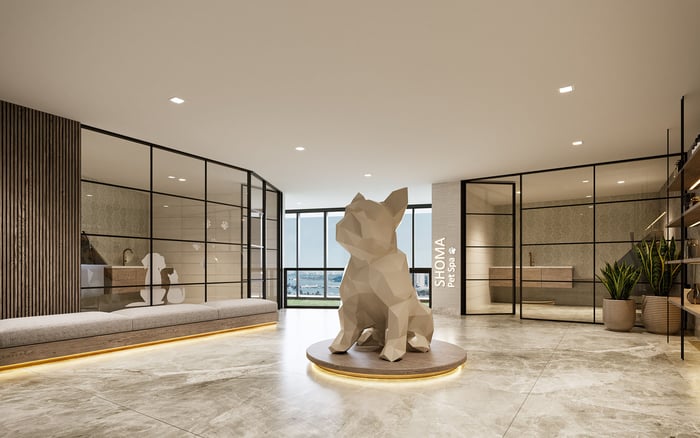
For buyers with pets, service-elevator access can also influence daily comfort. Dog walkers, grooming appointments, veterinary visits, and early morning or late evening routines all benefit from circulation that is practical and discreet. The same is true for owners who host frequently. Catering teams, florists, musicians, and event staff need a route that does not turn the residential entrance into a loading sequence.
On a tour, buyers should ask how large deliveries are handled, whether time windows are required, where vendors check in, and whether the service elevator reaches the relevant residential level. The answer can reveal as much about the building’s true luxury as the finish package.
Many buyers instinctively rank higher floors above lower floors. That instinct is understandable, especially in waterfront and skyline-oriented buildings. Still, the value of height can narrow when the lower or mid-level residence has more efficient access, faster daily movement, or a better relationship to parking, storage, amenities, and service circulation.
For a full-time owner, waiting patterns matter. If the household frequently receives staff, luggage, art handlers, or deliveries, a residence that supports those movements can feel calmer than a higher home with less efficient logistics. This is one reason a buyer might accept a slightly less commanding outlook in exchange for a more disciplined living system.
The calculation is personal. A seasonal owner who visits lightly may prioritize the most memorable exposure. A family using the residence every week may find that operational predictability creates more value over time than a marginally stronger vista.
The most refined condo tours do not stop at the terrace. They trace the path from garage to lobby, lobby to elevator, elevator to residence, and service area to private entry. They also test the realities that renderings and brochures rarely convey.
Ask whether the service elevator is separate from the main passenger elevators. Ask how vendors are approved, where they wait, and whether they can reach the unit without passing through the owner’s principal arrival sequence. Ask how move-ins are scheduled, how protective padding is handled, and whether peak periods create bottlenecks.
For residences with staff rooms, secondary entries, or larger floor plans, ask whether the service circulation aligns with the way the home is actually organized. A service elevator is most valuable when it supports the interior plan. If it opens in an awkward location or requires a long path through formal rooms, its practical benefit may be reduced.
Views are powerful in resale, but they are also easy for buyers to understand quickly. Operational quality requires a more sophisticated eye. When a future buyer recognizes that a residence lives better because of its access, privacy, and circulation, that can support confidence in the decision.
In the ultra-premium tier, buyers often look for fewer compromises rather than one dramatic feature. They want beauty, of course, but also control. Service-elevator access can communicate that a building was designed not only to impress at arrival, but also to function under the pressures of real ownership.
That discipline can be especially persuasive for buyers moving from single-family homes, where staff, deliveries, garages, and service appointments are typically easier to stage privately. A condo that recreates some of that logistical separation may feel more natural to them than a residence that offers an extraordinary view but limited operational depth.
The right decision is not universal. A buyer should weigh service access against view quality, floor height, exposure, noise, building staff, security protocol, parking convenience, amenity access, and monthly carrying costs. The key is to avoid treating service circulation as a secondary detail.
A practical framework is simple: imagine the busiest week of ownership, not the quietest day of the showing. Consider a family arrival from the airport, groceries coming in, a dinner being catered, a dog walker entering, a repair appointment running late, and guests arriving for cocktails. If the building can absorb that week without making the home feel crowded or exposed, the service design is doing its job.
The most desirable Miami condos often succeed because they make life feel unhurried. Sometimes that sensation comes from the waterline at dusk. Sometimes it comes from never seeing the machinery that keeps the household moving.
Why would a buyer choose service-elevator access over a better view? Because daily privacy, deliveries, staff movement, and convenience can shape the ownership experience more than a marginal difference in outlook.
Is service-elevator access only important for very large residences? No. It can matter in any home where owners receive frequent deliveries, use household help, travel often, or entertain regularly.
Should seasonal buyers care about service access? Yes, especially if arrivals involve luggage, stocked kitchens, housekeeping, or vendors preparing the residence before each stay.
Does a service elevator guarantee privacy? Not by itself. The full circulation plan, staff protocol, security procedure, and elevator placement all matter.
How should buyers evaluate service access during a tour? Walk the actual route used by vendors, deliveries, move-ins, and staff rather than relying only on the main arrival sequence.
Can service access affect resale appeal? It can support resale appeal for buyers who value operational ease, particularly those coming from large homes or staffed households.
Is this more relevant in Brickell than in quieter neighborhoods? It can be relevant anywhere, but dense vertical settings make elevator separation and timing especially noticeable.
What should pet owners ask about? They should ask how dog walkers, groomers, supplies, and late-night pet routines are handled within the building.
Can a strong view still outweigh weak service access? Yes. For some buyers, a rare exposure or emotional connection to the view will remain the priority.
What is the best way to shortlist comparable options for touring? Start with location fit, delivery status, and daily lifestyle priorities, then compare stacks and elevations to validate views and privacy.
If you'd like a private walkthrough and a curated shortlist, connect with MILLION.
If branded residences are on your mind — as a home or as an allocation — we would be glad to share what we are seeing, privately.
Begin a quiet conversation