A buyer-oriented framework for assessing how arrival design, elevator permissions, security protocols, and service circulation shape privacy at Forté on Flagler.
At the highest end of the condominium market, privacy is rarely a single feature. It is a chain of controlled transitions, beginning at the street and continuing through arrival, reception, elevator access, residential corridors, and in-home service. A weakness at any point can compromise the experience of the entire building.
For buyers considering Forté on Flagler West Palm Beach, the useful question is not simply whether the property is secure. It is how naturally the building separates residents, guests, deliveries, vendors, and staff without making daily life feel procedural. The best systems are intuitive for residents, discreet for visitors, and difficult for unauthorized users to navigate.
This is where Design & Architecture become operational rather than merely decorative. Door placement, sightlines, waiting areas, reception positioning, and circulation routes can either preserve anonymity or expose residents to unnecessary encounters.
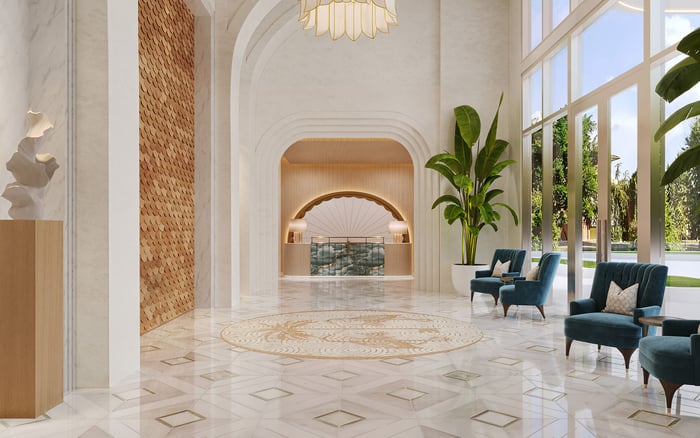
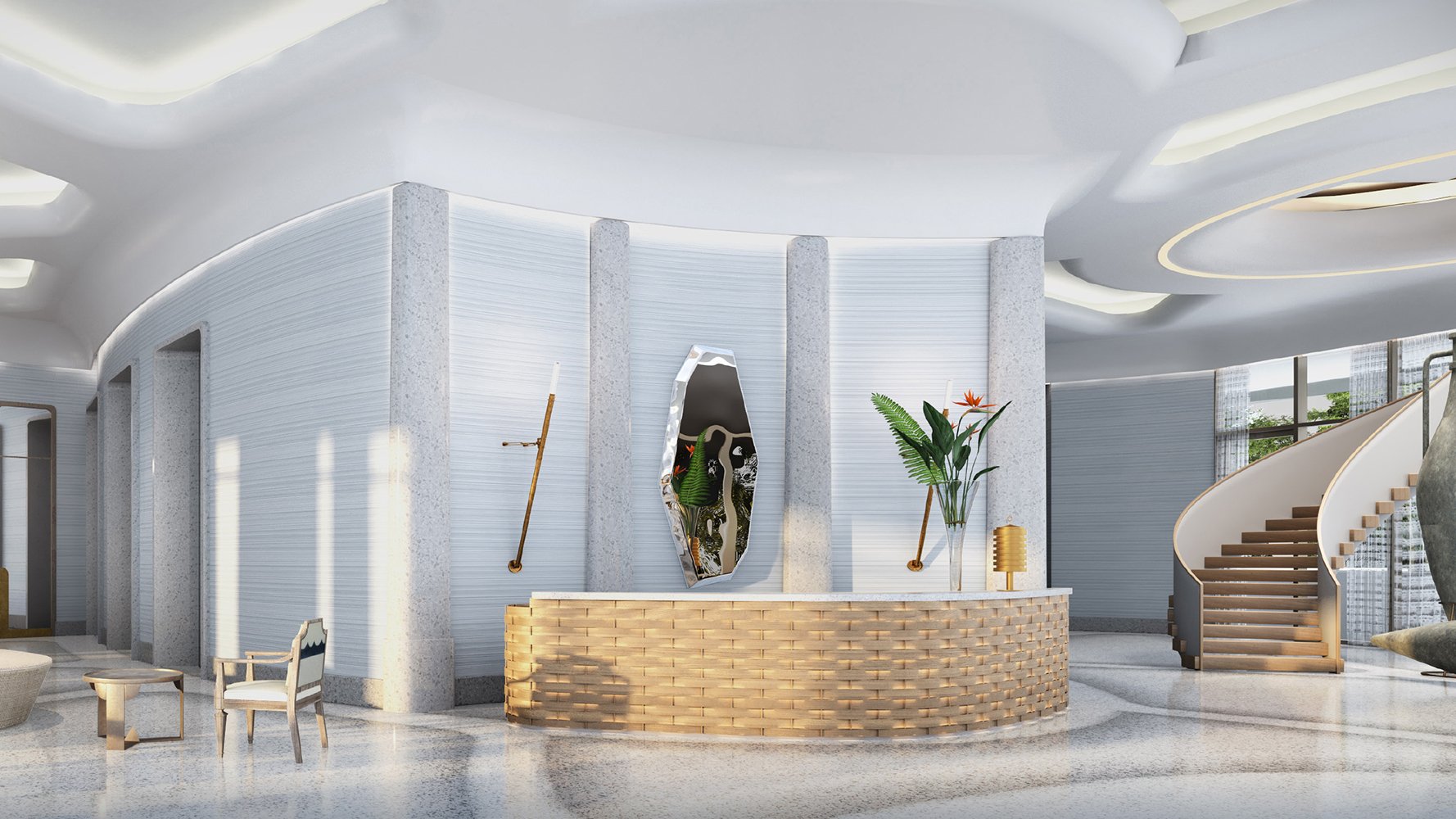
A beautiful lobby establishes the mood, but its privacy value lies in its planning. Buyers should observe whether the entrance creates a direct sightline to the elevator doors, whether visitors can linger near resident circulation, and whether reception staff can supervise arrivals without making the room feel like an obvious checkpoint.
The arrival sequence deserves equal scrutiny. Consider where a resident exits a vehicle, how quickly that person enters a controlled interior, and whether guests, rideshare activity, packages, and service personnel converge at the same threshold. A single grand entrance can be elegant, but multiple carefully managed paths may offer greater discretion.
Ask how visitor identity is established, where an unexpected guest waits, and whether a resident must enter the public lobby to retrieve someone. In a Waterfront setting, buyers should also examine any secondary arrival point connected to outdoor amenities or waterside circulation. Every exterior door forms part of the privacy plan.
Those comparing the Flagler Drive market may also review the arrival logic at South Flagler House West Palm Beach. The point is not to assume equivalent systems, but to compare how each project manages the transition from public frontage to private residential space.
Elevators often determine whether privacy remains theoretical or becomes tangible. The central issue is permission: who can call a car, which floors that user can select, and what happens when residents, guests, staff, and vendors require access at the same time.
A buyer should request a clear demonstration of the complete journey. Can a guest proceed only after resident authorization? Does that authorization expire? Can staff access residential floors without entering resident-facing waiting areas? What is the protocol if credentials are lost, shared, or issued temporarily? These questions reveal far more than a general statement about controlled access.
Private or restricted elevator configurations can reduce corridor exposure, but terminology should never substitute for a floor plan and a clear operating explanation. Confirm the number of residences served by each elevator, the relationship between elevator doors and residence entries, and whether emergency or service routes create alternate access points.
When touring Shorecrest Flagler Drive West Palm Beach or another nearby option, apply the same test. Trace the path of a resident, invited guest, housekeeper, contractor, and delivery. Privacy becomes easier to compare when each journey is mapped step by step.
Cameras, access credentials, intercoms, and staffed desks can support security, but equipment alone does not define a private building. Buyers should understand who monitors the systems, how incidents are escalated, how visitor records are handled, and which procedures govern access during staffing changes or technology interruptions.
Human judgment matters. An effective team recognizes residents while maintaining professional boundaries. It manages recognizable visitors, sensitive deliveries, and last-minute access requests without announcing private information in shared spaces. For Palm Beach households accustomed to domestic staff, drivers, assistants, or personal security, coordination protocols can be as important as physical barriers.
Ask who may view access activity, how permissions are approved, and whether residents can customize standing instructions. It is also prudent to discuss emergency access, wellness checks, evacuation, and first-responder entry. A privacy system must remain safe and functional when ordinary routines are disrupted.
Service circulation is among the least visible yet most consequential layers of privacy. Housekeeping, maintenance, catering, deliveries, and move-ins generate recurring traffic. If those functions repeatedly intersect with the principal lobby and resident elevators, even an elegant Boutique environment can feel exposed.
Buyers should examine loading access, package intake, service-elevator routing, back-of-house holding areas, and the path from the service entry to each residence. The objective is not to hide staff. It is to give every user a dignified, efficient route that minimizes congestion and accidental encounters.
The same analysis is worthwhile at The Ritz-Carlton Residences® West Palm Beach, particularly for buyers comparing different approaches to residential service. Lifestyle expectations should be translated into specific scenarios: a florist arriving before dinner, luggage returning from a trip, a chef bringing supplies, or a contractor requiring supervised access.
Request current plans and written explanations covering entry control, visitor authorization, elevator permissions, delivery handling, and service access. Confirm which elements are physical, which depend on software, and which rely on staff procedures. Also ask whether operating policies can change after residents assume control of the association.
Privacy carries recurring costs. Staffing coverage, system maintenance, credential administration, and package management may affect the operating budget. Buyers should therefore evaluate not only what is proposed, but also how that standard is expected to be sustained.
Finally, visit with ordinary life in mind. Imagine a busy evening, overlapping guests, a large delivery, inclement weather, or an elevator temporarily out of service. A sophisticated privacy plan should remain intuitive under pressure. That resilience is often the clearest distinction between a luxurious presentation and a genuinely private residence.
Does a staffed lobby guarantee privacy? No. Staffing is most effective when supported by controlled circulation, clear authorization rules, and discreet operating protocols.
What should buyers inspect at the main entrance? Review sightlines, waiting areas, reception positioning, door control, and the route from vehicle arrival to the elevator.
Why do elevator permissions matter? They determine who can reach residential floors and whether access is limited by destination, time, or resident approval.
Should buyers ask for an elevator demonstration? Yes. A live demonstration can clarify the journeys of residents, guests, vendors, and staff.
Are cameras enough to create a secure environment? No. Monitoring, response procedures, credential management, and staff training are equally important.
How should guest access be evaluated? Ask how guests are verified, authorized, directed, and accommodated when they arrive early or unexpectedly.
Why is staff circulation important? Thoughtful service routes reduce congestion, preserve discretion, and allow household support to operate efficiently.
What delivery questions should a buyer ask? Confirm intake locations, notification procedures, storage, oversized-item handling, and the route to each residence.
Can privacy policies change after closing? Operating rules may evolve, so buyers should review governing documents and ask how access policies are approved.
What is the best way to compare Forté with other residences? Map the same arrival, guest, delivery, and staff scenarios at every property, then compare the complete sequences.
For a discreet conversation and a curated building-by-building shortlist, connect with MILLION.
If branded residences are on your mind — as a home or as an allocation — we would be glad to share what we are seeing, privately.
Begin a quiet conversation