A buyer-focused look at concierge staff training in South Florida branded residences, from arrival choreography and privacy to amenity readiness and service recovery.
In South Florida’s upper tier of residential real estate, the most meaningful luxury is often not the amenity shown on a tour, but the way a building performs after closing. Concierge staff training has become a quiet differentiator for buyers comparing branded residences, private towers, and high-service waterfront addresses. The discussion around Porsche Design Tower and The Ritz-Carlton Residences protocols reflects a broader shift: owners are looking beyond design pedigree and asking how daily life will actually be managed.
For a high-net-worth resident, service cannot feel improvised. The door team should recognize patterns without appearing intrusive. The concierge should understand preferences without overstepping. Management should resolve friction before it becomes visible. This is where training moves from hospitality language into real estate value.
In markets such as Brickell and Aventura, where buyers may compare multiple high-amenity residences in a single afternoon, service culture can influence the emotional decision as much as view, finish, or floor plan. A polished lobby is expected. A calm, well-briefed staff is remembered.
Hotel service and residential service are related, but they are not identical. A hotel guest arrives for a finite stay. A resident builds a routine, entertains family, receives private deliveries, hosts vendors, and expects continuity across years. Training must therefore focus less on theatrical welcome and more on memory, boundaries, coordination, and discretion.
In a luxury residence, the concierge is not simply a front desk presence. The role sits at the intersection of security, hospitality, lifestyle management, and building governance. Staff must know when to personalize and when to disappear. They must communicate with valet, housekeeping, engineering, management, and amenity teams without making the resident feel that the machinery is visible.
Protocols associated with branded residences matter because they create a shared language for this work. Whether a buyer is considering a car-forward lifestyle concept, a resort-branded residence, or a boutique waterfront building, the central question is the same: can the team deliver consistency when the building is full, when weather disrupts plans, when guests arrive early, or when an owner’s expectations are highly specific?
The arrival sequence reveals more than any brochure can. A trained team understands sightlines, timing, name recognition, guest handling, luggage movement, parking coordination, and elevator flow. None of this should feel rushed. None of it should require the resident to repeat information unnecessarily.
For owners who travel frequently, arrival is not merely ceremonial. It may involve a late flight, a private car, pets, children, luggage, restaurant reservations, and climate-sensitive packages. A strong protocol anticipates the handoff from vehicle to residence. The best teams communicate quietly, confirm essentials, and reduce the number of decisions required at the threshold.
This is why buyers should observe the lobby at different moments of the day. Morning departures, late-afternoon returns, and weekend guest arrivals all test the depth of staff preparation. A building can feel serene at noon and strained at peak demand. Training is what protects the resident experience when conditions are less than ideal.
Privacy is not only a security matter. It is a service principle. In South Florida’s luxury towers, residents may include executives, founders, collectors, entertainers, seasonal owners, and multigenerational families. Their expectation is not anonymity in the abstract. It is control over what is noticed, discussed, repeated, or escalated.
A disciplined concierge team understands that personal details are operational information, not social currency. Guest names, dining preferences, medical deliveries, travel schedules, art handlers, yacht plans, and family routines must be handled with restraint. Training should make discretion reflexive rather than dependent on individual personality.
This is particularly important in buildings where lifestyle expectations are expansive. Pool reservations, private dining, spa appointments, terrace events, balcony maintenance access, and vendor coordination all create opportunities for information to move through the building. The better the training, the less the resident must manage the information flow personally.
The most sophisticated residential service teams do not simply answer requests. They understand the building as a living system. They know which amenities require advance preparation, which resident preferences affect timing, how to coordinate with engineering, and how to communicate limitations gracefully.
Pool service is a good example. The surface-level question is whether the deck is attractive. The deeper question is whether staff can manage guest expectations, towel service, cabana readiness, weather changes, maintenance closures, and special requests without confusion. The same applies to fitness areas, spa suites, screening rooms, private dining rooms, dog amenities, children’s spaces, and owner lounges.
Buyers should listen for specificity. Vague promises of white-glove service are less persuasive than clear explanations of how requests are logged, who follows up, how preferences are documented, and how staff are trained to respond when an immediate yes is not possible. Luxury service is not the absence of limits. It is the graceful management of limits.
No residence operates perfectly every day. Elevators require service. Deliveries arrive at the wrong time. Vendors miss windows. Guests misunderstand access instructions. Weather changes outdoor plans. A well-trained staff is defined not by pretending these moments never happen, but by resolving them with composure.
Service recovery should be prompt, factual, and ownership-oriented. Residents should not need to chase multiple departments for a simple answer. They should receive acknowledgment, a realistic next step, and a follow-up. When staff training is strong, even an inconvenience can reinforce confidence because the owner sees that the building has a mature operating culture.
This is where protocols connected to established hospitality brands carry particular appeal. Buyers often perceive brand discipline as a proxy for repeatable standards. Yet even in branded settings, local execution matters. The resident experience ultimately depends on hiring, training, supervision, and daily accountability inside the building.
A serious buyer should treat concierge operations as part of due diligence. Ask how staff are trained, how new team members are introduced to residents, how preferences are maintained, and how privacy is protected. Ask who oversees service standards and how feedback is handled. Ask what happens during peak season, major events, holiday weekends, and storm preparation.
It is also useful to ask how the building distinguishes between owner services and guest services. In a residential setting, the owner’s routine should not be diluted by transient traffic or unclear access rules. The strongest buildings communicate boundaries with warmth, but they maintain them.
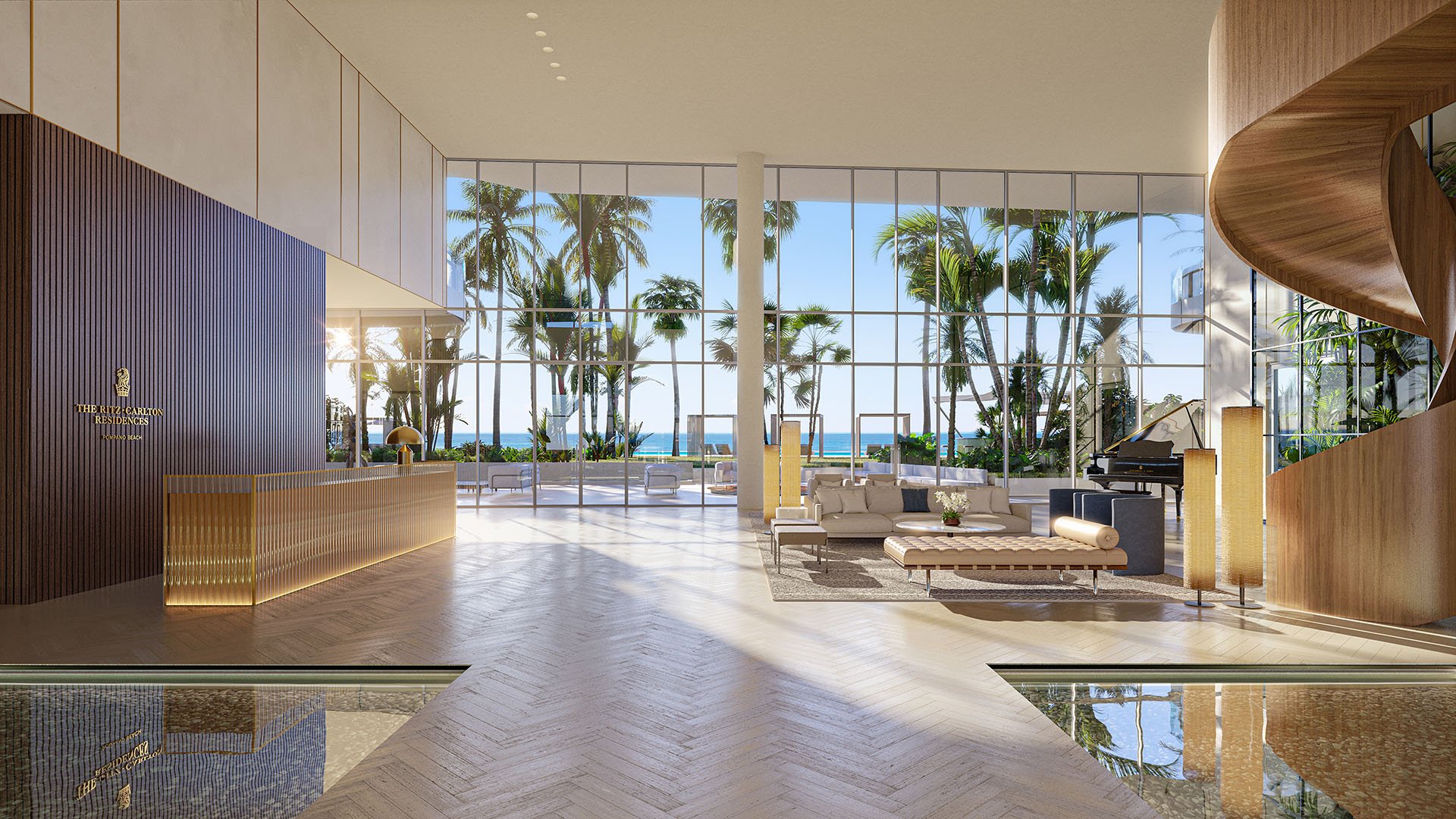
For South Florida buyers, this can be as important as architecture. A waterfront view may sell the first impression, but service shapes the ownership experience month after month. In conversations around The Ritz-Carlton Residences® Sunny Isles, The Ritz-Carlton Residences® Miami Beach, and The Ritz-Carlton Residences® Pompano Beach, the most discerning buyers increasingly want to understand not only what the brand represents, but how the staff experience is translated into daily residential life.
Concierge training is most valuable when it becomes invisible. The resident does not feel a script. The guest does not feel processed. The owner does not need to explain the same preference repeatedly. The building simply seems to know how to behave.
That consistency has market significance. In a luxury cycle where buyers can compare dramatic architecture, branded interiors, wellness amenities, and resort-style programming, operational excellence is harder to photograph but easier to feel. It supports retention, word-of-mouth confidence, and the intangible sense that a residence is professionally cared for.
Porsche Design Tower and The Ritz-Carlton Residences protocols are compelling because they point to the same underlying buyer desire: a home that performs at the level it presents. In South Florida, where the line between residence, retreat, and private club continues to blur, the concierge desk is no longer a background detail. It is part of the architecture of trust.
Why does concierge training matter in luxury condominiums? It shapes the resident’s daily experience through privacy, efficiency, recognition, and reliable problem-solving.
Is branded residence service the same as hotel service? No. Residential service requires longer-term memory, stronger boundaries, and more discreet coordination.
What should buyers observe during a property tour? Watch how staff handle arrivals, guests, packages, valet coordination, and resident questions in real time.
How can a buyer assess privacy standards? Ask how personal preferences, guest information, deliveries, and vendor access are handled by the team.
What is a strong sign of good staff protocol? Staff should communicate clearly, anticipate common needs, and follow up without making service feel heavy.
Do amenities require separate training? Yes. Pool, fitness, dining, spa, pets, and event spaces each require specific coordination standards.
Why is service recovery important? Problems happen in every building, but trained teams resolve them quickly and protect resident confidence.
Should seasonal owners evaluate concierge service differently? Yes. They should ask how the building manages arrivals, absences, vendors, deliveries, and preference continuity.
Can concierge quality affect resale perception? It can support buyer confidence because consistent service reinforces the sense of a well-managed residence.
What is the ultimate benchmark for luxury residential service? The benchmark is a calm, discreet experience in which owners feel known without feeling watched.
To compare the best-fit options with clarity, connect with MILLION.
If branded residences are on your mind — as a home or as an allocation — we would be glad to share what we are seeing, privately.
Begin a quiet conversation