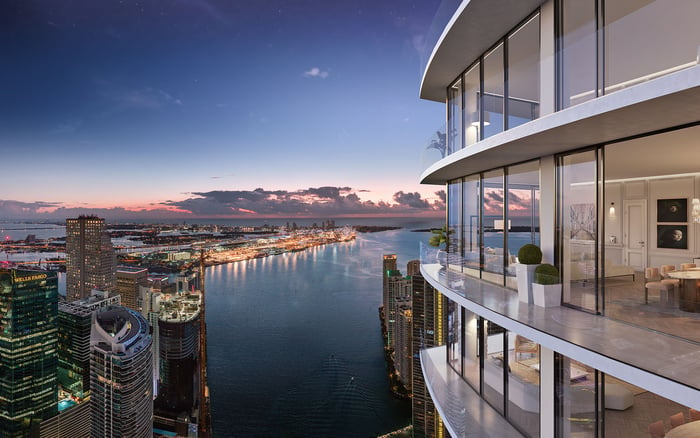
In Miami’s luxury condo market, sophisticated buyers are increasingly weighing water-risk intelligence alongside views, finishes, and amenities. Leak-detection sensors can support peace of mind, asset preservation, and more confident ownership in high-rise residences.
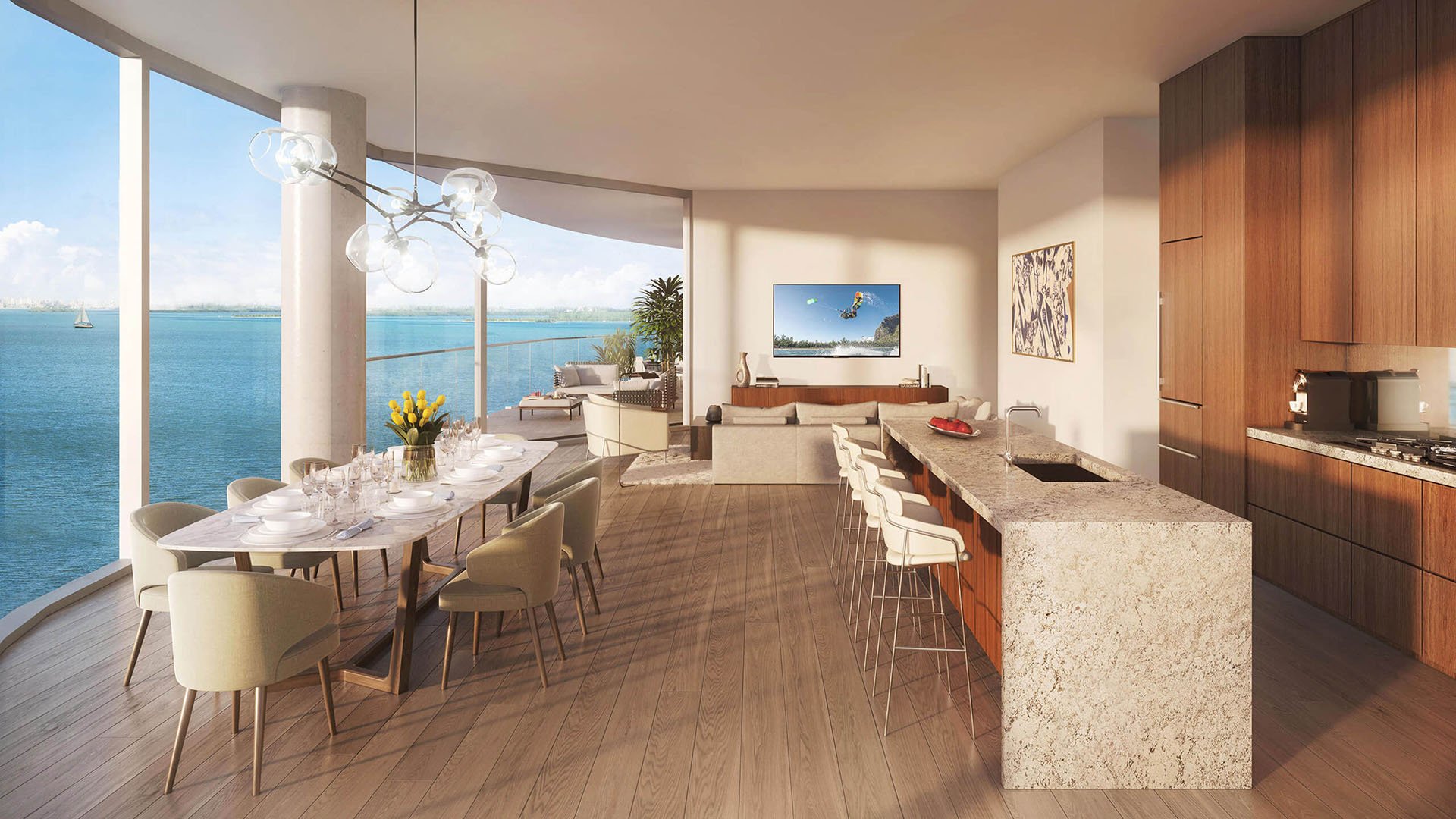
For years, the Miami condominium conversation began with the view. Oceanfront sunrise, Biscayne Bay shimmer, a glittering Brickell skyline, or the long horizon from Sunny Isles all carried a certain emotional authority. A buyer could step into a residence, move toward the glass, and understand the premium almost instantly.
Today, a more technical form of discernment is entering the room. In the ultra-premium segment, buyers are still moved by light, volume, privacy, and outlook, but they are also asking what happens when no one is home. Leak-detection sensors, smart shutoff systems, and water-event alerts are becoming part of the luxury vocabulary because they address a practical truth: a residence is not only something to admire. It is an asset to protect.
This does not mean the view has lost its allure. It means the definition of a superior condo is expanding. The most sophisticated buyers now see invisible infrastructure as part of the finish level, not an afterthought.
A Miami condo can be exquisitely designed and still be vulnerable to ordinary water events. A supply line, appliance connection, air-conditioning component, bathroom fixture, or neighboring residence can create a problem that remains unseen until damage has already begun. In a high-rise setting, water rarely respects ownership boundaries. It can travel vertically, affect adjacent spaces, and complicate responsibility.
For owners who use a residence seasonally, the issue is even more acute. A second-home owner may leave for weeks or months. A small leak that might have been caught quickly in a primary residence can become a major disruption if it occurs in an unoccupied unit. This is where sensors matter. They can alert an owner, property manager, building staff, or designated contact before a minor event becomes a costly intrusion into daily life.
In the luxury category, the concern is not only drywall or flooring. It is custom millwork, stone, lighting, integrated technology, art walls, closets, and furnishings selected over months of design work. A view can inspire the purchase, but protection systems can preserve the experience of ownership.
Views still anchor value in Miami. Buyers will continue to distinguish between direct oceanfront exposure, bay frontage, skyline drama, and interior outlooks. A remarkable balcony can change the way a residence lives, especially when it extends entertaining space or frames the water with cinematic precision.
Yet view premiums are often understood at the moment of showing, while water-risk features reveal their value over time. Leak-detection sensors may not produce the first gasp when the doors open, but they can reduce anxiety after closing. They belong to the same family of decisions as impact-rated openings, backup systems, secure access, quality elevators, and thoughtful building management. They are part of the architecture of confidence.
For the buyer comparing two similarly compelling residences, the one with better monitoring can feel more complete. This is particularly true when the residences are not separated by an extraordinary difference in outlook. A slightly less dramatic view may become acceptable if the home offers more intelligent protection and a clearer ownership protocol.
The essential question is not simply whether leak-detection sensors exist. It is how they function, where they are placed, and who receives the alert. A sensor under a sink is useful, but a broader system may include areas near appliances, mechanical closets, water heaters where applicable, laundry equipment, and other vulnerable points.
Buyers should ask whether the system is individual to the residence or integrated with building operations. They should understand whether alerts go only to the owner’s phone, to a concierge desk, to building engineering, or to a third-party monitoring arrangement. They should ask whether there is an automatic shutoff capability and whether that feature is permitted, maintained, and tested.
The most refined answer is rarely a single device. It is a layered protocol. Technology, staff response, access procedures, maintenance culture, and insurance documentation all intersect. In a competitive new-construction environment, the better buildings will be those that treat these systems as part of the living experience rather than a checkbox hidden in a specification sheet.
In Brickell, the discussion often centers on height, views, walkability, and a polished urban lifestyle. For many buyers, the appeal is the ability to move between residence, dining, wellness, and work with minimal friction. That convenience is amplified when the home itself can be monitored intelligently during travel.
In Miami Beach, where design pedigree, resort sensibility, and proximity to sand shape the search, water intelligence has a different resonance. Buyers may be choosing between historic glamour, new boutique residences, and larger amenity-rich towers. The conversation should include not only what can be seen from the terrace, but how the residence is protected behind the walls.
In Sunny Isles, where vertical living and expansive water views define much of the luxury inventory, the same logic applies at a larger scale. A residence with dramatic glass and sweeping exposure may still benefit from quiet, practical safeguards. The higher the emotional value of the home, the more persuasive it becomes to consider systems that protect the investment during periods of absence.
The modern luxury condo is no longer judged only by what photographs well. Some of its most important attributes are silent: acoustic separation, air quality, elevator programming, service circulation, security, climate control, and now water-event intelligence. These features do not compete with marble, bronze, oak, or glass. They make those materials easier to own.
This is an important distinction for buyers trained to evaluate surface beauty first. A residence can be visually impeccable and operationally fragile. Another can be slightly quieter in its presentation but more intelligently assembled. The latter may offer a better long-term ownership experience, particularly for buyers who travel frequently, maintain multiple homes, or rely on staff and management teams.
The strongest Miami condo search is therefore both aesthetic and forensic. It considers line of sight, ceiling height, floor plan, and natural light, then turns to mechanical rooms, riser walls, appliance locations, and building response standards. The goal is not to diminish romance. It is to protect it.
A useful framework is to separate beauty, livability, and resilience. Beauty includes the view, architecture, finishes, and arrival experience. Livability includes storage, elevator access, parking, privacy, service flow, and amenity use. Resilience includes the less visible systems that support ownership when conditions are imperfect.
Leak-detection sensors sit squarely in the resilience category, but they influence livability as well. They may reduce the burden on owners, estate managers, and family offices that oversee multiple properties. They can also shape confidence during travel, renovation, or seasonal vacancy.
For a buyer deciding between two residences, the question becomes: which home will feel better not only on the day of the showing, but six months later, when the owner is elsewhere and expects the residence to remain protected? In that context, a sensor network can become a luxury feature precisely because it preserves calm.
The Miami buyer does not need to choose between beauty and prudence. The best opportunities often combine both. But in a close decision, the residence with smarter monitoring, clearer maintenance standards, and stronger water-event planning may deserve priority over a marginally better view.
That is a meaningful change in mindset. It suggests that luxury buyers are moving beyond pure spectacle and toward operational excellence. They still want the horizon. They still want the terrace, the light, the arrival, and the sense of place. But they also want a home that behaves intelligently when unattended.
In the end, leak-detection sensors are not glamorous in the conventional sense. They do not define the skyline. They do not sell the dream in a single photograph. Yet they can help protect everything that makes the dream worth owning.
Should leak-detection sensors matter more than a view? Not always. But when two residences are otherwise comparable, better water monitoring can become a decisive ownership advantage.
Are leak-detection sensors only important for older condos? No. New and existing buildings can both benefit from thoughtful monitoring, especially in residences with high-value finishes and frequent owner travel.
What should buyers ask about sensor placement? Ask whether sensors cover kitchens, baths, laundry areas, mechanical closets, and other vulnerable locations inside the residence.
Is an alert enough, or should there be automatic shutoff? Alerts are helpful, but automatic shutoff may offer stronger protection when properly installed, permitted, maintained, and tested.
Who should receive leak alerts? Ideally, alerts should reach the owner and any approved responder, such as building staff, a property manager, or a designated local contact.
Can leak-detection systems affect insurance discussions? They may be relevant to risk conversations, but buyers should confirm details directly with their insurance advisor before relying on any assumption.
Do sensors replace building maintenance? No. Sensors are a supplement to good maintenance, responsive management, and clear access procedures during an emergency.
Should seasonal owners prioritize this feature? Yes. Owners who are away for long periods may benefit significantly from early alerts and defined response protocols.
Does this reduce the importance of oceanfront views? No. Views remain central to Miami value, but resilience can influence which residence feels more complete.
How should I compare buildings on this issue? Ask each building or sales team to explain monitoring, response, maintenance, and access in practical detail before making a final decision.
For a confidential assessment and a building-by-building shortlist, connect with MILLION.
If branded residences are on your mind — as a home or as an allocation — we would be glad to share what we are seeing, privately.
Begin a quiet conversation