For discerning Miami Design District buyers, the most consequential luxury may be operational: a private path from vehicle to residence, supported by discreet elevator access and a valet system designed for real-world demand.
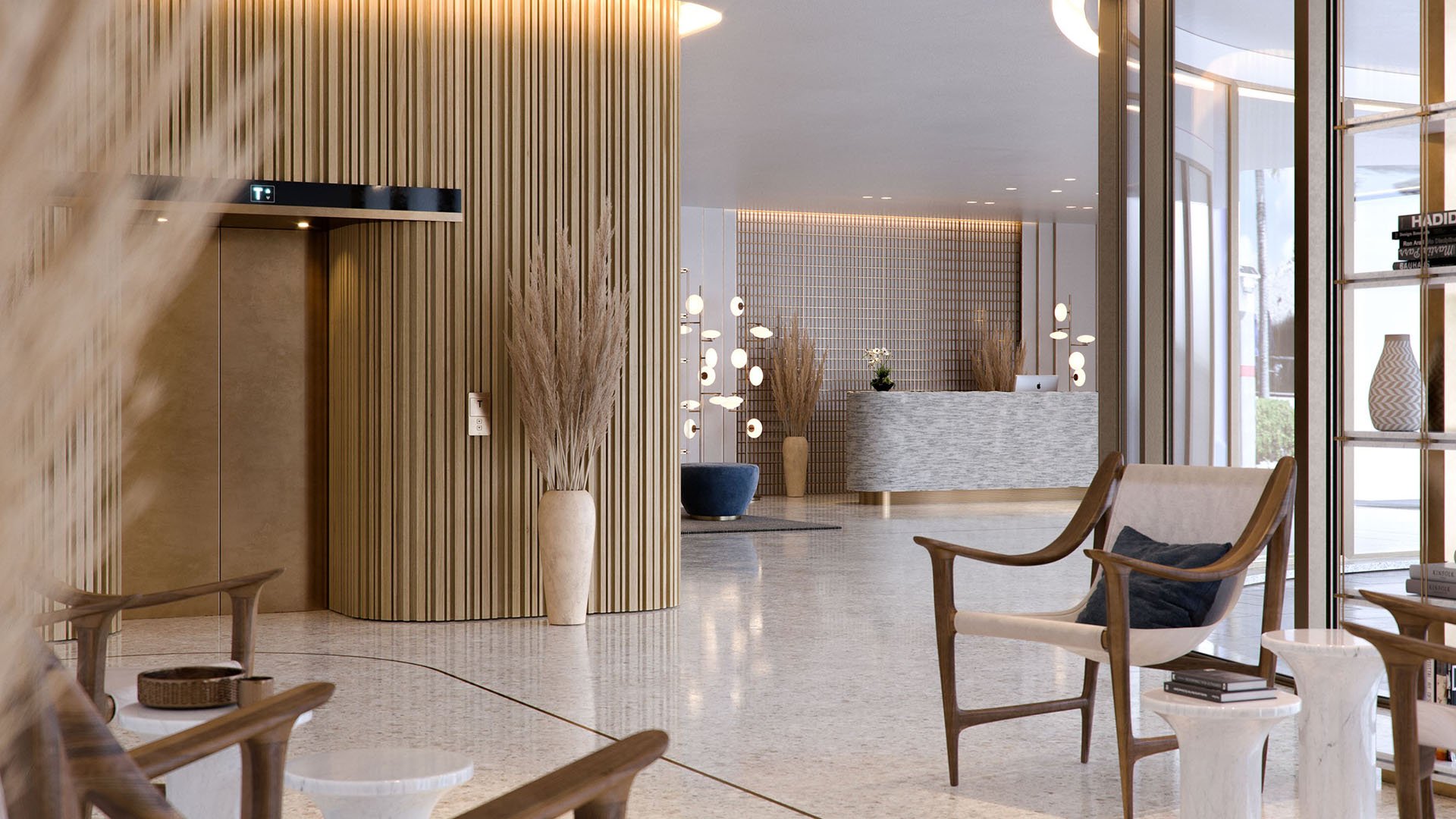
A beautifully composed residence can create an immediate emotional response. Yet for a serious Miami Design District buyer, the more revealing test often begins before the front door opens: How does a resident move from the street to the garage, from the vehicle to the elevator, and from the elevator into the home?
That sequence determines whether luxury feels effortless or merely decorative. Stone, millwork, lighting, and appliances remain important, but many finishes can be refined after closing. Circulation, elevator configuration, loading access, and valet operations are embedded far more deeply in the building. Here, Design & Architecture becomes inseparable from Lifestyle.
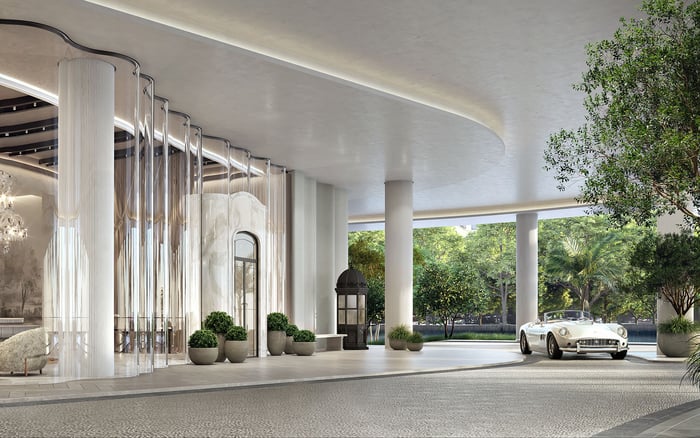
The porte cochere should be assessed as working infrastructure, not merely as a photogenic entrance. Buyers should observe where vehicles queue, whether resident and guest movements intersect, how deliveries are received, and what happens when several cars arrive at once.
A rigorous review follows the actual route: curb, valet handoff, lobby threshold, security point, elevator call, residential landing, and front door. Prospective owners considering Kempinski Residences Miami Design District or Miami Tropic Residences can use this sequence as a disciplined framework for examining plans, presentations, and operating details.
“Private elevator” can describe materially different experiences. The essential question is what is actually private: the cab, the landing, the vestibule, the access controls, or only the final stop. Buyers should ask how residents, staff, guests, service personnel, and deliveries are routed.
Elevator redundancy also warrants scrutiny. If one cab is unavailable, does the alternative preserve privacy and convenience? Ask about anticipated wait times, service-elevator access, move-in procedures, and emergency protocols. In new construction, these matters should be established through governing documents, plans, and written specifications-not inferred from renderings.
Valet service is most valuable when demand is highest. A calm midday tour reveals little about dinner-hour arrivals, private events, guest traffic, rain, or simultaneous vehicle requests. The buyer's task is to understand both capacity and choreography.
Ask where vehicles are staged, how retrieval requests are handled, whether residents can self-park, and how guest, vendor, and delivery traffic is separated. Staffing assumptions, operating hours, garage geometry, and queue management all shape the outcome. A polished uniform cannot compensate for a constrained circulation plan.
Comparing urban residences such as EDITION Edgewater can help buyers refine the questions they bring back to a Design District search, without assuming that different buildings operate alike.
A private landing can serve as a residential buffer, but its value depends on execution. Consider sightlines when the elevator doors open, sound transfer from the cab, camera placement, access permissions, and whether staff can enter the floor without unnecessarily exposing the home.
The strongest arrangement is not necessarily the most theatrical. For many owners, discretion means admitting a guest smoothly, managing a delivery without disrupting the residence, and allowing household staff to move efficiently. Branded residences may present a refined service vision, but buyers should still test the practical division between hospitality and private domestic life.
Finishes deserve close inspection, especially where replacement would be disruptive. Still, buyers should distinguish between visible specifications and fixed building logic. Cabinet hardware, decorative lighting, wall treatments, and some flooring choices can evolve. Elevator cores, ramps, turning radii, garage access, and back-of-house routes generally allow far less flexibility.
This distinction helps prevent a common imbalance: devoting an hour to marble selection while allowing only minutes for the garage and service path. The Residences at 1428 Brickell can serve as another urban comparison point when evaluating how presentation, arrival, and residential circulation are communicated.
The most useful buyer's guides extend beyond residence dimensions and finish schedules. Request written clarification of elevator access, parking rights, valet terms, guest procedures, delivery rules, service routes, and any limitations affecting daily use. Review the relevant documents with appropriate legal and technical advisers.
Then revisit the property with an operational mindset. Walk slowly, note every handoff, and ask who controls each threshold. If possible, evaluate the arrival at a busier time and consider how it would function with children, pets, luggage, household staff, or several guests. Serious luxury is not merely visual consistency. It is the absence of friction when the building is under ordinary pressure.
Why can private elevator access matter more than premium finishes? It shapes privacy and movement every day, while many interior finishes can be changed after purchase.
Does a private elevator always open directly into the residence? Not necessarily. Buyers should verify the cab, landing, vestibule, and access-control arrangement in writing.
What should buyers ask about elevator redundancy? Ask what happens during maintenance, outages, moves, emergencies, and periods of concentrated demand.
How can a buyer assess valet performance before closing? Review staffing and retrieval procedures, then, when possible, observe circulation during a realistically busy period.
Is self-parking preferable to valet service? It depends on the owner's priorities. What matters is confirming whether self-parking is permitted and practical.
Why do service routes matter in a luxury residence? They determine how deliveries, vendors, moves, and household operations occur without compromising the principal arrival.
What should be reviewed in a private elevator landing? Examine sightlines, acoustics, security controls, lighting, door placement, and access for approved personnel.
Can an elegant lobby offset poor vehicle circulation? No. A lobby may enhance the visual experience, but it cannot resolve queuing or inefficient garage access.
Should buyers prioritize arrival flow in a second home? Yes. Intermittent use can make seamless luggage handling, guest access, and vehicle retrieval especially valuable.
Who should help review operational details? Buyers may wish to consult qualified legal, technical, and real estate advisers before relying on representations.
For a confidential assessment and a building-by-building shortlist, connect with MILLION.
If branded residences are on your mind — as a home or as an allocation — we would be glad to share what we are seeing, privately.
Begin a quiet conversation