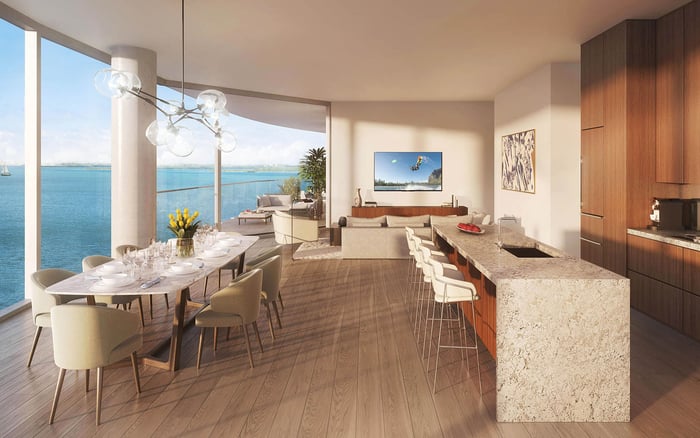
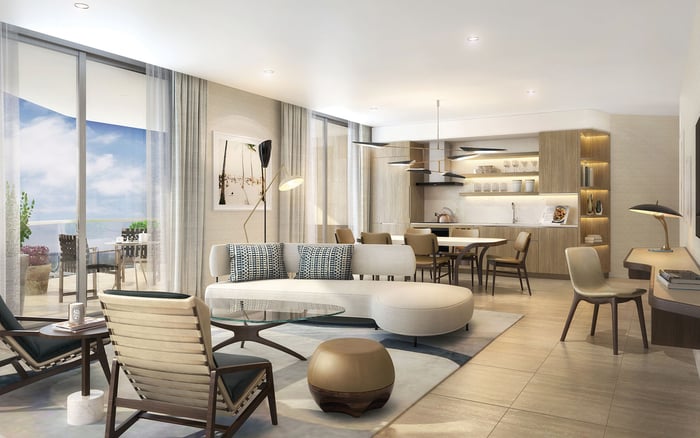
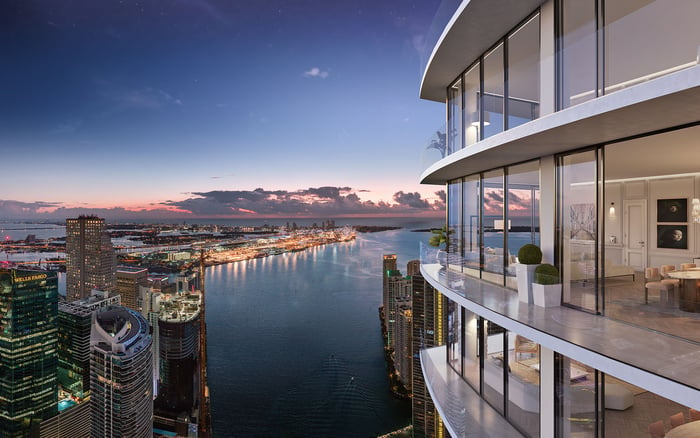
Circadian lighting has become one of the clearest tests of whether a luxury residence is designed around daily life or simply dressed in the language of wellness.
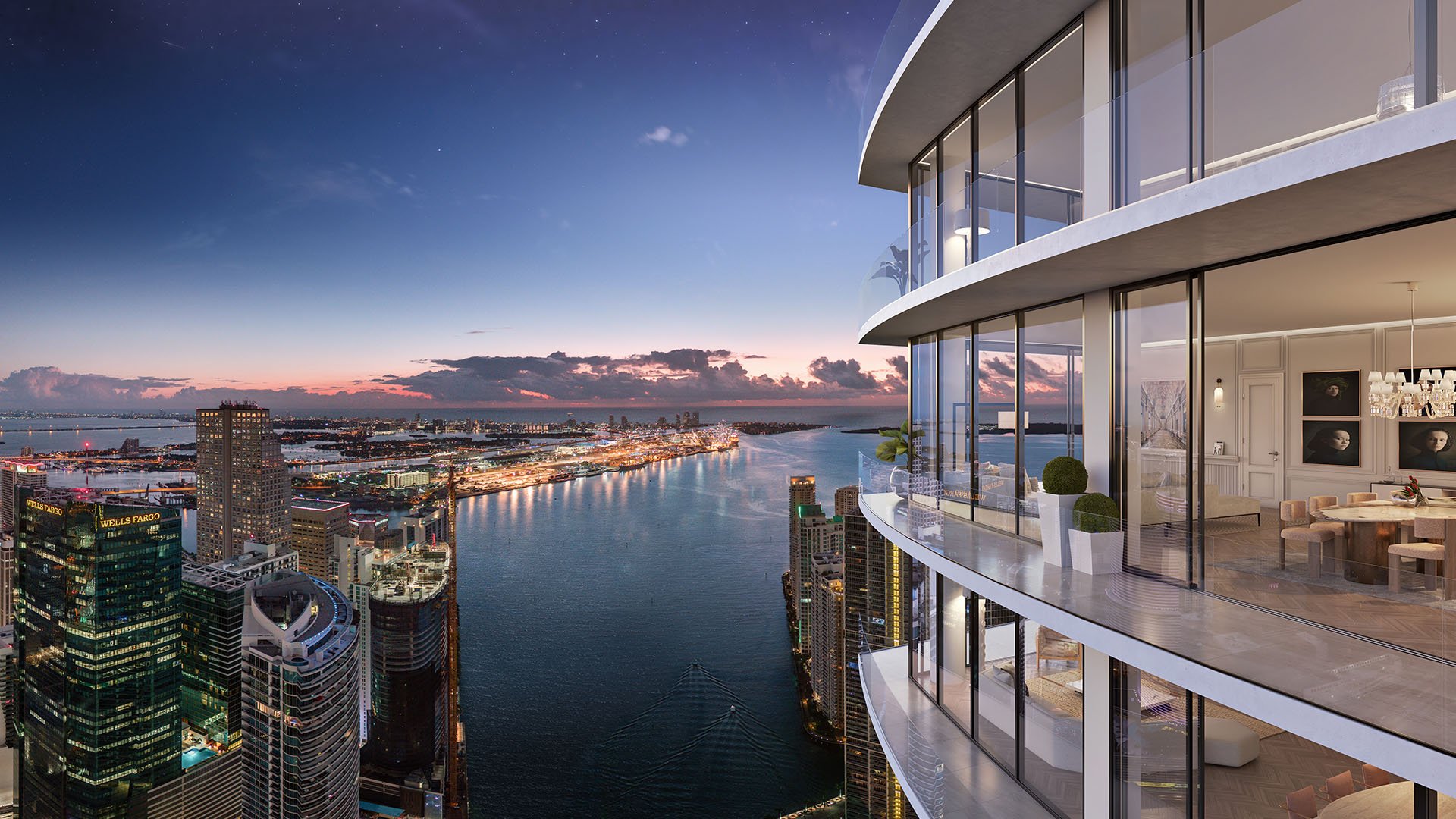
Wellness has become one of the most overused terms in residential real estate, but circadian lighting gives serious buyers a sharper filter. It is not a decorative flourish, and it is not simply a dimmer system paired with warmer bulbs at night. At its best, it is a disciplined approach to light across the day, shaped around comfort, routine, atmosphere, and the body’s preference for predictable transitions.
For South Florida’s ultra-premium buyer, that distinction matters. A residence may offer a spa, a yoga lawn, and a private treatment room, yet still feel harsh at dawn, flat at noon, or overstimulating after dinner. Circadian lighting asks a more intimate question: how does the home behave from the first moment of the morning to the final hour of the evening?
That is where real wellness separates itself from amenity marketing. The strongest residences do not merely advertise wellness. They make daily life feel more composed.
Mood lighting is about ambience. Circadian intent is about sequence. A beautifully lit living room can still be poorly aligned with the rhythm of a household if every scene is treated as theater rather than part of a daylong pattern.
A credible circadian strategy usually begins with layered lighting: natural daylight, indirect architectural light, task lighting, accent lighting, and carefully controlled nighttime illumination. The goal is not to mimic a laboratory. The goal is to give residents a home that can feel crisp in the morning, balanced through the working day, flattering at cocktail hour, and quiet at night.
In luxury design, this requires restraint. Too much technology becomes another form of visual noise. The best systems are often the least visible: integrated coves, softened transitions, intuitive controls, and scenes that support behavior without asking the owner to manage a control panel every hour.
South Florida has extraordinary natural light, but abundance is not the same as wellness. Glare, heat, reflection, and overexposure can turn a luminous residence into an uncomfortable one. Floor-to-ceiling glass may be visually seductive, especially in oceanfront settings, but the experience depends on orientation, shading, materials, and how artificial light responds as the sun changes.
This is especially relevant in high-rise living. A morning-facing bedroom, a west-facing great room, and a deep interior corridor each require different lighting logic. The buyer who understands this looks beyond the view and asks how the home performs across the entire day.
The same principle applies across markets. In Brickell, a residence may need to balance skyline brightness with work-from-home precision. In Miami Beach, glare control and evening warmth can define whether a home feels calm or exposed. In Sunny Isles, where vertical living and water views often meet intense sun, the quality of light can be as important as the quantity of glass.
The first question is whether lighting was planned early or added late. A true circadian approach is difficult to retrofit elegantly if ceiling conditions, wiring, shade pockets, control zones, and fixture locations were not considered from the beginning. New-construction residences have an advantage when the design team coordinates architecture, interiors, glazing, and lighting as one composition.
The second question is control. Can the home shift from day to evening without abrupt changes? Are scenes simple enough for guests and household staff to use? Can bedrooms remain dark when needed, while circulation areas stay safe and softly visible? Does the system respect privacy, sleep, entertaining, and work?
The third question is glare. Luxury buyers often focus on brightness, but glare is the more revealing issue. A room can be technically bright and still uncomfortable. Better residences use indirect sources, warm low-level pathways, controlled task lighting, and shading to create a more civilized experience.
The most refined wellness design often feels ordinary at first because nothing shouts. The hallway is not overlit. The primary bath does not turn a nighttime visit into a stage performance. The kitchen supports preparation without flattening every surface. The balcony remains usable after sunset because exterior lighting is soft, directional, and respectful of the view.
This is the difference between an amenity and a lived advantage. Amenity marketing is easy to photograph. Circadian quality is easier to feel than to capture. It appears in the way a breakfast room wakes gently, a study avoids eye strain, and a primary suite becomes progressively quieter in the evening.
For a second-home owner, the value is also practical. A residence that welcomes the body back into rhythm after travel feels more personal. For a primary resident, the effect is cumulative. The home becomes less fatiguing, less visually aggressive, and more aligned with the rituals that define private life.
The word circadian can be applied too casually. A tunable bulb does not make a residence wellness-driven. A branded control panel does not guarantee a thoughtful sequence. A spa-like rendering does not prove that bedrooms, bathrooms, closets, kitchens, terraces, and service areas have been considered as a complete environment.
Buyers should be wary of vague language that promises healthier living without explaining how the residence handles daylight, nighttime, glare, controls, and room-by-room behavior. The most convincing presentations are specific without becoming theatrical. They show how the home supports morning routines, entertaining, reading, bathing, sleeping, and returning home late.
There is also a difference between feature and infrastructure. A feature can be added. Infrastructure is embedded. In the upper tier of South Florida real estate, that distinction increasingly matters because sophisticated buyers are no longer satisfied with wellness as a mood board. They expect the residence to operate with the same discretion as a well-serviced hotel suite, but with the intimacy of a private home.
Circadian lighting should not be treated as a trend. It is a design discipline that reveals how seriously a residence has considered daily life. In a market where many properties can claim views, pools, gyms, and spa environments, the quality of light becomes a more subtle marker of intelligence.
The best test is experiential. Visit at different times if possible. Notice whether the home feels sharp or soft in the right moments. Observe reflections on stone, glass, and water. Ask whether the primary suite can become truly quiet at night. Consider whether the lighting makes art, skin tones, and materials feel natural rather than staged.
Real wellness is not louder than amenity marketing. It is quieter, more precise, and more durable. Circadian lighting belongs in that category because it touches every room and every hour. When done well, it does not announce itself. It simply makes the residence feel right.
What is circadian lighting in a luxury residence? Circadian lighting is a planned approach to light that supports different parts of the day through changes in intensity, warmth, placement, and control.
Is circadian lighting the same as smart lighting? No. Smart lighting is a control capability, while circadian lighting is a design strategy for how light should behave across daily routines.
Why does it matter in South Florida homes? South Florida’s strong daylight can be beautiful, but it also requires thoughtful control of glare, heat, reflection, and evening transition.
Can circadian lighting be added after purchase? Some improvements can be added, but the most elegant results usually come when lighting, shades, wiring, and architecture are planned together.
What should buyers ask during a showing? Ask how the lighting changes from morning to evening, how bedrooms are protected at night, and how glare is managed in glass-heavy rooms.
Does circadian lighting require visible technology? Not necessarily. The most refined systems often feel seamless, with discreet fixtures, simple controls, and pre-set scenes.
Is warm lighting always better at night? Warm, low-level light is often more comfortable in evening settings, but placement and glare control matter as much as color temperature.
How does lighting affect entertaining? Good lighting can make dining, art, terraces, and conversation areas feel more flattering and relaxed without making the home feel staged.
Should investors care about circadian lighting? Yes, especially at the high end, where buyers increasingly notice whether a residence feels genuinely livable rather than merely photogenic.
What is the simplest sign of real wellness design? The home should feel comfortable at multiple times of day without requiring constant adjustment or calling attention to the system.
When you're ready to tour or underwrite the options, connect with MILLION.
If branded residences are on your mind — as a home or as an allocation — we would be glad to share what we are seeing, privately.
Begin a quiet conversation