A discreet buyer’s guide to the condo amenities that make marina-oriented South Florida living feel practical, elegant, and low-maintenance.
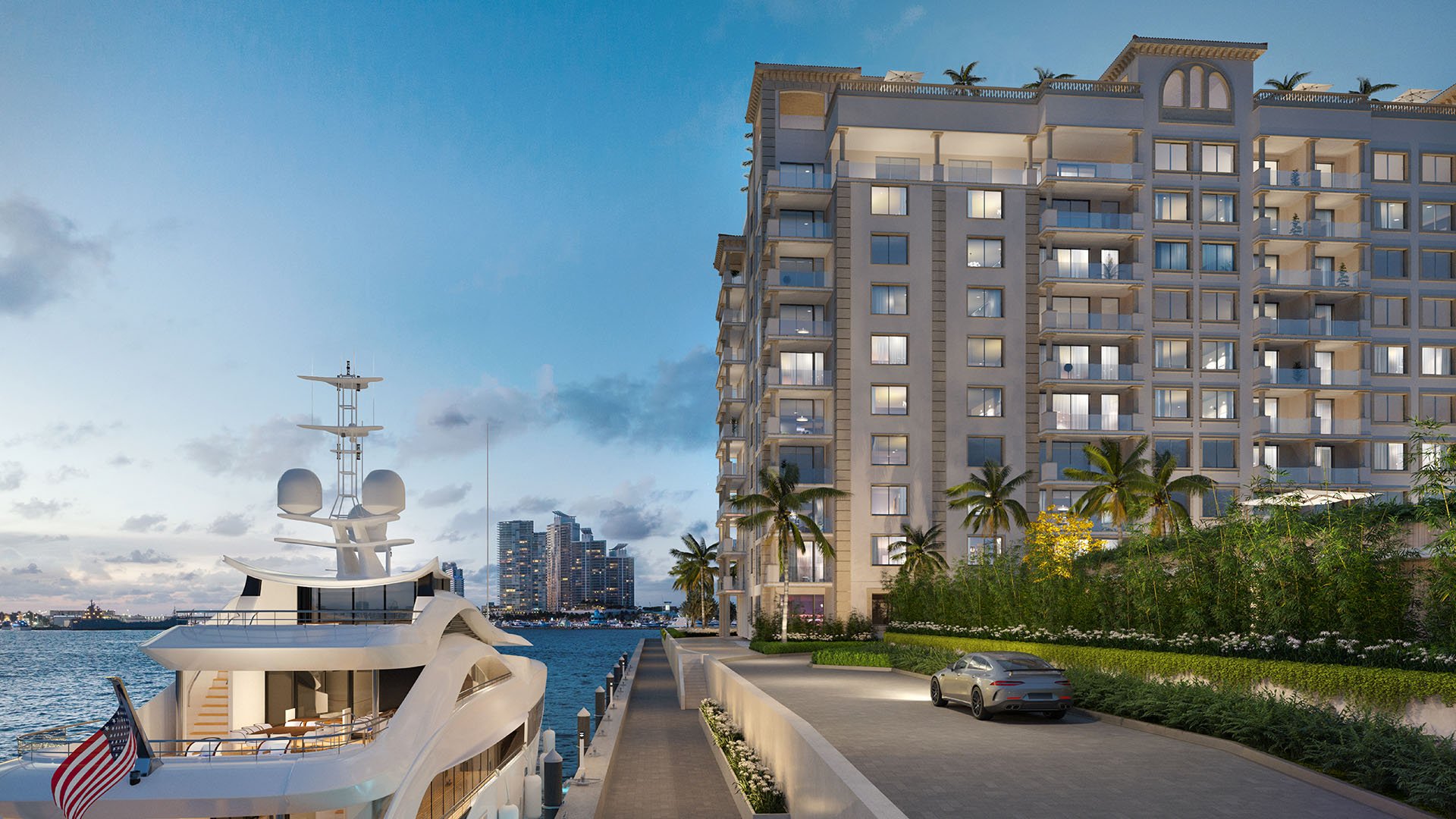
For a certain South Florida buyer, the ideal residence is no longer a sprawling waterfront estate with its own maintenance calendar, staffing concerns, and endless exterior oversight. The more compelling proposition is a highly serviced condominium that keeps the water close while allowing ownership to remain focused on enjoyment rather than obligation.
That distinction matters. Marina access is not simply a view of boats from a terrace. It is a daily lifestyle system: arrival, storage, guest movement, provisioning, weather readiness, and the graceful handoff between residence and water. The most successful buildings understand that buyers want the feeling of a private waterfront compound without inheriting the complexity of one.
For MILLION readers evaluating Miami Beach, Fort Lauderdale, Boca Raton, Palm Beach, and nearby waterfront enclaves, the right amenity package should do more than photograph well. It should make time on the water easier, more secure, and more predictable. The following five amenities are the ones that most directly support that ambition.
1. Dedicated marine concierge - arrival and departure control
A true marine concierge is the amenity that turns marina adjacency into a usable lifestyle. The role is not decorative. It gives residents a single point of contact for coordinating arrivals, departures, guest instructions, deliveries, and the many small details that otherwise fall to an estate manager or owner.
For buyers accustomed to private homes, this is where the condominium model becomes powerful. Instead of managing staff, vendors, gates, docks, and schedules independently, the resident benefits from a professionally organized service layer. The difference is especially meaningful for second-home owners, frequent travelers, and families who want boat access to feel spontaneous rather than operational.
2. Boat-slip access - practical proximity to the water
Boat-slip access remains the most direct marina-supporting feature, but it should be evaluated with care. The question is not only whether a slip exists, but whether the broader residential experience makes time on the water feel seamless. Secure pedestrian movement, efficient loading areas, guest circulation, and building-level coordination all influence how often the amenity is actually enjoyed.
A boat slip is most valuable when it supports the rhythm of condominium living. Residents should be able to move from residence to lobby to water without recreating the burdens of a waterfront estate. In that sense, the slip is only one part of the equation. The surrounding service design is what protects the owner’s time.
3. Waterside valet and loading support - the invisible luxury
The most elegant marina amenity may be the least theatrical: a well-managed loading experience. Towels, day bags, provisions, coolers, equipment, flowers, luggage, and guest belongings can all turn a beautiful boating day into a sequence of small chores. Waterside valet support reduces that friction.
This is where condominium living can outperform the single-family estate model. The best version is discreet and anticipatory, allowing residents to move between home and water without managing every transfer themselves. It is particularly useful for owners who entertain often, host visiting family, or use their residence seasonally.
4. Climate-conscious storage - less clutter, better readiness
Marina access creates storage demands that differ from standard residential living. Residents need places for seasonal gear, water-related accessories, luggage, outdoor cushions, and the practical objects that accumulate around a coastal lifestyle. Without organized storage, even the most refined residence can begin to carry the burden of a utility room.
A strong storage program protects the interiors and preserves the calm of the home. It also reduces dependence on an estate garage, separate storage unit, or staff-managed outbuilding. For buyers prioritizing new construction, this amenity should be considered part of the architecture of ease, not an afterthought.
5. Resort-caliber waterfront social spaces - lifestyle without upkeep
Pool decks, shaded lounges, private dining rooms, wellness terraces, and waterfront seating areas matter because they extend the marina lifestyle beyond the boat itself. Not every day on the water requires a departure. Sometimes the appeal is simply being near the water, receiving guests, watching the harbor, or enjoying the view without maintaining the grounds that make it possible.
This is where waterview living becomes more than a line item. The right shared spaces can deliver the emotional reward of a waterfront estate while placing landscaping, furniture care, lighting, service, and repairs within the condominium’s professional operating structure. For many buyers, that is the precise balance they are seeking.
The private waterfront estate will always have its audience. Yet it asks something of its owner: attention. Docks, seawalls, roofs, landscaping, exterior lighting, pools, gates, staff, and vendor management all compete for time. A marina-oriented condominium reframes that equation by converting maintenance into managed service.
The buyer is not necessarily downsizing ambition. Often, the buyer is upgrading efficiency. A lock-and-leave residence with marina access can suit the owner who moves between cities, spends part of the year abroad, or prefers to concentrate energy on family, business, travel, and the water itself.
The best buildings understand that privacy and service are not opposites. A refined arrival sequence, attentive staff, controlled access, and calm shared spaces can create a lifestyle that feels personal without requiring estate-scale administration. That is the quiet luxury behind this category.
Begin with use, not image. A glossy rendering of boats outside the window does not automatically translate into a fluid daily experience. Buyers should ask how the building supports the moments before and after time on the water: parking, luggage, deliveries, guest arrival, storage, staff communication, and elevator access.
Then consider the degree of separation between public and private movement. Waterfront settings can attract activity, so the most desirable residences maintain a sense of calm even when the marina is active. Service areas, loading points, and resident-only pathways can make a meaningful difference.
Finally, study whether the amenity package supports both active boating and passive enjoyment. Beach access, a pool, shaded lounges, and refined indoor gathering spaces can matter as much as the dock experience. The more complete the lifestyle system, the less pressure there is for the residence itself to function like an estate.
This category suits buyers who want proximity to water without the operational weight of a private compound. It is especially compelling for families with multiple homes, owners who entertain during season, and international buyers who value reliable service when they arrive.
It also appeals to those who want flexibility. A marina-oriented condo can serve as a primary residence, a seasonal base, or a second home that feels ready on demand. The point is not to replace the romance of waterfront living. It is to preserve that romance while removing unnecessary burden.
In South Florida, that is a powerful proposition. The region’s luxury buyer has become increasingly selective, less impressed by amenities in name only and more focused on how a building actually performs. The difference between a pretty waterfront address and a truly livable one is often found in these operational details.
What is the most important marina-supporting condo amenity? A dedicated marine concierge is often the most useful because it coordinates the practical details that make water access feel effortless.
Is a boat slip always necessary for marina-oriented living? Not always, but direct or well-organized access is important if boating is central to the buyer’s lifestyle.
Why choose a condo instead of a waterfront estate? A condo can provide proximity to the water while shifting exterior maintenance, staffing, and daily upkeep into a professionally managed structure.
Does waterview living add practical value? It can, especially when paired with usable outdoor spaces, strong privacy, and amenities that support daily enjoyment of the waterfront.
What should second-home buyers prioritize? They should focus on lock-and-leave service, storage, arrival coordination, security, and staff responsiveness.
Are marina amenities only for boat owners? No. Many buyers value the atmosphere, views, dining, entertaining, and waterfront rhythm even without owning a boat.
How does storage affect marina living? Good storage keeps gear and seasonal items out of the residence, preserving the calm and polish of the interiors.
What makes waterfront social spaces valuable? They allow residents to enjoy the setting without personally maintaining terraces, gardens, pool areas, or outdoor furnishings.
Should buyers focus on new-construction buildings? New construction can be appealing when the service model, access planning, and storage strategy are thoughtfully integrated.
What is the best way to compare marina-oriented condos? Compare how each building handles arrivals, guest flow, storage, service requests, privacy, and access to the water.
For a confidential assessment and a building-by-building shortlist, connect with MILLION.
If branded residences are on your mind — as a home or as an allocation — we would be glad to share what we are seeing, privately.
Begin a quiet conversation