Elevator wait times are becoming a refined but practical lens for evaluating South Florida luxury residences, especially where privacy, staffing, vertical design, and daily rhythm matter as much as views and finishes.
South Florida buyers have long been fluent in the language of views, ceiling heights, spa suites, arrival courts, service elevators, beach access, club rooms, and private terraces. Yet one of the most revealing questions in a luxury condominium tour is now almost disarmingly simple: how long does it take to get upstairs?
For 2026-minded buyers, elevator wait time is no minor operational detail. It is a proxy for privacy, building density, staffing discipline, service design, and the ease of daily life. In a region where many premium residences are vertical, the elevator is not merely transportation. It is the threshold between the city and the home.
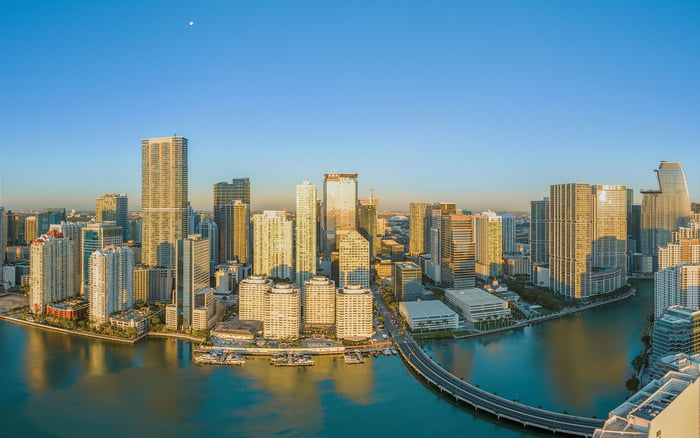
This matters across Brickell, Miami Beach, Sunny Isles, Fort Lauderdale, and other coastal or urban submarkets where buyers often compare high-floor and new-construction residences through the lens of lifestyle. A remarkable home can lose its serenity if arrivals feel crowded, delays are frequent, or service logistics intrude on the resident experience.
Luxury buyers are not measuring elevator performance like commuters timing a platform. They are evaluating emotional friction. A residence may offer a cinematic lobby, but the impression changes if the journey to the private floor feels congested, unpredictable, or overly public.
The elevator experience also reveals how a building is choreographed. Does the lobby allow residents, guests, staff, deliveries, pets, and service providers to move gracefully? Are there separate paths where appropriate? Is there a sense of calm at peak arrival moments? Are private or semi-private elevator arrangements aligned with the price point?
These questions are especially important for buyers who live between multiple homes. A second-home owner may arrive after travel and expect the transition from car to residence to feel seamless. A full-time resident may care even more, because small delays compound into a daily irritant. In both cases, vertical movement becomes part of the real luxury package.
A 2026 filter is less about novelty and more about discipline. Buyers are increasingly separating beautiful buildings from buildings that function beautifully. Elevator wait time belongs in that second category.
Privacy is the first layer. In the ultra-premium segment, buyers often prefer fewer shared moments between lobby and residence. That does not always require a fully private elevator, but it does require thoughtful circulation and a sense that the building has been planned for discretion.
Predictability is the second layer. A residence should not feel different on a quiet weekday morning than it does during dinner departures, school runs, weekend guest arrivals, or service windows. The most compelling buildings anticipate these rhythms rather than forcing residents to adapt to them.
Pace is the third layer. South Florida luxury is increasingly about time ownership. Buyers are paying for access, comfort, design, and service, but also for the feeling that the home removes friction from the day. An elevator system that supports that feeling becomes an invisible amenity.
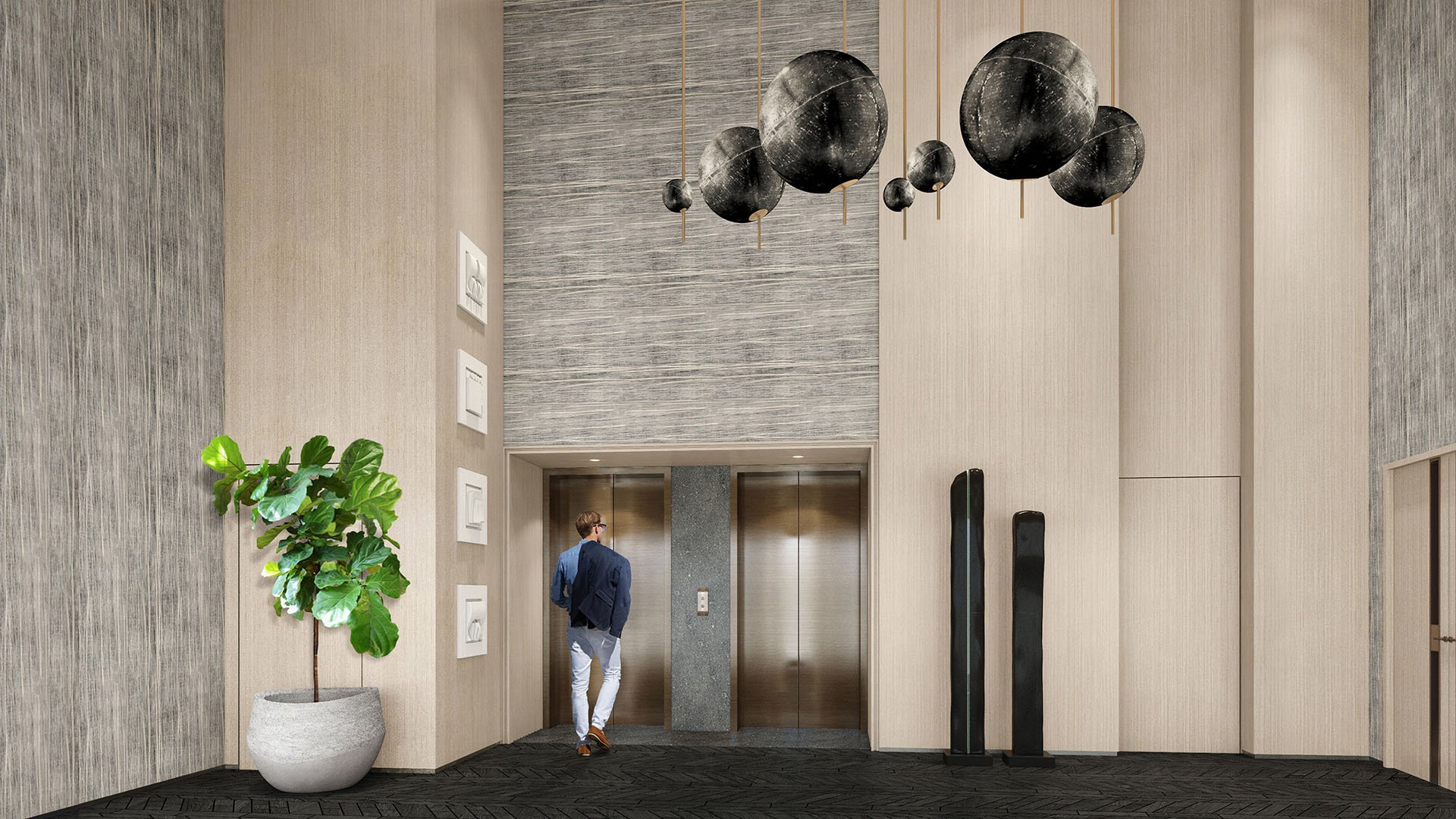
The best test is not a scripted ride at an empty hour. Buyers should pay attention from the moment they arrive. How many people are waiting in the lobby? Are staff members directing flow with ease? Does the elevator lobby feel proportionate to the building? Are residents pausing comfortably, or does the space feel compressed?
Inside the cab, the questions become more sensory. Is the ride quiet? Is the finish level consistent with the rest of the property? Does access feel secure without becoming cumbersome? Do guests move intuitively, or do they require constant explanation?
On the residential floor, the final impression matters. A private landing, limited-corridor arrangement, or composed elevator vestibule can transform arrival into a ritual. Conversely, a busy corridor can undercut the feeling of exclusivity, even if the residence itself is exceptional.
Buyers should also ask how service activity is handled. Deliveries, move-ins, maintenance, housekeeping, pet care, and catering all affect the lived experience of a building. A polished front-of-house environment depends on what has been intelligently separated behind the scenes.
High-floor residences often command attention because of light, outlook, and separation from street-level intensity. But vertical distance creates a practical question. The higher the home, the more elevator design, allocation, and management shape daily life.
A buyer considering an upper-level residence should think beyond the view corridor. How many stops might typically occur before reaching the floor? Are there express or limited-stop arrangements? How does the building handle guests during peak social hours? What happens when one elevator is reserved for service or maintenance?
None of these questions diminishes the appeal of living high above the city or shoreline. Rather, they protect the experience. A spectacular residence should feel effortless to enter and leave. When that effortlessness is absent, the view may still impress, but the lifestyle becomes less refined.
New construction often allows buyers to evaluate vertical living from the beginning, before habits and operating patterns are fully established. Renderings may show serene lobbies and private arrivals, but the buyer’s task is to understand how the building intends to perform after move-in.
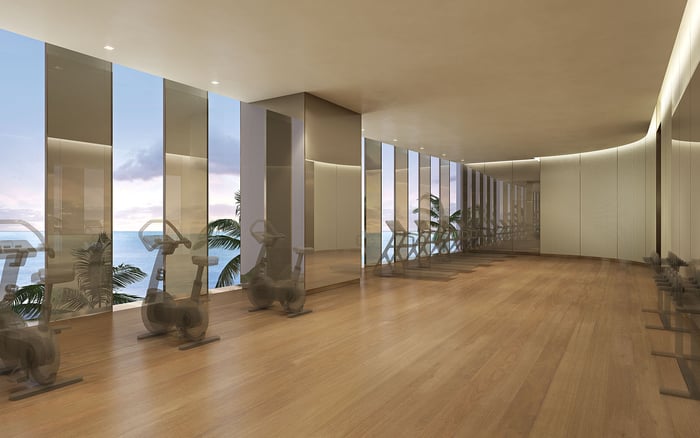
Important questions include elevator count, resident-to-elevator relationship, service separation, access control, and how the property will manage hospitality-level expectations. Buyers should also consider how amenity floors affect elevator demand. A building with active wellness, dining, coworking, pool, and entertainment programming may create different movement patterns than a quieter boutique residence.
The point is not to avoid activity. Many buyers want energy, service, and social programming. The point is to ensure that the building’s circulation can absorb that lifestyle without making residents feel as if they are constantly passing through a public venue.
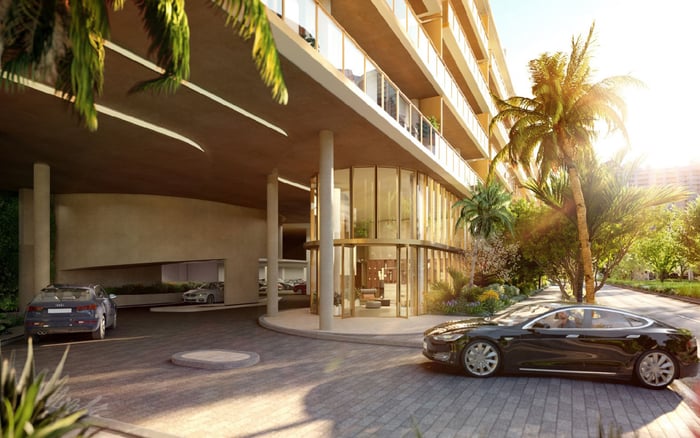
In South Florida, luxury often announces itself through water, architecture, and sun. But the most sophisticated homes also understand arrival. The driveway, lobby, elevator, corridor, and threshold should read as one continuous sequence.
That sequence has financial and emotional value. Buyers remember whether a showing felt fluid. They remember whether they waited. They remember whether the lobby seemed crowded or serene. They remember whether stepping out on their floor felt private.
For sellers and developers, this makes elevator experience part of positioning. For buyers, it makes elevator wait time a legitimate question, not an awkward one. The most discerning clients are not being difficult when they ask. They are evaluating whether the property’s promise survives ordinary life.
A practical buyer should experience the building more than once when possible. Visit at different times. Notice weekday mornings, late afternoons, weekend evenings, and moments when guests or service providers may be present. Ask direct questions, but also trust observation.
Compare buildings with similar price points, not just similar views. A residence that feels slightly less dramatic on paper may live better if its arrival sequence is calmer. Conversely, a glamorous tower may require closer scrutiny if vertical movement feels strained.
Elevator wait time should not be the only filter. It belongs beside floor plan, exposure, outdoor space, building financials, management quality, amenities, parking, and neighborhood fit. But it deserves a place on the checklist because it touches every day. In the upper tier of the market, daily ease is not a bonus. It is the product.
Why are elevator wait times becoming a buyer concern? They reveal how well a building manages privacy, density, service, and daily circulation.
Is a private elevator always necessary? Not always. A well-planned shared system can feel refined if it is predictable, secure, and uncrowded.
Should high-floor buyers care more about elevators? Yes. The higher the residence, the more vertical movement influences daily convenience.
When should buyers test elevator flow? Visit during realistic arrival windows, including mornings, late afternoons, and weekend evenings.
Do amenities affect elevator demand? They can. Active amenity floors may increase movement throughout the building.
What should buyers ask during a tour? Ask about resident elevators, service elevators, access control, peak periods, and maintenance planning.
Can elevator experience affect resale appeal? It can influence buyer perception because it shapes the daily feeling of the property.
Is this issue only relevant in large towers? No. Boutique buildings can also have circulation challenges if planning or operations are weak.
How does service traffic matter? Deliveries, housekeeping, catering, and maintenance can affect privacy if not properly separated.
What is the best rule of thumb? If the arrival sequence feels calm under ordinary conditions, the residence is more likely to live well.
For a discreet conversation and a curated building-by-building shortlist, connect with MILLION.
If branded residences are on your mind — as a home or as an allocation — we would be glad to share what we are seeing, privately.
Begin a quiet conversation