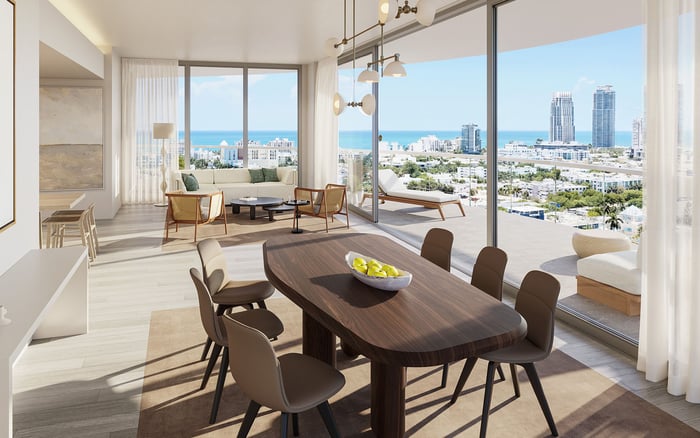
A buyer-oriented look at why building depth, plate design, terraces, exposures, and floor-plan efficiency can matter more than headline height in South Florida oceanfront residences.
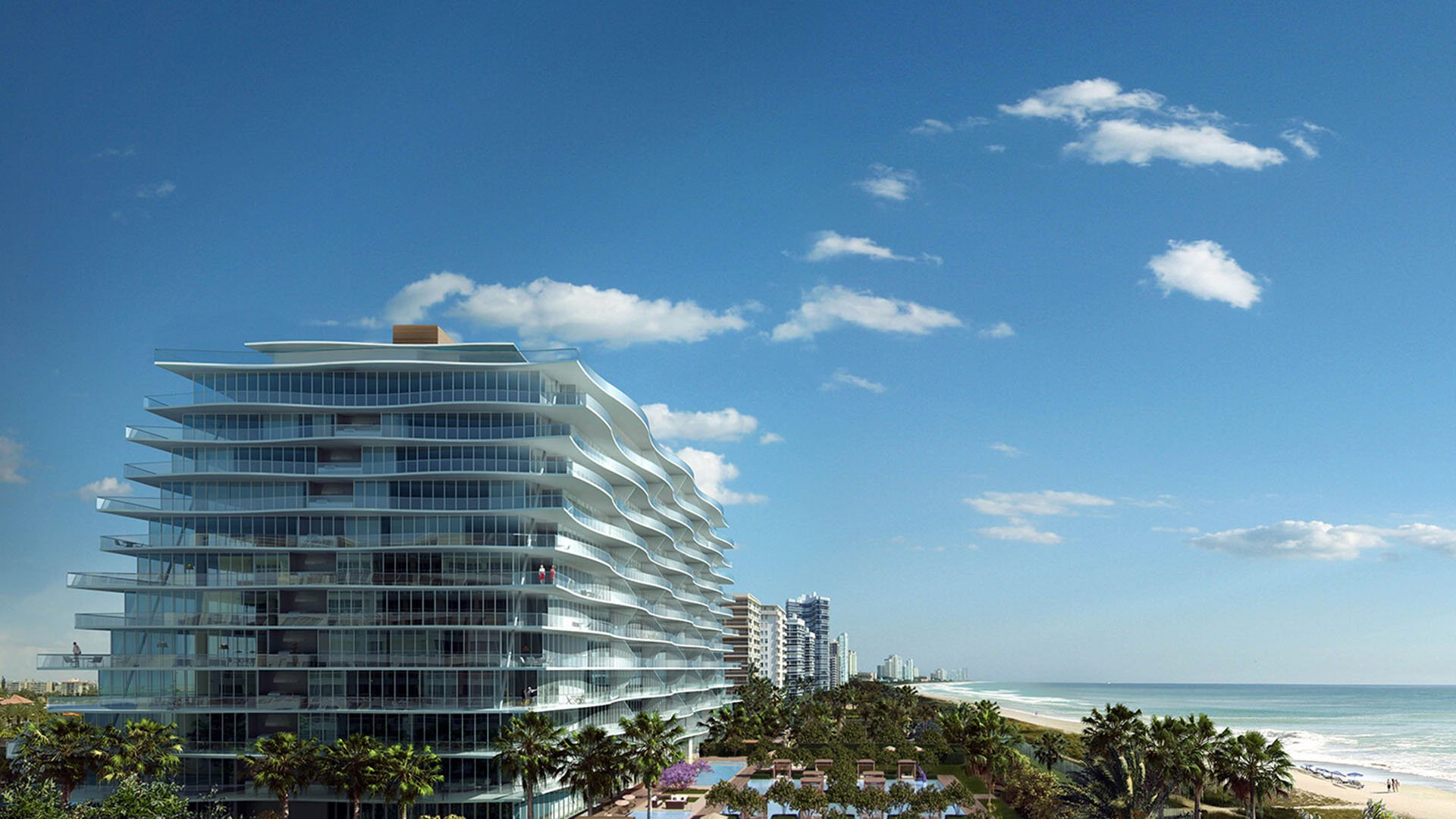
On the South Florida shoreline, height has an obvious allure. It promises altitude, horizon, and the social shorthand of being above it all. Yet for the buyer who intends to live fully, not simply look outward, building depth can be the more revealing measure. Depth shapes how a residence receives light, how rooms relate to one another, how far the main living space sits from the glass, and how naturally indoor life extends toward the water.
A tall tower can still feel narrow, compressed, or overly dependent on a single view plane. A lower or broader building, by contrast, may deliver a more gracious experience when the floor plate allows wider rooms, clearer separation between public and private areas, and a more fluid connection to outdoor space. Oceanfront luxury is not only about elevation. It is about proportion.
Depth is the distance between the front-facing facade and the rear of the building or unit. In practical terms, it influences whether a living room feels like a gallery, a passageway, or a true salon. It affects how far natural light can travel, where the kitchen is placed, how bedrooms are buffered, and whether service areas intrude on the primary experience.
For buyers comparing homes along Miami Beach, Surfside, Bal Harbour, Sunny Isles, Pompano Beach, and Hillsboro Beach, this is especially important because the oceanfront lot is often the defining asset. A building can rise beautifully, but if the plan is too deep in the wrong way, the ocean may become a view at the end of a tunnel rather than a constant presence. If the building is too shallow, it may sacrifice storage, privacy, and the ability to create generous arrival sequences.
The strongest residences tend to find balance: enough depth to create real rooms and gracious transitions, but not so much that interior spaces lose brightness or immediacy to the water.
Height changes perspective. Depth changes lifestyle. This is why sophisticated buyers often study floor plans before they fall in love with a rendering. A high-floor residence may have a commanding water view, but the everyday test is more intimate: can two people move comfortably through the kitchen while guests gather in the living area, does the primary suite feel secluded, and does the dining room have architectural dignity rather than the character of leftover space?
Projects such as 57 Ocean Miami Beach invite this kind of thinking because the most valuable comparison is not simply where a residence sits vertically, but how its plan frames daily rituals near the sand. In the same way, buyers looking at The Perigon Miami Beach often evaluate how openness, frontage, and depth come together to create a coastal home rather than a view platform.
A well-resolved floor plate can make a mid-level residence feel calmer and more complete than a higher residence with compromised proportions. The question is not only, “How high is it?” It is, “How well does the building use its depth?”
The terrace is where building depth becomes visible in daily life. A terrace that is too narrow can read beautifully in photography but function like an overlook. A more usable terrace becomes an outdoor room, capable of holding seating, dining, planting, and the rituals of sunrise or evening air.
The relationship between the living room and the terrace is critical. If doors open generously and the interior room has enough depth to support furniture without blocking circulation, the residence feels larger and more resort-like. If the living area is shallow or awkwardly proportioned, the terrace can feel detached from the home. The best designs make the transition effortless, with the balcony or terrace operating as an extension of the plan rather than an accessory.
This is one reason buyers should walk the plan mentally. Where does the sofa go? Where is the dining table? Does the outdoor space have depth, or merely length? On the oceanfront, those questions can be more consequential than a few additional floors of elevation.
Depth also protects the private life of a residence. A deeper and more intelligently planned unit can separate arrival, entertaining, bedrooms, laundry, staff or service functions, and storage. That separation is not always glamorous in marketing language, yet it is central to true luxury.
In boutique oceanfront settings such as Surfside, the conversation often shifts from spectacle to discretion. At The Delmore Surfside, buyers naturally consider how residence scale, privacy, and frontage shape the experience of being by the water. The same broader principle applies across the coast: a building that manages depth well can make a home feel composed while entertaining, hosting family, or moving between beach life and formal evenings.
Depth can also influence acoustic comfort and perceived privacy. Bedrooms placed away from the most active living zones feel more restful. Service corridors and secondary entries, where present, can reduce the friction of daily life. These are not headline features, but they are often the details owners appreciate most after closing.
More depth is not automatically better. A very deep plan can push secondary rooms far from natural light, create long corridors, or make the ocean feel remote from the center of the home. In humid coastal climates, buyers also tend to value cross-breezes, brightness, and a sense of immediate connection to the outdoors. A thoughtful, shallower plan can be excellent if it increases frontage, reduces wasted circulation, and gives more rooms meaningful exposure.
This is where expert comparison matters. Two residences with similar square footage may live very differently. One may spend its area on hallways and interiorized rooms. Another may devote more of its space to glass line, terraces, and well-proportioned living areas. The second can feel larger, brighter, and more valuable, even if the numerical size is comparable.
Sunny Isles has long appealed to buyers who appreciate dramatic tower living, wide water views, and a skyline that celebrates height. Still, the same rule holds: vertical ambition must be tested against plan quality. At Bentley Residences Sunny Isles, for example, the buyer’s lens should include not only the building’s presence, but how each residence organizes arrival, light, entertaining, outdoor living, and privacy.
High-flying architecture can create extraordinary moments, but the most enduring satisfaction usually comes from a plan that feels natural at breakfast, at sunset, and on a quiet weekday afternoon. Height may win the first impression. Depth often wins the second, third, and tenth.
A disciplined buyer can evaluate depth with a simple set of questions. How many principal rooms face the water? Does the plan allow furniture to be placed without blocking views or terrace access? Are bedrooms meaningfully separated from entertaining spaces? Is the kitchen integrated without dominating the living area? Are closets, laundry, and service functions placed where they support life rather than interrupt it?
Investment thinking should also include depth. A residence with balanced proportions, usable outdoor space, and a strong relationship between interior rooms and the water may remain appealing across market cycles because its value is experiential, not merely numerical. Buyers can change finishes. They cannot easily change a building’s depth, column logic, or relationship to the ocean.
The best oceanfront residences do not ask buyers to choose between height and depth. They combine elevation, frontage, privacy, air, light, and plan intelligence into a single coherent experience. But when the decision becomes close, depth deserves special attention. It is the hidden architecture of daily life.
In a market where views are often discussed in superlatives, the more refined question is quieter: does the residence live beautifully? If the answer is yes, building depth is usually part of the reason.
Why can building depth matter more than height on the oceanfront? Depth affects room proportions, light, circulation, privacy, and terrace usability, which shape daily living more directly than elevation alone.
Does a higher floor always mean a better residence? Not always. A higher floor may offer broader views, but a lower residence with better proportions can feel more livable and complete.
What should buyers look for in an oceanfront floor plan? Focus on water-facing rooms, efficient circulation, usable outdoor space, privacy between bedrooms and living areas, and natural light.
Is a deeper building always preferable? No. Excessive depth can create dark interiors or long corridors, so the key is balanced depth with strong frontage and exposure.
How does terrace depth affect value? A usable terrace functions like an outdoor room, making the residence feel larger and more connected to the ocean.
Why do furniture layouts matter when judging depth? Furniture reveals whether a plan is truly usable or merely impressive on paper, especially in living and dining areas.
Can two similarly sized residences live differently? Yes. Square footage can be distributed into generous rooms and terraces, or lost to corridors and inefficient transitions.
Should investors study building depth? Yes. Homes with enduring proportions and strong indoor-outdoor relationships often have broader long-term appeal.
How does depth influence privacy? Thoughtful depth can separate entertaining spaces from bedrooms, service areas, and arrivals, making the home feel calmer.
What is the best way to compare oceanfront residences? Review the plan, walk the space if possible, test the furniture layout, and judge how naturally the home lives by the water.
When you're ready to tour or underwrite the options, connect with MILLION.
If branded residences are on your mind — as a home or as an allocation — we would be glad to share what we are seeing, privately.
Begin a quiet conversation