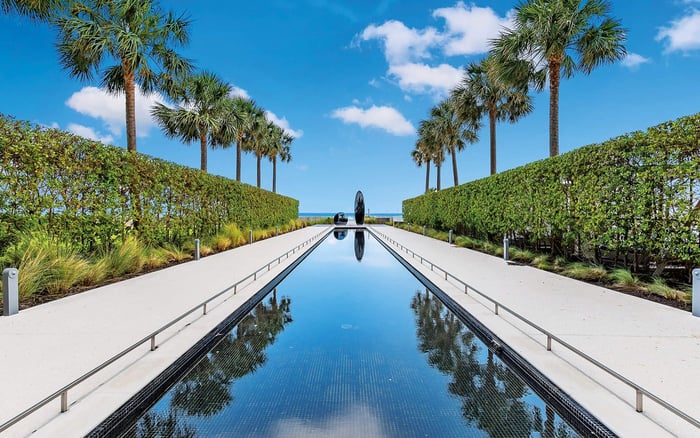
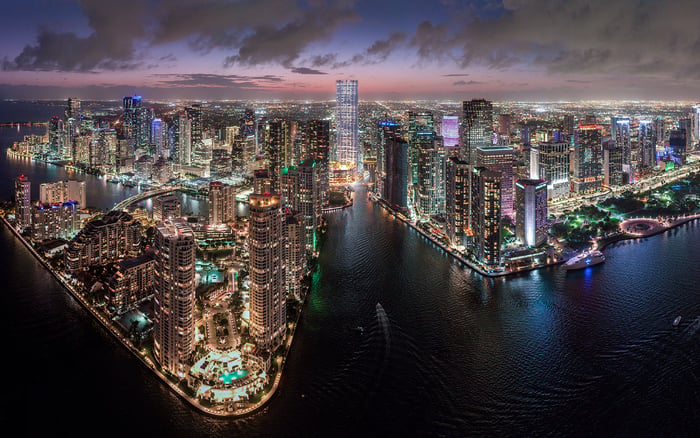
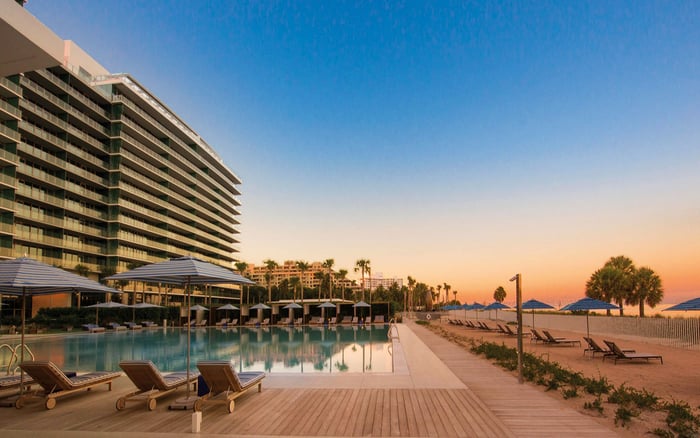
A strategic comparison of Baccarat Residences Brickell, La Baia North Bay Harbor Islands, and Oceana Key Biscayne for buyers weighing South Florida second-home use across urban, bayfront, and oceanfront settings.
For the ultra-prime South Florida buyer, a second home is rarely a simple vacation address. It is a logistics decision, a family-rhythm decision, and often part of a broader residential strategy. The right condominium must answer how often the owner will be in residence, who will use it, what kind of waterfront matters, and whether the property should function as a city base, a seasonal retreat, or an extended lifestyle residence.
That is why Baccarat Residences Brickell, La Baia North Bay Harbor Islands, and Oceana Key Biscayne belong in the same conversation despite being fundamentally different. Together, they clarify three distinct paths through Miami’s luxury coastal condominium market: urban access, bayfront boating, and oceanfront island living.
This is not a question of which address is universally superior. For a sophisticated buyer, the sharper question is which property best matches the intended use pattern.
A second residence should be evaluated less like a trophy and more like a private operating system. Some buyers need a place that compresses business, dining, culture, and airport-adjacent convenience into a highly usable Miami base. Others want a quieter setting that supports family weekends, seasonal stays, and water access. A third group is pursuing the fuller emotional proposition of an oceanfront island residence, where the property is not simply visited, but inhabited for longer stretches.
The distinction matters because the same buyer may admire all three properties while needing only one of their strategies. Baccarat Residences Brickell speaks to the business-forward pied-à-terre. La Baia North Bay Harbor Islands speaks to the bayfront, boat-centric second home. Oceana Key Biscayne speaks to the oceanfront island enclave.
That range is precisely what makes this trio useful. It maps density, waterfront type, and lifestyle cadence in a way that helps buyers narrow the field before becoming distracted by finishes, views, or amenity language.
Baccarat Residences Brickell is the most urban choice in this comparison. Its relevance is tied to Brickell and Downtown Miami as a lifestyle node, where the owner wants proximity to the center of Miami’s business and social life rather than the slower tempo of a resort island or bayfront enclave.
For the second-home buyer who moves through Miami with purpose, that matters. A Brickell residence can function as a composed pied-à-terre: arrive, settle in quickly, attend meetings or dinners, enjoy the city, and leave without the mental shift required by a more remote retreat. The strategy is not necessarily about staying the longest. It is about being present in Miami with efficiency and polish.
Baccarat’s branded luxury tower identity also differentiates it from the other two properties. In this framework, branding is not merely aesthetic. It signals a buyer profile that values urban service, recognition, and the ability to maintain a Miami address connected to a dense, highly visible environment. For some owners, that is exactly the point.
The tradeoff is equally clear. A Brickell base does not offer the same residential quiet implied by a boutique bayfront property, nor the beachfront remove of Key Biscayne. Its strength is access. Buyers should choose it when the second home is meant to support Miami engagement, not escape from Miami.
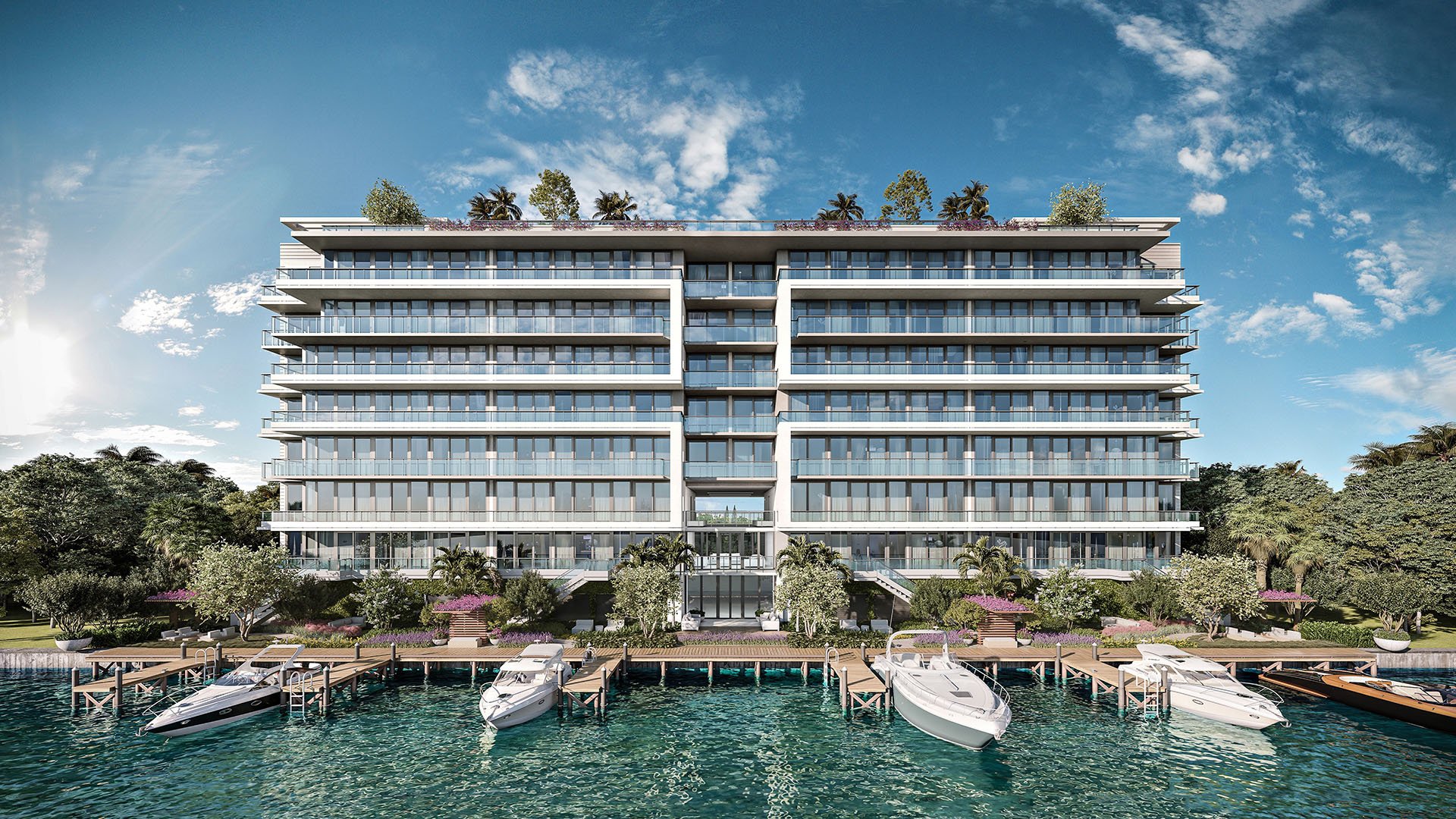
La Baia North Bay Harbor Islands occupies the middle lane between Brickell intensity and Key Biscayne island seclusion. It gives buyers a bayfront alternative that feels more residential, more private, and more naturally aligned with boating and water access.
That positioning is important for families and seasonal users. A boutique bayfront property can feel more intuitive for repeated weekend use, multigenerational stays, or a pattern of arriving with less emphasis on business and more emphasis on time together. The North Bay Harbor Islands setting offers a different kind of Miami luxury: connected, but not defined by urban density.
La Baia North is also strategically relevant because it is boat-centric. For buyers who prioritize bayfront living, the water is not only a view; it is part of the residence’s purpose. This is a different second-home logic from a Brickell pied-à-terre. It is less about proximity to an urban core and more about the rituals of leaving, returning, hosting, and decompressing on the bay.
The boutique dimension also matters psychologically. Many second-home owners are not searching for anonymity inside a dense tower. They want a place that feels residential from the moment they arrive. In that respect, La Baia North fits buyers who want privacy without fully detaching from the broader Miami map.
Oceana Key Biscayne is the strictly oceanfront option in this comparison, and that single fact changes the entire second-home thesis. Key Biscayne is not Brickell, and it is not Bay Harbor Islands. It is a distinct island market where the residential proposition is tied to beachfront living, longer stays, and a deeper sense of retreat.
For buyers seeking an ultra-prime beachfront enclave, Oceana Key Biscayne is the most natural fit among the three. It is less about quick urban access and less about bayfront boating as the dominant identity. Its appeal rests on the oceanfront island experience, the kind of setting that encourages extended seasonal living and long-duration lifestyle migration.
That phrase, lifestyle migration, is important. Some second homes are used episodically. Others gradually become the place where a family spends its most meaningful months. Oceana belongs more naturally to the latter category. It is suited to owners who are not simply adding a Miami address, but reconsidering the balance of their year around beach, privacy, and island routine.
The tradeoff is that Oceana’s strength is not urban immediacy. Buyers who want a business-forward Miami perch may find Brickell more strategically efficient. Buyers who want a boat-centric bayfront environment may find La Baia North more aligned. But for the buyer whose priority is oceanfront Key Biscayne living, Oceana defines the clearest lane.
The most effective comparison begins with three questions. First, is the second home primarily for city access or retreat? Second, does the buyer prefer bayfront living, oceanfront living, or an urban skyline setting? Third, will the property be used in short, frequent visits or longer seasonal stays?
Baccarat Residences Brickell answers the first question with urban access. It is the most business-forward and city-connected of the three. La Baia North Bay Harbor Islands answers with a more private bayfront profile, especially for buyers who value boating and a residential feel. Oceana Key Biscayne answers with the beachfront island lifestyle, especially for buyers envisioning extended time in residence.
A family may gravitate toward La Baia North if boating, privacy, and seasonal use are central. A principal who needs a polished Miami base may gravitate toward Baccarat. A buyer testing a more permanent shift toward beachfront island life may find Oceana the more coherent match.
What should be avoided is choosing only by architectural impression. At this level, many residences can look compelling. The better decision comes from aligning the property with behavior. A second home that matches the owner’s actual rhythm will be used more naturally and enjoyed with less friction.
Baccarat Residences Brickell serves the buyer who wants Miami to remain immediately accessible. This is the owner who may arrive for business, dining, events, or a short stay and wants the city at close range. The residence is a base of operations.
La Baia North Bay Harbor Islands serves the buyer who wants water access and a softer residential cadence. This owner may be thinking about family time, boating, and seasonal use in a setting that feels more private than a dense urban tower. The residence is a bayfront retreat.
Oceana Key Biscayne serves the buyer who wants beachfront island living as a central part of the year. This owner is not merely visiting Miami, but building a longer relationship with its coastal lifestyle. The residence is an oceanfront anchor.
Seen this way, the comparison becomes practical rather than emotional. Each property matters because it represents a different answer to the same high-level question: what should a South Florida second home actually do?
Which property is the most urban second-home option? Baccarat Residences Brickell is the most urban choice, suited to buyers who want a Brickell and Downtown Miami base.
Which property is best aligned with bayfront boating? La Baia North Bay Harbor Islands is the boat-centric bayfront option in this comparison.
Which property is the strictly oceanfront choice? Oceana Key Biscayne is the oceanfront island option among the three properties.
Is Baccarat Residences Brickell more of a pied-à-terre? Yes, it fits the business-forward pied-à-terre strategy more naturally than the bayfront or island alternatives.
Does La Baia North feel more residential than an urban tower? Yes, its boutique bayfront positioning supports a more private and residential second-home use case.
Who should consider Oceana Key Biscayne? Buyers seeking an ultra-prime beachfront enclave and extended seasonal living should consider Oceana Key Biscayne.
How should buyers compare Brickell, Bay Harbor Islands, and Key Biscayne? Compare them by density, waterfront type, and intended use pattern rather than by surface-level design alone.
Is this comparison mainly about investment return? No, the stronger lens here is lifestyle strategy, use cadence, and fit within a multiple-residence plan.
Can a family-centric buyer prefer La Baia North? Yes, La Baia North may fit family-centric or seasonal use more naturally than a dense urban tower.
What is the simplest way to frame the decision? Choose Baccarat for urban access, La Baia North for bayfront boating, and Oceana for oceanfront island living.
For a confidential assessment and a building-by-building shortlist, connect with MILLION.
If branded residences are on your mind — as a home or as an allocation — we would be glad to share what we are seeing, privately.
Begin a quiet conversation