Cipriani Residences Brickell deserves attention from buyers who care less about headline balcony size and more about shaded, protected, genuinely usable outdoor living.
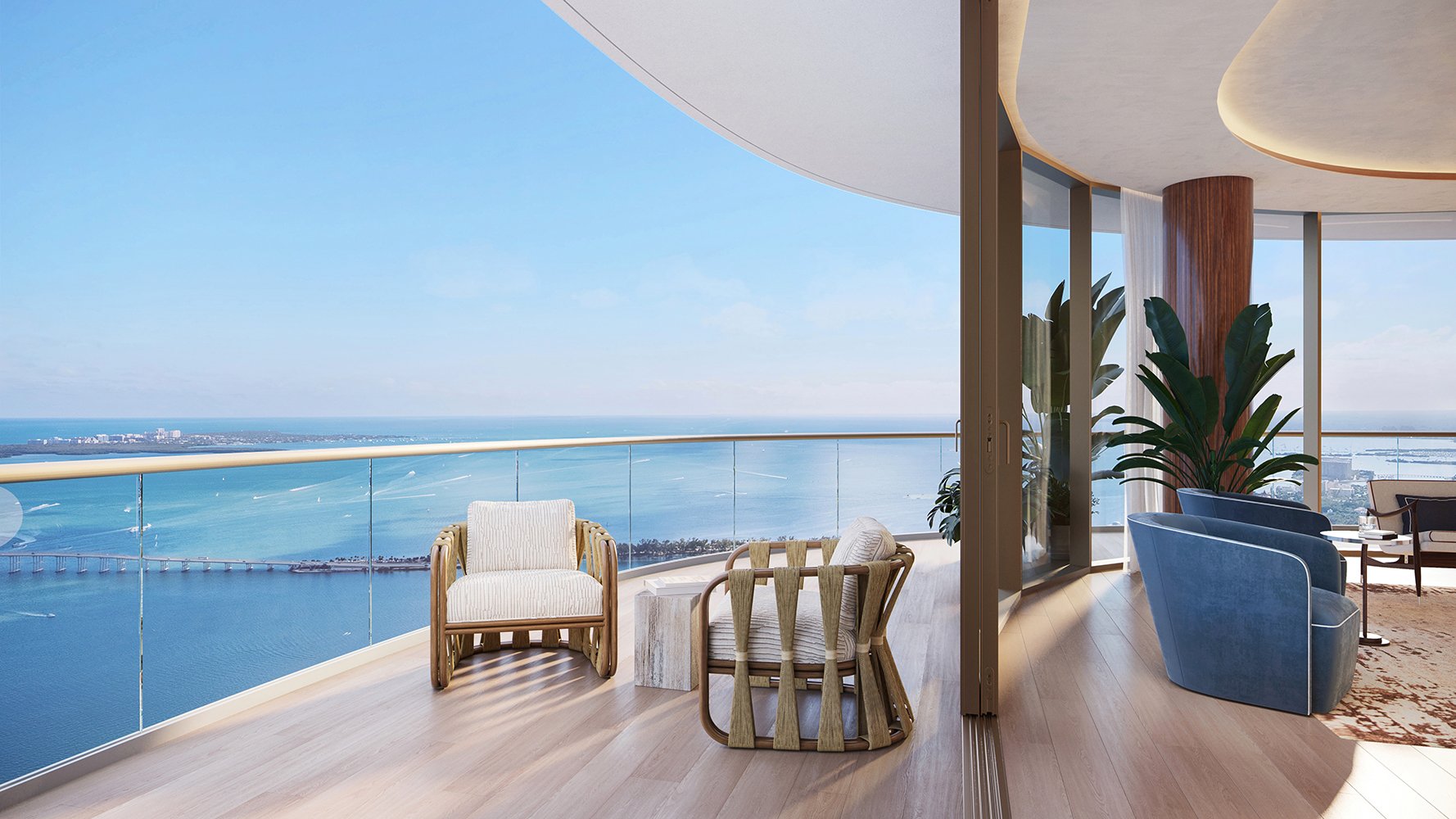
In Brickell, outdoor space can be seductive in renderings and surprisingly conditional in daily life. A balcony that reads generously on a floor plan may be too shallow for dining, too exposed to afternoon heat, or too wind-prone to support more than a brief view check. For high-rise buyers, the more sophisticated question is not simply how much exterior square footage comes with a residence. It is whether that space behaves like a room.
That is the core reason Cipriani Residences Brickell belongs on the shortlist for buyers who prioritize terrace usability in heat and wind. The project is positioned as a luxury, branded, hospitality-driven residence in Miami’s Brickell market, but its most practical appeal may be architectural: outdoor areas intended to function as extensions of interior living, rather than decorative ledges attached to glass towers.
For buyers, this distinction is especially important. The South Florida resident who works remotely, entertains at home, takes morning coffee outdoors, or wants a private decompression zone is not buying a terrace as a marketing feature. They are buying an additional layer of lifestyle, and that layer has to perform.
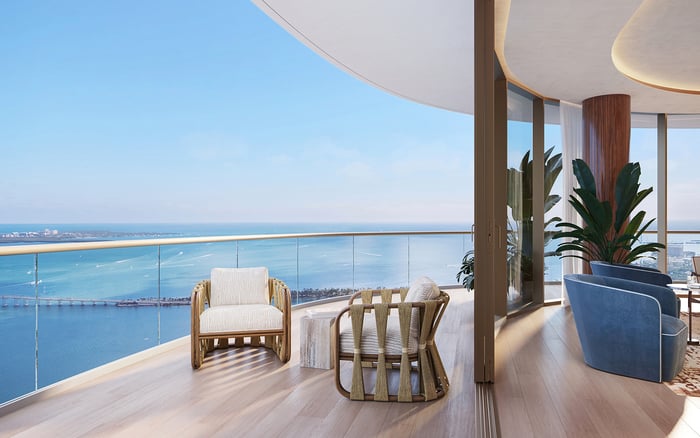
Cipriani’s case begins with the idea that terrace comfort is shaped by microclimate, orientation, and detailing. Deep, shaded loggias are central to the project’s outdoor-living proposition because shade changes how often a resident is likely to use a space. In South Florida, protection from direct sun can separate an all-day extension of the living room from an area that works only during narrow windows of the day.
Layered façade geometry also matters. In a dense vertical district, wind does not behave as it does in a low-rise neighborhood. It accelerates around corners, shifts between towers, and can make a beautiful perch feel more like an overlook than a living space. Cipriani’s layered façade strategy is presented as part of its approach to moderating exposure and wind, while the broader comfort proposition includes a high-performance envelope.
The best terraces in Brickell are not always the largest. A smaller but shaded, protected, and better-proportioned outdoor room can be more valuable than a larger exposed balcony. That is particularly true for buyers who intend to dine outdoors, place comfortable furniture, read in the afternoon, work with a laptop, or entertain without fighting glare and gusts.
The terrace question should be practical before it becomes aesthetic. Start with depth. Can a dining table, lounge chair, or work surface be placed without blocking circulation? Then examine overhangs. Does the slab above provide shade and weather relief, or does the terrace sit fully exposed?
Side-wall protection is another overlooked factor. A terrace with some lateral enclosure can feel more private, less wind-struck, and more room-like. Slab geometry can also influence comfort, especially in towers where exterior space varies by line or elevation. In Brickell, where neighboring towers, traffic, and vertical exposure all shape the experience, acoustic buffering deserves the same attention as views.
This is where Cipriani’s positioning becomes compelling. Its outdoor spaces are framed as programmed living areas suitable for wellness, dining, remote work, entertaining, and retreat. That is a more demanding standard than counting balcony footage. It asks whether the space invites repeated use at different times of day, across changing weather and wind conditions.
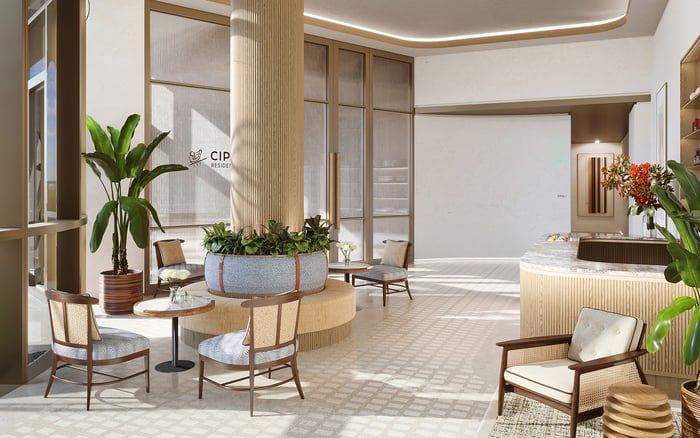
Cipriani’s hospitality brand adds another dimension. Branded residences succeed when service, operations, and design align with the way residents actually live. A terrace that feels like an outdoor room becomes more persuasive when the broader building experience is also organized around hospitality-level expectations.
Buyers comparing Brickell options such as Baccarat Residences Brickell, St. Regis® Residences Brickell, and The Residences at 1428 Brickell should view outdoor space through the same lens they apply to interiors and amenities. The issue is not whether a residence has a terrace. The issue is whether the terrace is protected, proportioned, and integrated enough to support daily rituals.
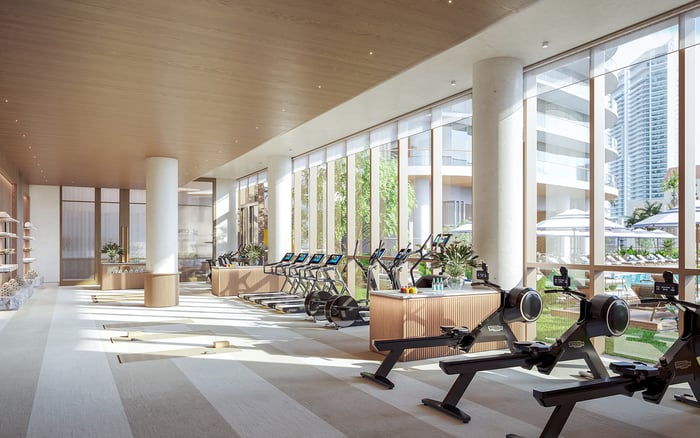
For some purchasers, hospitality branding is the emotional draw. For others, the practical value sits in the operating culture: the expectation that common areas, arrival sequences, amenity decks, and private residences feel composed. Cipriani’s amenity deck composition is part of that outdoor-living proposition, reinforcing the idea that open-air comfort should not stop at the private residence line.
A disciplined Brickell search should separate visual drama from usability. The neighborhood is full of vertical energy, water and skyline outlooks, and high-design towers, but those advantages can come with exposure. Buyers should ask how a building handles sun, wind, noise, and privacy, not only how it frames a view.
That makes Cipriani particularly relevant for heat- and wind-sensitive purchasers. Its pitch favors outdoor spaces that are shaded, layered, and usable with intent. The buyer profile is clear: someone who sees exterior space as a programmed room for wellness, dining, remote work, and retreat, rather than a place to stand for a few minutes before returning indoors.
It is also useful to compare Cipriani with more neighborhood-scaled Brickell choices such as 2200 Brickell, where the buying conversation may center on a different lifestyle rhythm. Cipriani’s appeal is more directly tied to a hospitality-forward, high-rise experience in which private terraces and shared outdoor environments form part of a single comfort narrative.
Even when a project’s design philosophy is aligned with terrace living, buyers should inspect the specific residence line carefully. Orientation can determine how the terrace receives sun. Elevation can influence wind. Nearby buildings can affect privacy, noise, and reflected heat. The same building can deliver different outdoor experiences depending on stack, exposure, and floor height.
Furniture planning is equally important. A usable terrace should support the buyer’s real habits, not imagined ones. If the goal is outdoor dining, measure for a table and circulation. If the goal is work, consider glare and shade. If the goal is retreat, study side-wall protection, sound, and the sense of enclosure.
Cipriani Residences Brickell earns its shortlist position because it asks buyers to think beyond spectacle. In a market where balconies are often treated as visual amenities, the project’s most refined value proposition is functional: outdoor space designed to be occupied.
Why is terrace usability more important than balcony size? A large exposed balcony may be less useful than a smaller shaded terrace with better protection from heat, wind, and noise.
What makes Cipriani Residences Brickell relevant for terrace-focused buyers? The project emphasizes deep shaded loggias, layered façade geometry, and outdoor spaces intended to extend interior living.
Is Cipriani only appealing because it is a branded residence? No. The hospitality brand is part of the appeal, but the terrace argument is rooted in comfort, shade, protection, and daily usability.
What should buyers inspect on a terrace floor plan? Buyers should study depth, overhangs, side-wall protection, slab geometry, orientation, and furniture placement.
Why does wind matter so much in Brickell? Brickell’s dense high-rise setting can intensify wind patterns around towers, making protection and façade design important.
Can a smaller terrace be more valuable than a larger balcony? Yes. If it is shaded, protected, and proportioned for real use, a smaller terrace can deliver more lifestyle value.
Who is the ideal buyer for this type of outdoor space? The best fit is a buyer who wants to dine, work, entertain, exercise, or decompress outdoors on a regular basis.
Does the amenity deck matter when evaluating private terraces? Yes. A building’s shared outdoor areas can reinforce the overall lifestyle proposition and indicate how seriously outdoor comfort is treated.
Should buyers compare terrace performance across Brickell projects? Yes. Comparing exposure, shade, acoustics, and usable depth can reveal meaningful differences between otherwise similar luxury residences.
What is the best way to shortlist comparable options for touring? Start with location fit, delivery status, and daily lifestyle priorities, then compare stacks and elevations to validate views and privacy.
For a discreet conversation and a curated building-by-building shortlist, connect with MILLION.
If branded residences are on your mind — as a home or as an allocation — we would be glad to share what we are seeing, privately.
Begin a quiet conversation