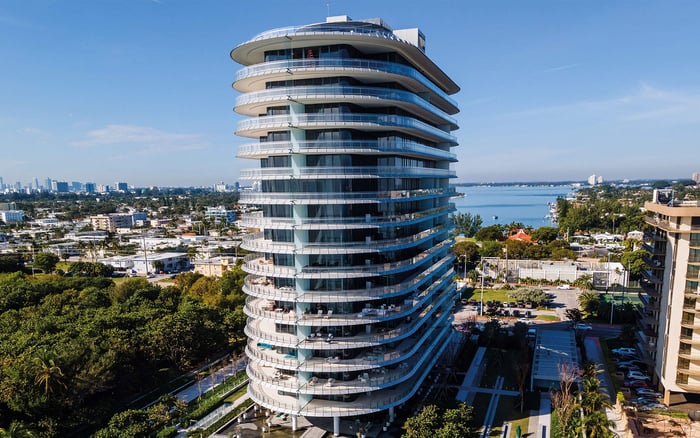
A discreet guide for South Florida luxury homeowners on when post-storm re-entry can strengthen resale positioning through documentation, timing, access, and confidence.

In South Florida luxury real estate, post-storm re-entry is often treated as a private logistical exercise: open the shutters, check the systems, call the property manager, confirm the landscape, and move forward. For an owner contemplating resale, however, the period immediately after a storm can also become a revealing measure of how a residence performs under pressure.
This does not mean turning weather into theater. The most sophisticated buyers are not persuaded by dramatic language. They are persuaded by clean records, disciplined maintenance, prompt access, and a property narrative that conveys composure. Handled with discretion, post-storm re-entry can help a seller show that the home is not only beautiful in season, but also well managed when conditions are less convenient.
That distinction matters across the premium market, from vertical residences in Brickell to waterfront enclaves along Miami Beach, Sunny Isles, Fort Lauderdale, and Palm Beach. A buyer may fall in love with a view, a floor plan, or an amenity suite, but confidence is what keeps a contract steady.
Post-storm re-entry should be treated as a resale advantage when three conditions are present: the property can be accessed safely, its condition can be documented clearly, and any follow-up work can be explained without ambiguity. If those elements are not aligned, re-entry remains a management task rather than a marketable strength.
The strongest scenario is simple and disciplined. The owner or representative gains access, photographs and videos the residence, checks major systems, reviews visible exterior and interior conditions, and creates a written record of what was observed. If repairs or maintenance are needed, the sequence is documented rather than improvised. If no material issue is visible, that fact is recorded with equal restraint.
The point is not to claim invulnerability. In a coastal market, smart buyers distrust perfection as much as they distrust vagueness. The advantage comes from showing an organized stewardship history and making clear that post-storm condition is not a mystery.
For a high-end buyer, documentation is a form of service. It reduces friction. It allows counsel, inspectors, insurance advisors, lenders, and family offices to evaluate a property without unnecessary uncertainty. In many negotiations, orderly records can feel as valuable as a design upgrade because they protect time.
A seller should think in layers. First, preserve visual proof of the residence immediately after re-entry. Second, keep invoices, service notes, inspection observations, permit-related materials if applicable, and association or building communications where relevant. Third, organize the file so it can be shared selectively and professionally during diligence.
This is especially important for investment-minded buyers comparing multiple residences across different submarkets. A buyer considering The Residences at 1428 Brickell will not evaluate risk in the same emotional language as a buyer focused on a legacy waterfront home, but both will appreciate evidence that the asset is being managed with rigor.
The best time to discuss resale positioning is not always the first day after re-entry. A rushed listing can invite questions that have not yet been answered. A delayed listing can miss a moment when the property’s performance is fresh and easily documented. The right timing sits between haste and hesitation.
Owners should first establish condition, access, and the status of any service needs. Then the advisor can decide whether the post-storm record belongs in the listing narrative, in the due diligence package, or simply in the background as a confidence tool for serious buyers.
If the residence emerges with clean documentation and no complicated repair story, the re-entry period can support a stronger message: this is a property with beauty, management discipline, and continuity. If maintenance was required, the advantage may still exist, provided the work was addressed transparently and professionally. What weakens resale is not the existence of work, but the absence of a clear record.
In a dense urban market, post-storm confidence is often tied to building operations, access, service coordination, and the owner’s ability to show a well-run ownership experience. In waterfront and barrier island settings, buyers may focus more intently on visible condition, exterior exposure, and the discipline of ongoing maintenance.
That difference should shape how the story is told. A Brickell buyer may respond to concise building-related documentation and a clean unit condition file. A Miami Beach buyer may want a broader sense of how the residence was protected and assessed. In the orbit of The Perigon Miami Beach, the conversation is less about alarm and more about the refined expectations attached to coastal ownership.
Fort Lauderdale introduces another layer because many luxury buyers there think in terms of both home and marine lifestyle. A residence associated with the waterfront experience, including markets near Riva Residenze Fort Lauderdale, benefits from a narrative that is orderly, specific, and calm. The seller does not need to overstate resilience. The file should speak with sufficient clarity.
The language of post-storm resale should be measured. Avoid broad promises, emotional declarations, or casual assurances that cannot be supported. Phrases that sound strong in conversation can create discomfort during diligence if they are not backed by records.
A better approach is factual and elegant. The property was accessed. Its condition was reviewed. Relevant systems were checked or scheduled for review. Any follow-up was documented. Available materials can be provided to qualified parties at the appropriate stage. This tone respects the buyer’s intelligence and the seller’s exposure.
It is also wise not to turn a listing into a storm story. The residence should still be presented for its architecture, setting, views, scale, privacy, service, and lifestyle. The post-storm record should enhance confidence, not dominate the emotional experience of the home.
South Florida’s luxury buyer has become increasingly sophisticated about ownership quality. Many are not simply purchasing square footage or a skyline angle. They are purchasing the expectation of continuity, privacy, service, and long-term ease.
That is why post-storm re-entry can become a meaningful resale advantage. It shows whether the owner has a plan. It reveals whether the property file is organized. It demonstrates whether a residence can move from disruption back to presentation without confusion.
For buyers studying oceanfront and high-rise options, from St. Regis® Residences Sunny Isles to established luxury towers and boutique coastal buildings, the question is rarely only, “Is it beautiful?” The deeper question is, “Will this ownership experience remain composed?”
A seller who can answer that question with documentation, not adjectives, has an advantage.
When should post-storm re-entry be viewed as a resale advantage? When access is safe, the property condition is clear, and documentation supports the ownership story without exaggeration.
Should a seller mention storm performance in the listing copy? Usually, it should be subtle. The stronger use is often in diligence materials or private conversations with qualified buyers.
What records matter most after re-entry? Photos, videos, inspection notes, service invoices, maintenance records, and relevant building or association communications can all help.
Can repairs still support a strong resale narrative? Yes, if the work was handled promptly, professionally, and with a clear paper trail that explains what was done.
Is it risky to claim a property had no storm impact? Broad claims can be problematic if they are not supported. It is better to describe what was reviewed and documented.
Do luxury buyers care about post-storm documentation? Serious buyers often value anything that reduces uncertainty, especially when reviewing a high-value coastal asset.
Should re-entry materials be shared with every buyer? Not necessarily. They are best shared selectively with qualified parties at the right stage of diligence.
Can post-storm timing improve buyer confidence? Yes, if the seller can show timely access, organized review, and a composed response rather than a rushed presentation.
Does this apply to condos as well as single-family homes? Yes, though the emphasis differs. Condos may involve building communications, while homes may require broader property-level review.
What is the best way to shortlist comparable options for touring? Start with location fit, delivery status, and daily lifestyle priorities, then compare stacks and elevations to validate views and privacy.
To compare the best-fit options with clarity, connect with MILLION.
If branded residences are on your mind — as a home or as an allocation — we would be glad to share what we are seeing, privately.
Begin a quiet conversation