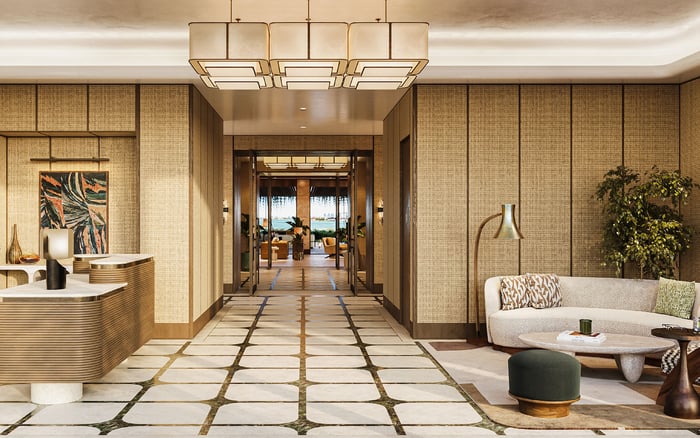
In South Florida’s highest-end condo market, rental policy can matter as much as design, views, and amenities. Strong restrictions help protect privacy, residential rhythm, and long-term ownership character in buildings where buyers expect discretion.

In South Florida luxury real estate, the amenity floor has become a familiar seduction. Screening rooms, private dining rooms, wellness suites, cold plunges, wine lounges, golf simulators, and residents-only clubs all have their place. Yet for the buyer who intends to live beautifully, quietly, and consistently, another question is becoming more consequential: who else is living here, for how long, and under what rules?
Strong rental restrictions are not glamorous in the way a marble-clad spa is glamorous. They do not photograph as well as a rooftop pool or a porte cochère. But they can shape the daily atmosphere of a residence more profoundly than another amenity level. A building with disciplined rental policies often feels different from the moment one enters. Staff recognition improves. Elevator traffic is steadier. Common areas feel less transient. The lobby reads less like a hotel and more like a private address.
This is particularly relevant in markets where branded design and resort-style services have expanded rapidly. In Brickell, a buyer comparing The Residences at 1428 Brickell with other high-profile offerings may admire the architecture, views, and wellness programming, but the deeper ownership question remains governance. A compelling building is not only what it offers. It is also what it prevents.
At the top of the market, predictability is a form of luxury. Owners want to know that the arrival experience will feel composed on a Friday evening, that pool decks will not change character every weekend, and that neighbors will have a meaningful stake in the building’s long-term reputation. Rental rules are one of the tools that create that consistency.
This is not an argument against rentals in every context. Many owners value flexibility, and certain buyers specifically prioritize income potential or seasonal use. The question is alignment. A buyer seeking a calm primary residence may have different priorities from a buyer evaluating an investment property. A family using a residence for school-year living may feel differently from an owner who visits twice a year. The right policy depends on the intended use, but it should never be treated as a footnote.
In internal buyer language, the tension is often reduced to short-term rentals versus long-term rentals. That shorthand is imperfect, but useful. Short stays can create hotel-like energy when a building’s documents and management culture permit frequent turnover. Longer lease structures generally support more stable occupancy patterns. The difference is not merely financial. It is social, operational, and emotional.
A decade ago, a richly programmed amenity deck could make a building feel singular. Today, luxury buyers have seen nearly every variation of the wellness, culinary, and entertainment narrative. The question is no longer whether a building has amenities. The question is whether those amenities are preserved for the people who actually live there.
A residents’ lounge loses some of its intimacy if it becomes a revolving social room. A serene pool deck changes when occupancy turns transient. Even an exceptional gym can feel less private when access is not supported by a disciplined building culture. Restrictions, when thoughtfully drafted and consistently enforced, help protect the experience those amenities were designed to deliver.
On Miami Beach, this issue becomes especially sensitive because lifestyle appeal is inseparable from privacy. A residence such as The Perigon Miami Beach may attract buyers drawn to architecture, water, and service, but those buyers are often equally focused on the tone of ownership. The Miami Beach buyer who values discretion will often ask about rental frequency before asking about another lounge.
Strong rental restrictions can be especially meaningful in buildings dominated by owner-users. These residents tend to care about hallways, staff continuity, reserve discipline, noise standards, and the long arc of reputation. Their interest is not only the individual apartment. It is the address as a shared asset.
That mentality often suits buyers who are less interested in maximizing yield and more interested in preserving lifestyle. They may accept reduced rental flexibility in exchange for a more residential atmosphere. For them, the absence of constant turnover is not a limitation. It is part of the value proposition.
In Sunny Isles, where oceanfront towers range from resort-like to deeply residential, the difference can be felt in daily use. A buyer touring Bentley Residences Sunny Isles may be captivated by design ambition, but the Sunny Isles conversation still comes back to operational character: how the building will feel in season, out of season, and during peak holiday periods.
Before being persuaded by an amenity floor, buyers should ask precise questions about minimum lease terms, the number of permitted leases per year, approval procedures, guest registration, move-in protocols, and enforcement practices. It is also worth understanding whether rules are embedded in governing documents, handled by board policy, or shaped through management practice. The distinction matters because durability matters.
Buyers should also ask how rental rules interact with pets, parking, elevators, storage, service access, and private amenities. A policy can look strong on paper but feel weak if enforcement is inconsistent. Conversely, a building with clear procedures and a serious residential culture can feel more polished even without the most extravagant amenity package.
In Coconut Grove, privacy takes a different form. The draw is often canopy, bay proximity, and a more grounded rhythm. At Vita at Grove Isle, buyers may be thinking less about spectacle and more about the sanctity of retreat. In that context, rental discipline is not merely administrative. It supports the very reason many people choose the neighborhood.
Luxury is not always additive. Sometimes it is subtractive. Fewer unknown faces. Less weekend volatility. Fewer elevator disruptions. Less ambiguity around who belongs in the building. In a market crowded with visible amenities, the invisible architecture of rules can become the more valuable feature.
The most sophisticated buyers do not dismiss amenities. They simply place them in the correct hierarchy. A beautiful spa matters. A well-run valet matters. A private dining room matters. But if the underlying rental culture undermines the residential experience, those features become less persuasive.
Strong rental restrictions are not the right answer for every buyer. They can reduce flexibility, narrow the pool of potential tenants, and limit certain ownership strategies. But for the buyer seeking a true residence rather than a monetized asset with occasional personal use, restrictions can be a sign of alignment. They say the building knows what it wants to be.
Why do rental restrictions matter in luxury condos? They help shape the building’s daily atmosphere, privacy, and sense of residential continuity.
Are stricter rental rules always better? Not always. They are best for buyers who prioritize stability, discretion, and owner-user culture over rental flexibility.
Can rental rules affect resale appeal? They can influence which buyers are most attracted to the building, especially those seeking either personal use or income flexibility.
What should buyers review before purchasing? Buyers should review minimum lease terms, approval procedures, frequency limits, guest policies, and enforcement practices.
Do amenities matter less than rental policy? Amenities still matter, but rental policy can determine whether those amenities feel private, calm, and well preserved.
Is this issue more important in resort-style markets? Yes. Markets with strong seasonal demand often require sharper attention to turnover, guest access, and building culture.
How do long-term rentals differ from short stays? Longer lease patterns generally support more predictable occupancy and a more residential rhythm.
Can a building change its rental rules later? Rules may evolve through governing documents or association action, so buyers should understand how changes are made.
Should investors avoid buildings with strong restrictions? Not necessarily, but the strategy must fit the rules rather than assume broad rental flexibility.
What is the simplest way to evaluate a building’s rental culture? Look beyond the brochure and ask how the property actually manages residents, tenants, guests, and enforcement.
For a confidential assessment and a building-by-building shortlist, connect with MILLION.
If branded residences are on your mind — as a home or as an allocation — we would be glad to share what we are seeing, privately.
Begin a quiet conversation
.jpg&width=700&height=438&fit=cover)