A discreet, buyer-oriented look at the renewed New York to South Florida migration, the friction points of co-op ownership, and why Miami’s luxury condo market is capturing privacy-minded, time-sensitive capital.
South Florida’s luxury condo story is no longer a simple sunshine narrative. For many New York City buyers, it has become a question of governance, friction, and lifestyle certainty. The shift is easy to understand when you view the purchase through a modern luxury lens: capital is sophisticated, time is scarce, and control matters.
From 2018 to 2022, more than 30,000 New Yorkers moved to Miami-Dade and Palm Beach counties, bringing an estimated $9.2 billion in income. That migration did more than move people. It normalized what used to feel like a contrarian decision for many Manhattan households: treating Miami as a primary address, not just a seasonal break.
More recently, the conversation gained a shorthand label. After Zohran Mamdani’s NYC mayoral win, brokers and developers described a post-election spike in NYC-buyer interest in Miami luxury condos, widely referred to in the press as the “Mamdani Effect.” The term is political, but the underlying driver is practical: when buyers perceive higher policy uncertainty, they tend to price optionality more aggressively. In real estate terms, that often means clearer ownership, quicker execution, and fewer personal variables embedded in the transaction.
At the ultra-premium end of the market, that preference frequently resolves into one specific asset class. Not a townhouse. Not a co-op. A modern, amenity-forward condominium that can function as a residence, a family hub, and a strategic foothold.
New York’s housing stock is famously co-op heavy. Experienced buyers understand the appeal: grand prewar buildings, an established culture of governance, and, in many cases, a tighter sense of community.
But the frictions are structural, not incidental. In a co-op, the buyer purchases shares in a corporation and receives a proprietary lease rather than owning real property outright. That distinction is not semantic. It influences how financing works, how resale expectations are set, and how much discretion a buyer can preserve throughout the process.
Board approval is the defining feature. Co-op boards can serve as meaningful gatekeepers, and the approval process typically requires extensive financial disclosure and documentation. For buyers who are time-sensitive, privacy-sensitive, or coordinating assets across multiple jurisdictions, the experience can feel less like a luxury transaction and more like underwriting. Even when the process is professional and fair, the volume and intimacy of disclosure can be difficult to reconcile with how modern wealth is managed.
This is not a critique of co-ops as an institution. It is an acknowledgment of fit. Today’s luxury buyer often expects a high-trust, high-service experience with fewer non-financial variables. When subjective or personal factors carry too much weight, capital tends to look for an ownership structure with cleaner lines.
Miami’s luxury condo market offers a different blend: direct real property ownership paired with a product philosophy that increasingly mirrors five-star hospitality. In practice, that often means newer construction, deeper amenity programming, and a service culture designed for residents who split time between cities.
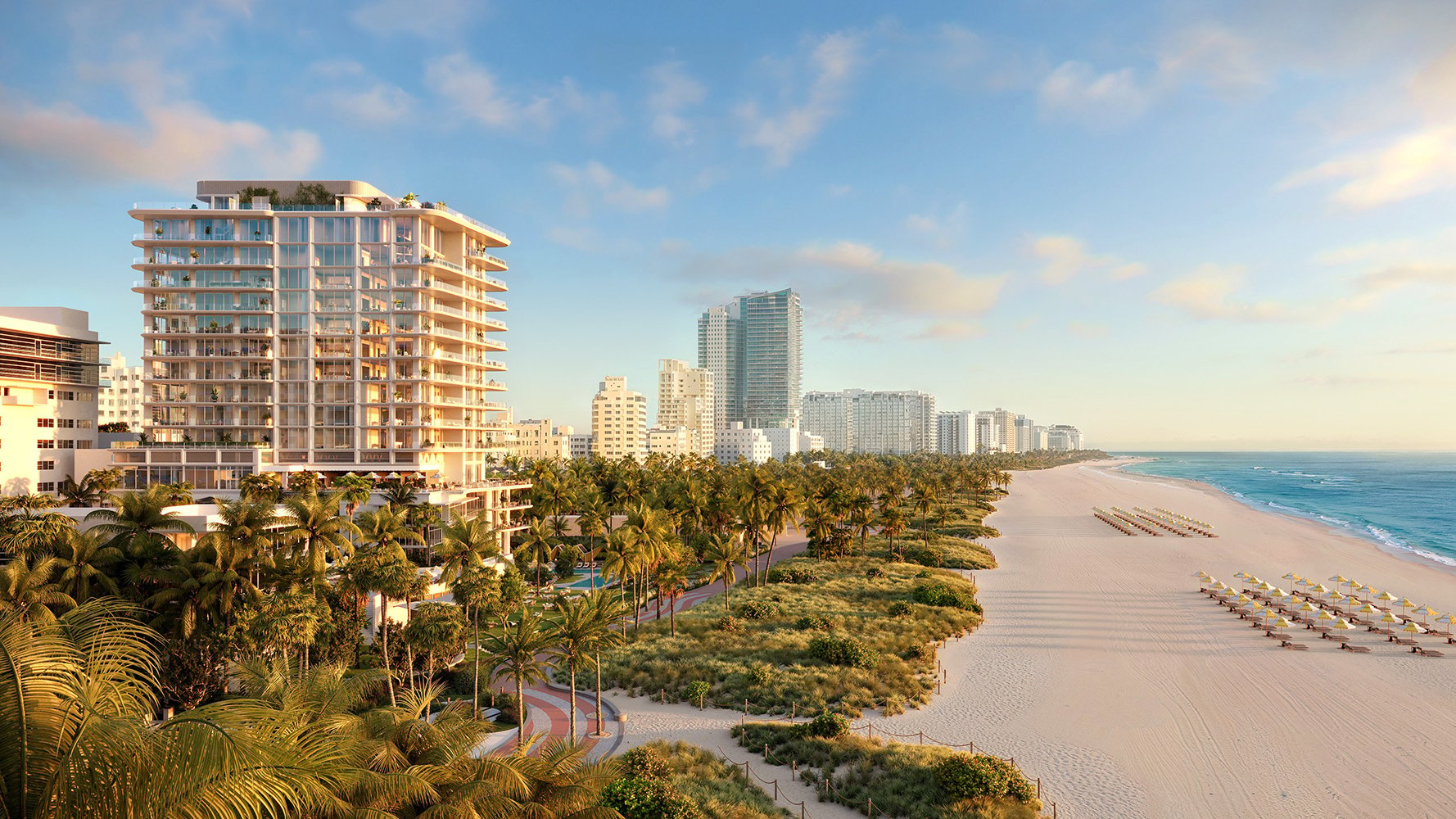
On Miami Beach, the appeal can be distilled into a specific kind of inventory: new, design-forward towers that feel purpose-built for contemporary living. Five Park Miami Beach is emblematic of this shift, frequently positioned in market coverage as a high-amenity, design-centric new-build alternative to older coastal stock.
For many NYC buyers, the contrast is immediate. Instead of navigating the idiosyncrasies of a proprietary lease and the discretion of a board interview culture, they are evaluating a unit as real property, with a governance structure that, while still meaningful, generally operates differently than the classic NYC co-op model.
A note of precision matters here. Miami condos still have associations and boards. The distinction is structural and transactional, not the absence of governance. The perceived advantage for many transplants is process. It can be more standardized and, in many cases, less personally invasive than a co-op approval model.
The press framing around the “Mamdani Effect” centers on tax-and-policy anxiety and the broader question of how cities retain high-income taxpayers. For real estate, what matters is the behavioral outcome: more inquiries and a more urgent tone from buyers evaluating South Florida.
One widely reported data point captures the mood. In the wake of the election, the Ritz-Carlton Residences, South Beach reportedly saw a 166 percent surge in inquiries from NYC luxury buyers. Not every inquiry becomes a contract, and sophisticated observers know that inquiry volume is not the same as closed sales. Still, a spike of that magnitude typically signals elevated intent, especially among buyers who already understand the difference between visiting Miami and owning Miami.
In South Beach, The Ritz-Carlton Residences® South Beach represents the kind of branded, service-led living that resonates with New Yorkers accustomed to full-time staff, operational predictability, and a building that functions with the ease of a private club.
The larger signal is about motivation. The next wave may be less about novelty and more about risk management. Many of the buyers arriving now are not discovering Florida. They are rebalancing exposure and selecting an ownership structure that feels more aligned with how they want to live and how they want to transact.
Headlines create heat, but luxury buyers still require a market that behaves. The better indicator is whether the segment shows steady absorption and disciplined pricing, rather than a stall that depends on perfect conditions.
Recent performance in the luxury condo segment suggests that demand remains active. In Q3 2025, Miami’s luxury condo segment priced at $2 million and above recorded 152 closed sales, up 15.2 percent year over year, with median price per square foot around $995, up 2.7 percent year over year. Those figures do not read as speculative acceleration. They read as steady momentum with moderate gains, which supports both lifestyle buyers and longer-hold allocators who want the option of liquidity.
Inventory conditions and forward-looking tailwinds are part of the underwriting as well, particularly as buyers weigh interest rates alongside Florida-specific costs. The near-term takeaway for a NYC buyer is not to “time” Miami. It is to underwrite Miami with the same rigor they apply in Manhattan: evaluate liquidity, building quality, carrying costs, and the likely exit audience.
In other words, treat the move as a decision about performance and experience. The best outcomes tend to follow buyers who remain practical, even when the market narrative is loud.
For some buyers, the defining differentiator is flexibility. Many NYC co-ops restrict subletting and impose rules that can make a pied-a-terre feel surprisingly illiquid. In contrast, Miami’s condo landscape includes buildings that allow short-term rentals, where permitted by local regulation and building rules.
That last clause is essential. “Short-term rentals” are never a blanket feature, and they should never be assumed. A premium buyer should read the governing documents closely, confirm the building’s policy, and understand the local regulatory environment before pricing an income scenario into the deal.
Still, even the existence of a legal, building-level framework for flexible use can change the calculus. For an owner who wants optional income, a structured way to host family, or the ability to pivot between seasons, the difference between “no” and “possible, with conditions” matters.
For the investment-minded buyer, the question is not simply whether a building permits a particular rental term. It is whether the building’s brand, management quality, and resident culture can protect value while accommodating flexibility. In luxury, tolerance for transient use varies. The smartest underwriting is as much about the building’s identity as it is about its rules.
South Florida does not sell a single lifestyle. It sells a portfolio of lifestyles. The most effective NYC buyers begin with a simple discipline: choose the life first, then choose the building.
In Miami Beach, the draw is coastal proximity paired with increasingly contemporary product. Ultra-luxury oceanfront developments such as The Perigon Miami Beach are often positioned to appeal to global UHNW buyers who want beachfront access and a quieter, more private design sensibility. For buyers coming from Manhattan, that sense of retreat can be as valuable as the square footage itself.
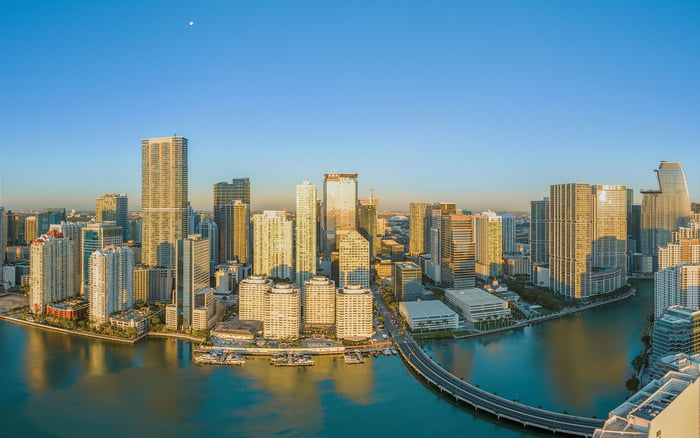
In Brickell and Downtown, the value proposition shifts to the urban core: walkability, restaurants, offices, and a skyline identity. Branded residences are a major part of that story, and Aston Martin Residences Downtown Miami underscores how the market packages design and hotel-like amenities into a condominium form that feels familiar to luxury travelers.
In Sunny Isles, the appeal often centers on high-rise ocean views and a resort-meets-residential environment. The branded residence trend is especially visible here, with projects such as Bentley Residences Sunny Isles illustrating how developers compete on experience, wellness, and statement-making amenities rather than only on square footage.
Edgewater deserves mention for buyers who want a newer urban residential corridor without the density of the Brickell core. Public market coverage points to Edgewater as a significant pipeline for new luxury condo development, a sign that the city’s inventory is still evolving in ways that can create compelling entry points for new-construction buyers.
Finally, there are enclaves that function almost as sovereign worlds. Fisher Island is widely positioned in luxury brokerage materials as one of South Florida’s most exclusive settings, often associated with top-tier pricing and a distinctly insulated lifestyle. For the right buyer, the appeal is less about being close to everything and more about being buffered from it.
Miami’s condo freedoms come with Florida realities. Insurance and HOA costs have become more central to the ownership equation, and local reporting has highlighted rising HOA and assessment pressures alongside the politics of cost relief.
This matters for New York buyers because the comparison is not only purchase price. It is monthly friction. A well-priced acquisition can lose its elegance if the ongoing cost lines are not properly modeled and stress-tested.
A disciplined approach includes:
The point is not to discourage a move to South Florida. It is to preserve the feeling of ownership once the honeymoon ends. The strongest Miami transactions are the ones where the buyer knows, in advance, exactly what they are buying into and what the operating profile looks like across different market conditions.
For a New York buyer accustomed to co-op conventions, the optimal entry into Miami often follows three principles.
First, prioritize building quality over headlines. Brand names and architecture matter, but governance, management, and resident culture matter more over a five to ten-year hold. Luxury is not only what you see in the lobby. It is how the building is run, how decisions are made, and how consistently the experience is delivered.
Second, decide which friction you are avoiding. If the goal is privacy, choose a transaction path and building profile that minimizes personal exposure. If the goal is flexibility, confirm the building’s rental posture and local regulation constraints before you assume optionality. In both cases, clarity up front prevents disappointment later.
Third, buy the Miami you will actually use. The buyer who wants ocean mornings should not compromise into a purely urban tower. The buyer who needs proximity to meetings and airports should not force a beach lifestyle that creates daily logistical drag. Matching the home to the lived reality is what makes a lifestyle purchase feel like an upgrade, not a complication.
The migration numbers and the “Mamdani Effect” make for compelling narratives, and they help explain why attention is returning to South Florida with new urgency. But luxury real estate is ultimately personal. The right condo is not a political statement. It is a lifestyle instrument, chosen for control, comfort, and the ability to move through life with less friction.
Is a Miami condo really “easier” than a NYC co-op? Often, yes. Condo ownership is real property and the transaction typically involves fewer board-driven personal disclosures than a classic co-op purchase, though associations and their rules still matter.
What does the “Mamdani Effect” mean for pricing in South Florida? It signals heightened buyer interest and urgency from NYC, but pricing still tracks fundamentals like inventory, building quality, and broader financing conditions.
Should NYC buyers prioritize Miami Beach or Brickell first? Choose based on usage: Miami Beach for coastal lifestyle and privacy, Brickell for an urban core with branded, service-led residences.
Do all Miami luxury condos allow short-term rentals? No. Short-term rentals depend on building rules and local regulation, so review governing documents before assuming flexibility.
What is the biggest surprise cost for new Florida condo owners? Carrying costs, especially HOA and insurance dynamics, can shift over time and should be stress-tested early in the purchase process.
For private guidance on South Florida luxury condos, connect with MILLION Luxury.
If branded residences are on your mind — as a home or as an allocation — we would be glad to share what we are seeing, privately.
Begin a quiet conversation