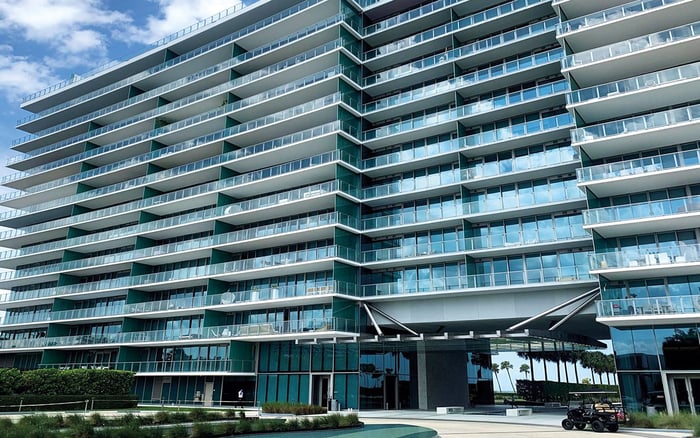
A buyer-focused guide to verifying vacant-unit condition, inspection access, pest-control coverage, and service records at Oceana Key Biscayne before closing.

At Oceana Key Biscayne, a purchase decision should rest on more than a beautifully presented interior. For a vacant residence, the essential questions are operational: who has monitored it, which systems have remained running, what service records are available, and whether the buyer can inspect every relevant area before committing.
The property's address is 350 Ocean Drive, Key Biscayne, FL 33149. Confirm the exact unit, parking, storage, and any separately titled interests in the transaction documents. A listing description is no substitute for establishing precisely what transfers.
The approach is verification, not suspicion. Nothing here establishes an infestation, mold condition, maintenance failure, or access violation at Oceana. These are purchase safeguards, not findings about the property.
Ask the seller for a written vacancy timeline covering the last period of occupancy, subsequent visits, and available maintenance history. Establish whether HVAC equipment remained operating and request available service records. An attractive showing cannot establish how a residence was managed between visits.
Arrange an inspection with the relevant systems operating. Ask your inspector which mechanical spaces and equipment require access, then secure permission and scheduling before the appointment. If an area cannot be inspected, document the limitation and determine whether a return visit is needed within the contractual timetable.
Where findings warrant it, engage an appropriate specialist. The objective is to connect observed conditions with documented servicing-not to treat an invoice as proof of present condition or an inspection as a complete maintenance history.
For a second-home purchase, also ask who would monitor the residence during future absences. Keep that ownership plan separate from the seller's account of past care.
Florida law gives an association an irrevocable right to enter units during reasonable hours when necessary to maintain, repair, or replace common elements or association-maintained unit components, or to prevent property damage. That authority is limited to those purposes; it is not unrestricted permission to enter for any reason.
Nor does it establish your contractual right to inspect the residence. Have counsel address buyer access expressly, including specialist visits, mechanical-space access, vendor coordination, and reinspection after agreed work.
Request the declaration, bylaws, and rules to establish the framework for unit entry and contractor activity. Ask management to confirm applicable notice procedures, scheduling requirements, and authorization arrangements in writing. Do not assume that a key held by management authorizes every requested visit.
The same distinction applies when comparing Oceana Bal Harbour: verify each association's documents independently rather than carrying expectations from one property to another.
The question is not simply whether pest control exists. It is whether the applicable service agreement covers this residence's interior, how access is arranged, and what work has actually been completed.
Request the applicable association agreement and ask whether vacant units receive treatment. Confirm the service scope, scheduling arrangements, and responsibility for any privately commissioned work. Establish Oceana's treatment frequency, interior coverage, approved vendors, and entry-notice procedures directly rather than assuming them.
Ask for available unit-specific service dates, findings, treatment methods, follow-up recommendations, and unresolved items. Distinguish a scheduled visit from a completed one. If access was unavailable, ask whether another appointment took place and whether completion is documented.
Florida's pest-control law also provides state regulatory entry authority during regular business hours for pesticide-related duties and records. That authority does not give a buyer or private pest contractor an independent right to enter. Arrange permission through the appropriate transaction and association channels.
Separate association-maintained records from the seller's private maintenance file. Association contracts, bids, invoices, and related accounting records can help establish documented service scope and spending. Seller-held records may address work commissioned privately inside the unit. Neither file should automatically be treated as complete evidence of the other.
For each relevant service, connect four points: the covered area, the work performed, the completion date, and any outstanding recommendation. A payment record may establish an expenditure without confirming that follow-up was completed.
Request budgets and financial statements for context on recurring maintenance spending and the association's financial position. Review meeting minutes for documented discussion of repairs, service concerns, and assessments. Verbal assurance that everything is handled should not replace that review.
If the search also includes Park Grove Coconut Grove, apply the same documentation standard while keeping each property's responsibilities and service arrangements distinct.
Florida law gives a purchaser under contract the right to specified current condominium documents at the seller's expense, including the declaration. Access to association official records is related but separate: members and people they authorize may inspect records at reasonable times. Arrange owner authorization rather than assuming prospective-buyer status alone provides access.
Submit focused written requests and retain proof of receipt. Coordinate statutory response deadlines with contractual review periods; do not assume they coincide. Have counsel confirm current requirements and the applicable contract before relying on any cancellation or review period.
Track each requested item as received, outstanding, or requiring clarification. If essential records remain unavailable as a deadline approaches, ask counsel to address the contractual position rather than allowing silence to stand in for satisfactory review.
Unit-level servicing is only one part of the purchase file. Request applicable structural and life-safety inspection reports, milestone-inspection materials, and structural-integrity reserve studies through the association's official-record process. Evaluate their relevance and applicability to the transaction rather than presuming either.
Obtain association insurance records and compare coverage responsibilities with the governing documents. Do not assume association insurance addresses every condition within a vacant residence. Ask your insurance adviser to identify the coverage you would need and clarify questions arising from the intended occupancy pattern.
These materials complement the physical inspection; they do not replace it. Likewise, a satisfactory unit inspection does not resolve every association-level question.
Before review periods expire, have counsel address inspection access, documentation deadlines, required repairs or treatments, reinspection rights, and available remedies in the agreement or a signed amendment. Define agreed work precisely enough to verify, including the supporting documentation expected afterward.
Arrange a final walkthrough with systems operating. Revisit agreed work and any previously inaccessible areas within the rights negotiated for the transaction. The strongest closing position rests on a consistent record: condition observed, responsibility understood, service documented, and remaining obligations clearly allocated.
For a discreet conversation about your next South Florida residence, connect with MILLION.
If branded residences are on your mind — as a home or as an allocation — we would be glad to share what we are seeing, privately.
Begin a quiet conversationThe property is identified at 350 Ocean Drive, Key Biscayne, FL 33149. Confirm the exact unit and included parking, storage, and separately titled interests in the transaction documents.
Establish the vacancy timeline and HVAC operating history, and arrange access to relevant mechanical spaces. Inspect with systems operating and obtain specialist evaluations where findings warrant them.
No. Its statutory entry authority is purpose-limited to specified maintenance, repair, replacement, and damage-prevention needs during reasonable hours.
No. Buyer inspection access should be addressed in the purchase agreement or a signed amendment, including specialist visits and reinspection.
Confirm that directly through the applicable agreement and management. Do not assume interior coverage, treatment frequency, or automatic access to vacant residences.
Request available unit-specific service dates, findings, treatment methods, follow-up recommendations, and unresolved items. Distinguish scheduled appointments from documented completed visits.
Prospective buyers should arrange owner authorization rather than assume independent access. Association members and people authorized by them may inspect official records at reasonable times.
Request applicable service contracts, invoices, accounting records, budgets, financial statements, and meeting minutes. Keep association-paid work distinct from privately commissioned unit maintenance.
Yes. Request applicable structural and life-safety inspection materials and reserve studies, then compare association insurance responsibilities with the governing documents.
Have counsel document required work, supporting records, reinspection rights, deadlines, and remedies. Arrange a final walkthrough with systems operating to revisit agreed work.