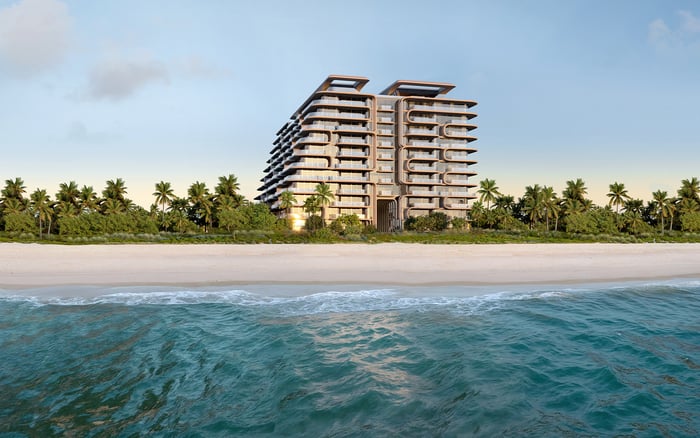
A buyer-focused guide to evaluating valet capacity, arrival flow, guest parking, staffing, and daily convenience before purchasing luxury real estate in Pompano Beach.

In luxury real estate, the arrival sequence is more than a convenience. It is the first private threshold between the city, the beach, and the residence. For buyers considering Pompano Beach, valet capacity deserves the same scrutiny as ceiling heights, terrace depth, elevator privacy, and amenity programming.
A beautiful lobby can be compromised by a congested motor court. A well-designed residence can feel less effortless if every dinner reservation begins with uncertainty at the curb. The question is not simply whether a building offers valet. The more revealing question is whether the system has the space, staffing, protocols, and flexibility to perform when it matters.
This is especially relevant in Pompano Beach, where oceanfront and waterfront living often means residents rely on cars more than they might in denser urban cores. Beach clubs, marinas, restaurants, golf, private airports, and neighboring coastal towns all shape daily movement. For buyers comparing addresses such as Armani Casa Residences Pompano Beach or The Ritz-Carlton Residences® Pompano Beach, the quality of valet operations should be treated as part of the home itself.
Parking inventory and valet capacity are related, but they are not the same. A garage may have adequate spaces while the arrival court struggles to absorb simultaneous resident arrivals, guest drop-offs, deliveries, and rideshare activity. Buyers should ask how many vehicles can be staged at the front without interrupting circulation.
Focus on the choreography. Where does a resident pause on arrival? Where do guests wait? Can a second or third car queue without affecting traffic? Is there a separate lane for service vehicles or move-ins? If the entrance is shared with hotel, retail, restaurant, or amenity traffic, ask how those uses are separated during peak periods.
The most refined properties make this feel invisible. That invisibility is designed, staffed, and paid for. If you are evaluating a residence such as W Pompano Beach Hotel & Residences, ask how any hospitality-style arrival experience is organized for private residents, overnight guests, and public-facing visitors. The goal is not drama at the driveway. It is quiet predictability.
A luxury buyer should know who receives priority when demand peaks. Residents, registered guests, restaurant patrons, beach club users, vendors, and event attendees can all place pressure on an arrival court. The operating rules should make resident priority unmistakable.
Ask whether residents may call down for a vehicle in advance, whether requests are handled through an app or concierge, and how retrieval times are managed when the building is busiest. Also ask whether the valet team keeps certain vehicles on-site, off-site, or in managed garage zones. For households with multiple cars, clarify whether all vehicles receive the same service level or whether policies differ by space assignment, ownership structure, or association rules.
For second-home owners, this can be particularly important. A residence may sit unused during part of the year, then host family, guests, and staff during high-demand periods. The valet operation should support that rhythm without turning each arrival into a negotiation.
Guest parking is one of the most underestimated luxury details. Buyers often focus on their own assigned spaces, then later discover that dinner guests, family members, private chefs, nurses, drivers, trainers, or yacht crew have less convenient options.
Ask where guest vehicles are placed, how many can be accepted at one time, and whether there are fees, time limits, validation procedures, or blackout periods. If the building expects valet to manage both resident and guest cars, ask whether guest demand ever competes with resident service. A well-run front desk should have a precise answer.
At a coastal address such as Ocean 580 Pompano Beach, buyers may also want to consider beach-day patterns. Visitors do not always arrive in neat appointment windows. Holidays, weekends, and school breaks can create a different operating reality than a weekday sales tour.
Valet service is a human operation. The physical design matters, but staffing determines whether the promise holds. Ask who operates the valet program, how staffing is scheduled, and whether overnight coverage is included. If valet service is mandatory, optional, or bundled into association fees, understand the cost structure before contract.
Buyers should also review whether the building has written service standards. These may address hours, guest procedures, liability, key handling, electric vehicle charging protocols, oversized vehicles, motorcycles, golf carts, bicycles, and vendor access. For luxury households, the details matter. A collector car, a large SUV, or a rotating family fleet may expose weaknesses in policies that seemed adequate on paper.
If you are comparing new construction with established buildings, be aware that early operations can evolve after residents move in. Ask how valet staffing will be calibrated as occupancy rises. Ask who has authority to increase staffing, adjust procedures, or modify fees if the original model proves insufficient.
A mid-morning presentation may not reveal the true valet experience. Visit when residents are most likely to be moving: early evening, weekend afternoons, holiday periods, and just before dinner. Observe the pace, but also the demeanor. Are attendants calm? Is the curb clear? Are residents greeted by name? Are cars returned with care rather than haste?
The most useful question is often simple: what happens when several residents arrive at once? Listen for specificity. A confident answer will describe process, staffing, and space. A vague answer may suggest the building is relying on goodwill rather than systems.
For buyers considering branded or amenity-rich residences such as Waldorf Astoria Residences Pompano Beach, the expectation of service is naturally elevated. That makes operational clarity even more important. Brand language may set the tone, but execution defines daily satisfaction.
Luxury living involves movement beyond residents and guests. Florists, art handlers, housekeeping teams, personal assistants, wellness providers, caterers, contractors, pet services, and package deliveries can all intersect with valet and loading areas. If those flows are not separated, the arrival experience can become crowded.
Ask whether the building has a dedicated loading zone, freight elevator access, vendor registration, and move-in controls. Clarify whether private drivers may wait on-site and where they are allowed to stage. If you regularly use a chauffeur, security driver, or house manager, ask how that person interacts with valet protocol.
This is where Pompano Beach buyers should be especially practical. Waterfront living often brings a lifestyle of boating, beach equipment, visiting relatives, weekend entertaining, and seasonal routines. The building should be prepared for more than a single resident pulling into a quiet garage.
Before making an offer, request all available parking and valet-related documents. Ask your advisor to review association rules, proposed budgets, parking assignments, guest policies, management agreements, and any disclosures related to shared access. If the property is still in development, ask what is committed versus subject to operational change.
For resale condominiums, speak with building management about current patterns. For pre-construction, ask the sales team to explain how the porte cochere, garage, staffing, and guest arrival plan will function at full occupancy. If you are comparing Casamar with larger or more hospitality-driven offerings, the correct answer may differ by scale, ownership structure, and lifestyle expectations.
Valet capacity is not necessarily a deal breaker. It is a value signal. A building that has anticipated arrival pressure is often a building that understands how its residents actually live.
Why is valet capacity important when buying in Pompano Beach? It affects daily convenience, guest experience, privacy, and the perceived quality of the building every time you arrive or leave.
Is valet capacity the same as the number of parking spaces? No. Parking spaces indicate storage, while valet capacity reflects staging, staffing, circulation, retrieval, and peak-hour performance.
What should I ask during a sales presentation? Ask how many cars can be staged, how resident priority works, where guests park, and how the system performs at full occupancy.
Should I visit the property at different times? Yes. Evening, weekend, and holiday observations can reveal patterns that a quiet weekday tour may not show.
How does valet affect guests? Guest parking policies can influence entertaining, family visits, private staff access, and the overall hospitality of the residence.
What documents should I review? Review association rules, parking assignments, service policies, operating budgets, and any available valet or garage management materials.
Are branded residences automatically better at valet service? Not automatically. Branding may raise expectations, but physical design, staffing, and management protocols determine performance.
What if I own multiple vehicles? Clarify whether each vehicle receives the same level of service, where cars are stored, and whether additional fees or rules apply.
Should electric vehicle charging be part of the valet discussion? Yes. Ask how charging access is managed, who moves vehicles, and whether charging demand affects retrieval or parking logistics.
What is the best way to shortlist comparable options for touring? Start with location fit, delivery status, and daily lifestyle priorities, then compare stacks and elevations to validate views and privacy.
For a tailored shortlist and next-step guidance, connect with MILLION.
If branded residences are on your mind — as a home or as an allocation — we would be glad to share what we are seeing, privately.
Begin a quiet conversation