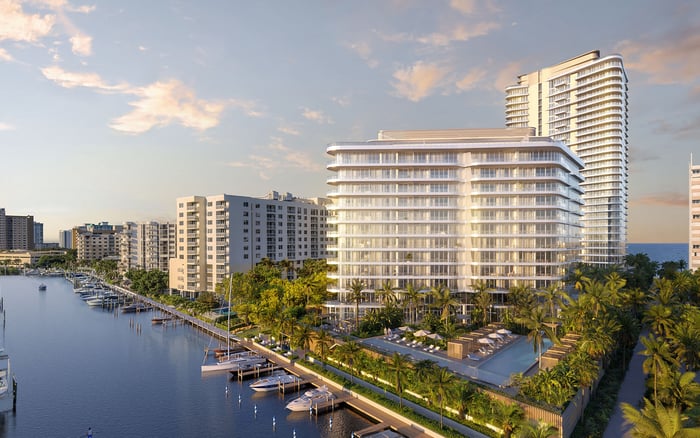
A discreet buyer’s guide to wind mitigation credit questions for luxury real estate in Pompano Beach, with a focus on documentation, underwriting, associations, and closing discipline.

In Pompano Beach, even the most elegant residence carries a practical question at its core: how will the property be viewed by insurance underwriters, and what documentation supports any available wind mitigation credits? For luxury buyers, the issue is less about pursuing a modest line-item discount and more about understanding the total cost and resilience profile of a coastal asset before the contract becomes emotional.
Wind mitigation credits should never be treated as a casual promise. They are typically tied to the features, documentation, inspection results, and underwriting rules applicable to a specific property and policy. A buyer should ask early, ask precisely, and require written confirmation from the appropriate professionals before relying on any assumed savings.
This is especially relevant when comparing Pompano Beach options across condo residences, waterfront homes, and new development. A buyer evaluating The Ritz-Carlton Residences® Pompano Beach may have a different due diligence path than a buyer considering a resale residence in an older building or a single-family property with past improvements. The goal is not to generalize. The goal is to know what the insurer will actually recognize.
Before discussing price, ask whether any quoted ownership cost includes wind mitigation credits. If the answer is yes, ask who calculated them, which insurance quote they are attached to, and whether they are transferable to a new buyer’s policy. A seller’s premium history can provide context, but it is not a substitute for buyer-specific underwriting review.
Luxury buyers should separate estimates from binding information. A projection from a conversation is not a formal quote. A prior inspection is not always a current inspection. A building feature described in marketing language may still require verification in insurance language.
The cleanest request is simple: provide the wind mitigation inspection or relevant building documentation, the insurance quote that reflects the credits, and confirmation of whether the quote is based on the buyer’s intended ownership structure and coverage needs. Clarify before negotiating, not after.
In a condominium, wind mitigation questions can be more layered than in a single-family purchase. The residence may have its own interior condition, openings, shutters, glass, or documentation. The building may have association-controlled components. The association’s master policy, reserve posture, and maintenance discipline may also affect the broader ownership picture, even when the buyer’s personal policy is separate.
Ask for the documents an insurance professional would need to evaluate the unit. Do not assume that a building’s prestige, height, or recent presentation automatically translates into a particular credit. Instead, ask what is documented, who maintains the relevant elements, and whether any pending work could alter the underwriting view.
For an oceanfront buyer comparing new offerings such as Waldorf Astoria Residences Pompano Beach with established luxury inventory, the question is not which property sounds more protected. The question is which facts can be documented for underwriting, association review, and long-term ownership planning.
New-construction residences can feel straightforward because everything is fresh, curated, and professionally presented. Still, buyers should ask which wind-related features will be documented at delivery, what forms or inspection materials will be available, and how the insurer will evaluate the residence once coverage is requested. The answer may not be fully knowable in the first sales conversation, but the process should be clearly understood.
A buyer considering Armani Casa Residences Pompano Beach should ask for the anticipated path to insurance documentation, including who will provide building information and when it will be available. The same discipline applies to W Pompano Beach Hotel & Residences, where buyers should understand how residential ownership, association documentation, and insurance review will intersect.
The most refined buying process is not rushed by beautiful renderings or amenity narratives. It treats insurance evidence as part of the closing architecture, alongside title, financing, association review, and legal diligence.
For waterfront and estate-style properties, the conversation often turns to improvements. Buyers may hear that windows were upgraded, the roof was replaced, shutters were added, or garage doors were reinforced. Those statements are useful only if they are supported by documentation an insurer will accept.
Ask for permits, invoices, product approvals if available, prior inspection forms, photographs, and any documentation the seller used for existing coverage. Then ask your insurance professional whether those materials are sufficient or whether a fresh inspection is required. A luxury renovation may be visually impeccable while still requiring a separate verification process for credit purposes.
In Broward, where coastal ownership is part lifestyle and part long-horizon asset management, the best buyers treat documentation as a form of liquidity. The more clearly a property’s protective features can be proven, the easier it is to price risk, negotiate intelligently, and move toward closing with fewer surprises.
Timing matters. Ask your insurance advisor to review the property before inspection periods or financing deadlines become compressed. Confirm what information is needed, whether a wind mitigation inspection should be ordered, and how long it may take to receive a quote that reflects the property accurately.
Ask whether the quoted premium depends on specific credits, deductibles, occupancy assumptions, ownership entity, or coverage selections. If you plan to use the residence seasonally, place it in a trust, own through an entity, or undertake improvements after closing, raise those details early. The wrong assumption can make a polished pro forma less reliable.
Also ask what would cause credits to change later. Ownership changes, policy changes, property condition, inspection updates, or association decisions may all require review. The point is not to predict every future adjustment. It is to understand which variables matter before making an acquisition decision.
Wind mitigation should be handled with discretion. It is not usually a theatrical negotiation point. It is a file-management issue that becomes powerful because it clarifies cost, risk, and documentation. If credits are uncertain, a buyer can request additional materials, ask for access for inspection, or adjust the economic conversation through customary contract channels.
The most sophisticated posture is calm and specific: identify what is missing, quantify what can be quantified by your advisors, and avoid relying on unsupported representations. In Pompano Beach’s luxury segment, where properties often compete on design, services, views, and brand association, insurance clarity is one of the quiet advantages of a well-run purchase.
A residence such as Ocean 580 Pompano Beach may appeal for one set of lifestyle reasons, while another buyer may prefer a different address, building scale, or service model. In every case, the underwriting file deserves the same attention as the terrace, kitchen, lobby, and view corridor.
Before buying, ask these questions in writing. What wind mitigation credits are included in any insurance estimate? Which documents support them? Is a current wind mitigation inspection available? If not, who will order one and when? What building or association records are needed? Are the relevant components maintained by the owner or the association? Has the insurer reviewed the exact residence under the buyer’s expected coverage scenario? Could future improvements increase, reduce, or require re-verification of credits?
These questions do not replace legal, insurance, inspection, or association counsel. They make those conversations more productive. The best luxury purchase is not merely the one that photographs beautifully. It is the one whose documents, costs, and assumptions are equally composed.
Should I rely on the seller’s existing wind mitigation credits? Use them as background only. Your own insurer should confirm what applies to your policy and ownership structure.
When should I ask about wind mitigation credits? Ask before key contract deadlines. Early review gives your insurance advisor time to identify missing documentation.
Is a wind mitigation inspection always current enough for a buyer? Not necessarily. Ask your insurer whether an existing inspection is acceptable or whether a new one is needed.
Do condo buyers need different questions than house buyers? Yes. Condo buyers should separate unit-level items from building and association-controlled components.
Can new development buyers assume credits will apply automatically? No. Ask what documentation will be available at delivery and how the insurer will review it.
What documents should I request from a seller? Request inspections, permits, invoices, association records, and any materials used for existing insurance review.
Can credits change after closing? They can be reviewed again if coverage, property condition, documentation, or underwriting requirements change.
Should wind mitigation affect my offer price? It can inform negotiations if credits are uncertain or documentation is incomplete. Let advisors quantify the issue.
Who should verify the credits for me? Use an insurance professional and qualified inspector, with counsel reviewing contract and association implications.
Is this only an issue for oceanfront property? No. Oceanfront exposure makes the topic prominent, but all coastal luxury buyers should ask disciplined questions.
When you're ready to tour or underwrite the options, connect with MILLION.
If branded residences are on your mind — as a home or as an allocation — we would be glad to share what we are seeing, privately.
Begin a quiet conversation