A buyer-focused guide to evaluating storm preparation services, building protocols, staffing, communications, and post-storm recovery before purchasing luxury real estate in Downtown Miami.
For a luxury buyer in Downtown Miami, storm preparation is more than a maintenance issue. It is a measure of management quality, building discipline, resident communication, and the depth of a tower’s private service culture. The question is not whether a building has a plan. The question is how detailed, staffed, tested, and owner-friendly that plan becomes when weather turns disruptive.
In a high-rise residence, preparation touches nearly every part of daily life: elevators, valet, garage access, generators, terrace furniture, amenity closures, deliveries, pets, staff availability, insurance coordination, and re-entry after a storm. A well-run property makes these issues feel orderly. A poorly documented property leaves owners guessing at precisely the moment they need clarity.
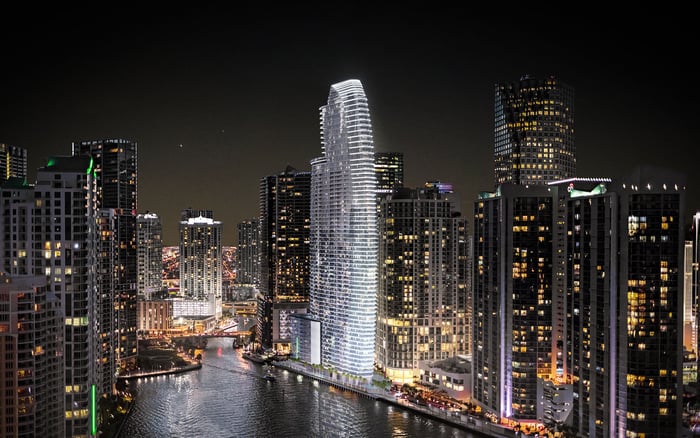
This is especially relevant across the vertical luxury market spanning Downtown, Brickell, and the waterfront corridors around Biscayne Bay. Buildings such as Aston Martin Residences Downtown Miami, One Thousand Museum Downtown Miami, and Waldorf Astoria Residences Downtown Miami are often considered for design, views, services, and prestige. The more refined question is how each residence supports owners when the weather calendar becomes serious.
Begin with accountability. Ask whether storm preparation is led by the property manager, general manager, condominium association, building engineer, hospitality operator, security director, or an outside vendor. In the best-run buildings, responsibility is not vague. There is a clear chain of command and a written procedure that can be explained without improvisation.
Request a plain-language summary of the storm protocol before contract, not after closing. It should explain how decisions are made, how residents are notified, who remains on site, which services are suspended, and what happens if local conditions restrict access. For absentee owners and second-home buyers, this is essential. If you may be in New York, London, São Paulo, or Palm Beach when a storm approaches Miami, you need to know who is physically protecting the residence and what they are authorized to do.
Also ask when the protocol is reviewed. A plan that is updated, rehearsed, and integrated with building operations inspires more confidence than a static document buried in a resident portal.
Luxury buyers should distinguish between common-area preparation and in-unit preparation. The association may secure lobby areas, pool decks, landscaping, garage entrances, mechanical rooms, and amenity spaces. That does not automatically mean staff will enter private residences to move balcony furnishings, check terrace drains, secure outdoor kitchens, or close shades.
Ask whether the building offers storm preparation services for individual units. If so, confirm whether they are included in monthly assessments, billed separately, available through preferred vendors, or limited to certain residences. If staff access is required, clarify the authorization process and whether owners can pre-approve entry in writing.
Terraces deserve special attention. In many luxury residences, outdoor furniture, planters, sculptures, lighting, and grills are part of the lifestyle investment. Ask what must be brought inside, who is responsible, and how early the building requires compliance. A beautiful terrace is also an operational responsibility.
A storm plan should not stop at shutters and sandbags. In a sophisticated Downtown Miami tower, ask about backup power strategy, fuel arrangements, life-safety systems, water management, sump pumps, access control, fire command systems, and elevator procedures. The answers may be technical, but the buyer takeaway is direct: how livable and secure does the property remain if normal conditions are interrupted?
Ask which systems are supported by backup power and which are not. Confirm whether elevators operate in a limited mode, whether air conditioning is supported in common areas or residences, and how garage access is managed. If the building has private elevators or high-floor residences, this is not a secondary matter.
At Casa Bella by B&B Italia Downtown Miami, a buyer may naturally focus on design language and interiors. That same buyer should still ask the less glamorous questions about emergency power, water intrusion response, and staffing. In luxury real estate, resilience is part of comfort.
Communication is often the difference between stress and confidence. Ask how the building contacts residents before, during, and after a storm. Email alone may not be enough. A stronger approach may include text alerts, app notifications, phone trees, front desk calls, resident portal updates, and direct outreach to off-site owners.
Confirm whether notices are sent in phases: preparation, service adjustments, final pre-storm instructions, post-storm inspection, amenity reopening, and re-entry guidance. Ask whether notices include deadlines for terrace clearing, valet restrictions, package holds, visitor policies, pet guidance, and garage procedures.
For international buyers, ask whether the management team can communicate with designated representatives, family offices, or property managers. If a residence is held as a seasonal home, the building’s ability to coordinate with the owner’s wider household team can be as important as the residence itself.
Storm preparation is personal. It affects cars, pets, staff, household managers, guests, and service providers. Ask what happens to valet operations, whether vehicles can remain in the garage, how flood-prone access points are managed, and whether charging stations or mechanical parking systems have special protocols.
Pet owners should ask about relief areas, post-storm access, elevator availability, and building rules if outdoor spaces are closed. Families should ask how guests, nannies, private chefs, and caregivers are handled during restricted-access periods. If a household relies on daily staff, the building’s policies must be understood before closing.
In Brickell, where residential towers, offices, restaurants, and traffic converge, logistics can feel different from quieter enclaves. Buyers considering The Residences at 1428 Brickell should ask how urban density, parking, and staff circulation are handled during storm preparation windows.
New-construction residences often present advanced design, modern codes, new systems, and elevated amenities. Still, buyers should not assume that new means operationally proven. Ask whether the building has a completed storm operations manual, whether the management team is already selected, and how early owners will receive resident procedures.
For pre-completion purchases, request details on the intended staffing model, emergency communication platform, vendor relationships, insurance framework, generator planning, and turnover responsibilities. Ask who bridges the period between developer control and resident association control. That transition can matter.
If a sales team cannot answer operational questions yet, ask when the answers will be available and whether they will be included in purchaser materials. Storm preparation is not a decorative amenity. It is an ownership service.
Before submitting an offer or moving deeper into diligence, request the storm preparation policy, association rules affecting balconies and terraces, emergency contact procedures, insurance summary, reserve-related documents when available, vendor access policies, and any owner responsibility checklist. If the property is a resale, ask the seller how the building communicated during prior severe-weather periods and whether any in-unit preparation service was used.
For a trophy residence, consider adding storm preparation to your private due diligence checklist alongside views, parking, storage, staff quarters, finishes, and privacy. A building that can answer detailed operational questions with calm precision is signaling more than preparedness. It is signaling culture.
Should I ask about storm preparation before signing a contract? Yes. Storm services affect the ownership experience, access, insurance coordination, and the practical care of the residence.
Is storm preparation usually handled by the building or the owner? It varies. Common areas are typically building responsibilities, while private terraces and interiors may remain the owner’s responsibility.
What is the most important document to request? Ask for the building’s storm preparation policy or resident emergency procedures, plus any checklist for owner responsibilities.
Should absentee owners ask different questions? Yes. Confirm who may enter the residence, how authorization works, and whether staff can coordinate with a family office or local manager.
Do luxury buildings provide in-unit storm services? Some may offer or coordinate them, but availability, cost, and scope should be confirmed in writing before purchase.
Why do terrace rules matter so much? Outdoor furnishings, planters, and decor can become hazards if not secured, so buildings often set clear preparation deadlines.
What should I ask about elevators? Ask whether elevators operate during limited power conditions, how service is prioritized, and what happens after a storm passes.
Are generators enough to make a building fully functional? Not necessarily. Ask exactly which systems are supported, including life safety, access, water, cooling, and elevators.
Should I compare Downtown and Brickell differently? Yes. Both are vertical urban markets, but access, traffic, valet, and staffing logistics may differ by location and building design.
Can storm readiness influence resale appeal? Yes. Sophisticated buyers often value buildings that demonstrate disciplined operations, clear communication, and reliable service standards.
To compare the best-fit options with clarity, connect with MILLION.
If branded residences are on your mind — as a home or as an allocation — we would be glad to share what we are seeing, privately.
Begin a quiet conversation