A discreet buyer’s guide to evaluating staff parking protocols before purchasing luxury real estate in Aventura, with practical questions for households that rely on private drivers, nannies, chefs, assistants, security, and recurring vendors.
For many luxury buyers in Aventura, parking is not simply a question of how many spaces convey with a residence. It is a question of household rhythm. A private driver may arrive before school drop-off. A nanny may stay late. A chef may unload for dinner at home. A personal assistant, housekeeper, security professional, dog walker, or wellness practitioner may need predictable access without creating friction at the front desk or porte cochere.
The best residences make this choreography feel invisible. The challenge is that staff parking protocols are often governed by house rules, valet policies, access-control procedures, association practices, and day-to-day management discretion. They may not be obvious during a polished sales tour. Before committing to a luxury condominium, waterfront residence, or new-construction opportunity, buyers should treat staff parking as part of their operational due diligence.
This is especially relevant in Aventura, where many buyers compare privacy, service, and access with neighboring Sunny Isles Beach, North Miami, Bal Harbour, and Hallandale Beach. A home that appears effortless on paper can become inconvenient if the building’s staff parking policy does not match the way your household actually lives.
A standard parking count rarely answers the most important question: who needs to park, when, for how long, and under what credential? Before touring, make a private list of recurring staff and service patterns. Include drivers, nannies, tutors, household managers, chefs, housekeepers, pet care providers, personal trainers, massage therapists, private nurses, security, yacht crew, and regular maintenance vendors.
Then separate those people into categories. Which individuals need daily access? Which require only short-term loading? Which may arrive after normal business hours? Which must remain on property while you are away? A nanny who stays through dinner service is different from a florist delivering arrangements. A driver waiting between appointments is different from a contractor staging equipment.
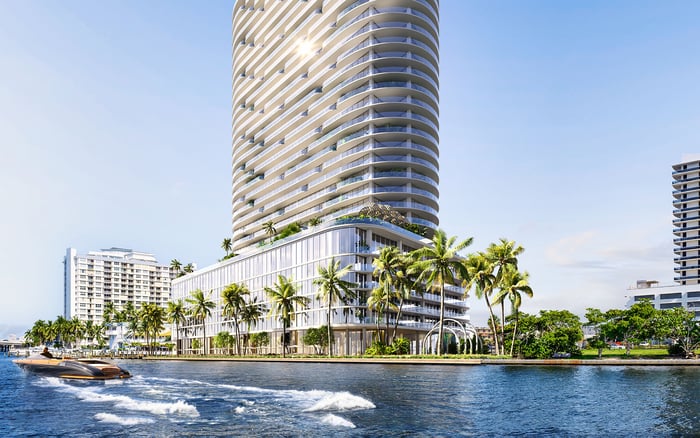
When touring Avenia Aventura or any Aventura residence, ask the sales or management team to walk you through the real sequence: arrival, gate or valet interaction, registration, parking placement, elevator access, waiting areas, and departure. The answer should be practical, not merely reassuring.
Begin with registration. Does each staff member need to be pre-registered, and if so, how far in advance? Are credentials issued by name, vehicle, license plate, employer, or visit type? Can a household manager update the access list, or must the owner personally approve every change? If you travel frequently, delegation matters.
Next, ask where staff actually park. Are they directed to valet, guest parking, vendor parking, a garage level, a surface area, or off-site arrangements? If valet is involved, clarify whether staff vehicles are treated like resident vehicles, guest vehicles, or commercial vehicles. If the building distinguishes between guests and vendors, ask how domestic staff are classified.
Time limits are equally important. Some properties are comfortable with a two-hour visit but less flexible with a full-day caregiver or driver. Ask whether daily staff may remain on site for an entire workday, whether overnight parking is allowed, and whether extended stays require separate approval. If you maintain a second home, also ask how the building handles staff access while the owner is not in residence.
In a luxury building, valet is more than a convenience. It is part of the privacy perimeter. The way staff vehicles are handled can affect how visible your household is to neighbors, visitors, and employees. Buyers should ask whether staff names appear on daily arrival lists, whether valet tickets reveal unit information, and how staff movements are logged.
Security protocols should feel firm but not theatrical. A driver should not have to renegotiate access each morning. A nanny should not be left in a lobby while the front desk searches for approval. At the same time, a building should not allow open-ended access without a clear record. The ideal protocol balances discretion, consistency, and accountability.
In nearby coastal towers such as Bentley Residences Sunny Isles and Turnberry Ocean Club Sunny Isles, buyers often pay close attention to the arrival experience because the building’s first five minutes shape the entire private-residence experience. Aventura buyers should apply the same lens, particularly when the household employs regular staff.
Staff parking is often entangled with service access. A chef may need to unload groceries. A stylist may arrive with wardrobe racks. A housekeeper may bring supplies. A nurse may carry medical equipment. If staff are required to park far from the service entrance, the residence may become less functional than it appears.
Ask whether there is a designated loading area, whether domestic staff may use it, and whether time slots must be reserved. Clarify how grocery deliveries, catering, floral installations, personal shopping, and art handling are treated. If a building has a service elevator, ask whether staff are required to use it and whether that elevator has restricted hours.
For waterfront living, these questions become even more layered. Boating schedules, beach equipment, pet routines, and family travel days can all generate service movement. A polished lobby cannot compensate for weak back-of-house logistics.
Aventura appeals to buyers who want refined residential living with strong access to shopping, dining, marinas, schools, beaches, and the broader Northeast Miami-Dade corridor. Yet service expectations vary by building. A boutique condominium may offer intimacy but limited parking flexibility. A larger tower may offer more operational infrastructure but stricter protocols. A new project may promise sophisticated service, while an established building may have routines that residents already understand.
When comparing Aventura with One Park Tower by Turnberry North Miami, Sunny Isles Beach, or Hallandale, focus less on marketing language and more on actual household operations. Does the building anticipate private staff? Does management understand full-time domestic support? Are policies documented, or are they handled informally?
This is where buyer’s guides can be useful, not as a substitute for legal review, but as a reminder that luxury ownership is measured in small moments: the driver who arrives on time, the caregiver who is not delayed, the dinner service that loads in quietly, and the residence that functions without daily negotiation.
Before contract, request the current parking rules, guest policies, valet procedures, move-in rules, vendor protocols, and any association documents that govern access. If the residence includes assigned spaces, confirm whether those spaces can be used by household staff and under what conditions. If the building uses valet, confirm whether a staff vehicle may be held, retrieved, or staged when needed.
During inspections and walkthroughs, physically trace the staff path. Where does the car enter? Where does the staff member check in? Which elevator is used? How long does it take to reach the residence? Where would a driver wait during dinner, a medical appointment, or a school run? The answers will reveal whether the property supports your lifestyle or merely photographs well.
Also ask whether rules can change. Association policies are not static. A building that currently tolerates extended staff parking may later tighten enforcement if congestion increases or resident complaints arise. Your attorney should review the governing documents, but you should also speak directly with management about practical enforcement.
Be cautious when answers are vague. “It should be fine” is not a protocol. “We handle it case by case” may work for occasional guests, but it is weak support for a household with daily staff. A luxury building should be able to explain how it manages recurring personnel with clarity.
Other red flags include no clear distinction between guests and vendors, no written approval process, limited after-hours access, uncertain overnight parking rules, unclear valet fees, lack of a service loading plan, and resistance to discussing domestic staff needs. If a building appears uncomfortable with the subject, that discomfort may become yours after closing.
The goal is not to demand special treatment. It is to confirm fit. In the highest tier of real estate, privacy and ease are inseparable. Staff parking is one of the quiet systems that determines whether a residence supports the life it is meant to frame.
Why should staff parking be reviewed before buying in Aventura? Because many luxury households rely on recurring staff, and the wrong parking protocol can create daily friction after closing.
Should I ask for staff parking rules in writing? Yes. Written rules are easier to evaluate than informal assurances and should be reviewed before you commit.
Are domestic staff usually treated as guests or vendors? It depends on the building. Ask management how nannies, drivers, chefs, housekeepers, and security personnel are classified.
Can a private driver wait on property all day? Some properties may allow it, while others may impose time limits or designate specific waiting areas.
Should assigned owner spaces be used for staff vehicles? Ask whether the association permits it and whether additional registration, insurance, or access credentials are required.
What should I ask about valet? Clarify fees, hours, retrieval procedures, vehicle classification, overnight rules, and whether staff cars receive different treatment.
Do service elevator rules matter? Yes. Restricted service elevator hours can affect chefs, housekeepers, deliveries, medical support, and event preparation.
How does staff parking affect privacy? A clear protocol reduces repeated explanations at the desk and limits unnecessary visibility into your household routines.
Can parking rules change after I buy? Yes. Association and management policies can evolve, so review governing documents and ask how changes are communicated.
Who should review the parking documents? Your real estate advisor and attorney should review them together, with your household’s actual staffing needs in mind.
For a discreet conversation and a curated building-by-building shortlist, connect with MILLION.
If branded residences are on your mind — as a home or as an allocation — we would be glad to share what we are seeing, privately.
Begin a quiet conversation