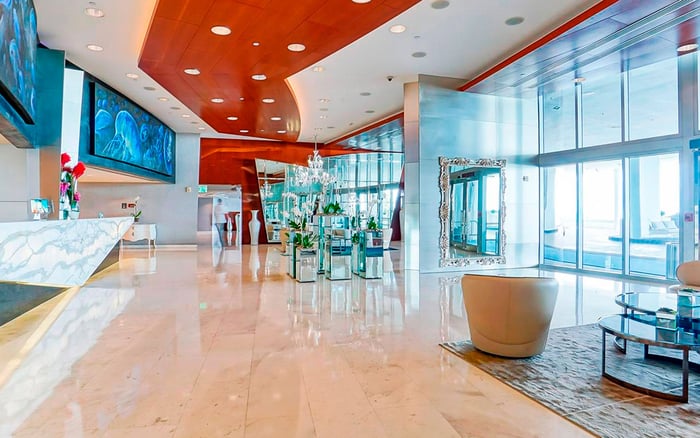
A buyer-focused due-diligence guide to understanding assessment culture, reserve funding, capital planning, insurance exposure, and association transparency before purchasing at Bentley Residences Sunny Isles.

At the top of the Sunny Isles Beach market, the purchase price is only one part of ownership discipline. The quieter, more revealing question is how a building expects to pay for itself over time. For buyers studying Bentley Residences Sunny Isles, special-assessment culture belongs in the review before contract execution, not after the first association notice arrives.
Assessment culture is not a prediction that a particular building will levy future assessments. It is a way to read governance, budgeting, reserve philosophy, transparency, and the willingness to confront long-term costs early. In a waterfront, high-service, branded condominium, those issues matter because the physical plant and lifestyle promise are sophisticated. Elevators, façade and glazing systems, mechanical systems, pool decks, parking systems, and amenity infrastructure all carry future capital exposure.
That makes this a buyer’s guide conversation as much as a pricing and trends question. The most polished sales gallery cannot answer every ownership-cost question on its own. The buyer’s task is to bring the right questions to counsel, the developer sales team, and the association-document review process.
The first question is deceptively simple: is the first-year condominium budget realistic, or has it been restrained for marketing comfort? A budget can look elegant beside a residence price and still fail to reflect the full cost of staffing, service, insurance, maintenance, utilities, and reserves.
At branded residences, the service model itself deserves scrutiny. A luxury tower can require frequent operating-budget increases even without a dramatic repair event. White-glove staffing, private arrival sequences, sophisticated amenity programming, and high-end finishes may all create recurring obligations. Buyers comparing Sunny Isles towers such as St. Regis® Residences Sunny Isles or The Ritz-Carlton Residences® Sunny Isles should look beyond amenity descriptions and ask how those services are budgeted after opening.
A prudent buyer asks for projected maintenance fees and the assumptions behind them. What staffing levels are embedded? What vendor costs are assumed? How are utilities, insurance, and preventive maintenance treated? The goal is not to negotiate the building into a lower service standard. The goal is to understand whether the published carrying cost reflects the intended standard.
Reserve funding is where a condominium’s financial temperament becomes visible. Buyers should ask what reserve-funding assumptions are built into the initial association budget and whether the developer expects full reserve funding from the beginning or any period of reduced reserve contributions.
A reduced early contribution may make initial ownership appear less expensive, but the cost of major components does not disappear. It is either planned for through regular reserves, addressed through a future special assessment, financed through a bank loan, or handled through some combination of those tools. The essential question is not simply, “What are the dues?” It is, “What future obligations are not yet visible in the dues?”
This is especially important in a new-construction and pre-construction environment, where buyers often evaluate documents before a completed building has a mature operating history. Ask for reserve schedules, draft association documents, turnover documents when available, and any engineering or lifecycle-cost assumptions that can be reviewed before signing.
Every luxury high-rise has a hierarchy of future capital needs. Buyers should ask which systems are expected to create the largest long-term repair exposure. At a tower like Bentley Residences Sunny Isles, the relevant categories include elevators, façade and glazing, mechanical systems, pool decks, parking systems, and amenity infrastructure.
The point is not to view these systems negatively. In the ultra-premium market, they are often central to the building’s identity. Private elevators, car-related systems, branded amenities, and high-end finishes can be part of the appeal. They can also create maintenance obligations that differ from standard luxury condos.
A buyer may admire the automotive-driven concept at Bentley while still asking how the related systems will be inspected, serviced, reserved for, and allocated. The same discipline applies when comparing established Sunny Isles references such as Armani Casa Sunny Isles Beach or Turnberry Ocean Club Sunny Isles. Signature features should be evaluated not only for lifestyle value, but also for long-term maintenance logic.
Special assessments become most sensitive when owners discover that allocation is not as intuitive as they assumed. Buyers should ask how any future special assessment would be allocated among units. Is it based on unit size, percentage ownership, parking rights, limited common elements, or another formula in the condominium documents?
This is where counsel’s review becomes indispensable. Two residences may experience the same building and enjoy the same lobby, but their assessment exposure may differ depending on the governing documents. Parking, private-use areas, or limited common elements can matter. The buyer should understand the formula before treating any future cost as a simple building-wide average.
Also ask whether any developer-controlled period limits the association’s ability to assess owners or change budgets. A controlled period may have its own practical implications for decision-making, budgeting, and timing. The question is not whether control is inherently good or bad. The question is how the structure affects the association’s ability to respond to costs honestly.
In South Florida high-rise ownership, insurance should be treated as a core budget category, not a footnote. Buyers should ask how insurance-premium increases would be absorbed. Would the association rely on annual dues increases, reserve use, special assessments, or a combination?
The answer can signal the building’s operating philosophy. A conservative approach may feel less flattering in year one, but it may also reduce surprise. A more delicate first-year budget may preserve near-term optics while leaving less room for cost pressure. Neither posture should be accepted without explanation.
The same analysis applies to the luxury service model. A tower can have no major repair crisis and still need budget increases because its service commitments are expensive to maintain. Buyers should ask whether the budget anticipates that reality or assumes a level of stability that may not match the building’s ambitions.
Before turnover to the condominium association, buyers should ask what warranties, guarantees, or maintenance obligations remain with the developer. These obligations can influence how early issues are handled and whether certain costs are absorbed by the association or remain the responsibility of another party.
Transparency is the final measure of culture. Ask how the association intends to share reserve studies, engineering reports, insurance renewals, and board-level capital planning. A luxury building should not treat capital planning as a private surprise. Owners at this level are accustomed to sophisticated information, and the building’s governance should respect that expectation.
For Bentley Residences Sunny Isles, the best buyers will not approach this as an adversarial exercise. They will approach it as stewardship. They are buying into a building, a service model, and a future association. The more refined the asset, the more important it is to understand how beauty, performance, and financial discipline will coexist.
Does asking about special assessments mean Bentley Residences Sunny Isles is expected to have one? No. The question is a due-diligence exercise, not a prediction of a future assessment.
What is the first document a buyer should request? Start with projected maintenance fees, draft association documents, reserve schedules, and available turnover materials.
Why does the first-year budget matter so much? It can show whether carrying costs are being presented realistically or kept low for initial marketing appeal.
What reserve question is most important? Ask whether reserves are expected to be fully funded from the beginning or reduced during an early period.
Which building systems deserve special attention? Elevators, façade and glazing, mechanical systems, pool decks, parking systems, and amenity infrastructure should be reviewed.
Can branded amenities affect future costs? Yes. Branded amenities, private elevators, car-related systems, and high-end finishes may create maintenance obligations.
How are special assessments usually allocated? Allocation depends on the documents and may involve unit size, percentage ownership, parking, limited common elements, or another formula.
Should insurance be part of the assessment conversation? Yes. Buyers should ask how insurance-premium increases would be absorbed if costs rise.
Why does developer control matter? It may affect how budgets are changed and how the association can assess owners during a controlled period.
Who should review these questions with the buyer? Counsel should review the governing documents, while the sales team can help identify available budget and lifecycle assumptions.
For a discreet conversation and a curated building-by-building shortlist, connect with MILLION.
If branded residences are on your mind — as a home or as an allocation — we would be glad to share what we are seeing, privately.
Begin a quiet conversation