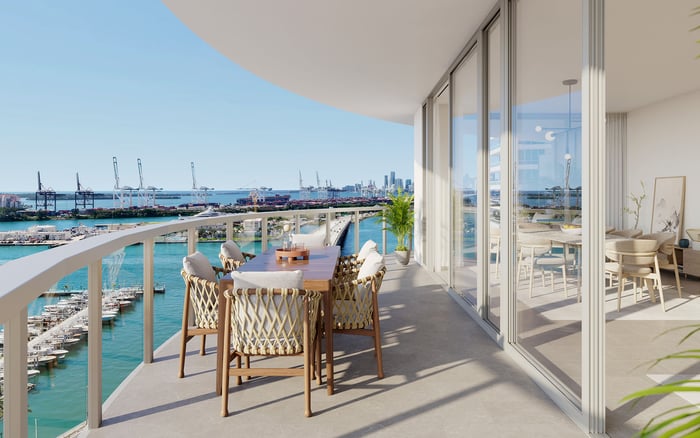
Family-zone planning is an essential due-diligence lens for South Florida private-club buyers who want the right balance of adult privacy, children’s access, seasonal flexibility, and long-term residential fit.

For many South Florida buyers, the private club is no longer a peripheral amenity. It is the social calendar, the children’s weekend rhythm, the winter-season dining room, the fitness routine, and often the quiet reason a household chooses one address over another. Yet buyers can spend months analyzing views, finishes, assessments, and valet flow without asking the most personal question of all: where, exactly, can the family live within the club?
Family-zone planning is the discipline of understanding how a private club separates, blends, schedules, or restricts spaces for adults, children, teens, guests, and multi-generational households. It touches dining rooms, pool decks, locker rooms, lounges, golf practice areas, beach clubs, holiday programming, guest privileges, and seasonal crowd control. In a market where club-linked real estate carries deep lifestyle expectations, those rules belong in the due-diligence file before signing, not after move-in.
This is not about whether a club is family-friendly in the abstract. The sharper question is whether its operating culture fits your household’s actual life. A young family, a couple with visiting grandchildren, a second-home buyer who hosts school-break guests, and a buyer seeking a more adult atmosphere may all be looking at the same club through completely different lenses.
The phrase “private club” carries a seductive shorthand in South Florida: privacy, access, polish, service, and familiarity. But families experience those qualities through daily logistics. Can children use the main dining room at preferred dinner hours? Are there adult-only pool areas? Are guests treated differently during peak weeks? Are junior members welcome in certain venues only at certain times? Are teen spaces genuinely useful, or simply nominal?
These questions become especially important for buyers comparing traditional club communities with new luxury residences that borrow the language of hospitality. A buyer considering Shell Bay by Auberge Hallandale, for example, may be weighing golf, service, family weekends, and the overall tone of membership at the same time. The real due diligence is not only what is offered, but how those offerings are shared across age groups and seasons.
For the South Florida lifestyle buyer, nuance matters. A rule that feels elegant to an empty-nester may feel restrictive to a household with school-age children. A lively family program may delight one buyer and unsettle another who wants a quieter winter refuge. Neither preference is wrong. The risk is assuming the word “club” means the same thing to every member.
A tour shows the terrace, the dining room, the golf shop, the spa corridor, and the view at golden hour. The documents show the framework that governs daily use. Before committing to club-linked real estate or a membership, buyers should review membership agreements, by-laws, house rules, guest policies, disciplinary procedures, transfer provisions, resignation terms, and any separate rules for children or junior members.
The most relevant provisions are often practical rather than dramatic. Look for age thresholds, dining restrictions, mobile-phone rules, pool access, fitness-center age requirements, holiday blackout periods, guest limits, and rules for caregivers or extended family. If the residence will be used seasonally, ask how rules apply during peak winter periods and school holidays. A club can be gracious and still place limits on capacity, reservations, and access.
This is also where buyers should separate sales language from governance. A residence can be beautifully aligned with a club culture, but the club’s governing documents usually control the member experience. In Boca Raton, buyers looking at The Residences at Mandarin Oriental Boca Raton may naturally evaluate hospitality, walkability, dining, and family convenience together. The same principle applies: read the rules with the same care you would bring to a condominium declaration or purchase contract.
The most successful club environments are not necessarily those that give every member access to every space at every time. They are the ones that make the boundaries clear. Adult-only zones can be a genuine luxury when they are well planned. Family areas can be equally refined when they are not treated as secondary. The key is whether the club has created a coherent map of use.
For families, that map should answer everyday questions. Where do children go after tennis or golf? Where can grandparents have dinner with young grandchildren without feeling out of place? Which pool is relaxed, which is quiet, and which is reserved? Can teenagers meet friends without crossing into adult lounges? What happens when multiple families arrive with guests during the same holiday week?
For buyers seeking serenity, the questions are just as important. If the club positions itself as family-oriented, adult members should understand when and where that energy will be most visible. In Miami Beach, a buyer comparing coastal residences such as The Perigon Miami Beach may prioritize architecture and ocean proximity, but the surrounding club and social ecosystem will still influence how the home lives in season.
South Florida luxury is increasingly multi-generational in practice, even when ownership is held by one individual or couple. Grandchildren visit. Adult children spend long weekends. Friends arrive during winter breaks. Caregivers may accompany younger children or older relatives. These patterns make family-zone planning more than a parenting issue.
Ask whether guests have access to the same areas as members, whether guest access changes during peak periods, and whether younger guests are subject to age-based restrictions. Clarify how the club handles unaccompanied minors, family guests, and recurring visitors. If the home is expected to serve as a family base, the rules should support that role.
This is particularly relevant in enclaves where privacy and membership culture are central to the residential decision. On Fisher Island, buyers considering The Links Estates at Fisher Island are not merely choosing square footage. They are considering a complete rhythm of arrival, recreation, dining, and family hosting. The more private the setting, the more important it becomes to know exactly how access works.
A club may feel effortless in late spring and very different in the height of winter. South Florida’s peak season can concentrate members, guests, children, and programming into the same narrow windows. This is where family-zone planning becomes operational rather than theoretical.
Before signing, ask how reservations are prioritized, whether family events affect regular dining availability, and whether popular spaces have time limits. Ask if children’s camps, holiday programming, or junior activities shift the use of courts, pools, dining rooms, or lounges. If you plan to host family during school breaks, ask how far in advance key reservations should be made.
In Fort Lauderdale, where boating, beach access, and club life often overlap, buyers reviewing residences such as St. Regis® Residences Bahia Mar Fort Lauderdale should think beyond the residence itself. The question is how the broader lifestyle performs when every preferred slot is in demand.
Family-zone planning can affect more than personal satisfaction. It can influence the future buyer pool. A residence tied to a clearly adult-oriented club culture may attract one kind of purchaser. A home associated with strong family use may attract another. Ambiguity can create friction during resale if the next buyer discovers limitations late in the process.
The goal is not to find a club that pleases everyone. The goal is alignment. Buyers should be able to articulate the club’s family posture in plain language: adult-forward, family-forward, balanced, seasonal, traditional, highly programmed, or discreet and quiet. That clarity helps protect enjoyment while you own and helps frame the property honestly when it is time to sell.
Before signing, request the current rules and read them as a household, not just as a purchaser. Have counsel review the membership and real estate documents together where appropriate. Ask direct questions about children, guests, caregivers, holidays, dining, pool areas, teen use, and adult-only spaces. If possible, visit during the period when you expect to use the club most.
Then test the answers against your real calendar. If your children visit only twice a year, a more adult club may still be ideal. If your family gathers for every holiday, capacity and guest access may matter more than a formal dining room. If you are buying for privacy, understand where family programming occurs and when it becomes visible.
In South Florida, the best luxury decisions are rarely the loudest ones. They are the ones where the architecture, membership culture, documents, and family rhythm quietly agree.
What is family-zone planning in a private club? It is the review of how a club manages spaces, rules, and schedules for adults, children, teens, guests, and extended family.
Why should buyers address this before signing? Once a purchase or membership is complete, the club rules usually become part of daily life, so the best time to evaluate fit is before commitment.
Are adult-only areas a negative for families? Not necessarily. Clear adult-only areas can improve the experience for everyone if family areas are also thoughtfully planned.
What documents should a buyer review? Review membership agreements, by-laws, house rules, guest policies, transfer provisions, and any age-based access rules.
Do children usually have the same access as adults? Access can vary by club, venue, time, and age, so buyers should ask for written rules rather than relying on assumptions.
Why does peak season matter? Peak season can place more demand on dining, pools, courts, guest privileges, and holiday programming, which makes practical access especially important.
Should grandparents ask different questions? Yes. Grandparents should clarify guest rules, child access, caregiver policies, and holiday use if the home will host family often.
Can club rules affect resale? They can shape the likely buyer audience because some purchasers seek a family-forward atmosphere while others prefer a quieter adult setting.
Is a family-friendly club always better for a family buyer? The best fit depends on the household’s routine, children’s ages, hosting style, and tolerance for seasonal activity.
What is the simplest first question to ask? Ask where children, teens, adult guests, and family guests may go during the exact weeks you plan to use the club most.
For a tailored shortlist and next-step guidance, connect with MILLION.
If branded residences are on your mind — as a home or as an allocation — we would be glad to share what we are seeing, privately.
Begin a quiet conversation