A buyer-focused guide to evaluating private elevator access control in Coconut Grove luxury residences, from credentialing and guest protocols to service access, outages, privacy, and resale value.
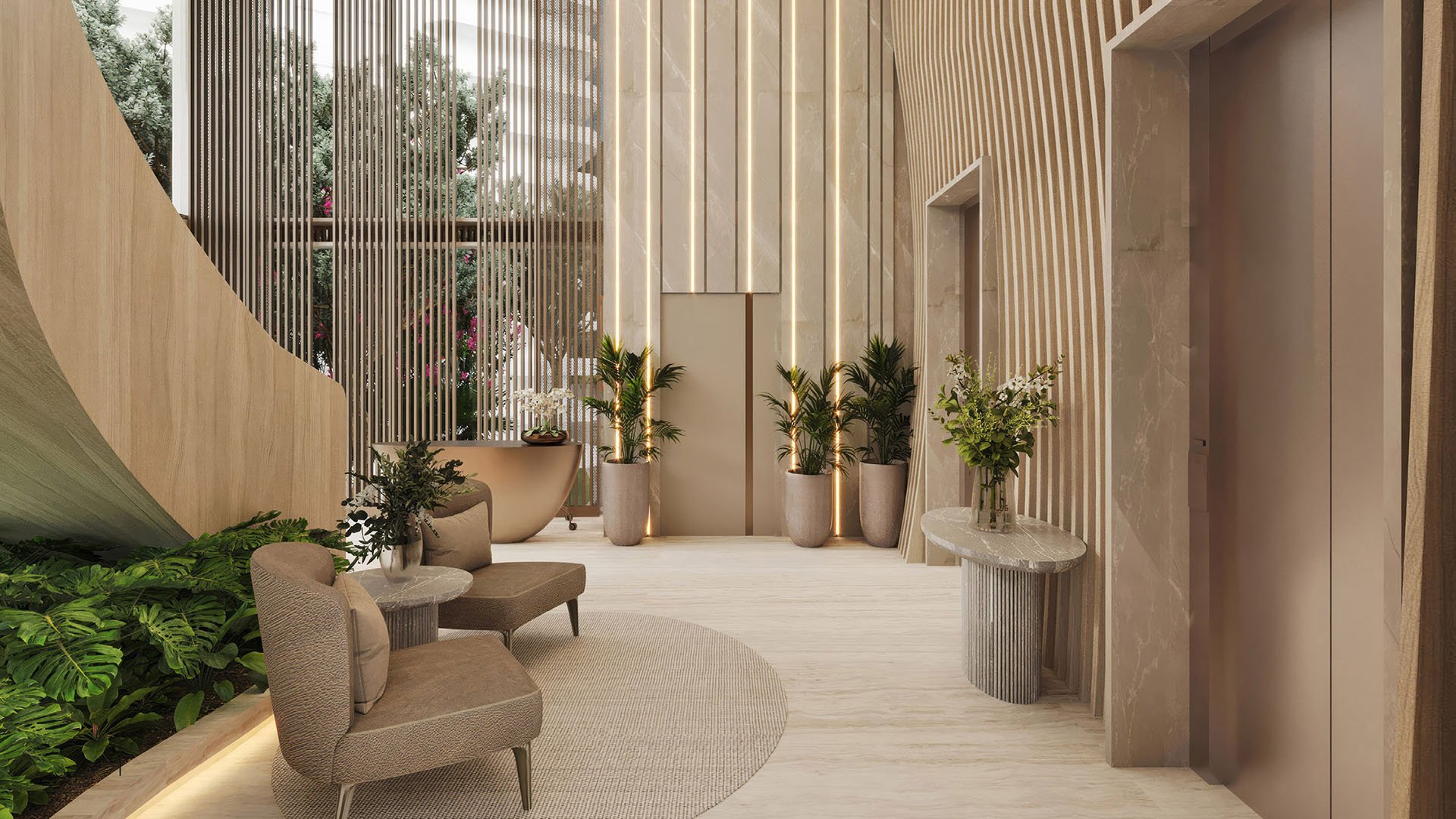
In Coconut Grove, privacy is often part of the architecture. Buyers are drawn to shaded streets, water-oriented living, mature landscaping, and buildings that feel composed rather than conspicuous. In that setting, private elevator access can read as quiet luxury: a direct arrival, a controlled threshold, and the sense that the residence begins before the front door.
Yet the elevator is not merely a convenience. It is a vertical entry system, and in a luxury condominium or boutique development, it can shape guest arrival, staff circulation, package handling, emergency response, and resale confidence. A beautiful private vestibule means little if the access-control logic behind it is vague, outdated, or difficult to live with.
This is why buyers should ask precise questions before contract, especially when comparing Coconut Grove residences such as Four Seasons Residences Coconut Grove, Mr. C Tigertail Coconut Grove, The Well Coconut Grove, and Arbor Coconut Grove. The goal is not to interrogate for its own sake. It is to understand whether the building’s access philosophy matches the way you actually live.
The phrase can describe several arrangements. In some residences, the elevator opens directly into a private foyer controlled by resident credentials. In others, it opens to a semi-private landing shared by a small number of homes. Some systems allow direct floor access only, while the residence entry remains separately controlled by a door lock or smart-home system.
Before you assign value to the feature, ask the sales team or association representative to define the full path of travel. Who can call the elevator? Who can select the floor? Does the elevator require a credential both at the lobby and inside the cab? Can front-desk personnel send an elevator to a residence level, and if so, under what authorization?
This is especially important for Penthouse buyers, where privacy expectations are typically highest. A top-floor arrival should feel controlled, not merely elevated. The essential question is simple: where does public circulation end, and where does my private residence begin?
A private elevator system is only as strong as its credential policy. Ask whether access is managed by fob, card, keypad, mobile credential, biometric technology, or a combination. Then ask who administers those credentials, how quickly they can be issued or revoked, and whether temporary permissions can be customized.
The backup plan matters just as much. If a phone battery dies, a fob is misplaced, or a family member arrives without credentials, what happens? A luxury building should have a clear, dignified process that protects security without creating drama at the lobby.
Buyers should also ask whether access rights are residence-specific, floor-specific, or role-specific. Owners, immediate family, household staff, visiting guests, and vendors should not necessarily have identical permissions. If the system treats everyone the same, convenience may be coming at the expense of control.
Private elevator access should make entertaining feel gracious, not complicated. Ask how guests are announced, approved, and routed. Can you preauthorize a dinner guest, wellness practitioner, stylist, chef, or art installer? Can approval be granted remotely? Is there a time window, and does it expire automatically?
For Coconut Grove owners who travel frequently, remote guest management can be a meaningful daily-life consideration. A residence may be used by family, trusted staff, or guests while the owner is away. The question is whether that can happen securely and without improvisation.
Also ask how the front desk verifies identity and how guest traffic is documented. Discreet service is not the same as informal service. The most refined buildings make access feel effortless precisely because the rules are well designed.
Luxury living often involves a wider circle of people: housekeepers, private chefs, assistants, dog walkers, personal trainers, florists, movers, and maintenance technicians. If each person is handled case by case, the system can become burdensome.
Ask whether staff can be assigned recurring access, limited hours, specific days, or only escorted entry. Confirm whether vendors use the same elevator as residents or a service route. In Waterfront residences, where owners may split time between boat, club, office, and home, reliable access coordination can preserve both privacy and schedule.
Deliveries deserve particular attention. Does the building permit direct-to-residence delivery, or are packages held at a mailroom, package room, or concierge desk? If large items, wine storage, art, furniture, or medical deliveries are common in your household, ask how they move vertically and who approves elevator use.
Access control creates information. The building may be able to see when credentials were used, which elevator was called, and which floor was selected. Buyers should ask what is logged, who can view logs, how long records are retained, and under what circumstances information is reviewed.
This is a subtle but important distinction in high-end residences. Security should protect residents without making them feel surveilled. Ask whether there is a written policy for access records and whether residents can request activity related to their own unit.
In Boutique buildings, where staff may know residents personally, formal policy can be even more important. Familiarity is pleasant, but documented standards help preserve consistency as teams, boards, and ownership groups change.
The private elevator experience should never obscure life-safety basics. Ask how the system behaves during a fire alarm, power interruption, hurricane preparation period, or mechanical service event. Which elevators remain available, if any? How are residents notified? What is the procedure for someone with mobility needs?
Buyers do not need to become engineers, but they should request a plain-English explanation. If an elevator cannot provide direct access temporarily, how is the residence secured? If service technicians must enter a private landing, how is notice handled?
This is particularly relevant for New-construction purchasers, because operating policies may still be evolving while a building moves from delivery to full resident occupancy. The hardware can be sophisticated, but the lived experience depends on staffing, training, and rules.
Access-control systems are not static. Software is updated, credentials change, boards revise policies, and vendors may be replaced. Ask who has authority to change private elevator settings. Is it the association, building manager, security vendor, developer during an initial period, or some combination?
Review whether any rights are described in condominium documents, rules and regulations, or owner handbooks. If direct elevator access is central to your purchase decision, do not rely only on a sales conversation. Ask your counsel to review how the feature is treated in the governing documents.
This issue is both practical and value-driven. The most elegant access system is one that remains predictable after closing.
Private elevator access can enhance the emotional impression of a residence. It can also narrow the gap between condominium convenience and single-family privacy, a powerful proposition in Coconut Grove. Still, value depends on execution.
A buyer who hosts frequently may prioritize guest preauthorization. A collector may care about secure vendor routing. A family may need layered permissions for children, relatives, and household staff. A lock-and-leave owner may focus on remote control and reliable documentation.
The right question is not whether private elevator access is prestigious. It is whether the system supports your patterns without friction. In Coconut Grove, where understatement is often the truest luxury, the best access control is nearly invisible: clear, secure, and calm.
Is private elevator access the same in every luxury condo? No. It can mean direct residence entry, private foyer access, semi-private landing access, or floor-restricted elevator control.
What is the first question to ask during a showing? Ask who can call the elevator, select your floor, and authorize arrival to your private or semi-private vestibule.
Should I ask to see the elevator access process in person? Yes. A live demonstration can reveal whether the system feels seamless, awkward, secure, or overly dependent on staff judgment.
Can household staff have limited elevator permissions? Many modern systems can support limited access, but you should confirm the exact rules before buying.
How should guests be handled? Ask whether guests can be preauthorized, remotely approved, time-limited, and logged without creating an intrusive arrival experience.
What should I ask about deliveries? Confirm whether packages, furniture, art, and service deliveries go directly upstairs or through a concierge, mailroom, or service route.
Do access logs affect privacy? They can. Ask what information is retained, who can view it, and whether there is a written policy governing its use.
What happens during an elevator outage? Ask how the residence remains secure, how residents are notified, and what alternative access is available.
Should my attorney review elevator-related documents? Yes. If private elevator access is material to your purchase, have counsel review the governing documents and rules.
Is private elevator access more important in Coconut Grove? It can be, because many buyers value discretion, low-friction living, and a residential arrival experience.
If you'd like a private walkthrough and a curated shortlist, connect with MILLION.
If branded residences are on your mind — as a home or as an allocation — we would be glad to share what we are seeing, privately.
Begin a quiet conversation