A discreet buyer’s guide to evaluating whether a Las Olas residence truly supports staff, service flow, privacy, storage, entertaining, and daily luxury before the view takes over.

In Las Olas, a seductive outlook can soften even the most disciplined buyer. The first impression is often light, water, terrace proportion, and the imagined ritual of an evening drink outside. Yet for a residence intended to be lived in at a high level, the view is not the test. It is the reward. The real question is whether the home can support daily service, visiting staff, private entertaining, family rhythms, security, and maintenance without making the owner feel as though life is being staged around logistics.
A staff-ready residence is not necessarily larger, louder, or more visibly formal. It is better organized. It allows people, packages, food, garments, pets, flowers, vehicles, and guests to move through the property in ways that preserve calm. When this is done well, the owner notices almost nothing. When it is done poorly, even a beautiful residence begins to feel improvised.
That is why this is a matter for Buyer's Guides, not fantasy browsing. Before falling for the view, the serious buyer should read the plan like an operations manual.
The first staff-ready clue appears before the front door. Ask how the residence handles arrival when several things happen at once: a principal returning home, guests arriving for dinner, a chef unloading provisions, a housekeeper finishing the day, and a driver waiting nearby. A polished residence gives each moment a place to occur without collision.
Look for a gracious owner arrival, but do not stop there. Consider whether service access is discreet, whether deliveries can be received without disturbing the main living areas, and whether there is a logical place for coats, luggage, dry cleaning, outdoor gear, and valet overflow. If every practical item must pass through the most formal space, the residence is asking beauty to do the work of planning.
This same operational lens applies across the broader Fort Lauderdale luxury landscape, from urban residences such as Sixth & Rio Fort Lauderdale to larger water-oriented homes. The best properties do not simply receive people well. They sort them intelligently.
A dramatic kitchen can sell a home in photographs, but a staff-ready kitchen must perform when the house is full. The question is not only whether the finishes are beautiful. It is whether the room can support preparation, plating, cleanup, and storage without overtaking the evening.
For frequent entertaining, consider whether there is a secondary prep area, a concealed cleanup path, generous refrigeration, useful pantry space, and enough distance between working surfaces and seated guests. A kitchen that looks cinematic but lacks staging space can make private service feel exposed. Conversely, a quieter kitchen with intelligent adjacency to dining, terrace, and storage can be far more valuable to the owner who entertains often.
Pay attention to sound and sightlines. Can staff work without becoming the backdrop to the living room? Can a late breakfast be prepared while a guest suite remains undisturbed? Can a caterer operate without monopolizing the main entry? These are not minor details. They determine whether hospitality feels effortless or theatrical.
The most important luxury in a staffed residence is not spectacle. It is privacy that holds under pressure. A staff-ready home separates public, family, guest, and service functions with enough clarity that the owner does not have to manage every interaction personally.
Primary suites should feel protected from the most active parts of the home. Guest rooms should be comfortable without giving guests unfiltered access to the owner’s daily routine. Staff or service areas, when present, should be practical rather than symbolic. A small, awkward room labeled for service is less valuable than a well-considered circulation pattern that allows work to happen quietly.
This is where Lifestyle and architecture meet. Buyers drawn to polished hospitality environments, including residences like Four Seasons Hotel & Private Residences Fort Lauderdale, often understand the difference between visible luxury and managed privacy. In a private Las Olas residence, the same principle applies: the home should protect the owner’s ease.
Storage rarely wins the first tour, but it often decides the second year of ownership. A staff-ready residence needs more than closets. It needs purposeful storage for entertaining inventory, seasonal wardrobe, linens, outdoor cushions, luggage, household supplies, wine or bar service, waterside equipment where relevant, and the everyday items that should never live in view.
The best storage is close to where it is used. Linens should not require a long walk across formal rooms. Catering equipment should not occupy prime kitchen cabinets. Terrace accessories should not migrate into guest closets. If storage is remote, undersized, or dependent on improvisation, the burden usually falls on staff and eventually on the owner.
For Estates & Single-Family buyers, this is especially important because larger homes often accumulate more operational material. Scale without back-of-house discipline can become clutter disguised by square footage.
A productive tour technique is to walk through a fictional weekend. Imagine arriving Friday afternoon, hosting dinner that night, receiving family Saturday morning, spending time outside, and departing Sunday evening. Where do cars wait? Where do bags go? Who receives groceries? Where does a private chef stand? Where do children or guests circulate? How is laundry handled? What happens if someone needs to work privately while the house is active?
This exercise quickly reveals whether the plan is genuinely staff-ready. It also exposes homes that rely on the view to distract from operational weakness. A residence may photograph beautifully and still be difficult to run.
Waterfront buyers should be especially deliberate. Outdoor living increases the number of service moments: towels, glassware, food, cushions, maintenance, and guest movement between interior and exterior zones. The transition should feel natural, not like a procession through the home’s most delicate rooms.
Luxury is fragile when systems are difficult to reach. A staff-ready residence should make maintenance possible without disrupting daily life. Mechanical rooms, equipment access, laundry zones, utility storage, and vendor pathways should be legible. If every repair requires moving art, crossing bedroom corridors, or interrupting formal entertaining space, the home is not as composed as it appears.
Ask practical questions during the tour. Where would a technician enter? Where would staff stage cleaning supplies? Where is overflow trash handled before pickup? How does the home manage wet towels, floral deliveries, party rentals, and routine repairs? These questions may feel prosaic, but they reveal whether elegance has been engineered or merely decorated.
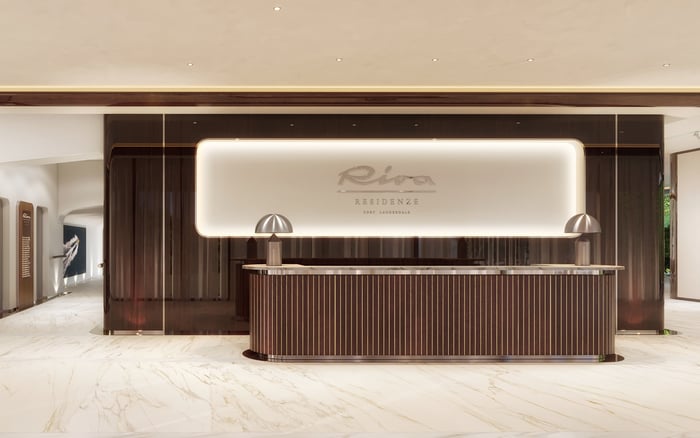
Residences such as Riva Residenze Fort Lauderdale remind buyers that refined living is not only about the rooms seen first. It is also about how the unseen layers support composure.
There is a misconception that a staff-ready residence must feel formal or hotel-like. In reality, the best examples are deeply personal. They simply remove friction. The owner can host spontaneously because service zones are prepared. Family can relax because storage is adequate. Guests feel cared for because circulation is intuitive. Staff can perform well because the residence gives them the tools and discretion to do so.
In Las Olas, where view-driven emotion can be powerful, this distinction matters. A residence should make the first tour memorable, but it should make the fifth year peaceful. That requires restraint, planning, and a willingness to judge what sits behind the photograph.
The same philosophy is visible in the way buyers compare full-service coastal addresses such as St. Regis® Residences Bahia Mar Fort Lauderdale with private homes: service is most luxurious when it disappears into the architecture of daily life.
Before making an emotional decision, stand in the best room and look away from the view. Study the doors, corridors, storage, kitchen access, service paths, and relationship between private and public areas. Then ask a simple question: if the view vanished for a moment, would this still be a superb residence?
If the answer is yes, the view becomes additive. If the answer is no, the view is compensating for operational compromise. In the upper tier of Las Olas real estate, the difference is not academic. It is the difference between a home that impresses and a home that lives beautifully.
What does staff-ready mean in a Las Olas residence? It means the home can support service, privacy, entertaining, storage, arrivals, and maintenance without disrupting the owner’s daily life.
Should I prioritize the view or the floor plan first? Begin with the floor plan. A great view enhances a strong residence, but it cannot fix poor service flow or weak privacy.
What is the most overlooked staff-ready feature? Storage is often underestimated. Proper storage keeps the visible rooms calm and allows staff to work efficiently.
How should I evaluate a kitchen for private service? Look beyond finishes and study prep space, cleanup paths, pantry capacity, refrigeration, and separation from guest areas.
Does staff-ready always require staff quarters? Not always. Intelligent circulation, utility areas, storage, and service access can matter as much as a dedicated room.
Why is arrival planning so important? Arrival reveals whether owners, guests, deliveries, drivers, and staff can move without congestion or awkward overlap.
How can I test a residence during a showing? Walk through a realistic weekend scenario and trace how people, food, luggage, laundry, and service would move.
What should waterfront buyers examine closely? Study the transition between indoor and outdoor living, including towel storage, service access, terrace support, and cleanup.
Can a highly designed home still be impractical? Yes. Beautiful materials and dramatic rooms do not guarantee privacy, maintenance access, or efficient back-of-house function.
What is the simplest final question to ask? Ask whether the residence would still feel exceptional if you looked away from the view and judged only how it works.
For a confidential assessment and a building-by-building shortlist, connect with MILLION.
If branded residences are on your mind — as a home or as an allocation — we would be glad to share what we are seeing, privately.
Begin a quiet conversation