A buyer-focused guide to evaluating terrace outdoor kitchens in South Florida luxury residences, with emphasis on wind design, corrosion, drainage, code compliance, insurance, and realistic maintenance costs.
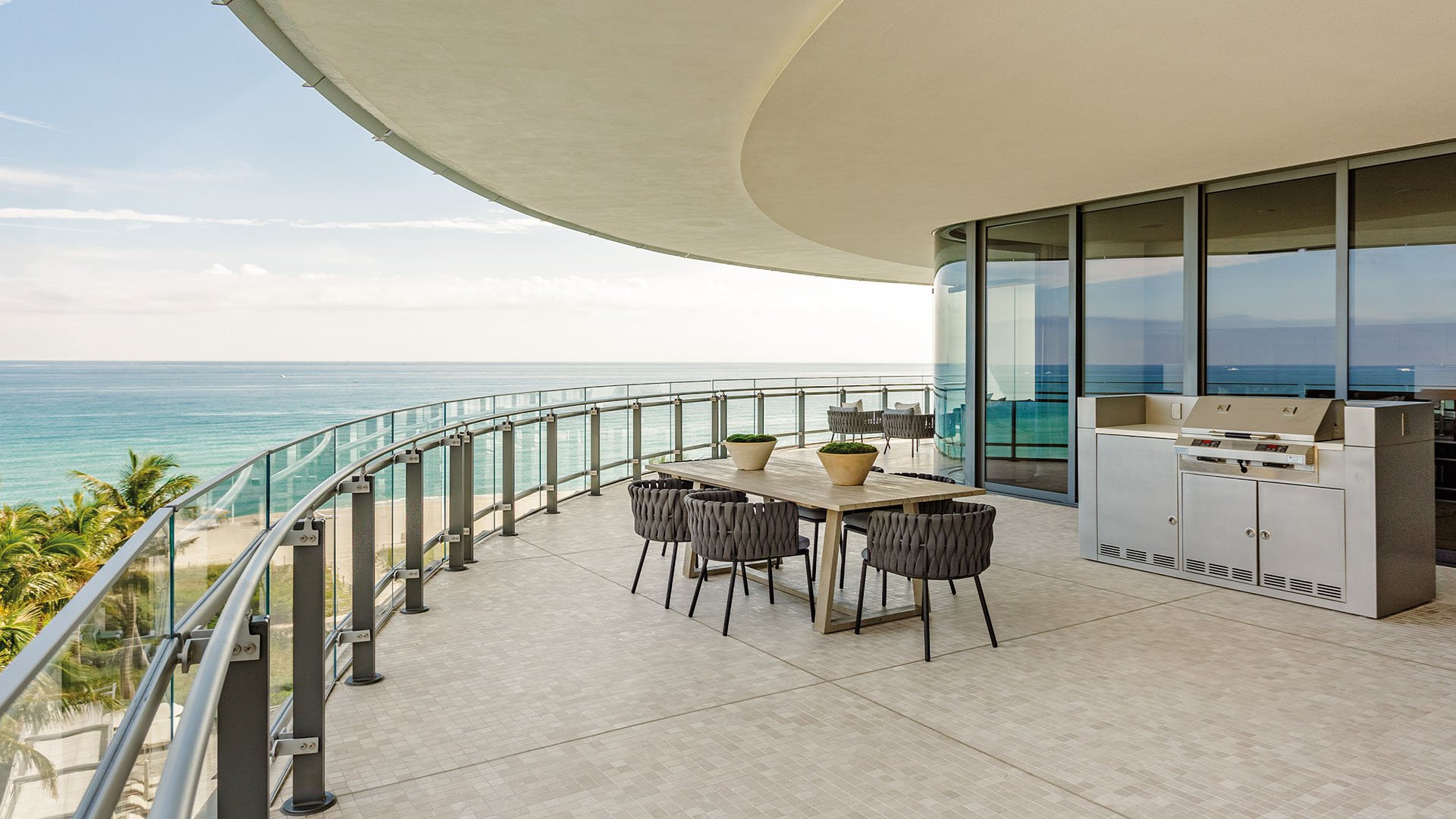
In South Florida, a generous terrace can change the entire character of a residence. It turns dinner into a skyline ritual, gives a balcony the scale of an outdoor room, and makes entertaining feel almost resort-like. Yet the more refined the terrace appears, the more carefully a buyer should examine what sits beneath the stone, behind the cabinetry, and inside the association documents.
An outdoor kitchen is not simply an amenity. It is fixed equipment exposed to wind, salt air, rain, heat, water, gas, electricity, and building rules. Before paying a meaningful premium for terrace space, especially in an oceanfront or high-rise setting, the central question is not whether the kitchen looks complete. It is whether the installation can be documented, maintained, insured, and eventually replaced.
This matters across the region, from Brickell towers such as The Residences at 1428 Brickell to coastal addresses like The Perigon Miami Beach. The terrace premium should be judged not only by square footage and view, but by the durability of the outdoor system.
The first document to request is the terrace’s wind-design criteria under the applicable building code. Exterior fixed equipment should be evaluated against site-specific wind assumptions, not treated as decorative furniture after the fact. A built-in grill, storage doors, drawers, panels, covers, screens, shade elements, and loose terrace items all behave differently when wind intensifies.
Ask whether the developer, seller, or association has wind-load documentation for the terrace level. In coastal and high-rise buildings, elevation and exposure can materially change wind forces, so a ground-level assumption may not tell the full story. The attachment strategy should be specific rather than conversational.
A practical buyer question is simple: what must be removed, locked, covered, or secured before a storm? If the answer depends on memory or staff custom rather than a written procedure, the kitchen may create more preparation burden than the marketing package implies.
A terrace kitchen should be traceable through permits, inspection signoffs, approved drawings, and product specifications. Ask whether all components were included in the permitted scope: grill, cabinetry, plumbing, gas, electrical, venting, lighting, drains, counters, shade systems, and finish changes. Unpermitted terrace work can complicate insurance, warranty claims, association approvals, and resale.
This is especially important in new and recently completed luxury buildings, where buyers may assume that anything delivered with the residence is automatically compliant. In a market where outdoor rooms are a major selling point, documentation separates a polished presentation from a durable asset.
When comparing residences from bayfront enclaves to Sunny Isles, including projects such as St. Regis® Residences Sunny Isles, ask for the same rigor you would apply to impact glazing, elevator access, or mechanical systems. If it is attached to the building and exposed to weather, it deserves building-level scrutiny.
“Stainless steel” is not a complete answer in a coastal climate. Corrosion resistance varies by alloy, finish, fabrication, fasteners, welds, and maintenance. Ask whether appliances, cabinets, hinges, drawer slides, handles, anchors, and fasteners are marine-grade or otherwise rated for coastal exposure.
Salt air and moisture can accelerate corrosion, and deterioration often begins in the least visible places: under counters, inside cabinets, behind access panels, near drains, or around screws and brackets. A buyer should request appliance and cabinet specifications, not just brochure language. The goal is to understand what has been selected, why it suits the exposure, and what the owner must do to preserve it.
Also ask for the cleaning protocol. Metal components may require regular washing, polishing, or protective treatment. Stone, concrete, and tile counters may require periodic sealing to resist staining, moisture, and weathering. A terrace kitchen that looks effortless at delivery can become labor-intensive if the maintenance schedule is vague.
Outdoor kitchens introduce another layer of complexity: they can interrupt drainage if poorly placed or difficult to access. Ask for the drain locations, slope, overflow paths, cleanouts, scuppers, gutters, and maintenance access. Standing water can accelerate corrosion, concrete deterioration, mold, leaks, and finish failure.
The buyer should also ask whether a waterproofing membrane lies below the terrace finish, what the warranty covers, and whether leaks into units or common areas below are included. Prior records matter. Request information on any prior leak, ponding, spalling, or terrace-repair history before assigning value to the outdoor space.
In coastal settings, beauty and water management must coexist. At addresses such as The Ritz-Carlton Residences® Pompano Beach, the broader point is universal: the more valuable the view corridor, the more disciplined the buyer should be about drainage, waterproofing, and access.
Outdoor kitchens combine water, heat, fuel, wind, and power. Ask whether outlets, lighting, refrigerators, and appliance circuits are outdoor-rated and installed to the applicable electrical code. Receptacles near the kitchen should be properly protected for exterior conditions. These are not luxury details; they are baseline safety questions.
Gas lines, shutoff valves, venting, and appliance clearances should be installed and inspected by licensed professionals. Buyers should ask where shutoffs are located, whether staff can access them, and whether combustible finishes have been considered around heat-producing equipment.
Replacement access is another overlooked cost. How will a refrigerator, grill, icemaker, or cabinetry module be delivered or removed five years from now? Confirm elevator size, door clearances, service corridors, stair limitations, and whether any crane or special handling would be required. A terrace kitchen is only as practical as its future service path.
Condo and HOA documents may allocate exterior-area maintenance differently from interior-unit maintenance. Ask who is responsible for cleaning metal, sealing counters, servicing appliances, clearing drains, maintaining covers, repairing waterproofing, and addressing corrosion. Is it the owner, association, building staff, or a shared arrangement?
Architectural approval is another key issue. Before changing grills, venting, cabinetry, shade structures, plumbing, gas lines, or terrace finishes, owners may need association approval. If shade, wind screens, covers, or shutters are important to comfort, verify whether they are allowed and whether they are included. Protection from exposure can materially affect usability and deterioration.
Insurance should be part of the same conversation. Ask your carrier whether the outdoor kitchen, built-in appliances, cabinetry, and shade structures are covered. Also ask whether flood, storm surge, king-tide, or wind-driven rain exposure affects the terrace or building systems. Standard homeowners coverage may not address every outdoor or water-related condition, so confirm coverage before relying on assumptions.
A trophy terrace should still be valued like a physical system. Ask for a written maintenance schedule and expected annual cost for cleaning, sealing, servicing appliances, clearing drains, and treating corrosion. Then consider the owner’s hurricane preparation responsibilities, insurance treatment, association approvals, and eventual replacement logistics.
The most compelling terrace kitchens in South Florida are not merely photogenic. They are documented, serviceable, corrosion-aware, properly drained, code-conscious, and realistic about wind. That is what allows the premium to feel justified after the first season of ownership.
What is the first question to ask about a terrace outdoor kitchen? Ask for the terrace wind-design criteria and whether the kitchen components were considered in the permitted, inspected scope.
Why does wind matter for a built-in grill? Fixed equipment, doors, drawers, covers, and loose items can become hazards if they are not secured for storm conditions.
Is stainless steel always suitable for coastal exposure? No. Ask whether the stainless steel is marine-grade or otherwise rated for salt air, moisture, and exterior use.
Should I ask for maintenance costs before buying? Yes. Request a written schedule for cleaning, sealing, appliance service, drain clearing, and corrosion treatment.
Who usually maintains a terrace kitchen in a condo? Responsibility depends on the governing documents, so confirm whether the owner, association, or building staff handles each item.
Why are drains so important under an outdoor kitchen? Blocked or inaccessible drainage can lead to standing water, corrosion, leaks, mold, and damage to finishes or utilities.
Can I change the grill or add shade later? Possibly, but association approval may be required for grills, venting, cabinetry, plumbing, gas lines, shade, or terrace finishes.
What should I ask about electrical safety? Confirm outdoor-rated equipment, weather protection, proper circuits, and appropriate protection where receptacles are near water or rain.
Does insurance automatically cover the outdoor kitchen? Not always. Ask your carrier how built-in appliances, cabinetry, shade structures, flood, and wind-driven rain are treated.
How should I value a large terrace with a kitchen? Value it net of maintenance, storm preparation, documentation quality, insurance treatment, and future appliance replacement access.
For a tailored shortlist and next-step guidance, connect with MILLION.
If branded residences are on your mind — as a home or as an allocation — we would be glad to share what we are seeing, privately.
Begin a quiet conversation