A precise buyer’s guide to evaluating outdoor kitchen durability at Avenia Aventura, from coastal-grade materials and drainage to warranties, condominium rules, maintenance, and long-term resale appeal.
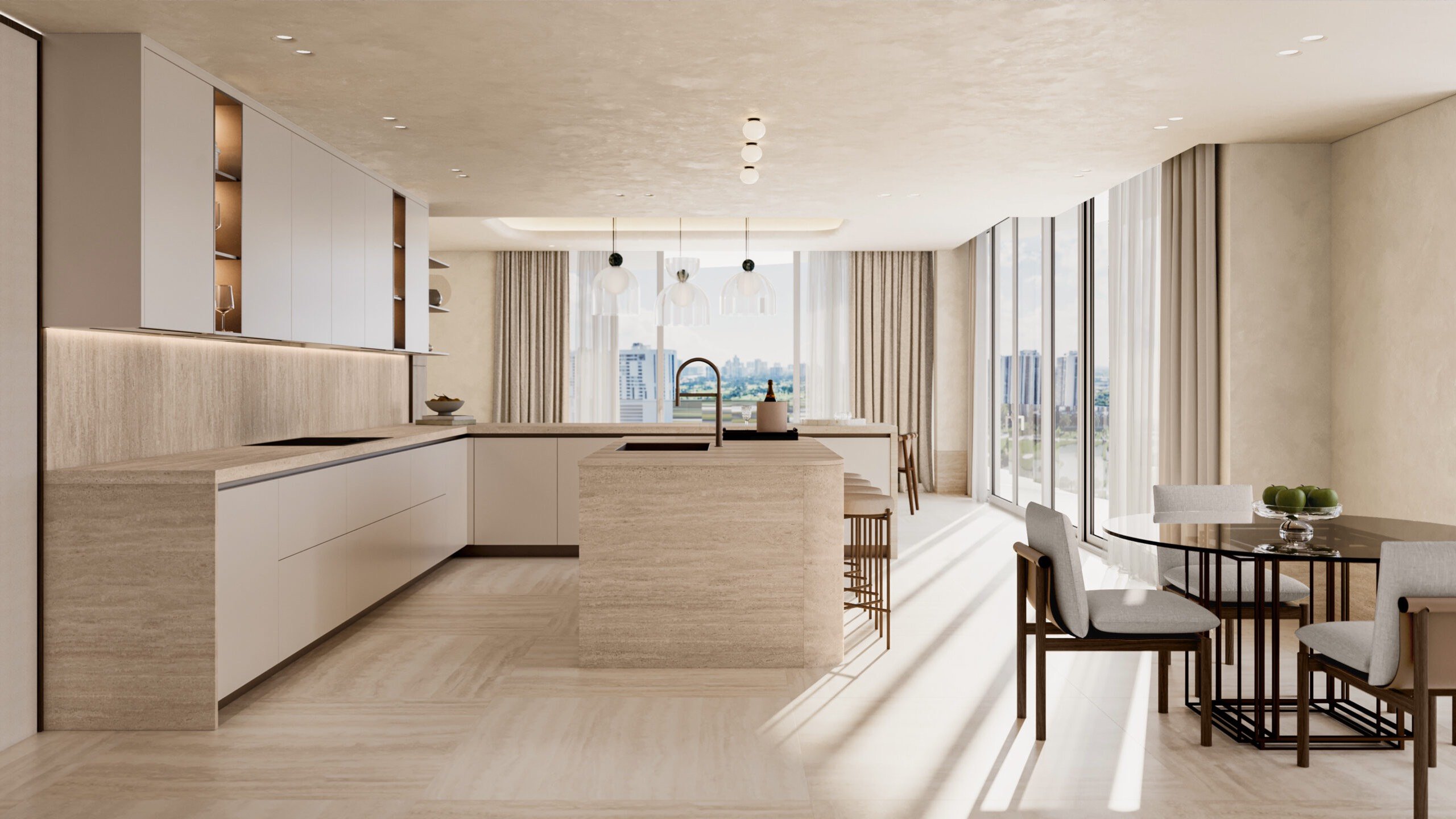
At Avenia Aventura, an outdoor kitchen is more than a lifestyle flourish. It is a working exterior installation in one of the country’s most demanding climates: humid, sunlit, salt-tinged, rain-prone, and periodically exposed to wind-driven moisture. For a buyer, the central question is not whether the concept feels luxurious. It is whether the outdoor kitchen, whether private, shared, or part of an amenity package, has been specified to remain elegant after years of real use.
Begin with a simple but consequential question: which outdoor-kitchen components are included in the specific residence, terrace, or amenity area you are evaluating? Exact specifications may vary by unit, package, or final build-out, so a buyer should not rely on a rendering, model image, or sales conversation alone. Ask for the final finish schedule and written specifications before treating any exterior kitchen element as part of the delivered value.
For buyers comparing Avenia Aventura with other South Florida luxury residences, the same discipline applies across markets. Aventura, Sunny Isles, Pompano Beach, Edgewater, and Bay Harbor Islands each bring their own microclimate considerations, but the durable-luxury test remains consistent: what is specified, who maintains it, and what happens when coastal exposure begins to show.
The first document to request is a written breakdown of all exterior materials. That means cabinetry, counters, appliance finishes, fasteners, hinges, frames, drawer slides, handles, burners, brackets, screws, and visible hardware. In a luxury setting, the smallest exposed component can become the first visible weakness if it is not engineered for exterior use.
Stainless steel deserves particular scrutiny. Ask what grade is being used for grills, doors, drawers, burners, handles, screws, and brackets. Lower-grade metals can be more vulnerable to corrosion near the coast, especially where salt air and humidity combine with heat and cooking residue. A beautifully styled grill face tells only part of the story; the buyer should understand what sits behind it, below it, and inside it.
Cabinetry is equally important. Ask whether the structure is marine-grade, powder-coated, sealed, or otherwise designed for outdoor conditions rather than adapted from indoor-kitchen systems. Doors may look substantial on day one, but swelling, finish discoloration, hinge corrosion, and drawer failure often begin at the structural level.
Countertops require their own line of questioning. Whether the material is porcelain, natural stone, engineered stone, concrete, or another surface, request specifics on UV resistance, staining risk, sealing needs, and thermal expansion. A terrace counter in South Florida may face intense sun, sudden rain, appliance heat, and frequent entertaining use. Durability is not a single attribute; it is the combined result of surface performance, installation detail, and maintenance behavior.
Avenia Aventura buyers should ask directly whether the outdoor kitchen has been designed for South Florida coastal exposure. Salt air, humidity, intense sun, heavy rain, and wind-driven moisture create a far harsher setting than a covered inland patio. This is where the phrase outdoor-rated needs definition, not assumption.
Drainage is one of the most revealing topics. Ask how the kitchen drains after heavy rain. Are counters, cabinet interiors, appliance bays, and surrounding decks sloped to prevent standing water? Does water escape cleanly, or can it collect around burners, seams, fasteners, flooring transitions, or cabinet bases? Standing water is not merely inconvenient; it can accelerate staining, swelling, corrosion, and appliance failure.
Wind also matters. Ask how appliances and cabinetry are secured for high-wind events, especially if the installation is on an elevated terrace, rooftop area, or exposed amenity deck. The answer should address anchoring, access panels, covers, and any protocols owners or management must follow before major weather events.
Buyers who are also considering vertical coastal living at Bentley Residences Sunny Isles or The Ritz-Carlton Residences® Pompano Beach should apply the same logic: exterior kitchens and outdoor entertaining areas need specifications that respect salt, sun, rain, and wind, not just design intent.
Outdoor cooking in a multifamily setting is governed by more than taste. Ask how gas, electric, plumbing, drainage, and ventilation are routed, because condominium outdoor kitchens depend on shared building systems and association rules. A private installation may look self-contained, yet its utility connections, drain paths, shut-offs, and venting can affect common infrastructure.
Ask whether grills or cooking appliances are permitted on private terraces, shared amenity decks, or both. Confirm the answer in the condominium documents rather than relying on casual assurances. The same question should cover fuel type, storage limitations, operating hours, cleaning obligations, and whether covers or accessories must meet building standards.
Fire safety deserves a clear paper trail. Ask whether the installation meets applicable fire-safety, ventilation, shut-off, and clearance requirements for outdoor cooking in a multifamily high-rise setting. That includes the relationship between cooking equipment, surrounding finishes, overhead structures, wind exposure, and emergency access.
This is where new-construction buyers should be especially careful. Early marketing may convey a lifestyle, while final condominium documents and finish schedules define actual use. Treat the documents as the controlling luxury feature.
A major durability question is financial responsibility. Ask which items are covered by developer warranties, manufacturer warranties, appliance warranties, and association maintenance obligations. Then ask what is excluded. Salt-air corrosion, finish discoloration, cabinet swelling, countertop staining, grill ignition failure, and hardware rust should all be discussed explicitly.
For shared amenity kitchens, clarify whether maintenance is funded through association dues, reserves, or possible special assessments. For private outdoor kitchens, ask who repairs or replaces each element if a cabinet door warps, a burner fails, a hinge rusts, or a counter stains. A buyer should understand the difference between a common-area obligation and an owner obligation before closing.
The same diligence belongs in any buyer’s-guide conversation involving waterfront residences or outdoor kitchens. A buyer comparing Aventura with Aria Reserve Miami or The Well Bay Harbor Islands may be looking at different settings, but the maintenance and warranty questions remain central to long-term satisfaction.
Ask for the recommended maintenance schedule in writing. It should address cleaning frequency, approved products, resealing requirements, appliance servicing, and seasonal inspections. Also ask whether owner-installed covers, aftermarket cleaners, or modifications could void warranties. In a coastal environment, maintenance is not a housekeeping footnote; it is part of the ownership cost.
Replacement parts are another overlooked issue. Ask whether grills, burners, cabinets, hinges, drawer slides, and related hardware will have parts available over the expected ownership period. If a highly specific finish or appliance line is difficult to source later, small failures can become expensive aesthetic problems.
Finally, ask whether owners may upgrade or replace outdoor-kitchen appliances in the future, and whether association approval, licensed contractors, or matching finishes are required. Durability is partly about today’s specification, but it is also about adaptability. A kitchen that can be responsibly serviced, refreshed, and documented may support long-term appearance, reduce maintenance friction, and help preserve resale appeal within Avenia Aventura’s luxury positioning.
Before contract decisions are made, ask for the final finish schedule, written exterior specifications, warranty documents, association rules, and maintenance guidance. Then move component by component: what is included, what grade is used, how water exits, how wind is addressed, who pays for repairs, which exclusions apply, and what can be replaced later.
The goal is not to make the outdoor kitchen feel less romantic. It is to protect the romance from avoidable deterioration. In South Florida, the best exterior kitchens are not simply photogenic. They are specified, drained, ventilated, warranted, maintainable, and understood before ownership begins.
What is the first outdoor-kitchen question to ask at Avenia Aventura? Ask exactly which components are included in the specific residence, terrace, or amenity package, since specifications can vary by unit or final build-out.
Should I rely on renderings when evaluating the outdoor kitchen? No. Treat renderings as a design starting point, then request written specifications, final finish schedules, and warranty documents.
Why does stainless-steel grade matter near Aventura? Lower-grade metals are more vulnerable to corrosion in salt air, humidity, and wind-driven moisture, especially around grills, fasteners, burners, and hardware.
What should I ask about outdoor cabinetry? Ask whether it is marine-grade, powder-coated, sealed, or otherwise engineered for exterior use rather than adapted from indoor cabinetry.
Which countertop details matter most outdoors? Ask about the material, UV resistance, staining risk, sealing needs, and thermal expansion, especially for sun-exposed or rain-exposed areas.
Why is drainage so important for an outdoor kitchen? Poor drainage can leave standing water around cabinets, appliance bays, seams, and decks, increasing the risk of staining, swelling, and corrosion.
Can grills always be used on private terraces? Not necessarily. Confirm whether cooking appliances are permitted on private terraces, shared amenity decks, or both, and verify restrictions in condominium documents.
Who maintains a shared amenity outdoor kitchen? Ask whether maintenance is handled through association obligations, dues, reserves, or other funding mechanisms, and clarify repair responsibility.
What warranty exclusions should buyers review? Review exclusions for salt-air corrosion, finish discoloration, cabinet swelling, countertop staining, ignition failure, and hardware rust.
Can owners upgrade outdoor-kitchen appliances later? Ask whether upgrades require association approval, licensed contractors, matching finishes, or specific replacement parts.
To compare the best-fit options with clarity, connect with MILLION.
If branded residences are on your mind — as a home or as an allocation — we would be glad to share what we are seeing, privately.
Begin a quiet conversation