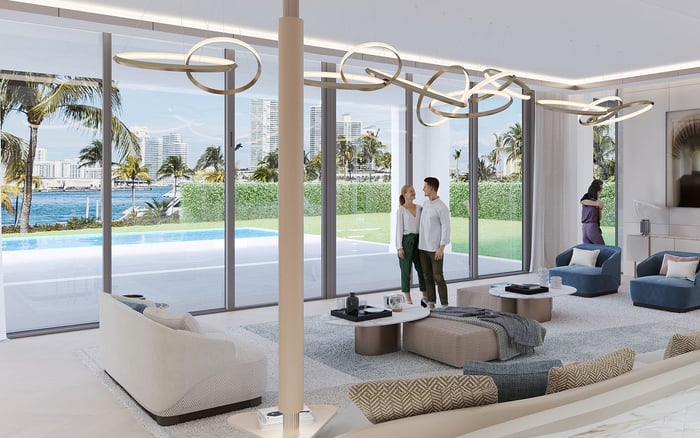
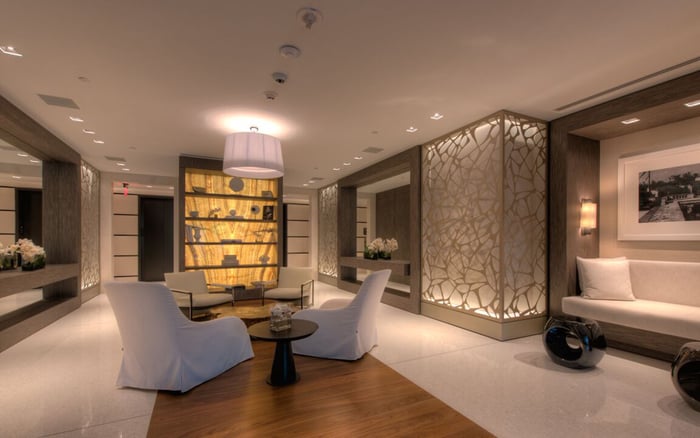
A buyer-focused due diligence guide to guest-suite strategy at Palazzo del Sol, from building rules and Fisher Island access to staff stays, layout flexibility, renovation limits, liability, and resale positioning.
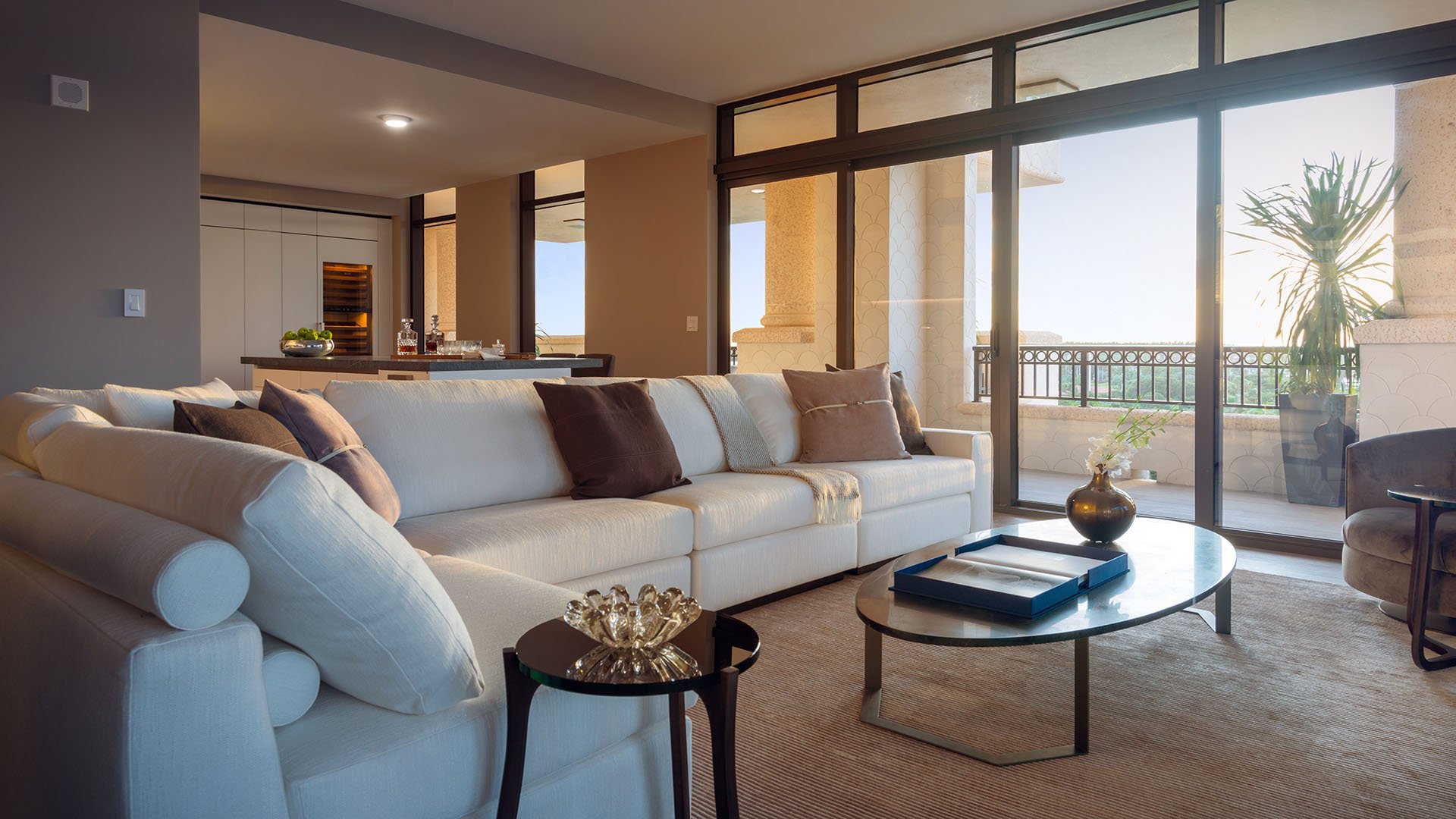
At the top of the market, the phrase “guest suite” can mean several different things. It may refer to a true building-level accommodation, an owner-reservable room, a rentable private guest room, or simply a bedroom within the residence planned with enough privacy to function as a semi-independent wing. Before buying at Palazzo del Sol, the first question is not whether the home can host guests. It is what, exactly, the building permits and recognizes.
For buyers focused on Palazzo del Sol Fisher Island, that distinction matters because a private island address adds layers of access, security, transportation, and discretion. A residence may be physically generous, yet the operating rules may still determine how non-owners arrive, register, use amenities, receive deliveries, park vehicles, or stay overnight. Guest-suite strategy is therefore not a decorating decision. It is a legal, lifestyle, and resale due-diligence exercise.
Begin by asking whether Palazzo del Sol has any true building-level guest suites, rentable guest rooms, or owner-reservable accommodations separate from private residences. Do not assume a hotel-style arrangement unless it is confirmed in writing through the proper building process. In ultra-luxury condominium language, “guest accommodation” and “guest bedroom” are not interchangeable.
If the answer is no, the strategy shifts to the floor plan. The residence itself must carry the burden of hospitality. That means evaluating whether a guest bedroom offers privacy, bath access, closet space, acoustic separation, service circulation, and comfortable distance from the owner’s primary suite. In larger Fisher Island residences, this can become a subtle but powerful part of the value proposition, particularly for owners who host adult children, grandparents, rotating family offices, or long-weekend guests.
On Fisher Island, the guest experience begins before the lobby. Ask whether overnight guests are governed only by Palazzo del Sol condominium rules or also by broader Fisher Island access and security protocols. A seamless guest suite is not truly seamless if arrival depends on unclear credentialing, ferry timing, parking procedures, or after-hours instructions.
The most important questions are operational. How are guests credentialed for island entry? Is building entry handled separately? What happens if guests arrive late? Where do drivers wait? Can luggage be handled through a service route? Are deliveries and packages treated differently for guests than for owners? These issues may feel administrative during contract review, but they become personal when a family is hosting during holidays, regattas, art week, or peak season.
This is also where comparisons with nearby private-island residences can sharpen a buyer’s thinking. Buyers considering Palazzo della Luna, The Residences at Six Fisher Island, or The Links Estates at Fisher Island should treat guest protocol as part of the property’s lifestyle architecture, not as a footnote.
Ask for the condominium documents, house rules, and any amendments that define guest occupancy, visitor registration, and non-owner overnight stays. The right question is not simply “Can guests stay?” It is “Under what conditions, for how long, how often, and with what approvals?”
Short-term rentals, paid guest stays, corporate use, and recurring third-party occupancy may be prohibited or restricted by the condominium association. Even if an owner has no intent to rent, the language matters. A family office, visiting executive, charitable guest, or repeated guest pattern can raise questions if the documents are written narrowly. Ask how many guests can be hosted at once before the association treats the use as excessive, commercial, or inconsistent with residential occupancy.
Second-home planning often depends on predictable guest use. If the residence will serve as a seasonal base for a large family, the rules should support that rhythm without creating recurring friction. The same is true for owners who prize privacy and want assurance that neighboring residences are not functioning like informal lodging operations.
A guest-suite strategy should distinguish between building amenities and Fisher Island Club access. Ask whether guests may use building amenities independently or only when accompanied, sponsored, or pre-authorized by the owner. Then ask separately whether club access for guests requires registration, sponsorship, fees, or a distinct approval process.
This distinction is essential for lifestyle planning. A guest who can sleep comfortably in the residence but cannot independently move through the island, meet friends, access amenities, or coordinate services may still require constant owner involvement. Some buyers welcome that control. Others want hospitality that feels effortless while remaining discreet.
The point is not to maximize guest freedom at any cost. In buildings at this level, controlled access is part of the appeal. The goal is to understand the choreography in advance, so hosting aligns with the way the owner actually lives.
Luxury hospitality often depends on people who are not personal guests in the social sense. Ask whether staff, nannies, private security, chefs, drivers, or household managers may stay overnight in the residence. Then ask whether different rules apply to staff versus family or friends.
This matters for buyers with children, elderly relatives, security needs, medical support, or event-driven service requirements. A layout with a secondary bedroom may appear useful, but the association rules may limit who can occupy it, how they are registered, and whether their presence is considered staff support or guest occupancy. Service elevators, package handling, luggage movement, golf carts, and guest vehicles should also be reviewed because convenience depends on the entire operating path.
A strong guest-suite layout is not just a bedroom with a door. It should be tested against actual use. Can guests reach a bathroom without crossing the owner’s private zone? Is there storage for long stays? Is the room near service circulation or too close to entertaining spaces? Can a nanny or chef move discreetly? Does the plan protect the primary suite from noise and traffic?
If changes are needed, ask whether renovations require association approval, permits, design-review approval, or limits on plumbing, kitchens, locks, or secondary entrances. Owners sometimes imagine a semi-independent suite with additional wet areas, lockable passages, or enhanced privacy. Those improvements may be subject to restrictions, and they should be reviewed before closing, not after the designer begins work.
Guest use may create extra charges, amenity fees, insurance requirements, security deposits, or liability exposure for the owner. Ask for these items in writing. Also ask local counsel to review whether the intended plan affects homestead, tax, insurance, estate-planning, or rental-compliance considerations. The more formal or frequent the guest use, the more important this review becomes.
Resale strategy should be discussed with brokers and advisors who understand buyer preferences in the building. Some purchasers value a flexible guest wing because it supports family, staff, and long-stay visitors. Others may prioritize uninterrupted owner privacy and prefer layouts where guest use is clearly secondary. In MILLION Buyer’s Guides, the best answer is rarely universal. It depends on whether the residence supports the owner’s private life without weakening the building’s residential character.
Does Palazzo del Sol definitely offer building-level guest suites? Buyers should ask directly and obtain written confirmation before assuming any true building-level guest suite, rentable room, or owner-reservable accommodation exists.
Are overnight guests governed only by condominium rules? Not necessarily. Buyers should ask how Palazzo del Sol rules interact with broader Fisher Island access and security protocols.
What documents should a buyer request? Request the condominium documents, house rules, and amendments addressing guest occupancy, visitor registration, and non-owner overnight stays.
Can guests use amenities without the owner present? Ask whether guests need to be accompanied, sponsored, or pre-authorized before using building amenities.
Is Fisher Island Club access the same as building access? Treat them as separate questions. Guest club privileges may involve registration, sponsorship, fees, or other procedures.
Can staff stay overnight in the residence? Ask whether nannies, chefs, drivers, private security, or household staff are treated differently from personal guests.
What makes a floor plan suitable for a guest-suite strategy? Look for privacy, bath access, storage, service circulation, and separation from the owner’s primary suite.
Can an owner renovate to create a more independent guest wing? Any renovation plan should be checked for association approval, permits, design review, and restrictions on plumbing, locks, kitchens, or entrances.
Are short-term stays or paid guest use allowed? Buyers should ask whether short-term rentals, paid stays, corporate use, or recurring third-party occupancy are prohibited or restricted.
Does a guest-suite layout help resale? It can, if it adds flexibility without compromising privacy. Resale advisors should evaluate whether Palazzo del Sol buyers prioritize hosting capacity or uninterrupted owner seclusion.
For a tailored shortlist and next-step guidance, connect with MILLION.
If branded residences are on your mind — as a home or as an allocation — we would be glad to share what we are seeing, privately.
Begin a quiet conversation