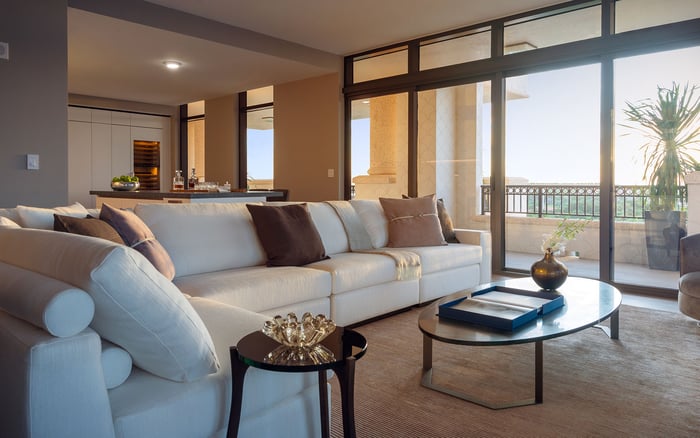
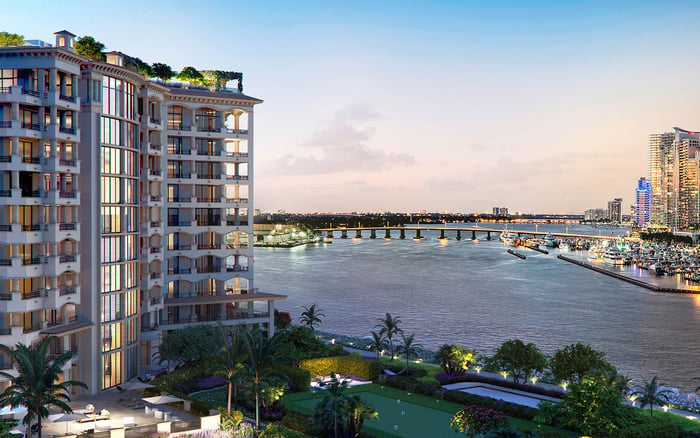
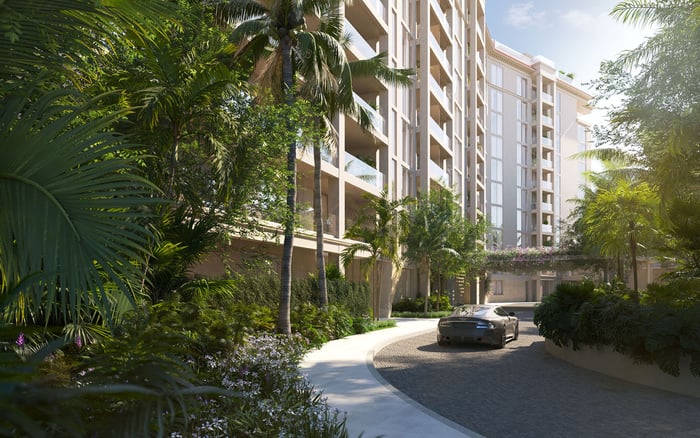
A discreet, buyer-focused look at Palazzo della Luna Fisher Island and how amenity planning supports weekday privacy, time savings, service rhythm, and long-term residential value.
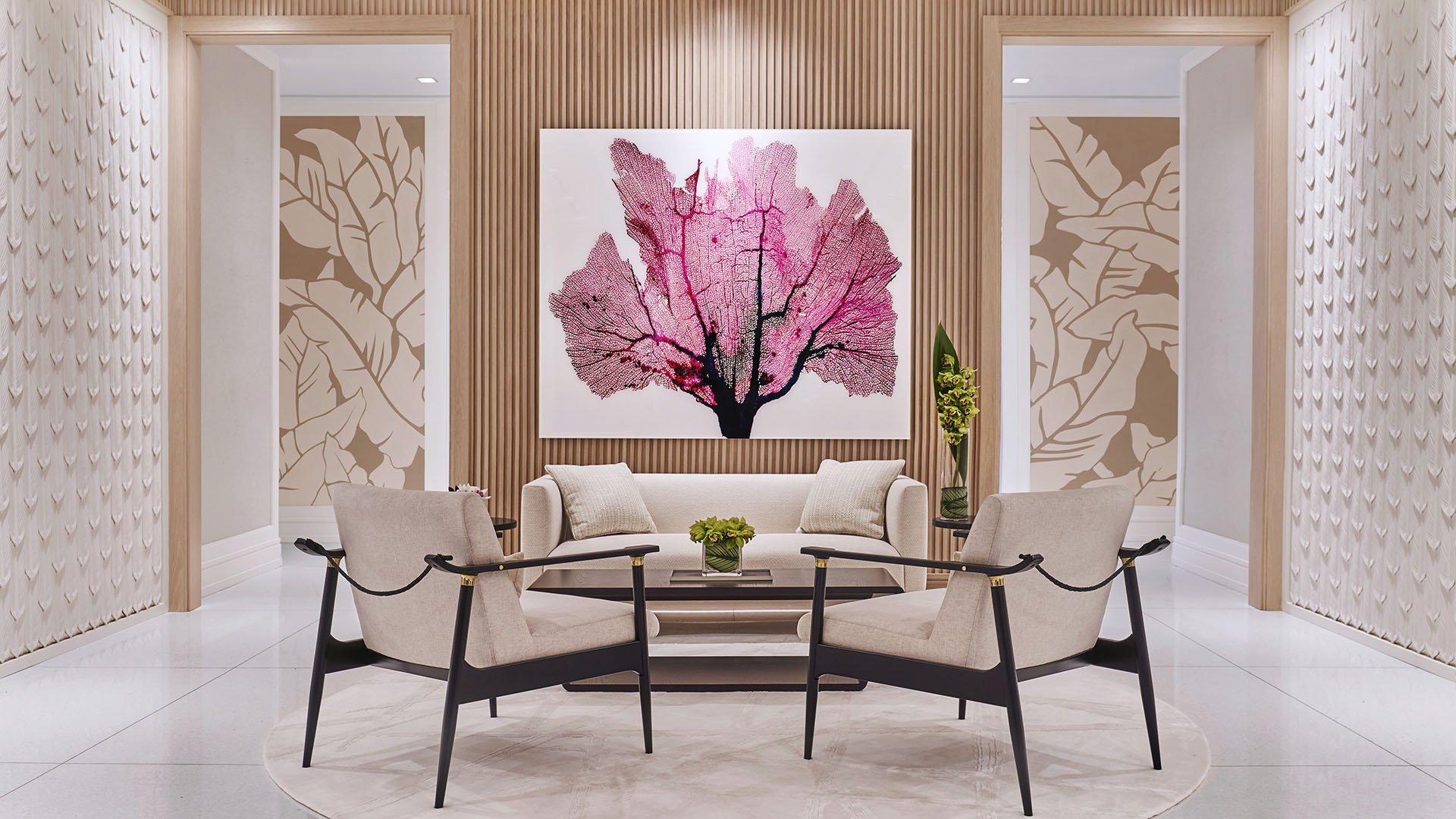
At the highest end of South Florida real estate, amenities are no longer judged solely by scale or photogenic appeal. The more revealing question is what they do for a resident at 8:15 on a Tuesday morning, between a school run, a private call, a wellness appointment, and a dinner that needs to feel effortless rather than arranged. That is the clearest lens for understanding Palazzo della Luna Fisher Island.
For buyers considering Palazzo della Luna, the amenity program is best understood as a weekday operating system. It is not simply a collection of destinations within a residential address. It is a way to compress time, preserve privacy, and reduce the small frictions that can make even a beautiful home feel less usable during the workweek.
Fisher Island raises that standard. The island setting already appeals to residents who value discretion, controlled access, and a residential atmosphere removed from the denser rhythms of mainland Miami. Within that context, an amenity program must do more than impress guests. It must help residents move through ordinary days with less exposure, fewer transitions, and a calmer sense of control.
A weekend amenity can be theatrical. A weekday amenity has to be dependable. It should support the moments that rarely appear in marketing language: the early workout before the first call, the quiet reset between meetings, the ability to receive service without turning the residence into a logistical center, and the option to entertain without compromising the private life of the household.
This is where the distinction between luxury and convenience becomes important. Convenience is transactional. Luxury is choreographed. In a building like Palazzo della Luna, the value of the amenity program is not only whether a resident can do more at home, but whether the day feels less interrupted while doing it.
For a buyer, the practical question is simple: does the building make the weekday smaller, easier, and more elegant? If the answer is yes, the amenity program becomes part of the residence itself. It extends the usable footprint of the home without requiring the owner to manage every detail personally.
In South Florida’s ultra-premium market, privacy is not a secondary feature. It is often the amenity that gives every other amenity meaning. Wellness areas, social rooms, arrival sequences, service corridors, and outdoor environments matter most when they allow residents to feel protected from unnecessary visibility.
That is especially relevant for Fisher Island buyers, many of whom are comparing not only buildings, but modes of life. The contrast between a high-energy urban tower and an island residence is not merely geographic. It is behavioral. On Fisher Island, the appeal is the ability to stay close to Miami while maintaining a deliberate remove from it.
This is why comparable island offerings such as Palazzo del Sol are often part of the same buyer conversation. The decision is rarely about one spectacular room or one isolated amenity. It is about the full residential rhythm: arrival, security, staff interaction, guest management, family use, and the ease with which a private day remains private.
The modern luxury weekday is increasingly hybrid. A residence has to support work without feeling like an office, wellness without feeling like a facility, and social life without feeling like a public venue. The best amenity programs allow these uses to coexist while keeping them distinct.
For owners who live in South Florida full time, the building must hold up under repetition. It is one thing to enjoy amenities during a long weekend. It is another to use them routinely and still feel that they are calm, polished, and easy to access. Weekday value is created when the building supports repeated use without making residents feel as though they are circulating through a resort.
For a second-home owner, the test is slightly different. The amenity program must make arrival feel immediate. The fewer decisions required after landing, the more valuable the residence becomes. A well-organized weekday environment allows the owner to return to established routines quickly, whether the stay is several days or several months.
Weekday life is rarely linear for families. Schedules overlap, guests arrive, service appointments change, and different generations may use the building in different ways at the same time. A strong amenity program should absorb that complexity.
The most successful residential environments create zones rather than conflicts. Adults need places for quiet and restoration. Children and visiting family members need room to be comfortable. Staff and service providers need clear pathways. Guests need to be welcomed without disturbing the privacy of the household. When these layers are handled well, the residence feels larger, calmer, and more adaptable.
This is a key reason Fisher Island continues to appeal to buyers seeking a full lifestyle proposition rather than a seasonal address only. The setting allows owners to think beyond the view from the living room and consider how a normal weekday will actually unfold.
Waterfront real estate carries its own emotional charge, but weekday value depends on more than the view. The real question is whether the setting contributes to daily decompression. A waterfront residence can create a sense of distance from the workday without requiring the resident to leave home.
For Palazzo della Luna, the island context gives the amenity conversation a particular character. Waterfront expectations in this segment are not only about outlooks and outdoor moments. They are about atmosphere. The setting should make the transition from work to private life feel natural, not staged.
Buyers who study The Residences at Six Fisher Island or The Links Estates at Fisher Island often evaluate this same question through different residential formats. The common thread is not a single amenity category. It is the pursuit of a living environment where privacy, space, and daily utility reinforce one another.
The most resilient amenities are the ones residents actually use. In the resale conversation, visual drama can attract attention, but everyday usefulness can support conviction. A buyer who can imagine a full weekday inside the building, without sacrificing work, wellness, family, privacy, or service, is evaluating more than design. They are evaluating livability.
This matters because luxury buyers are increasingly fluent. They know the difference between amenities that photograph well and amenities that reduce friction. They notice whether circulation feels intuitive, whether social spaces are appropriately separated, whether service can be discreet, and whether the building supports both quiet weekday routines and occasional entertaining.
For Palazzo della Luna, the weekday lens clarifies the value proposition. The building is not only part of the Fisher Island conversation because of its address. It belongs in the conversation because ultra-prime buyers are seeking homes that function at a high level even when life is not on holiday.
A private showing should go beyond finishes and views. Buyers should pay attention to the sequence of the day. How does one arrive? Where does privacy begin? How naturally can a resident move from the home to shared spaces? Can different members of the household use the building at the same time without creating friction? Does the amenity program feel calm when imagined on an ordinary weekday?
The best answers are often felt rather than declared. A building either lowers the temperature of the day or it does not. It either makes service feel invisible or asks the owner to manage it. It either expands the home or competes with it.
For the right buyer, Palazzo della Luna’s weekday appeal is rooted in this quieter form of luxury: the luxury of not having to leave the island for every need, not having to over-plan every transition, and not having to compromise privacy in exchange for convenience.
What is the main weekday appeal of Palazzo della Luna? Its appeal is the way a private residential environment can support time, privacy, service, and routine during ordinary weekdays.
Why does Fisher Island matter to the amenity conversation? Fisher Island adds a layer of discretion and separation that shapes how residents experience daily convenience and privacy.
Are amenities only important for full-time residents? No. Second-home owners also benefit when a building makes arrival, daily rhythm, and departure feel effortless.
How should buyers evaluate an amenity program? Buyers should imagine a normal weekday and test whether the building reduces friction from morning through evening.
Is privacy more important than the number of amenities? In the ultra-prime segment, privacy often determines whether amenities feel genuinely luxurious or merely available.
Does weekday usability affect resale potential? It can support buyer confidence because useful amenities make the residence easier to understand as a daily home.
What should families consider at Palazzo della Luna? Families should consider whether the building supports different schedules, guests, service needs, and quiet time simultaneously.
How does waterfront living support weekday life? Waterfront living can help create a sense of decompression and privacy without requiring residents to leave home.
Should buyers compare Palazzo della Luna with other Fisher Island properties? Yes. Comparing island residences can clarify which environment best matches a buyer’s routines and privacy preferences.
What is the most important question during a showing? Ask whether the building makes an ordinary weekday feel simpler, calmer, and more private.
For a confidential assessment and a building-by-building shortlist, connect with MILLION.
If branded residences are on your mind — as a home or as an allocation — we would be glad to share what we are seeing, privately.
Begin a quiet conversation