A discreet buyer’s guide to evaluating family-zone planning in North Bay Village, from daily routines and waterfront access to construction risk, building operations, schools, mobility, pets, and long-term resale clarity.
In North Bay Village, even the most polished residence can be the wrong fit if the family zone has not been studied with discipline. A family zone is not a formal planning term for most buyers. It is the lived perimeter of a household: school runs, stroller routes, elevator timing, guest arrivals, pet walks, package flow, play space, after-dinner walks, service access, and the quiet threshold between public amenity and private home.
For families searching in North Bay Village, the strongest question is not simply whether a residence is beautiful. It is whether the surrounding pattern of movement supports a calm, predictable life. That includes what happens at 7:30 in the morning, during rain, on weekends, when grandparents visit, when a nanny arrives, when a driver waits, and when a child wants independence but still needs a protected environment.
This is where luxury due diligence becomes more intimate. The buyer is not only purchasing views, finishes, and amenities. The buyer is purchasing friction, or the absence of it.
Before choosing a residence, ask the sales team, association representatives, or your advisor to walk through a full weekday scenario. Where does a car stop? How does a child move from residence to lobby to vehicle? Is there a sheltered arrival sequence? Can strollers, scooters, sports equipment, school projects, and groceries move comfortably without improvisation?
In new-construction and pre-construction purchases, these answers should be understood before contract momentum takes over. A residence at Continuum Club & Residences North Bay Village, for example, should be evaluated not only through its lifestyle promise, but through the household choreography it will require. Ask where private, semi-private, and shared zones meet. Ask how amenity access is controlled. Ask whether young residents can move through the property without crossing service, valet, or delivery patterns unnecessarily.
The best luxury buildings make everyday movement feel invisible. If the family routine requires constant negotiation, the design may not be as effortless as it appears.
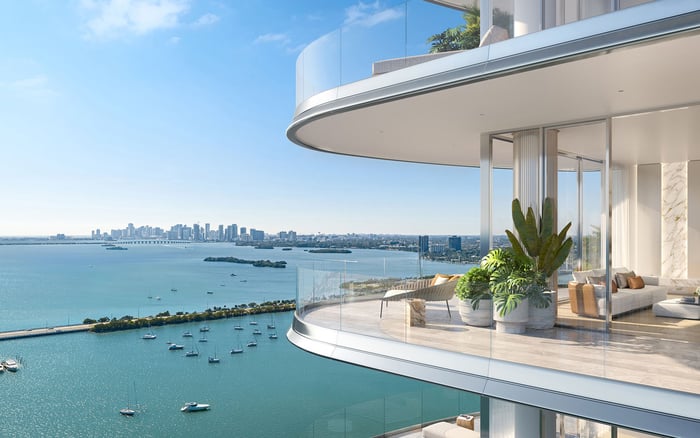
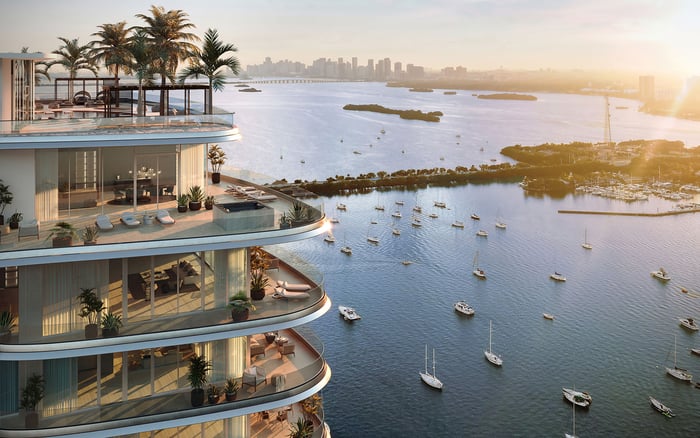
Waterfront living is one of the emotional reasons buyers consider North Bay Village, but families should treat it with a practical eye. The view is only one layer. Ask how the property separates leisure areas from edges, traffic, service paths, and arrival points. Ask how lighting, cameras, staffing, signage, and landscape design contribute to comfort after sunset.
Waterfront also changes the way families use outdoor time. Balconies, terraces, pool decks, promenades, and drop-off areas should be reviewed for supervision, wind exposure, shade, surface materials, and the ease of moving between indoor and outdoor spaces. A spectacular outlook does not replace secure circulation.
For buyers considering Shoma Bay North Bay Village, the right conversation is less about whether the address feels exciting and more about how the building’s shared spaces will work for children, guests, and service providers at the same time. Family-zone planning is the art of seeing those overlapping uses before they become daily habits.
A luxury buyer should ask what is planned nearby, what may be under construction, and how surrounding activity could influence daily living. Without relying on assumptions, request information about active approvals, known construction timelines, construction access, staging areas, lane impacts, dust control, noise protocols, and work-hour expectations.
This is especially important when buying into a growing waterfront market. A family may be comfortable with future development, but only if it understands the likely rhythm of the area during ownership. Ask whether nearby work could affect school commutes, walking routes, outdoor amenity use, guest parking, or the quiet hours that matter most to the household.
If evaluating Tula Residences North Bay Village, consider asking for a practical map of the family’s daily route: garage to lobby, lobby to street, street to vehicle, vehicle to bridge or main corridor, and return. The more precise the route, the fewer surprises after closing.
For many luxury households, education planning is private, layered, and dynamic. One child may attend a nearby school, another may travel across the bay, and a household may rely on tutors, coaches, therapists, sitters, or extended family. Ask how the residence supports these movements.
Can guests and caregivers be cleared efficiently? Are there rules for recurring visitors? Is there a comfortable waiting area? Does the building allow convenient pickup and drop-off without congestion or confusion? Are there storage solutions for uniforms, instruments, sports bags, car seats, and seasonal equipment?
Buyer’s guides often focus on bedrooms, views, and price per square foot, but family value is also found in the logistics that keep a household serene. A residence that allows caregivers to arrive smoothly, children to transition calmly, and parents to manage schedules without lobby stress may hold greater practical luxury than a larger home with weaker operations.
Family buyers should read amenity rules with the same attention they give to finish schedules. Pools, lounges, wellness spaces, screening rooms, dining rooms, children’s rooms, terraces, dog areas, and guest suites are meaningful only if their rules match the household’s life.
Ask about age restrictions, supervision requirements, guest limits, reservation systems, holiday policies, private event rules, food and beverage protocols, noise expectations, pet rules, and consequences for violations. Ask whether children are welcomed in key spaces or merely tolerated at certain hours. Ask how management balances residents seeking quiet with residents raising active families.
Nearby alternatives can sharpen the conversation. In Bay Harbor Islands, Onda Bay Harbor may appeal to buyers comparing waterfront lifestyles across the bay, but the family-zone question remains the same everywhere: does the building’s culture match the way the household actually lives?
Privacy is not only a matter of elevation or glass. For families, privacy is also about elevator flow, staff discretion, package handling, service entries, guest screening, and the separation of social spaces from residential corridors. Ask where children may encounter non-resident guests. Ask how delivery workers, contractors, and event staff move through the property. Ask whether private elevators, controlled-access floors, or secure parking sequences are available, and how they function day to day.
The goal is not to create isolation. It is to preserve the ease of family life without constant exposure. A truly refined building lets a household host beautifully, receive services efficiently, and still maintain a strong boundary around private time.
Family-zone planning is also a resale lens. The next buyer may ask the same questions: Is the arrival sequence intuitive? Are the amenities family-compatible? Does the building operate smoothly during peak hours? Is the surrounding area likely to feel more complete, or more complicated, over time?
A residence that supports family logistics can appeal beyond a narrow design taste. It can speak to second-home owners hosting relatives, grandparents relocating closer to family, executives with household staff, and couples planning future children. In a luxury market, operational grace is part of value.
Before signing, ask for documents, rules, site plans, management details, construction disclosures, and practical walkthroughs. Then test them against your own life. The most elegant purchase is the one that still feels elegant on an ordinary Tuesday.
What does family-zone planning mean for a luxury buyer? It means studying how the residence, building, street access, amenities, and daily routes support family life beyond the floor plan.
Should I ask about schools before choosing a North Bay Village residence? Yes. Even if school choices are private, commute patterns, pickup logistics, and caregiver access should be part of the purchase review.
How important is the arrival sequence for families? Very important. Valet, garage access, covered drop-off, elevators, and lobby flow can shape the ease of every school run and family outing.
What should I ask about nearby construction? Ask about expected access routes, work hours, staging areas, noise controls, dust management, and possible effects on daily commutes.
Are amenity rules as important as the amenities themselves? Yes. Age rules, guest policies, supervision requirements, reservation systems, and noise standards determine how usable amenities really are.
What should pet-owning families review? Review pet policies, walking routes, elevators, cleaning protocols, relief areas, and how pets interact with children and shared spaces.
How can I evaluate waterfront safety without overreacting? Ask about barriers, lighting, staffing, cameras, landscape design, pool protocols, and the supervision required for outdoor areas.
Is a larger residence always better for a family? Not necessarily. A slightly smaller home with better storage, circulation, parking, and amenity access may live more comfortably.
What documents should I request before committing? Request rules, budgets, management policies, site plans, construction disclosures, delivery procedures, and amenity-use guidelines.
Can family-zone planning affect resale? Yes. Residences that simplify daily life can appeal to a wider pool of future buyers seeking both beauty and operational ease.
To compare the best-fit options with clarity, connect with MILLION.
If branded residences are on your mind — as a home or as an allocation — we would be glad to share what we are seeing, privately.
Begin a quiet conversation