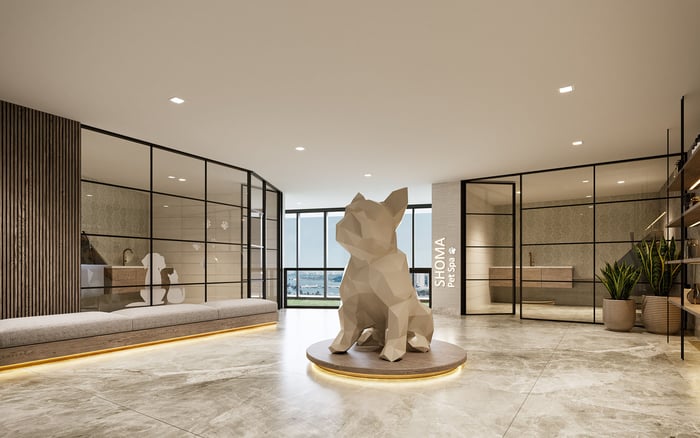
A discreet, practical guide for luxury buyers evaluating Key Biscayne homes and residences when daily life includes more than one pet.

For buyers with multiple pets, Key Biscayne requires a more exacting lens than the typical luxury search. The island’s appeal is clear: a quieter residential rhythm, proximity to the water, and a sense of privacy that feels distinct from the denser mainland. Yet for a household with two dogs, a dog and a cat, or a more complex mix of animals, the right residence is not simply the most visually compelling one. It is the home whose rules, proportions, surfaces, service pathways, and outdoor transitions can support daily life.
This is where otherwise sophisticated buyers often misstep. They fall in love with the light, the terrace, the lobby, or the beach-adjacent mood, then ask about pet restrictions too late. In a multiple-pet purchase, policy should be treated like architecture. If a building’s rules do not fit the household, the floor plan becomes irrelevant.
A pet-conscious Key Biscayne search should begin with three parallel questions: what the association allows, how the residence lives at 7 a.m. and 10 p.m., and whether the surrounding setting can support routine without friction. This is less glamorous than a sunset showing, but it is often the difference between a beautiful purchase and a livable one.
Before discussing finishes, a buyer with multiple pets should request the current pet policy and review it carefully with the purchase team. The important details are not limited to whether pets are allowed. A policy may address number of animals, weight, breed, approval procedures, registration, deposits, elevator usage, common-area behavior, noise complaints, and access routes. Buyers should also confirm whether rules apply differently to owners and tenants, especially if the residence may eventually become a second home or rental asset.
The smartest question is not, “Is the building pet friendly?” It is, “Will this building approve my exact household as it exists today, and will the rules still make sense if my circumstances change?” A buyer with two small dogs has a different profile from a buyer with one large dog and one older pet that needs frequent outdoor access. A family expecting to add another animal should be even more cautious.
This is also where tone matters. Luxury buildings are often protective of privacy, maintenance standards, and the experience of other residents. A polished pet resume, vaccination records, references where appropriate, and a clear understanding of building etiquette can help create a smoother approval process. None of that replaces the written rules, but it can reduce ambiguity.
The best residence for a multi-pet household usually has a clear arrival sequence. Ideally, there is space near the entry for leashes, towels, carriers, grooming items, and food storage that does not spill into the formal rooms. A laundry room, service corridor, or secondary entry can be unusually valuable. Luxury is not only marble and millwork. Sometimes it is the ability to bring in a wet dog without crossing the main entertaining salon.
Flooring deserves special scrutiny. Buyers should consider durability, traction, sound, and maintenance, particularly if pets are active or older. Highly polished surfaces can be elegant, but they may not suit every animal. Area rugs can soften acoustics and improve grip, yet they require planning in homes where sand, water, and shedding are part of the routine.
Balcony access is another issue. Outdoor space can be restorative for owners and animals, but it must be evaluated with safety and association rules in mind. Railings, drainage, heat exposure, privacy, and cleaning expectations all matter. Buyers should avoid assuming that a terrace automatically solves a pet-lifestyle challenge. In many cases, the more important feature is the route from residence to outdoor relief area, including elevator wait times and lobby protocols.
At Oceana Key Biscayne, buyers drawn to the island’s refined residential character should still conduct the same policy-first review. Even in a highly desirable setting, a multiple-pet household needs written clarity before becoming emotionally committed.
Pet living in a luxury building is a choreography. The path from unit door to elevator, from elevator to lobby, and from lobby to exterior should feel manageable at peak hours and discreet at quieter times. For owners with multiple pets, a service elevator, convenient exit, or less congested circulation pattern can be more useful than a dramatic lobby.
Ask how the building handles deliveries, grooming appointments, dog walkers, trainers, pet sitters, and veterinary access. If outside caregivers will enter the property, registration and access procedures should be understood before closing. A residence may appear effortless during a private showing, but daily operations can feel different when two dogs need to be walked, a cat needs medication, and the owner is leaving for the airport.
Noise is another practical consideration. Multiple pets can amplify sound, especially during storms, fireworks, construction, or long owner absences. Corner residences, thoughtful bedroom separation, and solid acoustic performance may help, but buyers should also think about behavioral patterns. A home that works for quiet pets may be less ideal for animals prone to anxiety.
For buyers comparing Key Biscayne with nearby low-density luxury environments, Vita at Grove Isle may enter the conversation because it allows a similar focus on privacy, water, and a calmer residential cadence. The point is not to replace the island search, but to keep leverage if pet rules narrow the Key Biscayne field.
A multiple-pet buyer should study outdoor routine with almost clinical precision. Where will the first walk happen? Is the route shaded? Is there a convenient cleanup point? How does the experience change during rain, heat, or a late return from dinner? A dog park nearby may be helpful for some owners, but it should not be the only answer. Not every dog thrives in a communal run, and not every schedule permits extended outings.
The better standard is redundancy. A residence should support quick relief, longer exercise, and calm decompression. For some households, that means easy access to paths and green space. For others, it means a private terrace paired with reliable walking routes. Owners of older pets should be especially careful about elevator dependence and distance to exterior access.
Waterfront living can add serenity, but waterfront conditions also bring practical concerns: wind, salt air, wet paws, and surfaces that need regular care. Buyers should consider where towels, washable mats, pet gear, and cleaning supplies will live. A beautifully designed residence can still feel disorganized if the pet infrastructure is improvised.
Key Biscayne may be the emotional target, but disciplined buyers often compare it with adjacent luxury markets before making a final decision. This is especially sensible for households with multiple pets, because the best choice may hinge on policy rather than preference. Coconut Grove, Coral Gables, Miami Beach, and select waterfront enclaves can provide alternatives if a particular building’s pet rules do not accommodate the household.
In Coconut Grove, Four Seasons Residences Coconut Grove may appeal to buyers who want a refined residential atmosphere with proximity to established neighborhoods and a more gardened sensibility. In Miami Beach, The Ritz-Carlton Residences® Miami Beach can be part of a broader comparison for buyers weighing service, privacy, and water-oriented living.
This is not a compromise exercise. It is a control exercise. When a buyer has options, they are less likely to force a purchase that will create conflict with an association, neighbors, or daily logistics.
Before submitting an offer, a multi-pet buyer should have the current governing documents reviewed, confirm the pet policy in writing, and understand the approval timeline. The buyer should also ask about pet-related fees, deposits, insurance expectations, elevator rules, restricted areas, and procedures for guests or staff handling animals.
A second showing should be scheduled around real-life movement. Visit at a time when residents are using elevators and common areas. Walk the actual route from the residence to the exterior. Stand in the potential pet-care zones inside the home. Imagine food delivery arriving while the dogs are excited, or a groomer entering while one pet is separated in a bedroom. These small scenarios reveal whether the residence is gracious or merely photogenic.
This is due diligence at the ultra-premium level: not less beauty, but fewer surprises.
Can buyers with multiple pets find a suitable home in Key Biscayne? Yes, but the search should begin with written pet policies and daily-living logistics rather than finishes alone.
Should I ask about pet rules before touring? Yes. If your household exceeds a building’s limits, even the most beautiful residence may not be a viable purchase.
Are weight and breed restrictions the only issues? No. Number of pets, approval procedures, elevators, deposits, common areas, and guest caregiver access can also matter.
Is a large terrace enough for multiple pets? Not by itself. Safety, cleaning, heat, drainage, and association rules should all be reviewed before relying on outdoor space.
What floor plan works best for pet owners? Look for a practical entry sequence, durable surfaces, storage for supplies, and a discreet path for walks and cleanup.
Should I consider nearby neighborhoods too? Yes. Comparing Key Biscayne with nearby luxury areas can preserve leverage if a building’s policy is too restrictive.
Do pet sitters and dog walkers need building approval? Many luxury buildings have access procedures for outside caregivers, so confirm registration and entry rules before closing.
How important is elevator access? Very important. Multiple pets make elevator wait times, service routes, and lobby circulation part of the daily lifestyle.
Can pet policies change after purchase? Rules can evolve, so buyers should review governing documents and discuss risk with qualified counsel before committing.
What is the biggest mistake pet owners make? They treat pet approval as a minor detail instead of a core condition of fit, comfort, and resale confidence.
For a discreet conversation and a curated building-by-building shortlist, connect with MILLION.
If branded residences are on your mind — as a home or as an allocation — we would be glad to share what we are seeing, privately.
Begin a quiet conversation