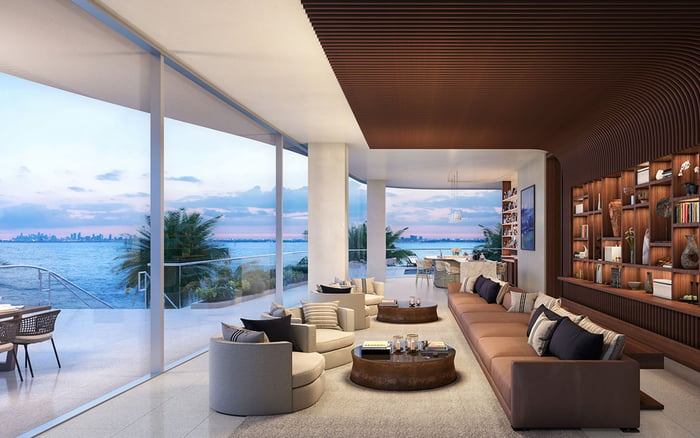
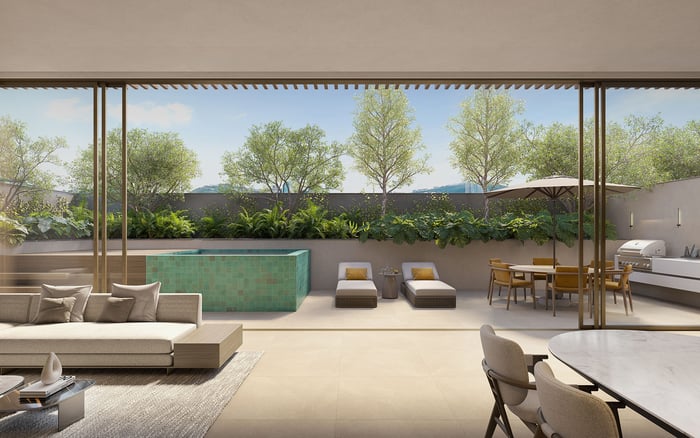
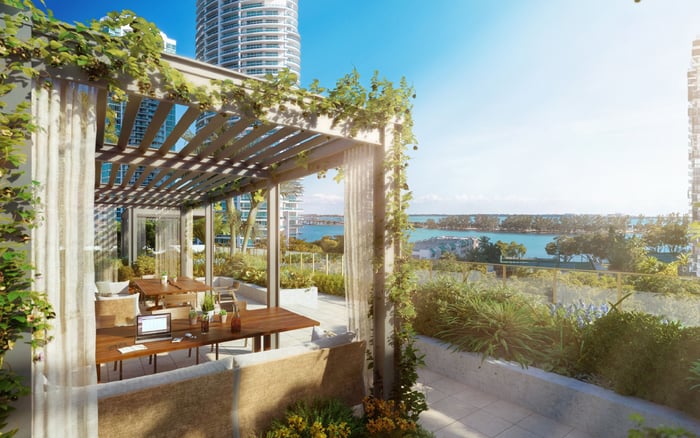
A practical luxury buyer’s guide to understanding balcony and terrace use rules before committing to a South Florida residence designed around outdoor living.
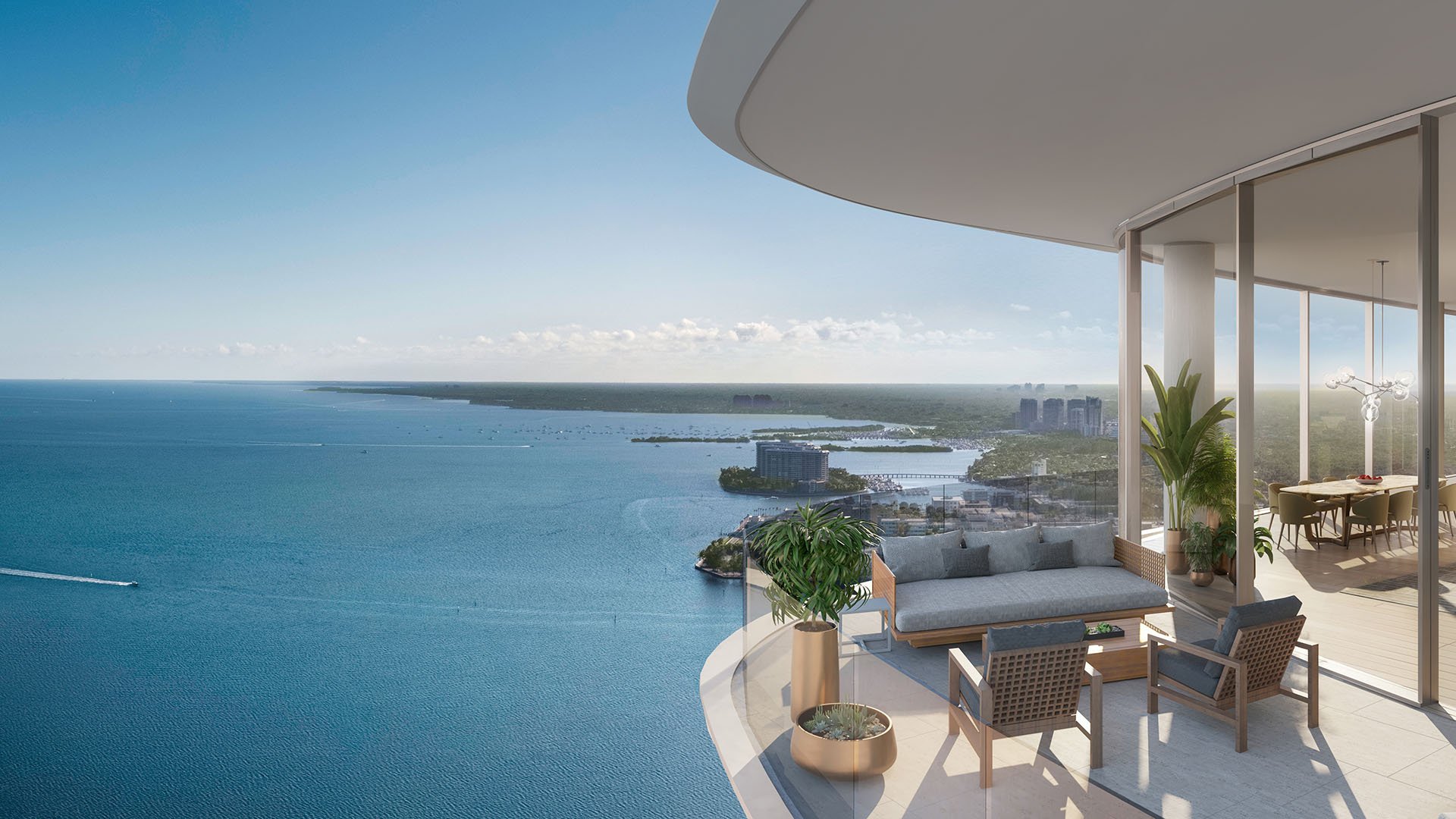
In South Florida, outdoor space is not a decorative extra. It is often the reason a buyer pauses at the glass, imagines morning coffee over the water, and begins to see a residence as a way of life. Yet even the most beautiful balcony can disappoint if daily use is more restricted than expected.
Before making an offer, study the balcony and terrace rules with the same care you would give to the floor plan, exposure, parking, and monthly assessments. The question is not simply whether a residence has outdoor space. The more important question is how that outdoor space may be used, furnished, planted, secured, and enjoyed.
This is especially relevant in buildings where the architecture places outdoor living at the center of the experience. A buyer comparing a vertical Brickell lifestyle at 2200 Brickell with a coastal setting in Miami Beach should not assume the same balcony culture applies. Rules can differ by association, building design, and the tone of the community.
A serious buyer should request and review the governing materials that address balcony use, architectural approvals, exterior appearance, common elements, limited common elements, and resident conduct. These documents matter, but they rarely tell the whole story. The language may be broad, while daily life depends on how the rules are interpreted and enforced.
Ask direct questions: What items are permitted outside every day? What must be removed during certain conditions? Are there restrictions on rugs, umbrellas, planters, screens, lighting, speakers, artwork, storage boxes, or fitness equipment? Can furniture remain outside year-round, or must it meet specific appearance standards?
The most valuable answer is not a casual “that should be fine.” Ask for the relevant rule, approval process, or written clarification. In the luxury market, small ambiguities can become daily irritations, particularly when a buyer intends to use the balcony as an outdoor room rather than a place to stand for five minutes.
Many high-end communities care deeply about the exterior composition of the building. From the street, pool deck, neighboring towers, or waterfront, balconies contribute to the overall architectural impression. Outdoor furniture may therefore be subject to style, color, height, material, or placement expectations.
Ask whether furniture must be commercial grade, weighted, neutral in palette, or limited to certain categories. Ask whether visible storage is prohibited. If you are planning a dining table, chaise lounges, a daybed, or sculptural pieces, confirm whether the size and silhouette are acceptable.
For buyers considering oceanfront living, salt air and wind exposure also make practicality part of the design conversation. A residence near the sand, such as Shore Club Private Collections Miami Beach, invites a refined outdoor ritual, but the association’s exterior standards will still shape what that ritual looks like.
Greenery can soften a glass balcony beautifully, but it is one of the first topics to clarify. Ask whether plants are allowed, whether artificial plants are treated differently, and whether planters must meet specific standards. Confirm whether anything may be attached to railings or walls, and whether irrigation, drainage, or staining are concerns.
Larger planters create a second layer of questions. Even when the visual design is elegant, weight, water, and placement may matter. A buyer who imagines a lush private garden should verify whether the building permits that level of planting before ordering custom containers or engaging a landscape designer.
Also ask about seasonal décor. Holiday lights, sculptures, flags, banners, and decorative objects may be regulated to preserve the building’s appearance. The most discreet communities often prefer balconies to remain visually quiet.
Outdoor dining is one of the pleasures of South Florida ownership, but cooking rules can be highly specific. Ask whether grills, cooktops, smokers, open flames, candles, or heat lamps are allowed. If cooking is not permitted on private balconies, ask whether the building provides designated outdoor culinary areas elsewhere.
For entertaining, clarify guest use, music, quiet hours, and furniture capacity. A large terrace may suggest dinner parties, but the association may still regulate sound, nuisance, and late-night use. If the residence is intended for frequent hosting, the buyer should understand both the written rules and the community culture.
At boutique and resort-style properties, the balance between private outdoor space and shared amenities can be part of the appeal. In Surfside, for example, buyers evaluating The Delmore Surfside may want to understand how private terraces interact with the building’s broader lifestyle programming and standards.
Pets can make balcony rules more sensitive. Ask whether pets may be on balconies unattended, whether pet relief is prohibited, and whether gates, turf, pet beds, or screens are allowed. Even a small daily routine can create issues if it conflicts with association expectations.
Privacy additions should be reviewed just as carefully. Screens, shades, films, umbrellas, drapery, and partitions may affect the building’s exterior appearance. If privacy is essential, do not assume you can solve it after closing. Ask what has been approved before, what is prohibited, and whether any changes require architectural review.
Sightlines matter as well. A balcony facing another tower, marina, pool deck, or neighboring terrace may feel very different at breakfast, sunset, or late evening. Rules can help preserve order, but they cannot change the orientation of the residence. Visit at different times if outdoor privacy is central to the purchase.
Balcony enjoyment in South Florida also requires a practical storm conversation. Ask what residents are expected to remove, secure, or store when severe weather is anticipated. Clarify who is responsible for moving outdoor items if the owner is away, and whether the building can access the residence or balcony under certain circumstances.
For second-home owners, this is not a minor detail. A terrace furnished for beauty still needs an absence plan. Ask whether the association sends notices, whether staff assistance is available, and whether vendors may be authorized in advance.
In markets such as Fort Lauderdale, where waterfront living and seasonal ownership often overlap, buyers considering Four Seasons Hotel & Private Residences Fort Lauderdale should evaluate both the elegance of the outdoor space and the operational expectations around keeping it secure.
The more ambitious the outdoor vision, the earlier the buyer should ask about approvals. Built-in seating, planters, lighting, flooring, shades, fans, outdoor kitchens, audio, misting systems, and privacy elements may all require review. Some may not be permitted at all.
Ask who approves balcony changes, how long the process typically takes, what drawings or specifications are required, and whether prior approvals create any useful precedent. A designer’s rendering is not the same as association approval.
This is particularly important in new-construction and recently delivered residences, where buyers may be tempted to customize immediately. The building may have a controlled design language that extends to outdoor areas. Early clarity protects both the design budget and the relationship with the association.
Before signing, ask these questions in writing or with your advisor present. What is the official status of the balcony or terrace under the governing documents? What items are allowed to remain outdoors? Are there restrictions on color, material, size, or visibility? Are plants allowed, and under what conditions? Are grills, flames, heaters, or cooking devices permitted? Are speakers, televisions, or lighting allowed? Are pets allowed outside unattended? What must happen before storms or extended absences? What changes require architectural review? How are violations handled?
A balcony should expand the residence, not complicate ownership. The best buyers approach outdoor space with imagination and discipline, pairing the romance of the view with a precise understanding of the rules that protect the building.
Should I review balcony rules before making an offer? Yes. Balcony rules can affect daily use, design plans, entertaining, and storm preparation, so they should be reviewed early.
Can I assume outdoor furniture is allowed on every condo balcony? No. Ask what furniture types, materials, colors, heights, and storage practices are permitted by the community.
Are plants usually a simple approval item? Not always. Planters can raise questions about drainage, weight, staining, attachment, and exterior appearance.
Should I ask about grilling before buying? Yes. Cooking devices, open flames, and heat sources may be restricted, so confirm the rule before planning outdoor dining.
Can I add privacy screens after closing? Do not assume so. Screens, shades, films, and partitions may require approval or may be prohibited.
How should second-home buyers think about balcony rules? They should ask what must be removed or secured during absences and whether staff or vendors can assist when needed.
Do terrace upgrades usually require approval? Many visible or permanent changes may require architectural review, especially built-ins, lighting, flooring, and shades.
Should I rely on verbal assurances from a sales representative? Treat verbal guidance as a starting point only and request written confirmation or the relevant governing language.
Can balcony rules affect resale value? They can affect buyer perception, especially when outdoor living is central to the residence’s appeal.
What is the best mindset when evaluating outdoor space? Think like both a designer and an owner, balancing beauty, comfort, compliance, and long-term ease of use.
If you'd like a private walkthrough and a curated shortlist, connect with MILLION.
If branded residences are on your mind — as a home or as an allocation — we would be glad to share what we are seeing, privately.
Begin a quiet conversation