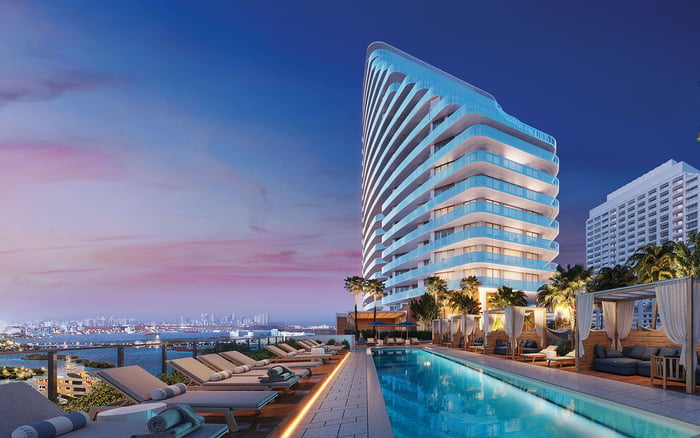
A discreet buyer’s guide to reviewing amenity operating budgets before purchasing luxury real estate in Fort Lauderdale, from staffing and reserves to insurance, service standards, capital planning, and the questions that reveal whether a building’s lifestyle is sustainably funded.

In Fort Lauderdale, the most compelling luxury residences are no longer defined only by views, finishes, or proximity to the water. They are increasingly judged by the quiet consistency of daily life: how the lobby is staffed, how the pool deck is maintained, how the fitness spaces feel at 7 a.m., how quickly an elevator issue is addressed, and how confidently the building protects its service culture over time.
That consistency is not accidental. It is funded through the amenity operating budget. For buyers comparing Fort Lauderdale Beach, Las Olas, and waterfront residences, the budget is where lifestyle becomes financial reality. A cinematic arrival court or resort-style pool may photograph beautifully, but the more important question is whether the association or condominium structure has a credible plan to operate, staff, insure, repair, and renew those amenities year after year.
This is not a call for suspicion. It is a call for precision. In the upper tier of Fort Lauderdale real estate, an informed buyer should treat the amenity budget as part of the property itself. It is as relevant as the floor plan, exposure, parking, and terrace depth.
Begin with a deceptively simple question: what exactly does the amenity operating budget cover? The answer should distinguish recurring operations from capital improvements, optional services, reserves, utilities, insurance, security, staffing, cleaning, landscaping, pool care, equipment service, and management fees.
This matters because two buildings can advertise a similar amenity mix while carrying very different financial obligations. A marina-oriented property, a wellness-forward tower, and a boutique riverfront building may each have distinct cost centers. At Riva Residenze Fort Lauderdale, for example, a buyer evaluating the lifestyle proposition should ask not only what the amenities are, but how the operating responsibility is divided and documented.
The best question is not, “What are the monthly dues?” It is, “Which services are funded by the regular budget, which are paid à la carte, and which may require future increases or assessments?” That framing turns a superficial expense review into a meaningful ownership analysis.
In a premium building, staffing is often the invisible architecture of the experience. Front desk coverage, valet, security, management, housekeeping, pool attendants, maintenance teams, and concierge services shape daily life more than most finishes do.
Buyers should ask for clarity on staffing assumptions. How many positions are budgeted? Are they full time, part time, contracted, or shared? Are service levels expected to change once the building stabilizes after initial sellout or turnover? Are payroll-related costs included in the operating budget, or are some functions handled through third-party contracts?
This is especially important when comparing branded or hospitality-influenced residences. At Four Seasons Hotel & Private Residences Fort Lauderdale, buyers are naturally attuned to service expectations. The diligence question is whether the residential budget clearly supports the level of polish a buyer expects from the name, location, and price point.
Operating budgets handle recurring costs. Reserves address future repair and replacement. The distinction is essential because luxury amenities contain systems that age: pool equipment, fitness machines, elevators, audiovisual infrastructure, mechanical systems, exterior furnishings, spa components, access controls, and lobby finishes.
Ask whether reserves are built with amenity replacement in mind. A pristine rooftop lounge today can become a future capital question if furniture, waterproofing, lighting, and mechanical equipment are not planned for properly. Similarly, a pool deck that is central to the building’s identity should have a long-term maintenance strategy, not just a monthly cleaning line.
Buyers should request the current budget, reserve information, recent meeting minutes, and any planned capital projects when available through the normal purchase review process. The goal is to determine whether the building is preserving its luxury standard proactively or merely responding when something breaks.
Fort Lauderdale’s appeal is inseparable from water, boating, beach access, and open-air living. Those attributes can also introduce added maintenance complexity. Salt air, wind exposure, high-use exterior spaces, dock or marina components where applicable, garage systems, glass, railings, landscaping, and pool equipment may all require disciplined attention.
For buyers considering St. Regis® Residences Bahia Mar Fort Lauderdale, the setting and lifestyle context should prompt precise questions about shared areas, exterior upkeep, hospitality-style expectations, and how the budget anticipates long-term maintenance. The same principle applies across Fort Lauderdale’s premium waterfront market: a dramatic location deserves a serious operating plan.
Insurance is another line item worth close review. Buyers should ask what policies are included at the association level, what deductibles may apply, how premiums are treated in the budget, and what coverage remains the individual owner’s responsibility. The objective is not to become an insurance expert during a showing. It is to know which questions your advisor, attorney, and insurance professional should press before contingencies expire.
New-construction can offer a particularly elegant lifestyle narrative: new systems, fresh amenities, contemporary design, and early access to a building’s culture. It can also require careful review because initial budgets may be based on projections rather than a long operating history.
When touring Sixth & Rio Fort Lauderdale or other new residences, ask how the first-year budget was prepared, whether developer contributions or temporary arrangements affect the stated figures, and what happens when the association assumes fuller control. Also ask whether initial service levels are intended to be permanent or introductory.
The most elegant question is simple: “If the building operates exactly as marketed, is the current budget sufficient?” A confident answer should be supported by documents, not just enthusiasm.
Not every budget increase is a red flag. Luxury service costs can change, insurance can move, contracts can reset, and buildings may intentionally improve service. A well-run association may raise dues because it is planning responsibly.
More concerning is a pattern of vague explanations, repeated special assessments without a clear capital plan, deferred maintenance, underfunded reserves, unusually low dues compared with the amenity package, or inconsistent answers about who pays for what. If the property offers extensive lifestyle programming, valet, wellness spaces, pool service, and high-touch management, the budget should look mature enough to support that experience.
For buyers, the key is alignment: the dues, reserves, service model, and physical amenity package should all tell the same story. A buyer should not rely on glossy renderings alone.
Before signing or during the review period, ask for the most recent operating budget and focus on categories rather than only totals. What portion goes to staffing? What portion goes to insurance? Are utilities separated by common area and owner usage? Are vendors under long-term contracts? When do major service agreements renew? Are there pending increases, assessments, litigation, or major repairs that could affect owners?
Then ask lifestyle-specific questions. Is valet included or optional? Are guest suites, club rooms, fitness areas, pool cabanas, boat slips, or storage spaces included, limited, leased, or separately charged? Are private events permitted in shared amenity spaces? Who pays for added staffing when owners reserve them? Are pets, deliveries, contractors, and short-term guests creating extra operating costs?
Finally, ask how the budget protects the building’s identity. If the property is marketed around serenity, wellness, boating, beach access, or hotel-caliber service, the operating plan should reflect that promise. Luxury is not only what is built. It is what is maintained.
Why should I review the amenity operating budget before buying? It helps you understand the true recurring cost of the lifestyle being offered, not just the purchase price.
Is a low monthly assessment always better? Not necessarily. If dues are too low for the amenity package, future increases or assessments may become more likely.
What documents should I ask to review? Request the operating budget, reserve information, recent meeting minutes, rules, insurance summaries, and any disclosed capital plans.
How do amenities affect resale value? Well-maintained amenities can support a building’s appeal, while neglected amenities may weaken the ownership experience and buyer confidence.
Should I worry about staffing costs? Staffing is central to luxury service. Ask whether the budget supports the service level you expect.
What is the difference between operating expenses and reserves? Operating expenses cover recurring costs, while reserves are intended for future repair and replacement needs.
Are waterfront buildings more complex to evaluate? They can be. Exterior maintenance, insurance, marine-related features, and weather exposure deserve careful review.
Do new buildings have reliable budgets? New buildings often begin with projected budgets, so buyers should ask how assumptions were made and what may change after turnover.
Can amenity fees be separate from association dues? Yes, some services or spaces may be optional, limited, or separately charged, so ask what is included in regular dues.
What is the best way to shortlist comparable options for touring? Start with location fit, delivery status, and daily lifestyle priorities, then compare stacks and elevations to validate views and privacy.
For a discreet conversation and a curated building-by-building shortlist, connect with MILLION.
If branded residences are on your mind — as a home or as an allocation — we would be glad to share what we are seeing, privately.
Begin a quiet conversation