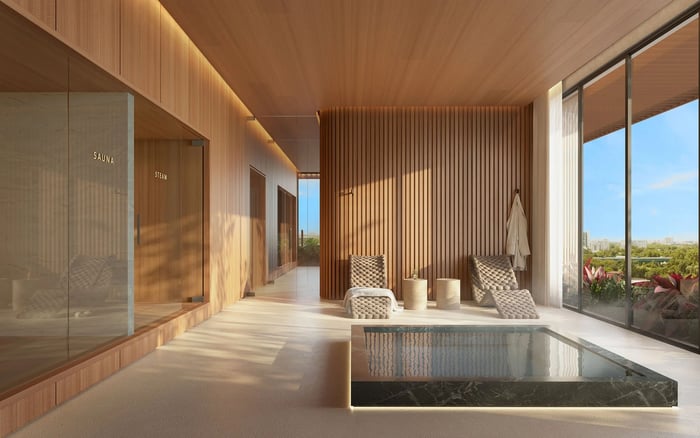
A refined guide to evaluating spa crowding as a floor-plan issue, not simply an amenity issue, when buying a luxury South Florida residence.
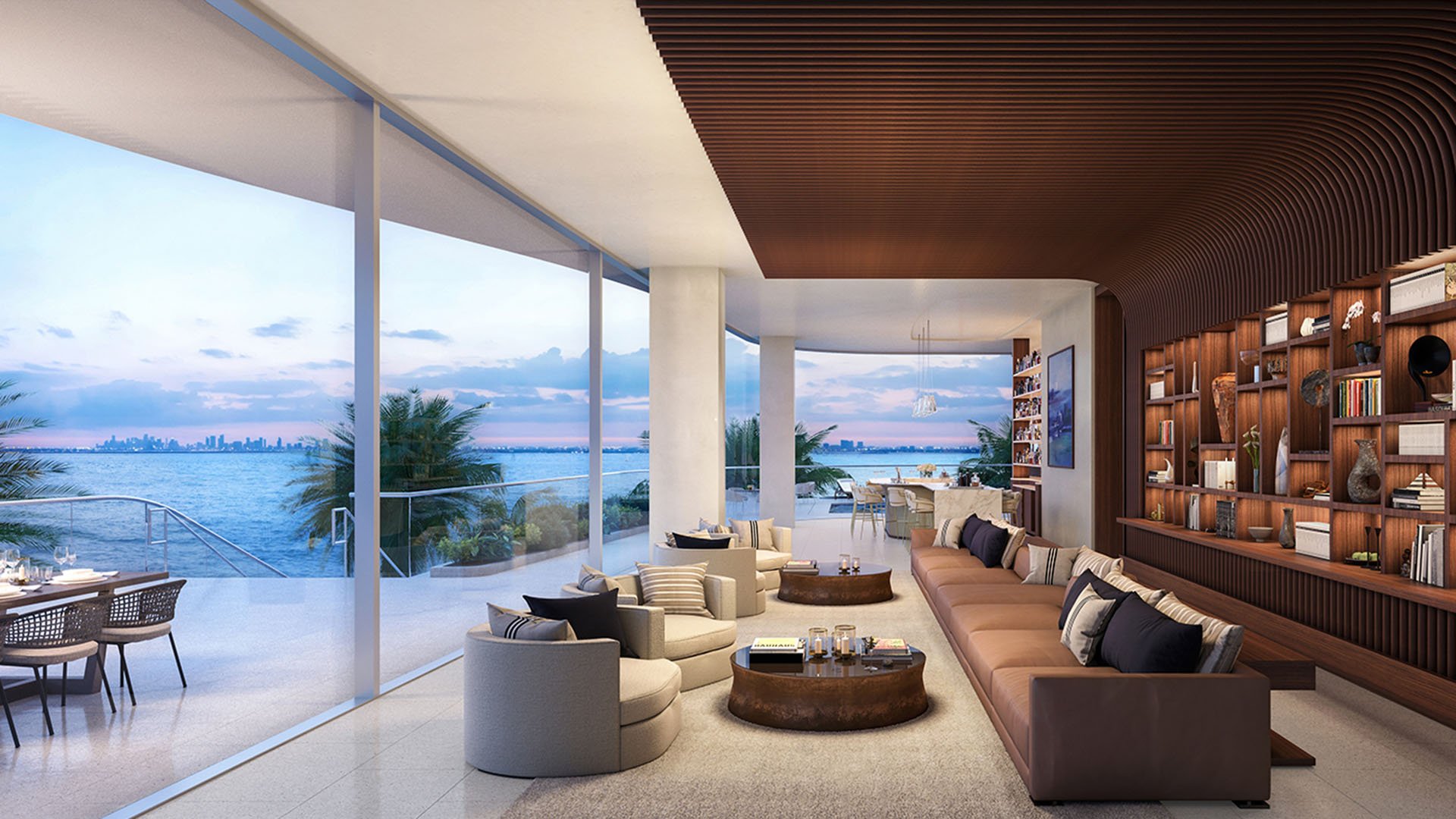
A wellness amenity can look impeccable in a presentation gallery and still prove difficult to use if the residence around it is not chosen with care. In South Florida’s luxury condominium market, the spa is no longer a decorative extra. It is often part of the daily rhythm: a morning sauna, a post-flight recovery session, a quiet massage, a swim before dinner, or a reset between work and entertaining.
The question is not simply whether a building has a spa. The more refined issue is whether your floor plan supports the way you intend to use that spa when other residents want to use it too. Crowding does not begin and end inside treatment rooms. It can start at the elevator, continue through amenity corridors, and follow you back into the residence if the private plan lacks a proper transition zone.
For buyers comparing Brickell towers, oceanfront residences, and quieter boutique addresses, the spa conversation should move beyond finishes and square footage. The stronger choice is often the plan that allows wellness to remain private, predictable, and easy.
A sophisticated buyer should study the spa as if it were an off-plan room attached to the home. How do you reach it? Do you pass through highly social areas? Is the route shared with pool traffic, fitness users, club guests, or service movement? Does the return path bring you directly into the main living room, or does the residence offer a discreet place to decompress?
The most successful layouts create a sequence. You leave the private zone, move through calm circulation, use the wellness area, and return without feeling exposed. This is where foyer depth, powder room placement, secondary closets, and bedroom separation matter more than they may appear to on a sales plan.
If a building’s spa is likely to be popular, a residence with a more gracious entry sequence can feel materially better than a larger unit with a blunt arrival. Privacy is not only a building amenity. It is something the floor plan either preserves or erodes.
Buyers often assume that more interior square footage solves lifestyle friction. With spa crowding, that is not always true. A larger residence can still feel compromised if the primary suite sits too close to entertaining areas, if secondary bedrooms open into the main circulation spine, or if there is no comfortable place to pause after returning from shared amenities.
A smaller but better-composed plan may outperform a larger one when it gives the owner a private wing, a proper vestibule, and clear separation between social and restorative zones. This is especially important for owners who use wellness amenities at peak times, such as early morning, late afternoon, or weekends.
A penthouse may offer superior privacy through scale and elevation, but the same analysis applies. If the plan does not support daily movement with discretion, the prestige of the residence will not fully protect the experience. The best luxury plan does not require the owner to stage-manage every routine.
Spa crowding often overlaps with water amenity crowding. A pool terrace that draws families, guests, and social gatherings can create energy that some buyers enjoy and others prefer to avoid. A lap-pool, by contrast, may attract a more routine-driven resident, but it can still become congested if access is limited or circulation is narrow.
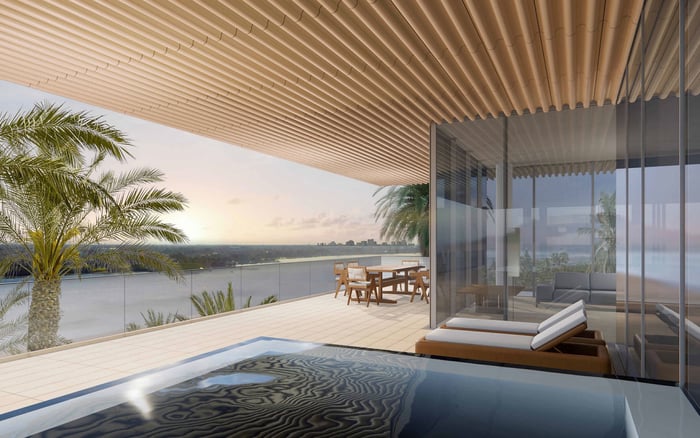
This is where the private terrace or balcony becomes strategically important. If your residence offers a generous outdoor room, the need to compete for shared relaxation space diminishes. You can return from a treatment and remain outdoors without re-entering the public amenity layer. For South Florida buyers, that private exterior space can be the difference between owning a residence near wellness and owning a residence that actually feels well.
The key is not simply having outdoor space. It is whether that space is connected to the right room. A terrace off the primary suite supports a different lifestyle than a balcony only attached to the living area. One is intimate and restorative. The other is social and architectural. Both can be valuable, but they solve different forms of crowding.
When spa amenities are heavily used, the primary suite becomes the residence’s true sanctuary. Its location within the plan deserves careful attention. Ideally, it should not feel like an afterthought beyond a noisy living area or a corridor shared with secondary bedrooms. It should have a sense of withdrawal.
Look for plans where the primary bedroom, bath, and closets create an internal wellness suite. A large bath is not enough if the bedroom lacks acoustic privacy or if the closet route is awkward. The spa downstairs may provide services, but the suite upstairs should provide continuity: bathing, dressing, resting, and stepping onto private outdoor space without crossing the public heart of the home.
This is particularly relevant for couples with different schedules, owners who host often, or families with guests in residence. If the building’s amenity floor feels active, the private suite should feel composed.
In luxury buildings, the elevator experience is part of the floor plan. Private elevators, semi-private landings, and well-designed vestibules can soften the impact of shared amenity demand. Even when the spa is busy, the return home should feel controlled.
Study what happens when the elevator doors open. Does the residence reveal its living room immediately? Is there a view through to the kitchen? Can wet hair, spa attire, gym clothes, or a robe be managed discreetly? These may sound like small details, but they shape daily comfort.
A formal foyer gives the owner time. It creates a buffer between public movement and private life. In a building where wellness amenities are part of the daily draw, that buffer becomes more than ceremonial. It becomes useful.
New-construction presentations often emphasize amenity breadth, but buyers should ask how those amenities interact with the homes themselves. The wellness program may be extensive, yet the more important issue is distribution: how residents move, where they wait, and how they return.
Ask whether the floor plan you are considering sits above, below, near, or far from the amenity level. Consider whether the elevator bank serves many residences or fewer homes. Think about whether your preferred line places bedrooms near potentially active zones, or whether it gives you a quieter perimeter.
For investors and second-home buyers, the same questions apply. A residence that feels effortless during a brief tour may live differently during holidays, high season, or periods when many owners are in town. The stronger floor plan anticipates those moments.
The right residence is not necessarily the one closest to the spa, nor the one farthest from it. Proximity can be convenient, but distance can create calm. The ideal answer depends on how you live.
If wellness is part of your daily discipline, choose a plan with efficient access and a private arrival sequence. If the spa is an occasional indulgence, prioritize the primary suite, outdoor space, and acoustic separation. If you entertain frequently, keep guest bedrooms and social areas from intruding on your own restorative spaces.
Spa crowding should not deter buyers from amenity-rich buildings. It should sharpen the search. The best floor plan lets you enjoy the building when it is quiet and remain comfortable when it is active.
Should spa crowding affect which residence line I choose? Yes. A line with better elevator access, bedroom separation, and arrival privacy may live better than one with only a larger interior area.
Is it better to live closer to the spa level? Not always. Proximity can be convenient, but a little separation may improve privacy, quiet, and the sense of retreat.
What floor-plan feature matters most for wellness privacy? A gracious foyer or vestibule is highly valuable because it buffers public circulation from the private interior.
Should I prioritize a private terrace if the spa may be busy? Yes. A private outdoor space can reduce dependence on shared relaxation areas after a treatment or workout.
Does a larger residence solve spa crowding concerns? Only if the layout is well organized. Poor circulation can make even a large residence feel exposed or inconvenient.
Are primary suite layouts important in amenity-rich buildings? Very. The primary suite should function as a private retreat when the building’s shared spaces are active.
How should families evaluate spa and pool crowding? Families should look for clear separation between children’s rooms, guest spaces, and the owner’s restorative areas.
Do private elevators make a meaningful difference? They can. A private or semi-private arrival often makes daily movement from shared amenities feel more discreet.
Should investors consider spa crowding when choosing a unit? Yes. A more livable plan can support stronger long-term appeal because comfort matters beyond the amenity brochure.
What is the simplest rule for choosing the right plan? Choose the residence that lets you use the spa without sacrificing privacy, calm, or the natural rhythm of home.
For a tailored shortlist and next-step guidance, connect with MILLION.
If branded residences are on your mind — as a home or as an allocation — we would be glad to share what we are seeing, privately.
Begin a quiet conversation