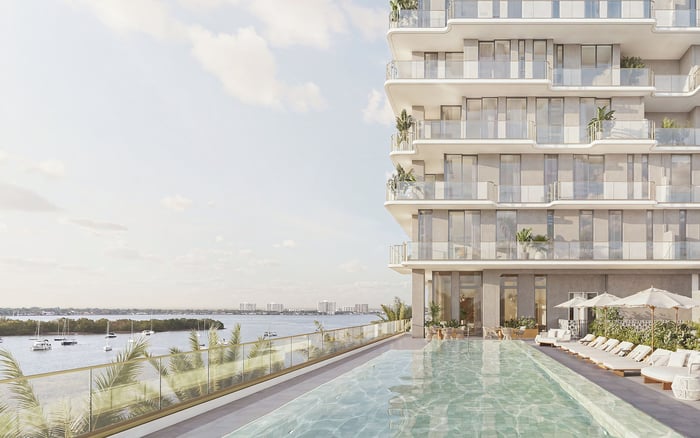
A discreet buyer’s guide to evaluating bayfront residences in North Bay Village through the lens of daily livability, waterfront quality, building discipline, and long-term ownership resilience.
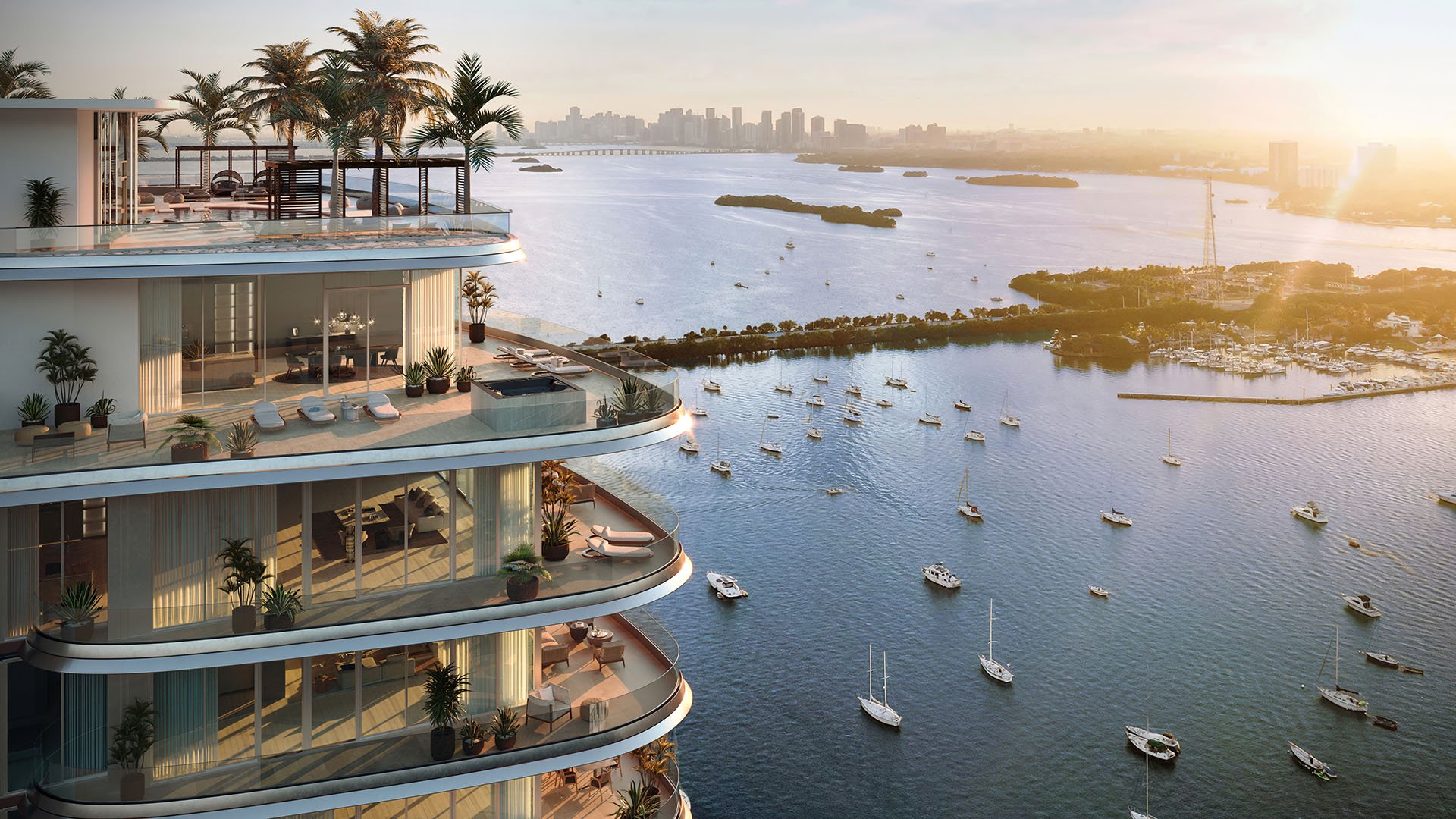
A bayfront residence in North Bay Village can be seductive at first glance: water, sky, light, and the sensation of living between Miami Beach and the mainland without fully belonging to either. Yet a serious long-term purchase requires more than a beautiful outlook. The sharper question is whether the residence will still feel intelligently bought once the novelty of the view has settled into daily life.
For the ultra-premium buyer, that means judging the property as a complete residential instrument. The bay must support privacy, light, calm, and ease. The building must be managed with discipline. The plan must live well through different seasons of ownership, from full-time residence to second-home use, and, eventually, to a possible resale.
North Bay Village is a distinctive shorthand in the Miami waterfront conversation because it sits between several buyer psychologies. Some purchasers want proximity to Miami Beach without the resort intensity. Others want a quieter bay setting while remaining connected to the urban core. The best purchases satisfy both instincts without overpromising either.
Not all waterfront is equal. A residence that works over time should make the water present in the rooms where the owner actually lives, not only from a terrace corner or a primary bedroom. The most durable layouts treat the bay as part of the home’s architecture: living room, dining area, kitchen, primary suite, and outdoor space should all participate in the view where possible.
The difference between Waterfront and Waterview also matters. Waterfront suggests immediacy and orientation. Waterview can be beautiful, but it may be partial, angled, or dependent on elevation. For a long-term hold, buyers should examine how the residence feels at breakfast, during afternoon glare, and at night. A dramatic first showing matters less than a view corridor that remains comfortable, coherent, and usable.
Terraces deserve the same scrutiny. A deep, furnished terrace can become an outdoor room. A shallow balcony may function more as a viewing ledge. For owners who host, read, work, or dine outside, terrace dimensions and wind exposure become part of the asset, not an afterthought.
North Bay Village works best for buyers who value centrality without wanting to be fully absorbed by the pace of larger Miami districts. The area can appeal to those who move between the beach, the mainland, cultural districts, dining corridors, marinas, and airports, but the purchase still needs to be judged at the building and unit level.
A residence in Continuum Club & Residences North Bay Village may attract attention because it places the North Bay Village conversation inside a recognizable luxury framework. A buyer should still ask the essential questions: how does the arrival feel, where are the strongest sightlines, how private are the elevators and corridors, and how does the residence handle storage, service access, and everyday movement?
This is where a serious purchase separates itself from a merely pleasant one. The buyer is not simply acquiring a waterfront address. The buyer is acquiring a routine. If the building makes that routine graceful, the ownership experience has a better chance of aging well.
In a bayfront setting, the building’s performance matters as much as the residence’s finishes. Maintenance culture, reserve discipline, amenity durability, security, parking logic, lobby experience, and staff consistency all influence the way a property holds its stature. Luxury is not only marble, lighting, and brand language. It is the absence of friction.
New construction can be compelling when it delivers contemporary ceiling heights, larger glass, efficient mechanical systems, updated amenity programming, and fresher common areas. But newness alone is not enough. Buyers should examine whether the building’s design solves real residential needs or simply assembles fashionable features.
For example, Shoma Bay North Bay Village belongs in the conversation for buyers studying how newer residential offerings are shaping the local market. The evaluation should remain practical: floor plate, exposure, noise control, parking, amenity placement, and the relationship between private space and common space.
A long-term owner should also consider how the building will feel in year five, year ten, and beyond. Amenities that are expensive to maintain but lightly used can become a liability. Common areas that are elegant, resilient, and operationally sensible are more likely to support a consistent ownership experience.
A serious residence should not depend on one narrow use case. Families change. Work patterns shift. Guests arrive. Adult children visit. Parents may stay for extended periods. A strong plan anticipates these transitions.
Look closely at bedroom separation, den flexibility, laundry placement, powder room access, and the relationship between entertaining space and private space. A bayfront home can feel magnificent and still be inconvenient if the plan lacks storage, acoustic separation, or intuitive circulation.
The best long-term residences allow owners to live formally or casually without fighting the plan. They accommodate a quiet morning, a dinner for friends, remote work, and a weekend with guests. The view may sell the first impression, but the plan sustains the ownership.
North Bay Village should be compared to neighboring waterfront submarkets, but not treated as interchangeable with them. Bay Harbor Islands, Surfside, Miami Beach, Edgewater, and Coconut Grove each carry different lifestyle codes and buyer expectations. The right comparison clarifies value. The wrong comparison creates false confidence.
A buyer considering North Bay Village may also study Onda Bay Harbor to understand a more boutique island residential rhythm. The point is not to declare one superior. The point is to understand whether the premium being paid is for privacy, access, architecture, services, neighborhood character, or a particular kind of waterfront calm.
Similarly, Tula Residences North Bay Village can be part of a localized review for buyers who want to understand the depth of the North Bay Village pipeline and how different buildings frame bayfront living. The stronger the buyer’s comparison set, the more disciplined the final decision becomes.
Investment is a useful lens, but it should not flatten a lifestyle purchase into a spreadsheet alone. For a bayfront residence, the more relevant question is whether the property has durable demand drivers: water orientation, floor-plan quality, building management, privacy, access, and an ownership experience that remains attractive in different market moods.
Buyers should be conservative about assumptions. Carrying costs, insurance, maintenance, assessments, financing conditions, and future buyer preferences all matter. A residence that can be enjoyed deeply while also offering a clear resale narrative is often more compelling than one purchased solely for projected appreciation.
Marina proximity, boating culture, and access to the bay can add emotional and practical appeal for certain buyers, but the value of those features depends on the individual building, the owner’s lifestyle, and the quality of the surrounding experience. The most resilient purchases are usually the ones where lifestyle utility and financial discipline align.
Before committing, a buyer should underwrite the residence across five dimensions. First, view quality: is the bay central, protected, and livable throughout the day? Second, plan quality: does the layout support the owner’s real life? Third, building quality: is the property operated with the seriousness expected at the price point? Fourth, location utility: does North Bay Village improve daily movement rather than merely sound convenient? Fifth, exit logic: can a future buyer understand the property’s appeal quickly and confidently?
When these elements align, the residence becomes more than a pretty place on the water. It becomes a rational luxury purchase: emotionally rewarding, practically usable, and easier to defend over a long holding period.
Is North Bay Village best for full-time living or second-home use? It can work for either, depending on the building, floor plan, and owner’s daily movement patterns. The key is choosing a residence that feels effortless, not merely scenic.
What matters most in a bayfront residence? The strongest purchases combine view quality, livable outdoor space, privacy, building discipline, and a floor plan that supports real use.
Is a direct bay view always better than a partial view? Direct views are often more compelling, but a well-framed partial view can still be attractive if the plan, light, and privacy are strong.
Should buyers prioritize new construction? New construction can offer modern design advantages, but buyers should still evaluate management, layout, materials, and long-term maintenance obligations.
How important is the terrace? Very important if the owner expects to dine, lounge, or entertain outside. Depth, shade, wind, and privacy can matter as much as square footage.
What makes a building feel serious over time? Consistent management, maintained common areas, practical amenities, secure arrival, and thoughtful service flow all contribute to long-term confidence.
How should buyers think about Investment value? Treat Investment value as a blend of lifestyle utility, future resale clarity, carrying costs, and the uniqueness of the waterfront position.
Does Marina access change the buying decision? It can for boating-oriented owners, but it should be weighed alongside privacy, building quality, residence layout, and overall convenience.
What is the biggest mistake buyers make? Many buyers overpay for a dramatic first view while underweighting floor-plan flaws, carrying costs, or weak building operations.
When is a bayfront residence a serious long-term purchase? It is serious when the view, plan, building, location, and exit story all reinforce one another rather than relying on a single emotional feature.
For a confidential assessment and a building-by-building shortlist, connect with MILLION.
If branded residences are on your mind — as a home or as an allocation — we would be glad to share what we are seeing, privately.
Begin a quiet conversation