Double-height ceilings can transform a South Florida residence, but full-time owners should evaluate comfort, proportion, privacy, maintenance, and day-to-day livability before treating volume as an automatic upgrade.
Double-height ceilings remain one of the most compelling architectural gestures in South Florida luxury real estate. They signal arrival. They frame light, water, sky, palms, art, and sculpture with an ease that standard ceiling heights rarely achieve. In a sales gallery or during a late-afternoon showing, the effect can be immediate: more air, more presence, more room for life to expand.
For full-time owners, however, the question is not simply whether the space impresses. It is whether the space performs. A double-height living room shapes how a residence sounds, cools, furnishes, lights, entertains, and ages. It can elevate daily life beautifully, but only when grandeur is matched by practical planning.
In South Florida, where sunlight, humidity, views, and privacy carry unusual weight, volume deserves the same scrutiny as floor plan, exposure, building services, and finishes. The best double-height rooms are not merely dramatic. They are comfortable, proportioned, and easy to live with every day.
A taller room usually invites more glass, and more glass can be both a privilege and a responsibility. An owner who loves morning light may discover that glare affects reading, television viewing, remote work, or artwork placement. An owner drawn to a cinematic sunset may need carefully specified window treatments to keep the room usable throughout the day.
Before committing, spend time in the space at different hours if possible. Study where sunlight lands, how reflective surfaces behave, and whether the room still feels calm when the sky is brightest. In South Florida residences with urban, ocean, bay, or Intracoastal outlooks, this evaluation is especially important for full-time living rather than occasional use.
Window treatments should never be treated as an afterthought. In a double-height room, they are architectural elements. Track, pocket, fabric, motorization, control system, and maintenance access should be considered early, because retrofitting can be visually disruptive. A beautiful room can lose its composure when the shading solution feels improvised.
A large vertical void can make conversation feel expansive, but it can also create echo when finishes are too hard. Stone, glass, lacquer, metal, and large-format flooring may photograph impeccably while amplifying sound. Full-time owners should listen for how voices carry, how music fills the room, and whether open entertaining sends noise into adjacent bedrooms or work areas.
Softness does not need to compromise sophistication. Rugs, upholstered seating, drapery, textured wall panels, books, art, and considered furniture placement can all help moderate sound. The key is to make acoustics part of the design language, not a corrective measure after move-in.
A double-height room should feel lively when guests arrive and serene when the household is quiet. If it works only for parties, it may not work for full-time ownership.
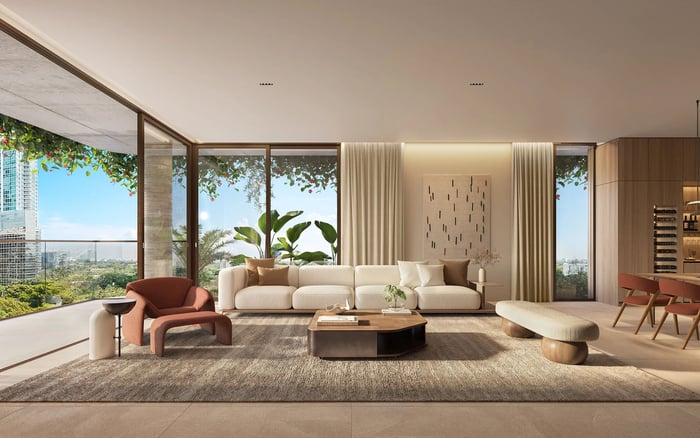
Scale is the most common design trap. Owners often assume a taller room requires oversized furniture, but the stronger approach is proportion. Seating should support the way the household actually lives: conversation, reading, children, pets, visiting family, formal entertaining, or quiet evenings. A giant sectional may fill the floor plate without creating intimacy.
Vertical space also demands a clear focal point. That may be a major artwork, a sculptural stair, a fireplace wall, a chandelier, or a framed view. Without hierarchy, the room can feel like a lobby rather than a private residence. A penthouse with double-height volume has a particular responsibility to balance spectacle with warmth, because the architecture already commands attention.
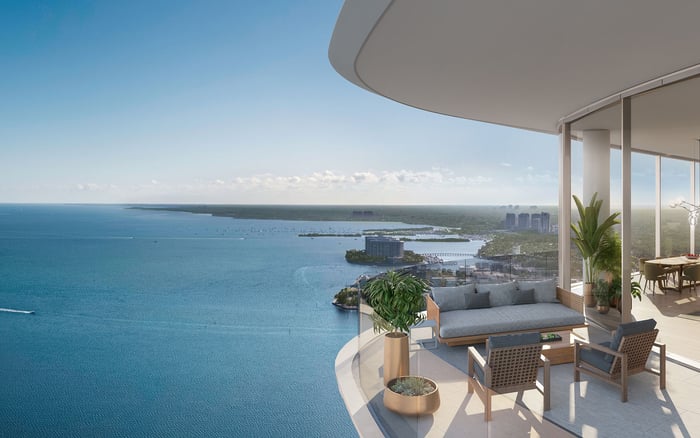
Think carefully about the relationship between the main living area and outdoor space. If a balcony or terrace connects directly to the double-height room, the threshold matters. The interior should not compete with the exterior view. It should frame it, soften it, and make movement between inside and outside feel natural.
Double-height ceilings often accompany large windows, mezzanine overlooks, open stairs, or internal bridges. These features can be beautiful, but they also affect privacy. From the street, neighboring towers, adjacent residences, or shared outdoor areas, visibility may shift throughout the day and evening.
For a South Florida residence, the question is not only what the owner sees, but who can see in. Full-time owners should evaluate sightlines from seated positions, bedrooms, kitchens, and upper-level circulation. Nighttime privacy can be very different from daytime privacy, especially when interior lighting turns glass into a stage.
Privacy planning can remain elegant. Layered drapery, sheers, architectural screens, landscape buffers, glass treatments, and furniture placement can preserve openness while reducing exposure. The goal is not to hide the room. It is to let the owner decide when the room is open and when it is quietly protected.
The higher the ceiling, the more important the maintenance plan becomes. Light fixtures, air vents, glass surfaces, fans, shades, sprinklers, art, and sensors may all require access. A beautiful chandelier is less appealing if every bulb change becomes a production. A dramatic glass wall is less serene if cleaning requires complicated coordination.
Ask how routine service will be handled. Where can ladders or lifts be used? Are fixtures reachable? Can shades be repaired without disturbing finished surfaces? Are air returns and supply locations discreet but serviceable? Full-time ownership depends on continuity, and continuity depends on practical access.
This is especially relevant for high-floor homes where logistics, elevator access, building rules, and vendor scheduling can shape the ease of upkeep. The room should not merely be magnificent on day one. It should be maintainable over many seasons of real use.
Double-height ceilings can broaden a residence's emotional appeal, but they are not universally valuable in isolation. Buyers respond to volume when it supports a coherent plan. They are more cautious when the room consumes usable square footage, compromises bedroom count, creates awkward circulation, or feels expensive to operate.
The strongest examples feel inevitable. The ceiling height makes the view better, the furniture plan calmer, the art more meaningful, and the entertaining sequence more memorable. Weaker examples feel like features added for drama without enough thought given to comfort.
For full-time owners, the central question is simple: does the double-height space improve the way the home lives every day? If the answer is yes, the feature can become one of the property's most enduring pleasures. If the answer is only that it looks impressive, further scrutiny is warranted.
Before falling for the room, test the daily routine. Sit where you would sit at breakfast, in the evening, and during a quiet weekend afternoon. Notice sound, glare, temperature, privacy, and proportion. Imagine holiday entertaining, ordinary laundry days, late calls, maintenance appointments, and guests arriving with luggage.
Then ask whether the architecture supports the life you intend to live. A double-height ceiling should not make the residence feel more formal than the household wants. It should create breathing room while allowing the home to remain intimate, efficient, and emotionally grounded.
In the most successful South Florida residences, volume is not a substitute for design intelligence. It is the reward for it.
Are double-height ceilings good for full-time living? Yes, when light, acoustics, cooling, privacy, and maintenance access are carefully planned. The feature should support daily comfort, not only visual drama.
Do double-height rooms feel less intimate? They can if poorly furnished, but proportioned seating, rugs, texture, and layered lighting can create warmth. The goal is human scale within architectural scale.
Should I worry about glare in a double-height space? Yes, especially with large glass areas and strong exposures. Review the room at different times of day and plan window treatments early.
Are acoustics a common issue? They can be, particularly when the room has many hard surfaces. Textiles, upholstery, art, and thoughtful layouts can help soften sound.
Is a chandelier practical in a very tall room? It can be, but service access should be understood before installation. Beauty and maintainability should be considered together.
Can double-height ceilings affect privacy? Yes, because taller glass and open internal sightlines may expose more of the residence. Daytime and nighttime conditions should both be reviewed.
Do these spaces require special furniture? They require disciplined proportion rather than simply larger pieces. The furniture plan should create comfortable zones for real daily use.
Are double-height ceilings better in condos or single-family homes? They can work in either setting if the plan is resolved. Building logistics, views, exposure, and service access are often the deciding factors.
Will a double-height ceiling help resale? It may, when the space feels elegant, usable, and well integrated. Poorly executed volume can make buyers focus on cost and inefficiency.
What should I inspect before buying? Study glare, sound, window treatments, maintenance access, privacy, furniture placement, and cooling comfort. These details shape the ownership experience.
When you're ready to tour or underwrite the options, connect with MILLION.
If branded residences are on your mind — as a home or as an allocation — we would be glad to share what we are seeing, privately.
Begin a quiet conversation