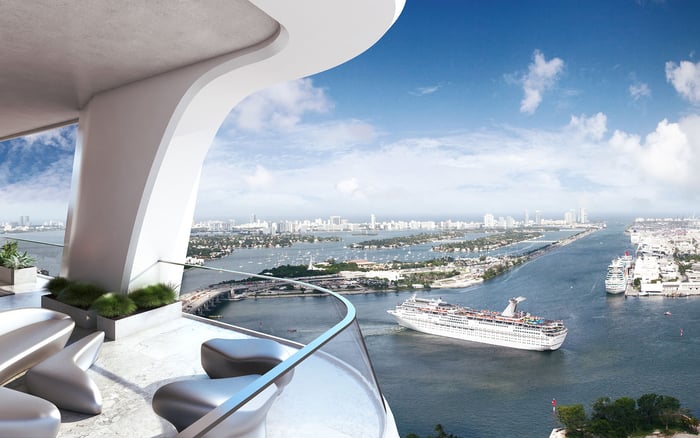
A discreet buyer’s guide to evaluating Viceroy Brickell as a second-home purchase, with emphasis on personal-use planning, rental flexibility, association review, and carrying-cost discipline.

For the global buyer, Brickell is more than a financial district. It is a lock-and-leave urban address with restaurants, offices, private clubs, waterfront corridors, and quick access to Miami’s cultural and aviation infrastructure. That makes Viceroy Brickell a natural point of study for a purchaser evaluating a second residence that must perform across several dimensions: personal enjoyment, controlled rental potential, and disciplined ownership cost.
The essential question is not whether a second home can be useful. It is how the property will be used in real life. A buyer who expects to occupy the residence during peak winter weeks, make it available to family in spring, and rent it during selected gaps needs a different strategy from an owner seeking a mostly private pied-à-terre. Those distinctions should be settled before pricing, furnishings, financing, or closing structure become the focus.
For clarity, the planning vocabulary matters. This is a second-home conversation first, an investment conversation second, and a Brickell lifestyle decision throughout. Rental income may improve the ownership profile, but it should not be the only reason the purchase works.
A refined second-home plan begins with a calendar. Owners should identify expected personal-use windows, blackout dates, family access, guest policies, remote-work periods, and the degree of spontaneity they require. The more frequently an owner wants last-minute access, the less aggressively the residence can be positioned for rentals.
Before contract deadlines, the buyer’s advisory team should review the declaration, bylaws, association rules, rental restrictions, management requirements, pet policies, guest-registration procedures, and any minimum lease terms. Do not assume short-term rentals are permitted simply because a building has a hospitality sensibility, and do not assume long-term rentals are frictionless simply because a residence is privately owned. The controlling documents matter more than market assumptions.
The distinction between private residential ownership and condo-hotel positioning is especially important. If an offering is described or marketed with hotel-style services, the buyer should understand how that affects rental administration, owner usage, financing, insurance, taxes, and resale expectations. If it is not a condo-hotel, the buyer should avoid importing assumptions from buildings that operate under a different structure.
Rental optionality can be valuable in Brickell, but the luxury owner should approach it with restraint. A residence intended for personal use must remain available when the owner wants it. Rental expectations should therefore account for realistic vacancy, seasonality, cleaning standards, wear, management costs, taxes, and association approval timelines.
The strongest rental strategy is not necessarily the most frequent one. In a premium building, protecting condition and reputation may be worth more than maximizing every empty night. Owners should consider the type of occupant they would accept, how furnishings will age, whether art and personal items will remain in the residence, and who will inspect the home after each stay.
This is also where building culture becomes decisive. Some buyers want an address where residences feel purely private. Others are comfortable with managed guest turnover if the governing documents allow it. The right answer depends on personal temperament, not projected income alone.
Carrying cost is where many second-home strategies become either elegant or strained. A disciplined model should include association dues, insurance, property taxes, utilities, maintenance, housekeeping, furnishings, periodic replacement, technology, parking, storage, management, travel-related expenses, and a reserve for special assessments or capital needs.
Luxury buyers often focus on acquisition price, but the sharper question is how the residence behaves during a year when it is used personally and rented less than expected. If the property remains comfortable to carry with conservative or no rental income, the owner has flexibility. If the plan requires strong rental performance to feel rational, the buyer is no longer making a pure lifestyle purchase.
Financing introduces another layer. Lenders may treat second homes, investment properties, and hospitality-oriented ownership structures differently. Before relying on a particular loan structure, buyers should confirm how personal use, rental activity, and building classification may affect underwriting.
Viceroy Brickell should be evaluated within the broader Brickell set, not in isolation. A buyer who wants a service-rich urban residence may also study ORA by Casa Tua Brickell for a different lifestyle sensibility, or Cipriani Residences Brickell if brand atmosphere and hospitality culture are central to the decision.
For buyers focused on privacy, architecture, and long-term ownership feel, comparisons may extend to The Residences at 1428 Brickell. Those considering a more fashion-driven branded-residence language may also look at 888 Brickell by Dolce & Gabbana. The purpose of these comparisons is not to rank taste, but to identify which building philosophy best supports the owner’s usage calendar.
A second-home buyer should compare rules as carefully as finishes. Two residences with similar views and pricing may produce very different ownership experiences if one has stricter rental limits, different guest protocols, higher service expectations, or a distinct resale audience.
Before moving from attraction to commitment, buyers should request and review the core ownership documents with counsel and an experienced advisor. The checklist should include rental permissions, minimum lease periods, application procedures, association fees, insurance obligations, reserve posture, parking rights, storage, pet rules, repair access, furnishing restrictions, and any owner-use limitations tied to management programs.
The buyer should also build two budgets. The first is a lifestyle budget, assuming little to no rental income. The second is an operating budget, assuming a measured rental plan that accounts for friction, taxes, management, vacancy, and maintenance. If both budgets feel acceptable, the acquisition has a stronger foundation.
Finally, plan the exit before the purchase. The future buyer pool may include end users, second-home owners, investors, or internationally mobile families. A residence with clear rules, well-preserved condition, tasteful furnishings, and a coherent ownership history is easier to understand at resale.
A polished second-home strategy at Viceroy Brickell is not built on optimism. It is built on control. The owner knows when the residence will be used, what rental activity is permissible, how costs will be covered, and how the property should be maintained between visits.
That approach preserves the luxury of the purchase. The residence becomes a Miami base rather than a financial puzzle. Rental income, if available and desired, becomes a supporting element rather than the central thesis. For the right buyer, that balance is precisely the point: enjoy Brickell when you want it, protect the asset when you are away, and carry the property with enough margin to make ownership feel effortless.
Is Viceroy Brickell best approached as a second home or an investment? It should be analyzed first as a second home, with investment potential treated as a secondary layer subject to building rules and carrying costs.
Can owners assume short-term rentals will be allowed? No. Rental permissions, minimum stay rules, and approval processes must be confirmed in the governing documents before purchase.
Are long-term rentals usually easier to underwrite? They can be simpler to model than frequent guest turnover, but association rules, tenant approvals, taxes, and market demand still matter.
What carrying costs should buyers model? Buyers should include dues, insurance, taxes, utilities, maintenance, housekeeping, management, furnishings, and reserves for future needs.
Should rental income be necessary for the purchase to work? Ideally, no. A resilient second-home strategy remains comfortable even if rental income is lower than expected.
Why does building governance matter so much? Governance determines how owners, guests, tenants, pets, repairs, and shared services are managed, which shapes daily ownership.
How should buyers compare Brickell projects? Compare lifestyle, privacy, services, rental rules, carrying cost, resale audience, and building culture rather than price alone.
Does condo-hotel positioning change the analysis? It can affect financing, taxes, rentals, management, and owner use, so buyers should verify the structure with counsel.
What is the most common second-home planning mistake? The mistake is buying for occasional enjoyment while underwriting the property as if rental income will always be strong.
When should advisors review the documents? They should review them before contract contingencies expire, so usage, rental, and cost assumptions can be tested early.
For a tailored shortlist and next-step guidance, connect with MILLION.
If branded residences are on your mind — as a home or as an allocation — we would be glad to share what we are seeing, privately.
Begin a quiet conversation