A luxury family buyer’s guide to evaluating view-corridor risk in South Florida, from zoning and easements to condo rules, HOA documents, development-pipeline diligence and pricing discipline.
For a family buying in South Florida, a view is not a decorative extra. It is breakfast light, homework calm, a parent’s evening reset, and the emotional reason one residence can feel entirely different from another. View-corridor risk is the possibility that a prized outlook, whether over water, garden, marina, park, or skyline, may be narrowed, interrupted, or materially changed after purchase.
The mistake is treating the view as a single photograph captured on a perfect tour day. Family buyers should treat it as a living asset with legal, planning, and neighboring-property exposure. The right question is not simply, “Do we love this view?” It is, “What must happen for this view to remain meaningfully intact, and what would we do if it changed?”
Whether the search is in Brickell, Coconut Grove, Sunny Isles, or Bay Harbor, a Waterview and a Terrace should be evaluated with the same discipline as floor plan, schools, service, and privacy. The most sophisticated buyers do not ask for a promise. They ask for the documents, context, and pricing logic that make the risk legible.
Every serious view conversation should begin with a map of the current and possible future environment. Family buyers should ask their advisor to identify adjacent parcels, nearby underbuilt sites, existing structures, planned improvements, and the basic zoning context that governs future development. This does not mean predicting every future application. It means refusing to buy a view without understanding what sits between the residence and the horizon.
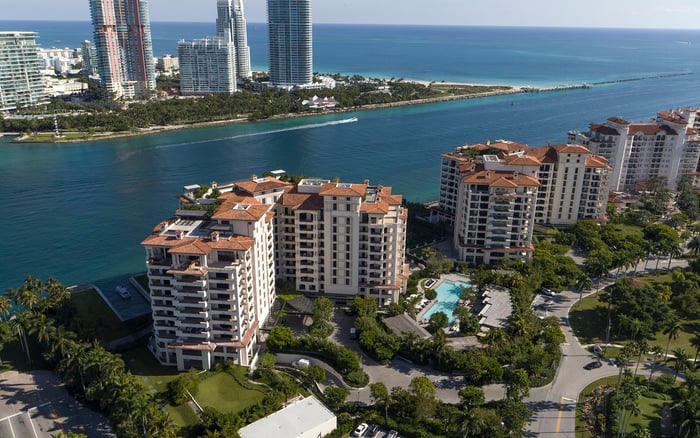
In dense urban markets, the exposure may be vertical. Families comparing The Residences at 1428 Brickell with other high-rise options should look beyond the immediate panorama and ask which sightlines are protected by physical distance, which depend on neighboring conditions, and which may be vulnerable to future change.
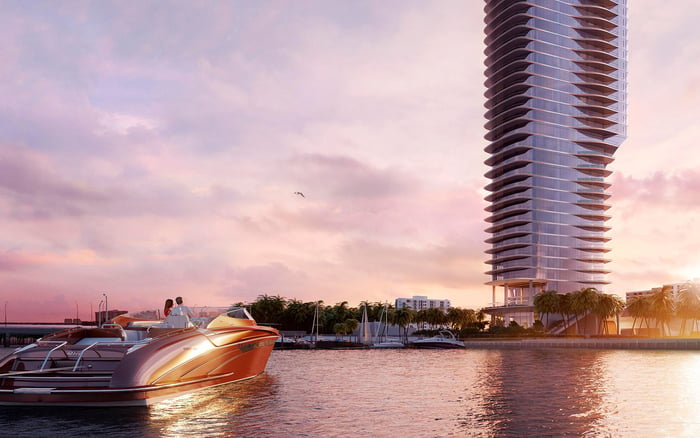
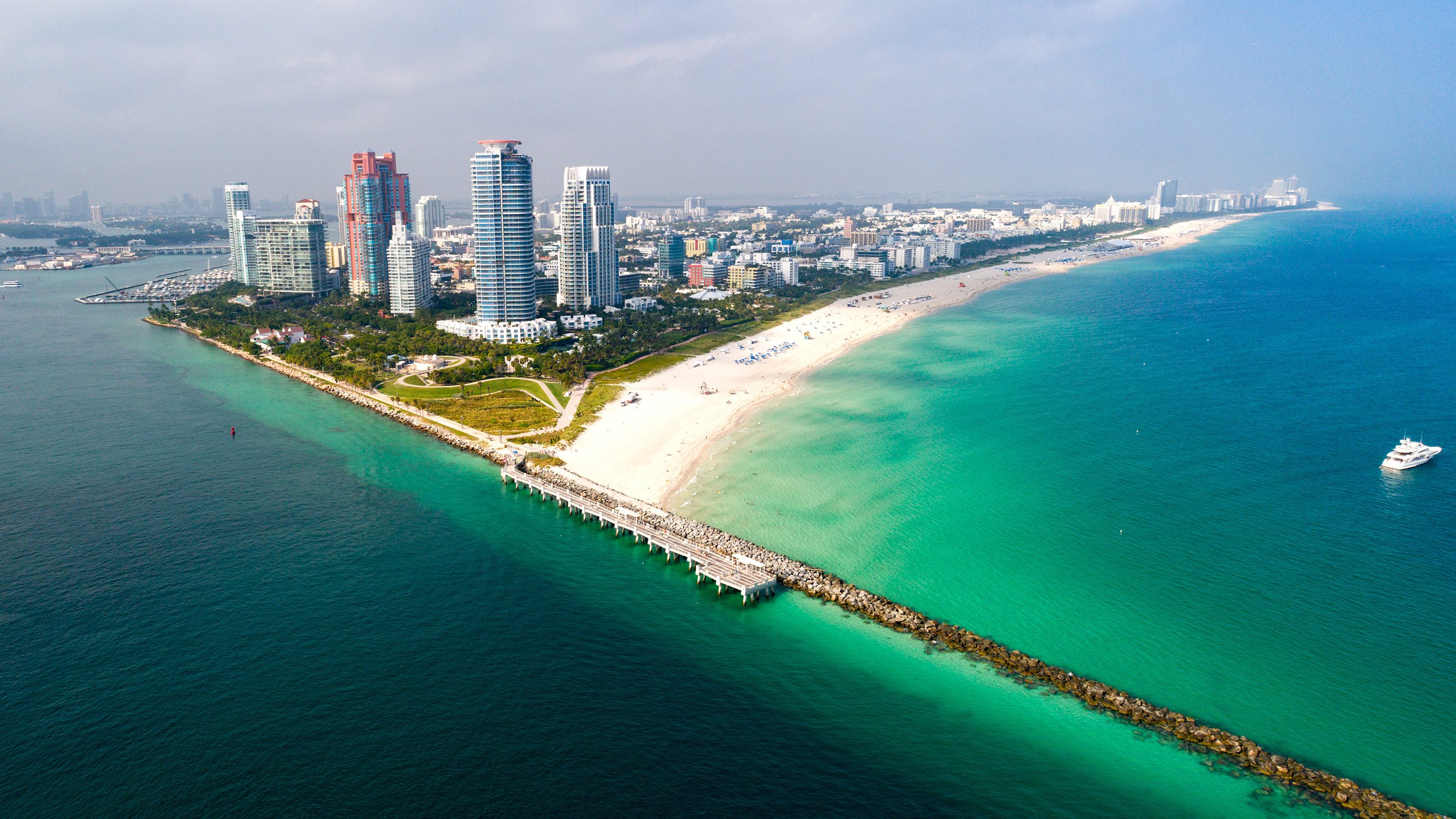
On the beach, the analysis is different but no less important. When touring The Perigon Miami Beach or any coastal residence, a buyer should distinguish direct water exposure from angled or partial outlooks, and consider whether the value being paid is tied to a broad experience of light and openness or to one very specific corridor.
The most elegant view diligence is written diligence. Before a family assigns a premium to a view, counsel should review recorded easements, condominium declarations, HOA rules, and any amendments that may affect use, alteration, access, common elements, or neighboring rights. Marketing language may describe a view beautifully, but the buyer needs to know what is actually enforceable and what is merely descriptive.
For condominium buyers, the declaration and related rules can matter as much as the view itself. They may influence what owners can place on balconies, how building elements are maintained, how common areas operate, and whether future association decisions could affect the lived experience of the outlook. For single-family or estate-style purchases, recorded easements and private restrictions may shape access, landscaping, building placement, or sightline expectations.
The goal is not to eliminate all uncertainty. In real property, absolute permanence is rare. The goal is to know whether the family is relying on a protected condition, a practical condition, or a hopeful assumption. Those are three very different foundations for a multimillion-dollar decision.
View risk often hides in timing. A property may feel serene because nothing is happening next door today, not because nothing can happen tomorrow. Families should ask for a clear conversation about the development pipeline around the residence: what is already built, what has been discussed, what is in review, and what nearby parcels could reasonably invite future attention.
This is particularly important for families with a long holding period. A couple buying a pied-à-terre may think in seasons. A family buying for school years, grandparents, children, and holidays is often thinking in chapters. That longer horizon magnifies the importance of pipeline diligence.
In a market such as Sunny Isles, where vertical living and water views often define the buying experience, touring Bentley Residences Sunny Isles should prompt questions about both the residence itself and the broader corridor from principal rooms. The same discipline applies in lower-scale, highly coveted settings. Around Coconut Grove, families evaluating Four Seasons Residences Coconut Grove should consider how tree canopy, neighboring sites, and neighborhood character shape the day-to-day view experience.
A view premium should be priced as a risk-adjusted asset. If the view is broad, elevated, physically buffered, and supported by favorable documents, a stronger premium may be rational. If the view depends on a narrow gap between buildings, an undeveloped neighboring parcel, or rules the buyer has not yet reviewed, the premium should be more cautious.
This is where families should be direct. Ask the advisor to separate the value of the residence from the value of the view. Ask what comparable alternatives would feel like if the outlook changed. Ask whether the floor plan, light, service, amenities, and neighborhood still justify the purchase if the corridor becomes less dramatic.
A prudent buyer can still choose the romantic view. The point is to know how much of the price is romance, how much is protected value, and how much is speculation. In luxury markets, discretion does not mean passivity. It means asking sharper questions quietly, before leverage disappears.
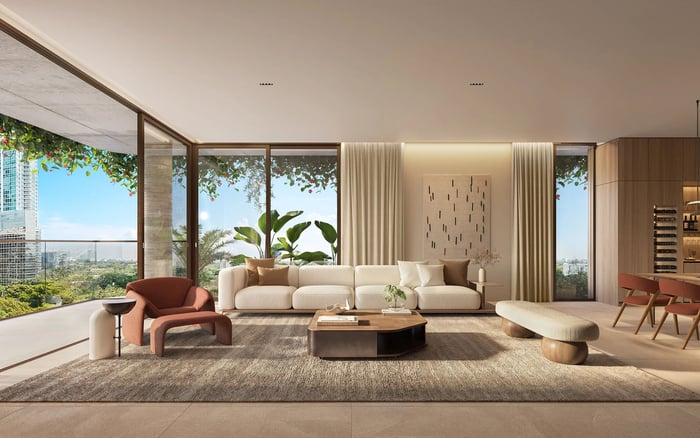
The family-use test is simple: which rooms depend on the view, and when does the family actually use them? A skyline view from a formal space may matter less than morning light in the kitchen, privacy from a child’s bedroom, or a calm outlook from the primary suite. A balcony that dazzles at sunset may be less important if wind, heat, or noise limits daily use.
Families should walk the residence at more than one time of day when possible. They should stand where children will study, where guests will gather, and where parents will begin and end the day. A view corridor is not only visual. It is spatial, emotional, and practical.
In Bay Harbor Islands, a buyer considering The Well Bay Harbor Islands should still ask the same grounded questions: what is the principal outlook, what might interrupt it, how much of the residence’s value depends on it, and whether the family would remain equally committed if the corridor changed.
Before becoming fully committed, family buyers should have a concise view-risk file. It should include the relevant zoning context, any recorded easements that affect the property, applicable condominium or HOA documents, notes on adjacent parcels, and a plain-language summary of the development pipeline. The file should also identify which view corridors are central to value and which are merely pleasant.
The family should then make a written internal decision. Are they buying the view as essential, meaningful, or incidental? Essential views require the highest diligence and the most conservative pricing. Meaningful views can justify a premium if other fundamentals remain strong. Incidental views are enjoyable, but should not drive the acquisition.
This framework protects more than resale. It protects family peace. The buyer who has examined view-corridor risk before closing is less likely to feel blindsided later, and more likely to own with confidence.
What is view-corridor risk? It is the risk that a valued outlook from a residence may be narrowed, blocked, or changed by future conditions around the property.
Can any South Florida view be guaranteed? Buyers should be cautious with that assumption. The strength of any protection depends on documents, property rights, zoning context, and site-specific facts.
What documents should a family review first? Start with recorded easements, condominium declarations, HOA rules, and any materials that clarify neighboring-property or association limitations.
Are high floors automatically safer? High floors can help, but they are not a substitute for reviewing adjacent parcels, zoning context, and the development pipeline.
Should families pay extra for a view? Yes, when the premium is supported by the residence, the documents, and realistic future conditions. The premium should shrink when uncertainty rises.
How does this differ for condos and single-family homes? Condos often require close review of declarations and association rules, while single-family homes may require more attention to easements and neighboring sites.
When should view diligence happen? It should happen before major contract deadlines, while the buyer still has leverage to ask questions, negotiate, or step away.
What is the family-use test? It asks which rooms, routines, and times of day truly depend on the view, rather than valuing the outlook as a single tour moment.
Can a partial view still be worth it? Yes, if the residence works beautifully without relying on one fragile corridor. A partial view should be priced with its limitations in mind.
Who should help evaluate the risk? A luxury advisor, real estate counsel, and other appropriate specialists can help translate documents, site conditions, and future exposure into practical decisions.
When you're ready to tour or underwrite the options, connect with MILLION.
If branded residences are on your mind — as a home or as an allocation — we would be glad to share what we are seeing, privately.
Begin a quiet conversation