A discreet buyer’s guide to evaluating privacy, orientation, sightlines, glazing, shades, terraces, and daily living patterns in glass-forward South Florida residences.

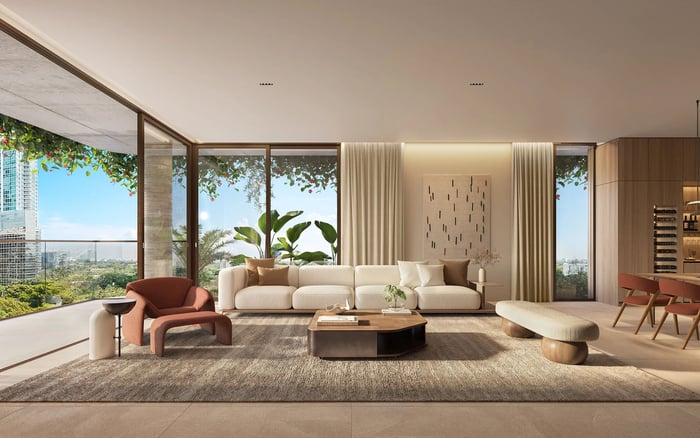
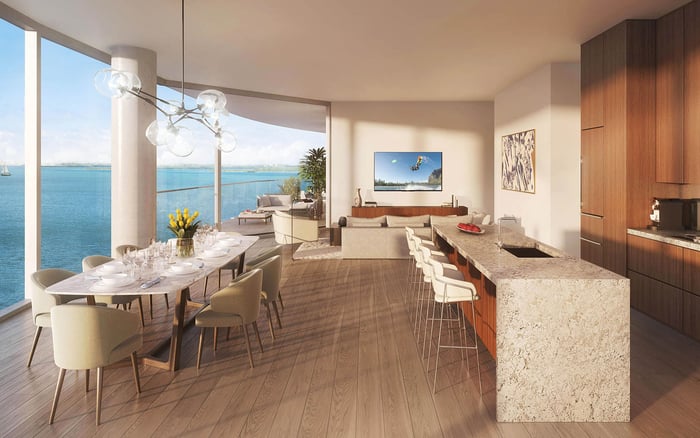
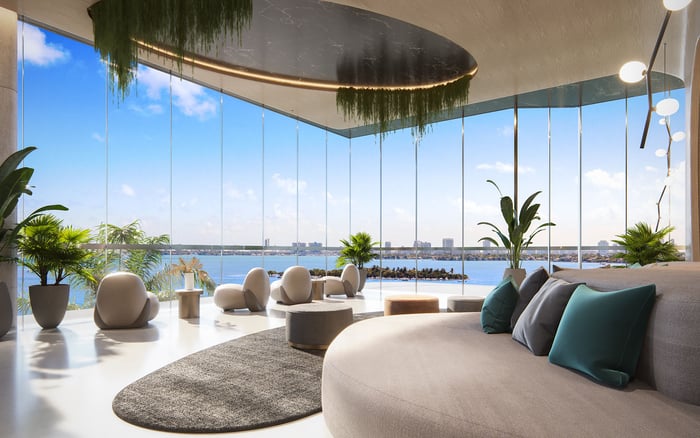
Floor-to-ceiling glass is one of South Florida’s signature residential pleasures. It frames water, skyline, palms, sunrise, and weather with theatrical clarity. Yet the same transparency that makes a residence feel expansive can also reveal the rhythms of daily life. For the high-net-worth buyer, the question is not whether glass is desirable. It is how to buy glass intelligently.
Privacy in a glass-walled home is not a single feature. It is a layered condition shaped by elevation, orientation, setbacks, balcony geometry, adjacent buildings, interior programming, lighting, and the discipline of the owner’s daily routine. A residence may feel perfectly discreet at noon and unexpectedly visible at night. A corner living room may feel cinematic, while the primary bath on that same exposure may require immediate intervention.
The most sophisticated buyers treat privacy as part of due diligence, not as an afterthought solved with drapery. Whether considering a tower residence in Brickell, a beachfront home on Miami Beach, or a quieter bayfront setting, the goal is to understand who can see in, when they can see in, and how easily that visibility can be controlled without compromising the architecture.
The first privacy test is physical: stand where life actually happens. Sit at the dining table. Lie back on the bed. Face the vanity. Walk from the shower to the closet. Then look outward and ask what looks back.
A buyer evaluating The Residences at 1428 Brickell, for example, should not think only in terms of skyline drama. In a dense urban setting, the key is the relationship between the residence and surrounding elevations. A higher floor may help, but height alone is not a privacy guarantee if another tower aligns directly across the view corridor.
Repeat the exercise at different times of day if access allows. Daylight creates reflection and glare that can obscure interiors from outside. Evening reverses the equation. Once interior lights come on, a glass-wrapped home can read like a stage unless lighting, shades, and furniture placement are carefully composed.
South Florida buyers often focus on view category first: ocean, bay, city, river, golf, or garden. Privacy requires a second filter: exposure. A water-facing residence can feel protected if the view opens broadly and neighboring structures sit at a respectful angle. A city-facing residence can be private if its glass does not directly confront another living room, hotel room, or amenity deck.
In Miami Beach settings, a project such as The Perigon Miami Beach invites buyers to consider how beach, street, neighboring properties, and internal layouts interact. The most private line is not always the one with the most obvious postcard view. Sometimes it is the line with the best diagonal outlook, the fewest direct oppositions, and the least exposure to shared circulation or public-facing activity.
Bay Harbor buyers should apply the same discipline at a different scale. At Onda Bay Harbor, the appeal of a more residential waterfront context does not remove the need to study angles, nearby balconies, marina activity, and nighttime illumination. Privacy is often strongest where the eye travels outward across open space rather than sideways into another residence.
In glass residences, window treatments are not accessories. They are part of the home’s functional architecture. Buyers should ask early how shade pockets are handled, whether motorization is already planned or installed, and how blackout, solar, and decorative layers can coexist.
A single shade type rarely solves every condition. Solar shades may preserve a view while softening exposure during the day. Blackout systems may be essential for bedrooms. Decorative drapery can add warmth and acoustic softness, but it must be scaled to the ceiling height and stack cleanly so it does not compete with the glass.
The best privacy plan is room-specific. A living room may need glare control more than concealment. A primary suite may need full visual separation. A powder room near a glass façade may need a permanent design solution rather than a behavioral workaround. Buyers should price this work before closing, especially in large residences with continuous glazing.
A terrace can be a private sanctuary or a highly visible platform. The difference depends on depth, railing type, neighboring balconies, building curvature, and the way furniture will be used. When touring, do not simply step outside and admire the view. Sit down. Stand at the rail. Look left, right, up, and down.
In Sunny Isles, where vertical coastal living is central to the lifestyle, Bentley Residences Sunny Isles is the kind of address that prompts buyers to consider how indoor glass and outdoor space work as one privacy envelope. A terrace connected to a primary bedroom has a different privacy threshold than a terrace used for entertaining.
High floors can create distance, but they can also increase visibility from afar, particularly at night. Lower floors may benefit from landscaping, podium separation, or a more intimate outlook. The right answer depends on the surrounding condition, not on a universal rule.
A beautiful plan can still expose the wrong moments. The most private glass residences usually separate public, private, and service zones clearly. Living and dining areas can tolerate more visibility. Bedrooms, baths, dressing rooms, offices, and wellness rooms require stricter control.
Look for bed walls that avoid direct exposure to neighboring buildings. Study whether bath glass faces open water, a setback, a terrace, or another façade. Consider whether the kitchen becomes visible from a nearby amenity deck after dark. If staff, family, or guests will use the residence differently, map those movements as well.
At Glass House Boca Raton, the project name itself underscores the broader buyer question: how does transparency support the lifestyle without compromising discretion? The answer is less about rejecting glass and more about aligning the plan, exposure, and interior design with the owner’s privacy tolerance.
Before contract, request clarity on what is included and what must be added after closing. Ask about shade readiness, smart-home integration, glass treatment restrictions, exterior modification rules, and any design guidelines that affect window coverings. In condominium environments, aesthetic standards may limit what can be visible from outside.
Bring an interior designer or architect into the process early if privacy is a top priority. A trained eye can identify where millwork, art placement, lighting scenes, screen walls, planting, or furniture orientation can solve exposure without dulling the view. The objective is not to live behind closed shades. It is to make openness selective.
Finally, be honest about lifestyle. If you entertain often, work at night, travel with security, or maintain a high public profile, your privacy requirements are different from those of a seasonal owner using the residence casually. The right glass home is one that allows you to enjoy openness on your terms.
Is a higher floor always more private? Not always. High floors can reduce nearby visibility, but another tower, hotel, or amenity level may still align with the residence.
Should I avoid floor-to-ceiling glass if privacy matters? No. The goal is to buy the right exposure, plan the right controls, and understand when the home is most visible.
What is the most important room to evaluate? Start with the primary bedroom, primary bath, office, and living room because they reveal the most about daily habits.
Are tinted windows enough? Tint may help in certain conditions, but it is not a complete privacy strategy, especially after interior lights are on.
When should I plan window treatments? Before closing whenever possible. Early planning helps coordinate electrical, pockets, fabric selection, and smart-home controls.
Can terraces compromise privacy? Yes. A terrace can expose seating, dining, and bedroom access points if adjacent balconies or nearby buildings have direct views.
Does a water view guarantee discretion? No. Water can create openness, but buyers still need to study angles, neighboring properties, and nighttime visibility.
How do I test privacy during a showing? Stand and sit in the places you will actually use, then look outward from each position at different angles.
Should I involve a designer before buying? If privacy is a priority, yes. Design input can reveal solutions that preserve the glass while improving discretion.
What is the best privacy mindset for glass residences? Think in layers: site, elevation, orientation, floor plan, lighting, shades, furnishings, and personal routine.
For a confidential assessment and a building-by-building shortlist, connect with MILLION.
If branded residences are on your mind — as a home or as an allocation — we would be glad to share what we are seeing, privately.
Begin a quiet conversation