For collectors considering 57 Ocean and The Perigon, the essential due diligence extends beyond beautiful interiors. Document collection requirements, unit-specific lighting performance, delivery clearances and written installation permissions before committing to an art-placement plan.
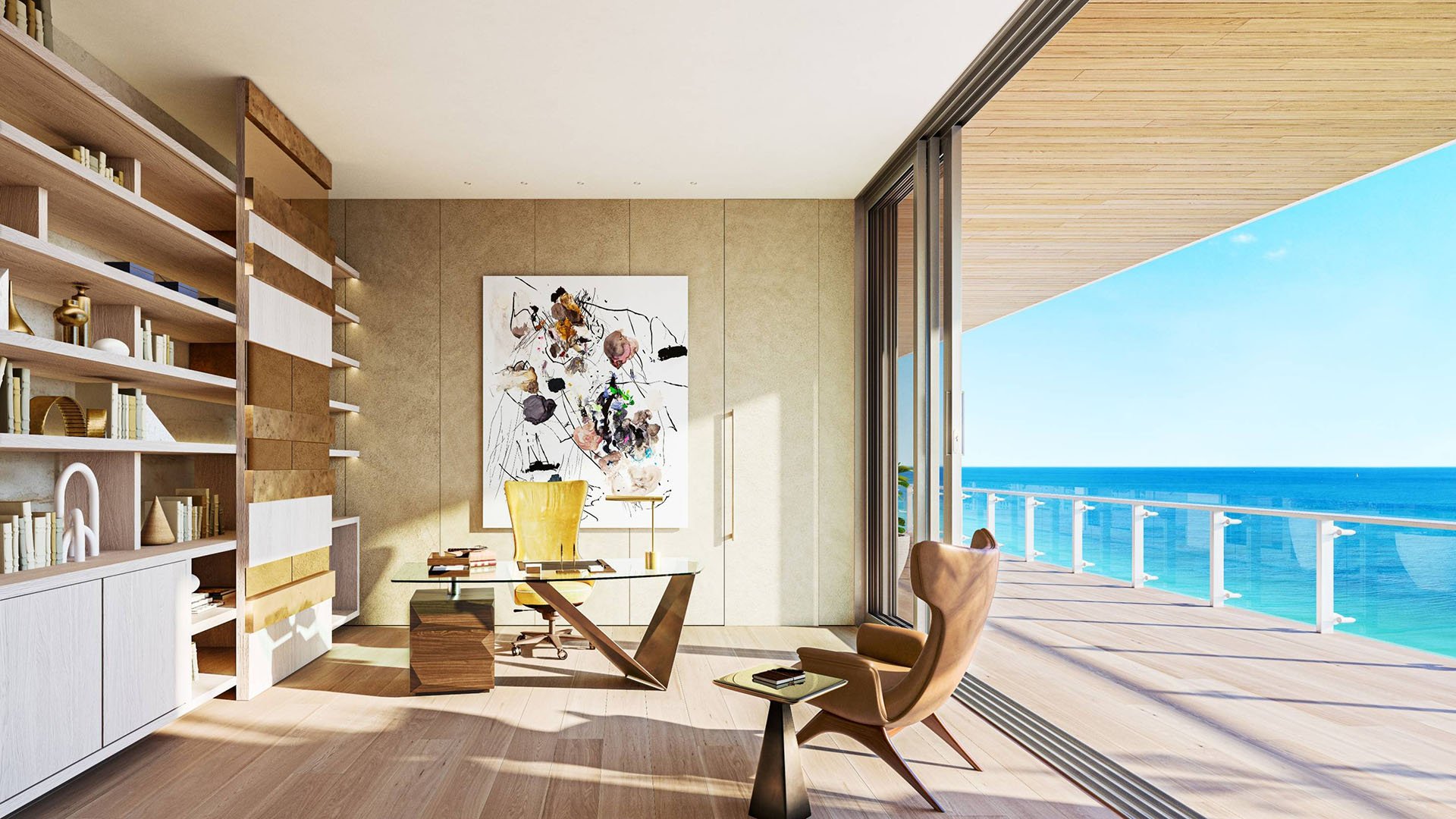
A residence can be beautifully composed without being ready for a particular collection. For buyers considering 57 Ocean and The Perigon in Miami Beach, that distinction matters: an inviting wall, a luminous ceiling and a private arrival experience do not establish conservation suitability or permission to install significant artwork.
Start with a collection brief that travels with the property search. Identify the works intended for display, their dimensions and weights, conservation requirements and special handling needs. Then ask the design, insurance and building teams to respond in writing.
Neither building’s advertised features establish a complete art-management policy, installation-approval process or museum-grade lighting specification. Treat these as separate due-diligence inquiries, not implied benefits of an exceptional address. Establish what the specific residence can accommodate before designing its interiors around the collection.
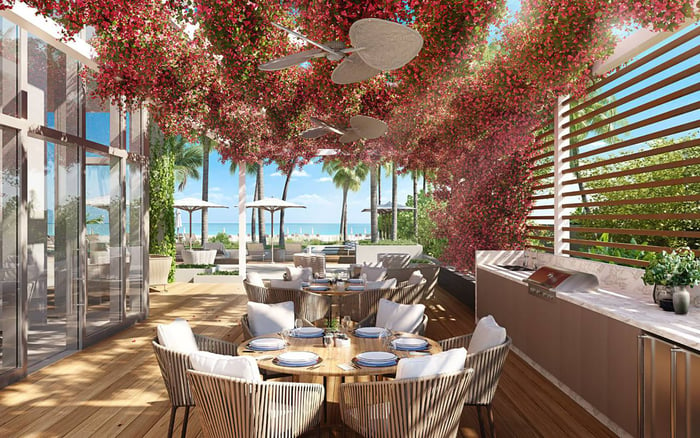
At 57 Ocean Miami Beach, advertised amenities include direct beach access and access to the Miami Beach Walk from the lobby. Two oceanfront infinity pools, a private spa, a thermal suite and fitness facilities anchor a leisure-oriented amenity program. Concierge services, a library and a club room with a chef’s kitchen add to the appeal.
Keep those offerings separate from art-related specifications in the purchase file. Concierge services alone do not establish collection-management services. Nor do the advertised amenities confirm museum-standard track lighting, dedicated gallery circuits or conservation-grade illumination inside a residence.
Request the applicable condominium disclosure documents, including those required under Florida Statutes §718.503, and have counsel identify the provisions governing the intended work. Ask for unit-specific inclusions and current rules rather than treating a general description as a contractual commitment. Record what is included, what would be an owner improvement and what remains subject to approval.
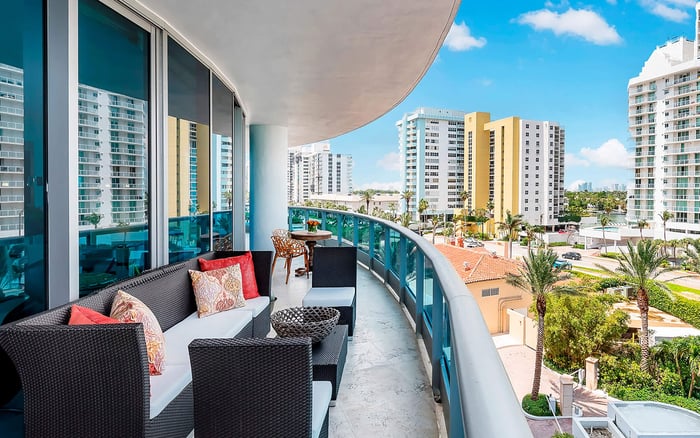
Advertised amenities at The Perigon Miami Beach include an oceanfront restaurant and speakeasy exclusive to residents and their guests, alongside a beachside pool, outdoor spa, sunbeds and cabanas. Described residence features include expansive living and entertaining areas, private terraces and custom Italian kitchens designed by Tara Bernerd & Partners.
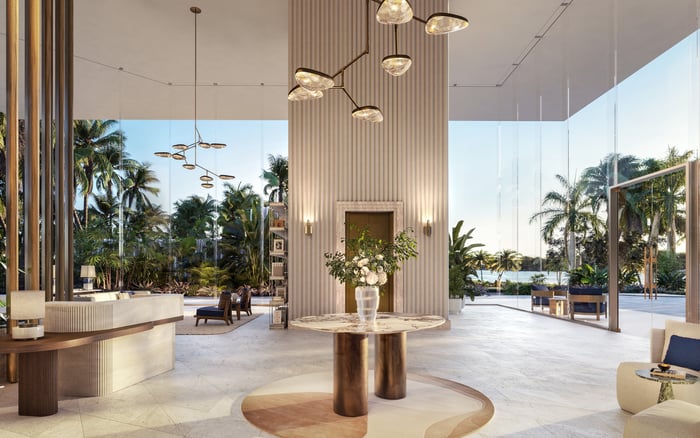
For a collector, the more consequential descriptions are direct elevator entry, 10-foot ceilings and “linear cove lighting throughout.” Each calls for a precise follow-up. Direct entry does not establish the clearances needed for a crated painting. Ceiling height does not establish a permitted suspension point. Cove lighting does not establish suitable illumination for a sensitive work.
Request dimensioned drawings for the residence and delivery route, along with the lighting plan and fixture schedule. Ask the relevant team to distinguish advertised design intent from the specifications applicable to the unit being purchased. Keep proposed art-related modifications separate from the base residence description.
Prepare an inventory connecting each work to a proposed location. Assemble provenance records, appraisals, condition reports and conservation instructions, using a consistent identifier so the insurer, installer and designer are discussing the same object. These are buyer-side recommendations, not confirmed submission requirements at either property.
Ask the insurer to clarify coverage during transit, temporary storage, installation and display. Obtain written confirmation of relevant conditions and exclusions rather than assuming one policy covers every stage. Where several contractors are involved, establish who is responsible for packing, receiving, inspecting and documenting each handoff.
Keep sensitive ownership and valuation records separate from the technical information needed for building review. Ask which documents must be submitted, who will receive them and how they will be handled. A mounting review may call for dimensions and weight; confirm the appropriate extent of any broader disclosure rather than assuming it is required.
“Museum-grade” should prompt a request for specifications, not an aesthetic conclusion. Ask the lighting designer and conservator to develop a work-specific brief before choosing fixtures. Address color rendering, color temperature, beam angles, dimming controls, ultraviolet output and heat output, alongside the intended illumination at each artwork.
Request a unit-specific plan showing fixture positions and their relationship to the art-placement plan. Ask whether additional circuits, controls or ceiling work would be needed and whether those changes require building approval. Distinguish decorative ambient lighting from the lighting proposed for individual works.
Where practical, commission a mock-up for review by the relevant specialists. Ask them to evaluate daylight alongside electric light and document any recommended shading, placement or operating conditions. Avoid adopting one numerical target for an entire collection without work-specific advice.
Retain the agreed fixture schedule, control settings and any commissioning measurements. The useful deliverable is a documented setup that can be reviewed when artwork moves-not a verbal assurance that the room looks right.
Before authorizing fabrication or shipping, request the applicable alteration rules and identify who can approve the proposed work. Ask about permitted mounting locations, load limits, contractor insurance requirements and whether specialist drawings or additional review would be required. Do not assume either building has a particular restriction or approval sequence.
The installation package should describe the proposed work clearly enough to support a meaningful decision: artwork dimensions and weight, mounting details, attachment locations and any electrical changes. Ask the reviewing party to state the approved scope and any conditions in writing.
For delivery, request elevator dimensions and capacity, door clearances, the intended route and applicable receiving procedures. Have the art handler assess the packed object, not merely its uncrated dimensions. Confirm scheduling and any temporary-storage arrangements before dispatch.
Keep delivery authorization distinct from installation approval. Ask whether one covers the other, and retain the response. Private elevator entry is an attractive arrival feature, but no substitute for a reviewed handling plan.
If the search also includes Faena House Miami Beach, carry the same collection brief into that evaluation without presuming equivalent lighting, delivery arrangements or alteration permissions. Consistent questions make residences easier to compare without treating their capabilities as interchangeable.
Before committing to the final placement plan, assemble one decision file: collection requirements, unit-specific specifications, insurance confirmations, delivery assessment and written approvals. Assign each unresolved question a responsible party and a next step. The strongest choice is the residence whose documented conditions align with the collection, not simply the one with the most compelling wall.
For a considered approach to your next art-focused residence, explore MILLION.
If branded residences are on your mind — as a home or as an allocation — we would be glad to share what we are seeing, privately.
Begin a quiet conversationNeither building’s advertised features establish museum-grade lighting, a complete art-management policy or a comprehensive installation-approval process. Buyers should request unit-specific specifications and written permissions.
Prepare an inventory, provenance records, appraisals, condition reports and conservation instructions. Connect each work to a proposed location and document its dimensions, weight and handling needs.
Its advertised amenities do not establish museum-standard track lighting, dedicated gallery circuits or conservation-grade illumination in residences. Request the lighting specifications for the particular unit.
The advertised description does not establish conservation suitability or museum-grade performance. Ask for fixture data and a work-specific assessment by the appropriate specialists.
Request lighting plans, fixture schedules, color-rendering and color-temperature data, beam angles, dimming controls, and ultraviolet and heat-output information. Have specialists assess the proposed setup for the individual artworks.
No. The Perigon’s advertised direct elevator entry does not document art-delivery clearances; obtain route dimensions and capacity information for an art handler to assess.
Describe artwork dimensions and weight, mounting details, attachment locations and any electrical changes. Confirm the actual submission requirements and approval authority before proceeding.
Ask about coverage during transit, temporary storage, installation and display, including relevant conditions and exclusions. Confirm responsibility at each handoff between contractors.
Request the applicable disclosure documents, including those required under Florida Statutes §718.503, together with current alteration rules and unit-specific inclusions. Have counsel identify the provisions relevant to the proposed installation.
Do not assume they are required. Keep sensitive ownership and valuation records separate from technical materials, and confirm what must be submitted and how it will be handled.