A discreet buyer’s guide to reading condominium and community association documents for signals that a South Florida residence can support comfort, autonomy, and design integrity over time.
Aging-in-place design is often discussed through the visible language of architecture: wide passages, generous baths, discreet lighting, private elevators, calm thresholds, and rooms that can shift purpose over time. Yet some of the most consequential clues are not in the finishes package or the view corridor. They are in the association documents.
For a luxury buyer, these documents can reveal whether a building or private community is simply beautiful today, or whether it has the governance culture to remain livable, adaptable, and dignified for decades. The difference is subtle. A residence can feel effortless during a showing while its rules make future modifications difficult. Another may appear conservative at first, yet its policies allow quiet, elegant enhancements that preserve independence without compromising design.
This is especially relevant for buyers comparing Brickell, Miami Beach, Sunny Isles, Palm Beach, Coconut Grove, and new-construction residences, where the decision is often less about square footage than long-term fit. The best purchase is not only the home that feels impressive now. It is the one that can support a refined life through changing needs, visiting family, wellness routines, and evolving expectations of privacy.
The declaration, bylaws, rules, and architectural guidelines shape the practical life of a residence. They may determine how alterations are reviewed, which contractors may access the property, which common areas can be modified, how deliveries are handled, whether mobility devices are accommodated without friction, and how the association approaches requests that do not fit neatly within a standard design package.
Through an aging-in-place lens, the central question is not simply whether the home has desirable amenities. It is whether the rules allow the owner to refine the home as life evolves. A discreet grab bar in a stone-clad bath, a threshold adjustment at a terrace door, additional task lighting, automated shades, or a reconfigured closet may seem minor. In a highly regulated building, however, each can become a matter of approval, timing, insurance, and contractor compliance.
Luxury buyers should read these documents with the same care they bring to floor plans. The more design-forward the property, the more important it becomes to understand how much flexibility exists behind the curated experience. True elegance is not rigid. It allows the home to adapt without announcing the adaptation.
Alteration policies are among the most revealing sections for aging-in-place design. Look for how the association handles in-unit work, floor coverings, plumbing changes, electrical upgrades, smart-home systems, lighting, doors, cabinetry, and bath renovations. The issue is not whether rules exist. Well-run properties should have rules. The issue is whether the process is clear, reasonable, and predictable.
A strong alteration framework protects the building while giving owners a defined path to improve daily comfort. A weaker framework may rely on broad discretion, unclear review timelines, or inconsistent standards. For buyers who may one day want to add accessibility-minded details, that distinction matters.
Pay close attention to wet areas, entry conditions, terrace transitions, and service routes. These zones often carry the greatest practical importance. A bath that can be modified gracefully is more valuable than one that photographs well but resists change. An entry sequence that supports packages, luggage, caregivers, guests, and medical deliveries without awkwardness can be as important as a dramatic lobby.
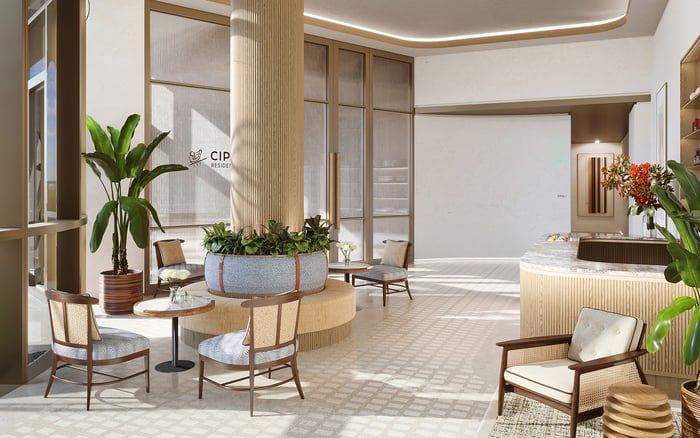
Aging-in-place does not begin at the front door. It begins at arrival. The porte cochere, garage, elevator bank, corridors, mailroom, amenity level, pool deck, fitness areas, and pet routes all shape whether daily life remains effortless.
Association documents may reveal the standards governing these shared spaces. Rules around access, guest registration, valet procedures, service elevators, carts, storage, and amenity use can either support independence or create unnecessary dependence. A building can have an exquisite lobby but a cumbersome route from parking to residence. A community can have lush grounds but limited clarity around maintenance, lighting, or pathway changes.
For luxury buyers, the goal is not institutional accessibility. It is invisible ease. The best environments make movement feel natural, not managed. They reduce the moments when an owner must ask for help. They create dignity through design, staffing, and policy working in concert.
Meeting minutes are often more candid than formal governing documents. They can show how the board discusses repairs, owner requests, disputes, design standards, safety concerns, staffing, noise, elevator performance, amenity upkeep, and capital priorities. The tone matters.
A board that treats maintenance as stewardship may be better positioned to preserve a refined living experience. A board that repeatedly postpones practical issues may signal a culture of deferral. For aging-in-place considerations, minutes can reveal whether the association responds constructively to residents’ changing needs or views exceptions as irritations.
Look for patterns rather than isolated comments. Do owners receive clear answers? Are projects planned thoughtfully? Is communication measured and professional? Are common-area improvements discussed through the lens of resident experience, or only through cost containment? A luxury building is not defined solely by its original design intent. It is defined by the quality of its ongoing decisions.
Long-term residence depends on financial confidence. Budgets, reserves, assessments, maintenance histories, and insurance materials can influence whether an owner feels comfortable remaining in place. Aging-in-place is not only a design decision. It is a cost-of-ownership decision.
A buyer should understand how the association funds repairs and upgrades, how it approaches major building systems, and whether recurring expenses appear aligned with the level of service promised. The point is not to avoid cost. In the ultra-premium market, well-funded stewardship is often preferable to cosmetic restraint. The concern is uncertainty.
Unexpected costs can disrupt even the most carefully planned lifestyle. Clear financial governance supports peace of mind, particularly for owners who view the residence as a long-term base rather than a temporary acquisition. In this sense, reserves and budgets are part of the design story. They determine whether the building can remain quiet, polished, and functional as it matures.
Aging-in-place is not solved by architecture alone. It depends on the human systems that surround the residence. Association rules may address valet, concierge, security, maintenance access, housekeeping vendors, package handling, deliveries, guests, private chefs, nurses, drivers, and personal assistants.
For some buyers, these services are conveniences. For others, they become essential infrastructure. A residence that supports a layered household, with privacy and protocol, is more likely to remain comfortable through different life stages. The documents can reveal whether such support is welcomed, tolerated, or restricted.
The question is how gracefully the property handles complexity. Can an owner receive assistance without turning private life into a public process? Are vendors managed with discretion? Are household staff treated as part of a professional ecosystem? In the most successful luxury environments, service feels choreographed but never intrusive.
Before contract, buyers should bring the association documents into conversation with the architect, attorney, advisor, and broker. The goal is not to turn a lifestyle purchase into a clinical exercise. It is to protect the beauty of the decision.
Ask whether the residence can accommodate a first-floor sleep option if applicable, safer bathing, stronger lighting control, improved acoustics, intuitive technology, and simplified circulation. In a condominium, ask how much of that work touches association-controlled elements. In a private community, ask how exterior modifications, landscape lighting, ramps, generators, and service access would be reviewed.
A sophisticated buyer does not wait until a need arises. The more seamless the future adaptation, the less visible it will be. That is the essence of high design: solutions embedded early, with restraint.
The finest aging-in-place design is not about anticipating decline. It is about preserving optionality. It allows owners to host, rest, recover, work, entertain, and live privately without being forced into premature compromises. It respects the possibility that a residence may become more meaningful over time, not less.
Association documents are valuable because they show whether that optionality is protected. They indicate whether a home can evolve, whether common areas are managed with care, and whether the community’s rules align with a long view of ownership.
For South Florida’s luxury audience, this is an increasingly refined way to evaluate property. The most desirable residence is not always the most theatrical. It may be the one whose documents quietly confirm what the eye hopes to see: discipline, flexibility, stewardship, and ease.
Why do association documents matter for aging-in-place design? They reveal the rules, approvals, and operational culture that determine whether a residence can adapt gracefully over time.
Which documents should a buyer review first? Start with the declaration, bylaws, rules, architectural guidelines, recent minutes, budget, reserves, and insurance materials.
Are alteration rules always a concern? No. Clear alteration rules can protect both the owner and the building, provided the process is reasonable and predictable.
What common-area details matter most? Arrival, parking, elevators, corridors, mailrooms, amenity access, lighting, and service routes all influence daily ease.
Can a beautiful residence still be difficult to adapt? Yes. Highly designed spaces can be restrictive if association approvals, building systems, or design standards limit future changes.
Why review meeting minutes? Minutes can reveal the board’s tone, maintenance priorities, responsiveness, and approach to owner requests.
How do financial documents affect aging in place? Budgets, reserves, and assessments shape the long-term cost and confidence of remaining in the residence.
Should buyers involve an architect before closing? Yes, especially when future modifications could affect plumbing, electrical systems, thresholds, lighting, or built-ins.
Does aging-in-place design have to look clinical? No. In luxury residences, the strongest solutions are discreet, integrated, and aligned with the home’s design language.
What is the ultimate goal of this review? The goal is to confirm that the residence offers comfort, dignity, flexibility, and control as life evolves.
If you'd like a private walkthrough and a curated shortlist, connect with MILLION.
If branded residences are on your mind — as a home or as an allocation — we would be glad to share what we are seeing, privately.
Begin a quiet conversation