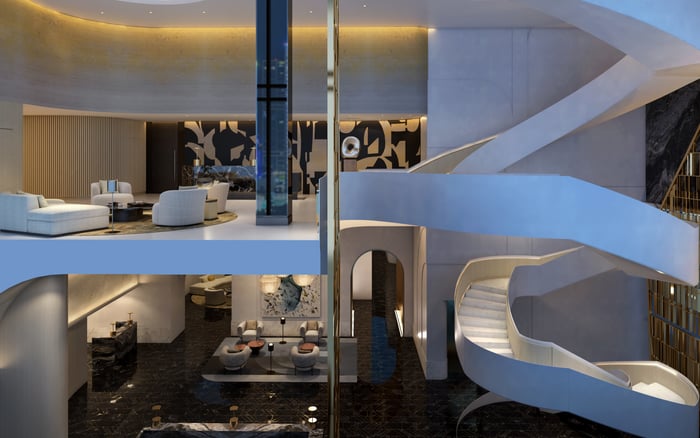
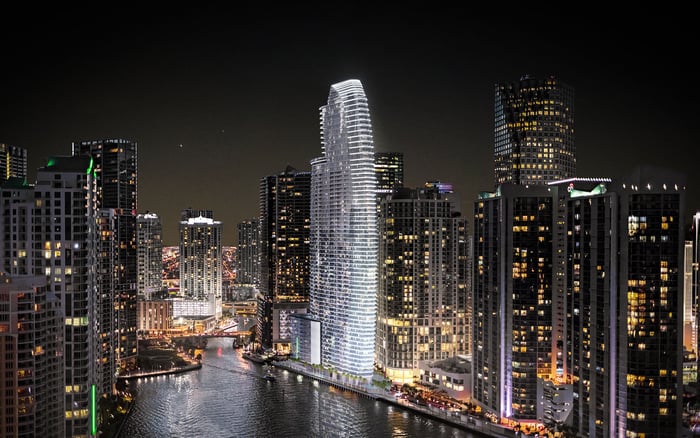
A discreet buyer-focused look at why guest-access management matters at Waldorf Astoria Residences Downtown Miami, where branded service, privacy, and calm arrival sequences define a quieter form of ultra-luxury living.
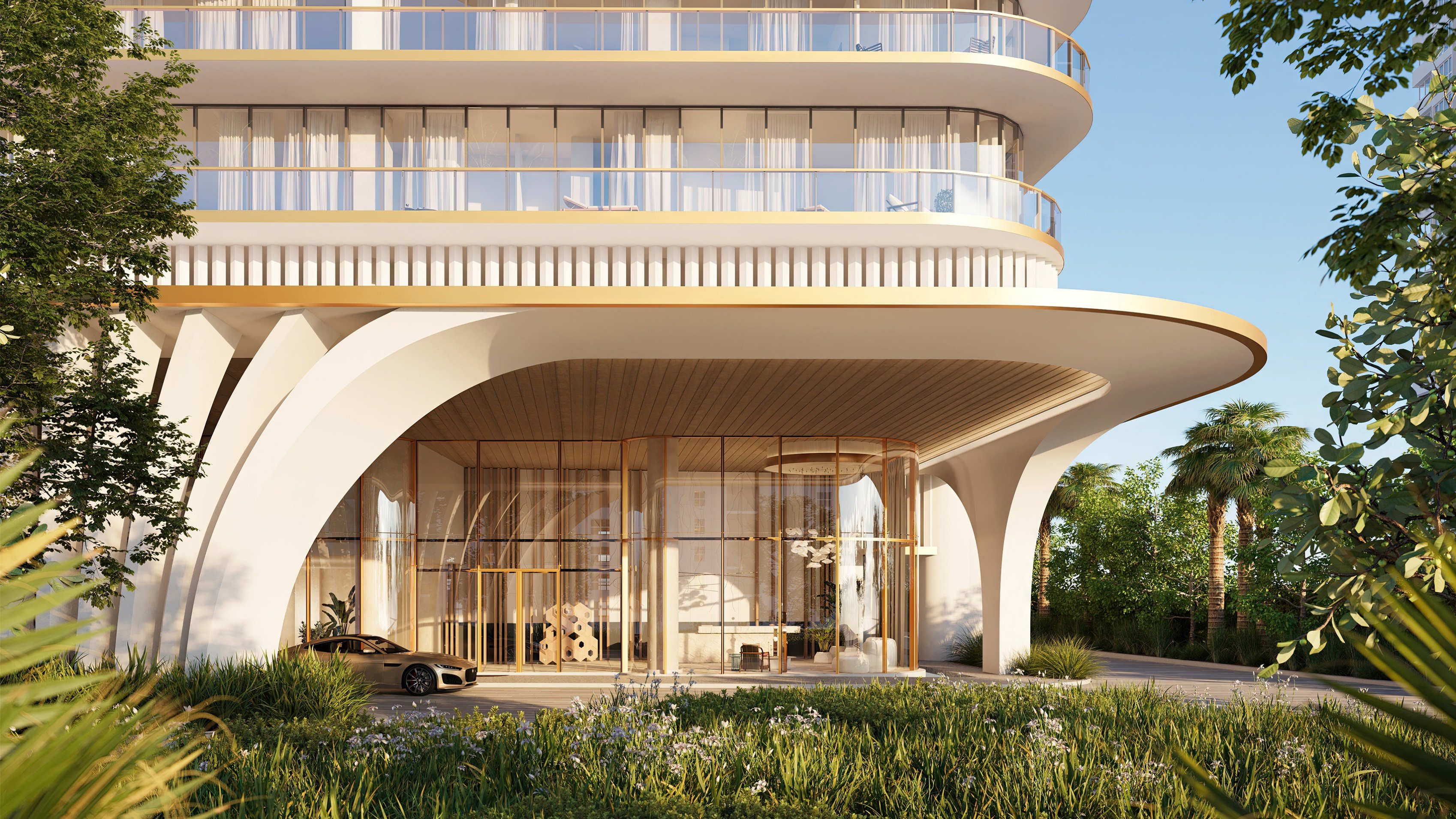
Waldorf Astoria Residences Downtown Miami sits at the center of a larger shift in South Florida luxury: the move from visible abundance to controlled experience. In an ultra-prime residential tower, the most meaningful comforts are often the least theatrical. The resident who values discretion does not simply want beauty, service, or a recognizable brand. They want the sense that every arrival, every guest, and every shared space has been considered before it ever reaches them.
That is where guest-access management enters the quiet luxury conversation. It is not a decorative feature, and it should not be treated as a marketing flourish. It is an operational discipline: how a high-profile tower choreographs who enters, how they arrive, where they move, and how a resident’s privacy is preserved without making the process feel heavy-handed.
For Waldorf Astoria Residences Downtown Miami, the hospitality-linked identity matters. The Waldorf Astoria name carries an expectation of service that is polished, discreet, and fluent. In a residential context, that standard is not only about being greeted well. It is about protecting the rhythm of daily life.
Branded residences are judged by a different standard than conventional luxury condominiums. The buyer is not only evaluating finishes, views, and location. They are evaluating the promise of service. In that sense, Waldorf Astoria Residences Downtown Miami is a useful benchmark for how modern branded living is evolving in Downtown Miami.
Guest-access management supports three priorities that matter deeply to high-net-worth residents: privacy, security, and calm. A tower may be visually prominent, but the private life inside it should not feel exposed. Visitors, household staff, private drivers, vendors, family members, and invited guests all create movement. The question is whether that movement feels organized or intrusive.
In quiet luxury, the best answer is usually invisible. Residents should not feel surrounded by procedure. They should feel protected by it. A well-managed access culture allows guests to be welcomed graciously while keeping residential areas composed, secure, and appropriately private.
In Downtown Miami, arrival has become a defining luxury detail. Urban towers must balance visibility with privacy, especially when they occupy locations associated with business, culture, dining, and waterfront energy. The building may belong to the skyline, but the resident experience must feel separated from the pace outside.
That separation begins before the front door. Guest-access management is, essentially, the choreography of arrival. It considers confirmation, reception, circulation, waiting areas, elevator flow, and the subtle distinction between public presence and private residence. The goal is not to make access difficult. The goal is to make it graceful.
This is especially relevant in a hospitality-branded setting. A hotel may welcome a broad and changing audience, but a private residence requires a more selective cadence. Waldorf Astoria Residences Downtown Miami, as a branded residential tower, invites the question buyers should now be asking: does the service model protect the resident’s atmosphere as carefully as it serves the guest?
South Florida’s most sophisticated buyers increasingly understand that luxury is operational. Architecture creates desire. Amenities create lifestyle. Operations determine whether the building remains serene once it is occupied.
Guest flow is central to that equation. Without thoughtful access management, amenity-rich branded residences can risk feeling busy, exposed, or overused. With the right culture, a tower can remain lively without feeling crowded, social without feeling public, and serviced without becoming performative.
That is the quiet luxury case. The most valuable service is often the service that prevents friction. It limits uncertainty. It reduces awkward encounters. It helps ensure that the resident hosting a dinner, receiving family, or coordinating household support does not have to manage the building experience personally.
In this sense, Waldorf Astoria Residences Downtown Miami can be viewed as a Top Project not merely because of brand recognition, but because it belongs to a category where execution is everything. The residence is not just a physical address. It is a daily operating environment.
Downtown Miami gives this topic particular importance. A tower in a more secluded coastal enclave has a different privacy equation than one in the urban core. Downtown carries movement, energy, and attention. That can be part of its appeal, particularly for buyers who want proximity to the city’s business and cultural life. Yet the residential experience still needs to feel composed.
For an ultra-luxury buyer, the building should create a threshold. Outside, there may be density and visibility. Inside, there should be calm and recognition. Guest-access management helps maintain that threshold by ensuring that the tower does not feel porous, chaotic, or overexposed.
This matters for both primary residents and second-home owners. A buyer may not occupy the residence every day, but they still expect consistency when they arrive. They also expect approved guests to be handled with elegance, not confusion. New-construction buyers in this tier are increasingly attentive to these operational details because they shape how a building feels after the initial excitement fades.
The right questions are practical, not theatrical. Buyers considering Waldorf Astoria Residences Downtown Miami should think about how access will feel in ordinary daily life. How are invited guests received? How is privacy maintained when multiple residences are hosting at the same time? How does the building distinguish between hospitality warmth and residential discretion?
The answers do not need to be loud. In fact, the best systems are usually understated. A resident should sense that the building knows how to handle complexity without broadcasting it. That is the difference between luxury as display and luxury as trust.
For investment-minded buyers, this operational layer may also influence long-term desirability. In the ultra-premium market, a residence that remains calm, private, and service-consistent over time can feel more enduring than one that relies only on dramatic design. The buyer of a New Project is buying into a promise. Guest-access management is part of how that promise is kept.
The phrase quiet luxury is sometimes reduced to materials, palettes, and restraint. In residential real estate, it should mean something more demanding. It should describe a building that knows how to protect attention, privacy, and time.
Waldorf Astoria Residences Downtown Miami makes that conversation especially relevant because of its Downtown setting and hospitality-linked brand identity. The value proposition is not only that residents live in a branded tower. It is that the brand’s service culture can be translated into a private residential atmosphere where access, arrival, and guest flow are curated with care.
The future of Miami luxury will not be defined only by which towers are most visible. It will also be defined by which towers feel most composed once the doors close behind the resident.
Why is guest-access management important at Waldorf Astoria Residences Downtown Miami? It supports privacy, security, and calm in a high-profile branded residential setting.
Is guest-access management a confirmed named feature of the project? This article treats it as an interpretive operations lens, not as a confirmed named system.
How does this relate to quiet luxury? Quiet luxury favors service that feels seamless, discreet, and protective rather than showy.
Why does the Downtown location make access management more relevant? Downtown living brings visibility and movement, so private residential flow needs careful control.
What role does the Waldorf Astoria brand play? The brand identity raises expectations for polished hospitality and disciplined service standards.
Does guest-access management only concern security? No. It also shapes arrival, circulation, privacy, and the resident’s sense of ease.
Why should buyers care about guest flow? Guest flow affects whether shared spaces feel calm, crowded, private, or exposed.
Is operational luxury as important as design? For many ultra-luxury buyers, daily service execution can matter as much as architecture.
Who benefits most from strong guest-access practices? Primary residents, second-home owners, families, hosts, and privacy-focused buyers all benefit.
What should buyers evaluate during due diligence? They should consider how the tower handles arrivals, visitors, privacy, and service consistency.
For a discreet conversation and a curated building-by-building shortlist, connect with MILLION.
If branded residences are on your mind — as a home or as an allocation — we would be glad to share what we are seeing, privately.
Begin a quiet conversation