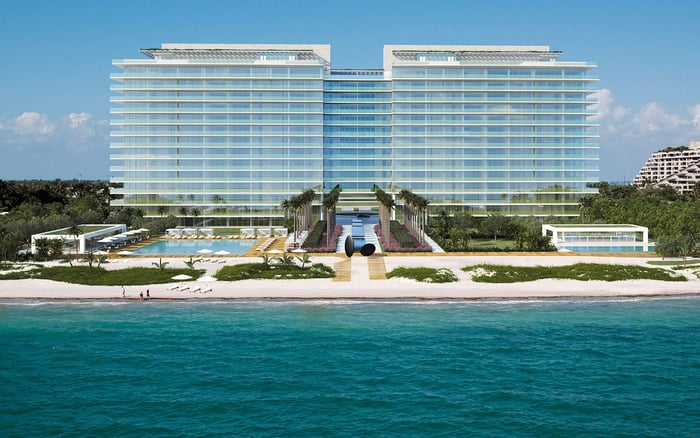
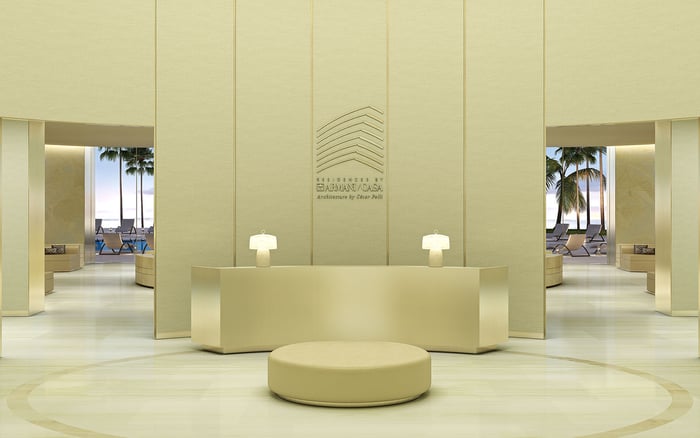
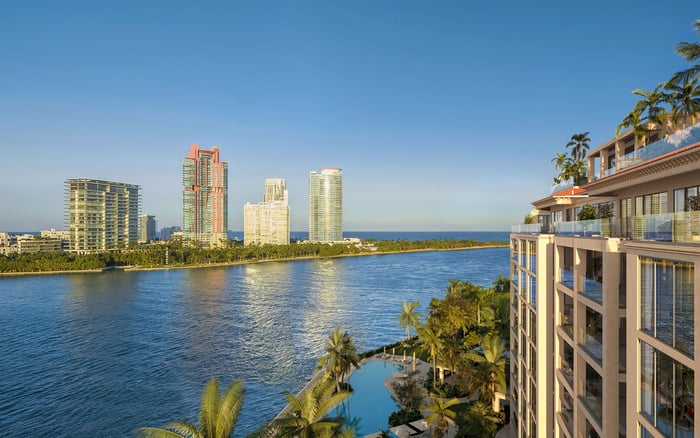
A privacy-first edit of five Miami residences, plus practical guidance for evaluating arrivals, shared spaces, amenity traffic, views, and day-to-day residential calm.
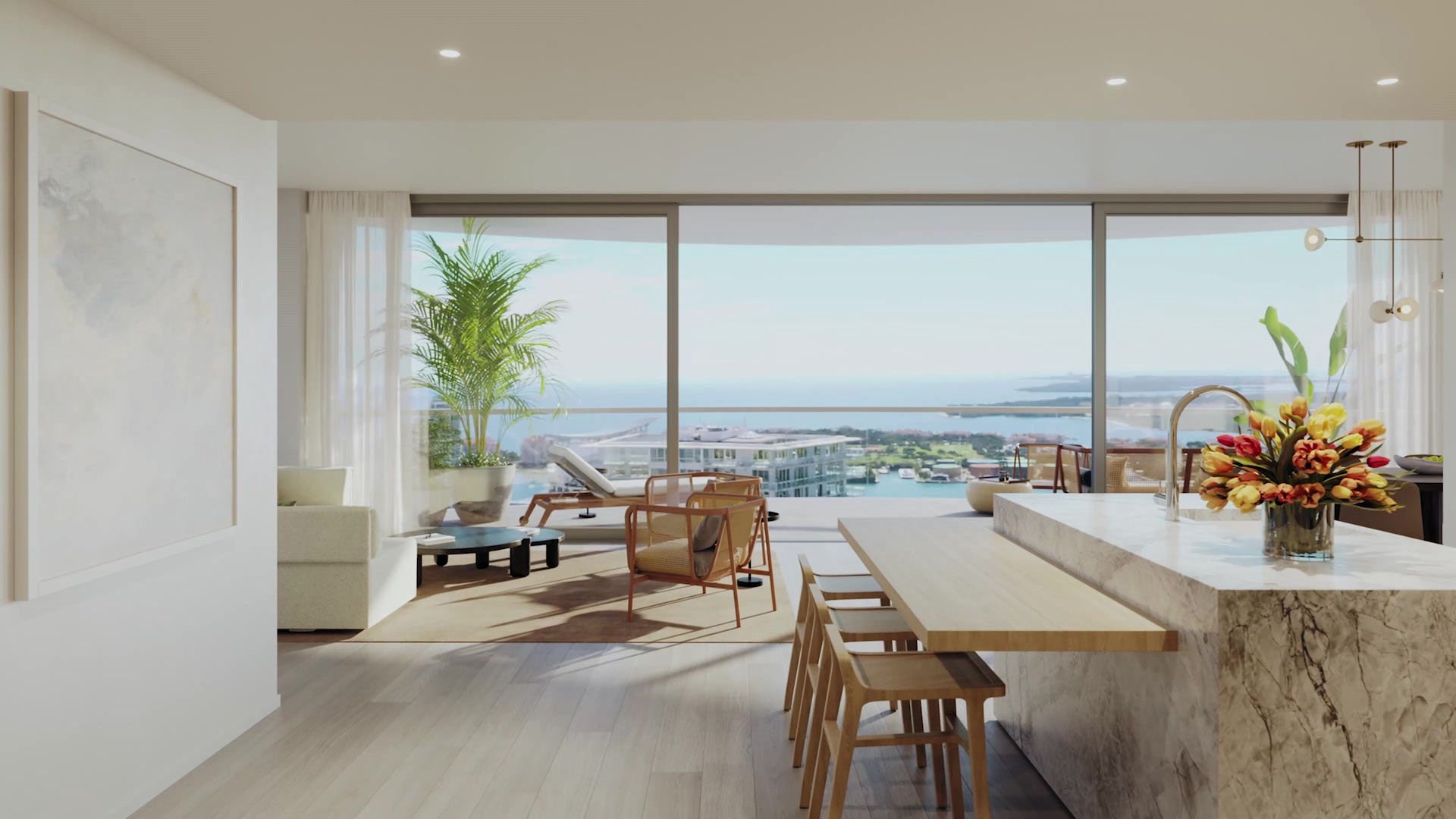
Miami’s most compelling residential luxury is not always its most conspicuous. For many buyers, the true prize is a home near the water that feels composed rather than crowded, with an arrival sequence, amenity plan, and daily rhythm centered on residents rather than constant visitor traffic.
This privacy-first edit considers five names across Fisher Island, Surfside, Miami Beach, and Sunny Isles Beach. It is a refined starting point, not a substitute for examining plans, access arrangements, management policies, and the lived experience of each property. Waterfront privacy should be evaluated at several scales: the neighborhood, the building, the floor, and the individual residence.
1. The Residences at Six Fisher Island - Fisher Island
The Residences at Six Fisher Island leads this edit for buyers beginning with an island setting. Its Fisher Island location places access, guest arrival, service circulation, and the relationship between home and shoreline at the center of a private review.
2. The Links Estates at Fisher Island - Fisher Island
A second Fisher Island entry offers buyers another way to consider the same coveted area without assuming every residential experience is identical. Compare residence positioning, neighboring sightlines, routes to shared spaces, and the degree of separation among household, guest, and service movement.
3. Eighty Seven Park Surfside - Surfside
Eighty Seven Park Surfside introduces a different coastal context. Buyers drawn to Surfside can focus on the transition from street to residence, the visibility of common areas, elevator patterns, and whether the home’s orientation supports the desired sense of retreat throughout the day.
4. 57 Ocean Miami Beach - Miami Beach
57 Ocean Miami Beach offers a Miami Beach reference point for purchasers who want the coast without automatically embracing a resort-style atmosphere. The most revealing considerations are arrival control, the route from entrance to private residence, the intensity of shared spaces, and exposure to activity beyond the property.
5. Regalia Sunny Isles Beach - Sunny Isles Beach
Regalia Sunny Isles Beach completes the ranking with a Sunny Isles Beach option. Privacy-minded buyers should study vertical circulation, residence-to-residence sightlines, balcony exposure, and the practical experience of arriving and departing at different times of day.
Location shapes privacy before the front door is reached. An island address can create a meaningful sense of separation, while a beachfront address may offer a more direct relationship with the coast. Neither format is inherently quieter in every circumstance. Access routes, neighboring uses, public activity, and the placement of shared amenities all influence the result.
For an island-focused comparison, buyers can review The Residences at Six Fisher Island alongside The Links Estates at Fisher Island. The useful exercise is not simply choosing an area, but understanding how each residence frames arrival, outlook, circulation, and separation.
On the coast, Eighty Seven Park Surfside and 57 Ocean Miami Beach offer two distinct points of reference for a focused conversation about beachfront living. Farther north, Regalia Sunny Isles Beach adds Sunny Isles Beach to the comparison. Use these links to organize private tours and sharpen questions, not to replace direct observation.
Privacy is partly architectural and partly operational. Begin with the route from vehicle arrival to the residence. Note where guests wait, how deliveries move, whether amenity users cross residential paths, and how much of the lobby or elevator sequence is visible from public-facing areas.
Inside the home, examine the relationship among the entry, entertaining spaces, bedrooms, terraces, and neighboring buildings. A dramatic view can still come with lateral exposure. Experience the residence from seated eye level, after dark, and with the interior lighting on. Glass, reflected light, balcony alignment, and nearby sightlines can alter the sense of seclusion.
The floor plan also reveals whether staff, family, and guests can move comfortably without unnecessary overlap. Buyers who entertain frequently may prioritize a gracious yet controlled threshold between social and private rooms. Those purchasing a second home may place greater value on secure lock-and-leave routines, discreet property access, and dependable oversight while away.
An extensive amenity program can be appealing, but the number of amenities alone says little about residential calm. More important questions concern who may use each space, how reservations work, where visitors enter, and whether events can alter the atmosphere around pools, lounges, elevators, or arrival courts.
Tour at more than one time, if possible. Morning routines, late-afternoon pool use, weekend guests, deliveries, and evening arrivals can create markedly different impressions. Stand in the lobby rather than walking straight through it. Wait for an elevator. Follow the route to the water. Observe where service personnel and residents cross paths.
Management policies deserve equal scrutiny. Request clarity on guest procedures, private events, rentals where relevant, security protocols, package handling, vendor access, and maintenance schedules. A discreet residence is sustained not only by design, but also by consistent operation.
Request the current plans and governing documents applicable to the residence under consideration. Confirm which spaces are residential, which are shared, and how access is controlled. Review parking and valet arrangements, delivery procedures, elevator access, staffing, and any policies that could influence traffic through common areas.
Waterfront due diligence should also address the practical boundary between private property and surrounding activity. Clarify access points, shoreline or beach approaches where applicable, terrace exposure, exterior maintenance, and the routes used by guests and vendors. The objective is a residence whose privacy holds up on an ordinary Tuesday, not only during a carefully staged presentation.
What defines waterfront privacy in a Miami residence? It is the combined effect of location, access control, circulation, sightlines, management, and the relationship between private and shared space.
Does an island setting automatically provide greater privacy? Not automatically. Buyers should still examine arrival routes, guest access, neighboring activity, and the operation of common areas.
Can a beachfront residence avoid a resort atmosphere? It may, depending on access policies, amenity use, visitor patterns, staffing, and the separation of residential circulation.
Why should I tour at different times of day? Traffic, deliveries, amenity use, lighting, and neighboring activity can change substantially between morning and evening.
Which plan details matter most for discretion? Study elevator access, entry placement, bedroom separation, terrace sightlines, service routes, and exposure to neighboring residences.
How should amenity congestion be assessed? Ask who can use each amenity, whether guests are permitted, how spaces are reserved, and where users circulate.
Are higher floors always more private? No. Elevation may change views and sightlines, but balcony alignment, neighboring towers, and elevator arrangements still matter.
What should second-home buyers prioritize? Focus on controlled access, property oversight, delivery handling, vendor procedures, and secure lock-and-leave routines.
Which documents can clarify the daily experience? Review applicable plans, governing documents, access policies, parking arrangements, guest rules, and amenity procedures with qualified advisers.
When is the best moment to test arrival privacy? Experience the full route during both a quiet period and a busier one, including parking, lobby, elevator, and residence entry.
When you're ready to tour or underwrite the options, connect with MILLION.
If branded residences are on your mind — as a home or as an allocation — we would be glad to share what we are seeing, privately.
Begin a quiet conversation