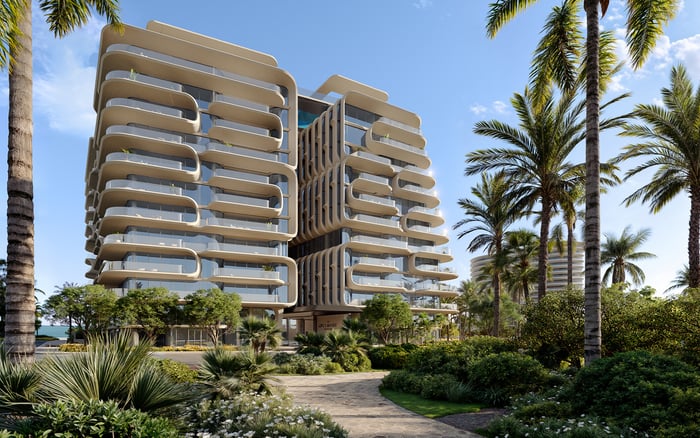
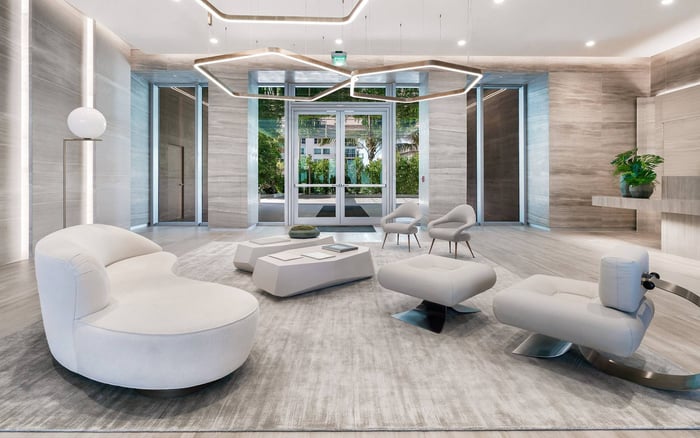
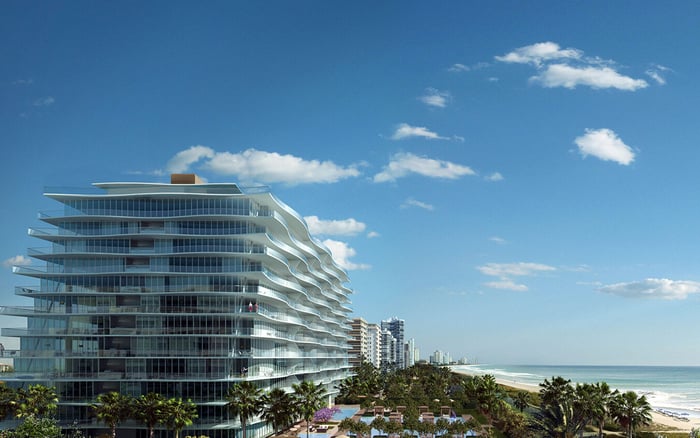
A buyer-focused look at how Art Basel Miami Beach sharpens the case for privacy, access, oceanfront presence, and long-view positioning in Bal Harbour residences.
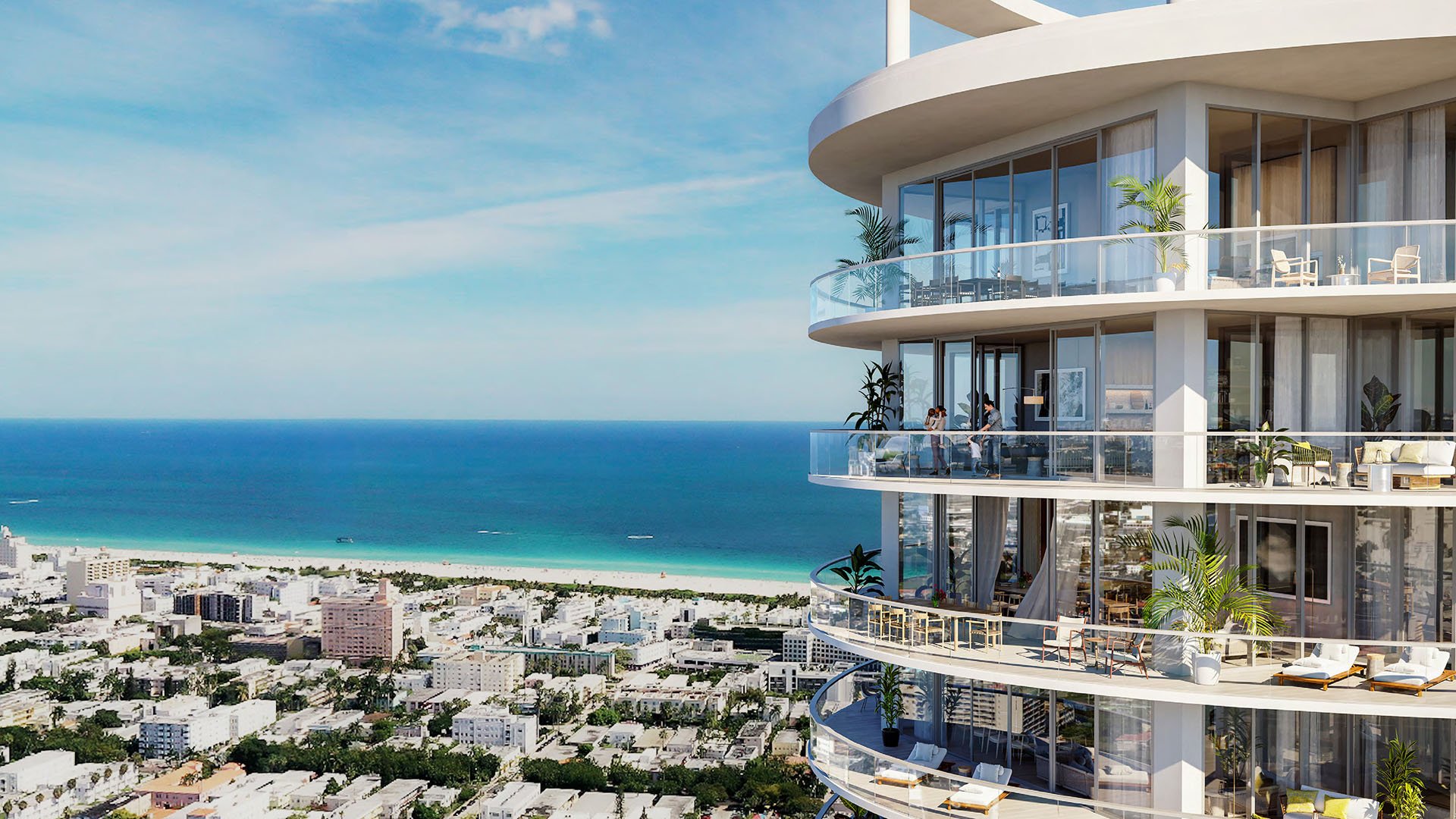
Art Basel Miami Beach has a way of compressing South Florida into one revealing week. Traffic patterns sharpen, dinner reservations become more deliberate, privacy carries more weight, and the difference between a beautiful address and a better-positioned residence becomes impossible to ignore. For buyers studying Bal Harbour, the week is not merely a cultural moment. It is a stress test for how a home performs when Miami is at its most visible.
The lesson is subtle. The best residence is not always the one nearest the loudest room. It is the one that allows an owner to participate selectively, arrive gracefully, recover privately, and preserve a sense of calm when the city moves at a faster tempo. In that sense, Bal Harbour is less about being removed from the action than about controlling the distance from it.
This is where the Art Basel conversation becomes useful for real estate. It reveals whether a property offers true optionality: access when desired, retreat when needed, and a daily environment that still feels composed after the event calendar moves on.
Luxury buyers often begin with proximity. How close is the residence to the beach, to dining, to shopping, to the social calendar, to Miami Beach, to the broader cultural circuit? Those questions matter, but they are incomplete. Position asks a more refined question: how does the residence sit within the buyer’s life?
A better-positioned Bal Harbour home should simplify movement without surrendering discretion. It should feel connected without feeling exposed. It should offer an arrival experience that does not depend on spectacle. During a major cultural week, this distinction becomes clearer because the city’s most desirable experiences are also the ones that require the most intentional planning.
For some buyers, that points directly to Oceanfront living. A residence such as Oceana Bal Harbour enters the conversation because it frames ownership around the rare simplicity of being at the water, rather than constantly moving toward it. The point is not only the view. It is the emotional reset that begins when the elevator opens, the door closes, and the public city falls away.
Bal Harbour’s appeal has never needed to be loud. Its strongest residential argument is restraint: a quieter profile, a more edited expression of luxury, and an environment suited to buyers who do not want their home to feel like an extension of the event itself. That becomes especially relevant during Art Basel Miami Beach, when the region’s social energy can be exhilarating, but dense.
The best Bal Harbour residences are evaluated less by how they perform in photographs and more by how they behave in real life. Is the arrival sequence intuitive? Does the building feel composed at peak hours? Are the interiors adaptable to both hosting and retreat? Does the residence allow guests to feel welcomed without making the owner feel overexposed?
This is why a project such as Rivage Bal Harbour belongs in the buyer’s mental map. The name itself is tied to Bal Harbour, but the larger point is positioning: a residence can be in a coveted enclave and still need to earn its place through proportion, privacy, and the quality of its daily rhythm.
Art collectors often think in terms that translate naturally to real estate: provenance, scarcity, condition, context, and long-term relevance. A residence is not art, but the discipline is similar. The buyer is not simply acquiring square footage. The buyer is selecting a point of view.
During art week, homes with strong positioning tend to reveal themselves. They are not dependent on novelty. They do not require constant explanation. They support the owner’s lifestyle with quiet confidence. The building, the floor plan, the arrival, the view corridor, and the neighborhood context all work together.
This is also where Boutique residential formats become compelling. Not every buyer wants the scale or social energy of a larger tower. Some prefer a more intimate building culture, especially when the residence serves as a Second-home and must feel immediately legible after travel. In the Bal Harbour and Surfside orbit, that preference can shape the search toward residences that emphasize privacy, calm, and a stronger sense of identity.
Bal Harbour should not be considered in isolation. The neighboring coastal language of Surfside helps buyers understand what they truly value. Some owners are drawn to a slightly different rhythm, one that still feels refined but may present a distinct residential character. Comparing the two can clarify whether the priority is enclave-like polish, architectural intimacy, direct beach living, or a more understated village sensibility.
For example, The Delmore Surfside can be part of the conversation for buyers who want to understand how a closely related coastal address frames privacy and design. Likewise, Arte Surfside may interest those considering how smaller-scale luxury can feel when the emphasis is on discretion rather than volume.
The point is not to declare one location superior in every case. The point is to use the comparison to refine the buyer’s eye. Bal Harbour may feel more appropriate for the owner who wants a polished residential base with a strong sense of separation from Miami’s busiest moments. Surfside may appeal to a buyer who wants a neighboring coastal expression with its own cadence. The better choice is the one that matches the owner’s daily pattern.
The most revealing part of art week is often not the opening reception or the dinner. It is the return home. After a long evening, the quality of a residence is measured in smaller details: how quickly the mood changes, how naturally the home receives guests, how protected the primary suite feels, how the morning begins, and whether the owner feels restored.
This is where better positioning becomes a form of wellness, even when the building is not marketed that way. A well-positioned residence reduces friction. It minimizes unnecessary transitions. It allows the owner to enjoy Miami’s cultural intensity without living inside it at all times.
For buyers considering the broader coastline, The Surf Club Four Seasons Surfside offers another useful reference point in the luxury coastal discussion. Its relevance here is not about comparing amenity checklists. It is about understanding how an established name, a coastal setting, and a residential culture can influence the way an owner feels when returning from the city’s most active social moments.
A serious buyer should move beyond the surface vocabulary of luxury. Better positioning is practical. It shows up in the relationship between indoor and outdoor living, the degree of privacy at arrival, the quality of light, the ease of hosting, and the ability to live beautifully on ordinary days. Art week simply makes those criteria more visible.
Ask whether the residence feels equally convincing on a quiet Tuesday and during Miami’s busiest cultural week. Ask whether the floor plan supports both solitude and entertaining. Ask whether the building’s scale suits your temperament. Ask whether the address improves your life or merely impresses other people.
For the Investment-minded buyer, this discipline matters because enduring desirability often comes from fundamentals rather than fashion. The most resilient luxury homes tend to be those that satisfy human needs before they satisfy market narratives: privacy, beauty, convenience, proportion, and a location that continues to make sense after the social calendar resets.
Art Basel Miami Beach does not tell buyers to chase the center of attention. It often tells them the opposite. The more animated Miami becomes, the more valuable it is to own a residence that offers control, calm, and a confident relationship to the water and the city.
For Bal Harbour buyers, the opportunity is to choose a home that performs beyond the moment. The best-positioned residence is not only impressive during art week. It is the one that still feels intelligent, beautiful, and deeply livable when the last dinner ends, the guests depart, and the owner returns to the quiet pleasure of being exactly where they want to be.
Why does Art Basel Miami Beach matter to Bal Harbour buyers? It reveals how well a residence supports access, privacy, entertaining, and retreat during one of Miami’s most active cultural periods.
Is Bal Harbour mainly about proximity to Miami Beach? Proximity matters, but the stronger value is controlled access: being close enough to participate while retaining a quieter residential base.
What defines a better-positioned residence? It is a home that aligns location, privacy, arrival, views, service, and daily ease with the owner’s real lifestyle.
Should buyers prioritize Oceanfront residences? Oceanfront living can be compelling for buyers who value immediate contact with the water and a stronger sense of retreat.
How should Surfside compare with Bal Harbour? Surfside can help buyers refine preferences around scale, design, privacy, and coastal rhythm before choosing the right address.
Are Boutique buildings better for privacy? They can be attractive to buyers who prefer a more intimate residential culture, though the right fit depends on the building and owner.
Does a Second-home need different criteria? Yes. A second home should feel effortless after travel, easy to maintain, and instantly restorative during short stays.
What should art collectors look for in a residence? Collectors often value context, restraint, proportion, and long-term relevance, which are useful lenses for real estate as well.
Is Bal Harbour suited to entertaining during art week? It can be, especially for owners who want to host selectively while keeping the home environment private and composed.
What is the most important buyer takeaway? Choose the residence that improves daily life, not merely the one that seems most visible during a major event.
For a confidential assessment and a building-by-building shortlist, connect with MILLION.
If branded residences are on your mind — as a home or as an allocation — we would be glad to share what we are seeing, privately.
Begin a quiet conversation